My Final Thoughts on MENA, Authoritarianism, and Change

New Tools for a Unique Region

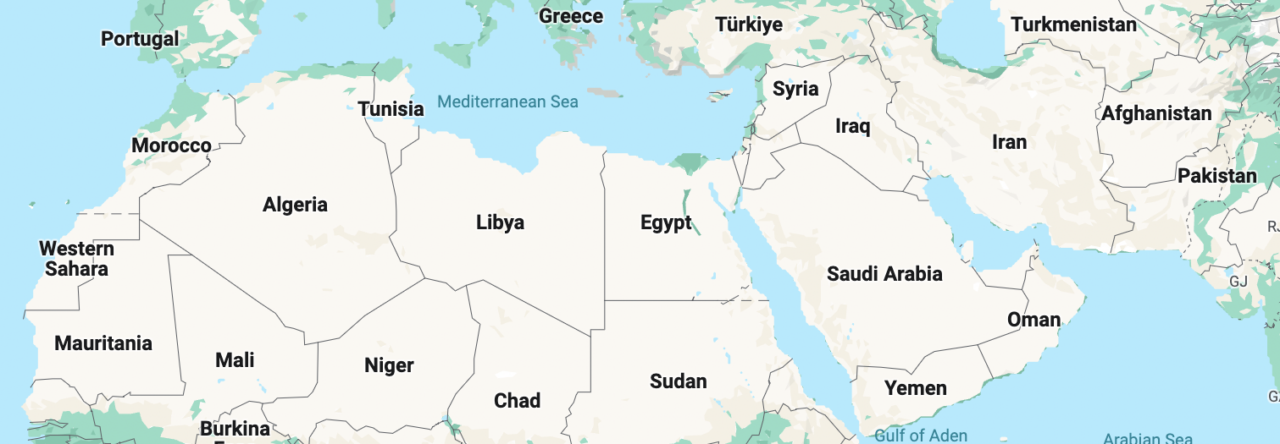
After finishing my first political science class centered on the MENA region, my understanding of authoritarianism and change in the region has grown immensely. Before this class, I only had a surface-level understanding of the different regime types, barely knew anything about their political economies, and tended to group many of the countries together. When considering everything I have learned, I think one the most important tools for studying authoritarianism and change in this region goes back to one of the first articles we read in this class. Lisa Anderson’s 2006 article, the topic of our first blog post, always comes back to my mind. I think her analysis should be considered by anyone studying political science in MENA. Her idea of a tool for understanding is a mindset shift. According to Anderson, political scientists tend to generalize the region with westernized theories and do not tend to ask the right questions (Anderson 2006). Especially in the United States, political scientists tend to relate everything back to democratization and the American experience, but this is not the case for everywhere else in the world. Anderson uses the metaphor of trying to look for a lost key in the light and not in the shadows, like how the political scientists constantly try and look for glimmers of democracy in the Middle East. This metaphor conveys the tool we need to better understand the region. Instead of looking at why democracy has failed, it is more important to look at why authoritarianism persists. 
 

It All Goes Back to Political Economies…

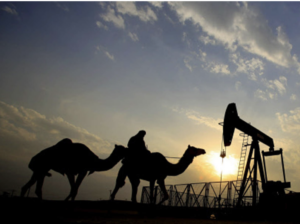
In my opinion, the most logical explanation for the persistence of authoritarianism is centered around political economies and resource wealth. While regime types and specific histories can be important factors in some cases, resource endowments make a more compelling argument. I think Michael Ross’ work on oil and democracy makes the best case for this. His arguments about rentierism, the spending effect, and group formation effect convinced me, and I was able to apply it to multiple countries when writing my midterm paper (Ross 2001). 


A Look into Sources

Finally, I learned a lot about the different things one can learn from different kinds of sources. While certainly a tough read at times, Cammett, Diwan, Richards, and Waterbury provided a necessary baseline for everything from the regime types, political economies, history, and status of health and food in the region. I felt I needed to know a lot of this information because most of it was completely new to me. I think this source was more about understanding each country and the important factors for authoritarianism. Wedeen’s book provided a completely different understanding, which I also think was very necessary. Her book on Syria was a much more personal and detailed account. I liked learning about the story of M, getting more information about Syrian family structures and everyday life, and seeing the pictures, jokes, and political cartoons. A source like this is important when inserting humanity into studying authoritarianism and change. While meant to be comical, the political cartoons really emphasize the struggle and repression that Syrians faced. I think detailed books like this should be used in tandem with a more broad book like from  Cammett, Diwan, Richards, and Waterbury. 


Works Cited

Anderson, Lisa. “SEARCHING WHERE the LIGHT SHINES: Studying Democratization in the Middle East.” Annual Review of Political Science, vol. 9, no. 1, June 2006, pp. 189–214, https://doi.org/10.1146/annurev.polisci.9.072004.095345.

Cammett, Melani, Ishac Diwan, Alan Richards, and John Waterbury. 2018. A Political Economy of the Middle East. Routledge.

Ross, Michael L. 2001. “Does Oil Hinder Democracy?” World Politics 53 (03): 325–61. https://doi.org/10.1353/wp.2001.0011.

Wedeen, Lisa. 2015. Ambiguities of Domination : Politics, Rhetoric, and Symbols in Contemporary Syria : With a New Preface. Chicago: The University Of Chicago Press.

Image Credit: The Economic Times
Uneasy Lies the Head That Wears a Crown

Monarchical rule in the 21st century is a topic deserving of analysis. The concept of monarchies stretches so far back into history yet they still exist today. They often were created as a result of violence and war, where one lucky family would get to be in charge for centuries after based on lineage. While a large portion of the world has transitioned away from democracy, the Middle East is an exception. There is still a heavy presence of monarchies that have stood their ground even after the protests for democracy in 201l. Although as time has gone on, monarchical rule has continued to be challenged in a number of ways. 

Challenges to Monarchical Rule

Monarchies in the Middle East have continued to face protests among the people, especially in 2011. This occurs because the structure of monarchies does not include the voices of the people. Monarchies feed into patrimonialism and create less opportunity for regular citizens. Both dynastic and linchpin monarchies perpetuate this. In a dynastic monarchy, the ruling family “monopolizes the highest state offices, controls the institutions of the state by distributing family members throughout the bureaucracy” (Lucas 2004). In a linchpin system, “the royal family generally participates only in the political institutions of the monarchy” (Lucas 2004). Regardless of what system is in place, these systems restrict political and bureaucratic participation to the elite ruling family. This can spiral into grounds for protests when looking at the economy and employment rates. If a country is struggling to find jobs for everyone, it is only natural to blame the family hogging the industries. The youth bulge in the 2010s contributed to the need to protest. Young people with the qualifications to work could not find it, therefore leading to distress and a cause to complain.

Another challenge to monarchical rule is the presence of social media and its connection to protesting. One of the reasons the uprisings of 2011 gained so much speed was due to the internet. Facebook groups and networks of users were able to share ideas between countries and share strategies (Khatib and Lust, 2014). A prime case study of social media challenging a monarchy was Morocco in 2011. The February 20th protest against King Mohammed V was sparked by the internet. The idea of Feb20 first came to fruition with the “Alternative Movement for Individual Freedoms” facebook group in 2009 (Khatib and Lust, 2014). This led to the creation of more and more groups supporting democracy and the agreement of February 20th. Due to the internet planning, “the February 20th protests hit fifty-three Moroccan towns simultaneously” (Khatib and Lust, 2014). While the protests ultimately did not change the monarchy due to the assets of the regime, it proved how internet communication can mobilize people. 

Assets to the Regime

While protesting proves monarchies have been challenged, there are also a lot of factors that keep them in place. One large factor is how monarchs were able to stamp out protests using coercion and manipulation. In the case of Morocco, the king “promised a spectacular constitutional reform” (Khatib and Lust, 2014). The media and the public were floored by this response and excited for a more democratic future, but this did not prove to be true. The king’s words were more a “clever preemptive move” (Khatib and Lust, 2014) than actually listening to the people. A committee was created to voice concerns, but so many groups were included that the process became convoluted. The king never gave a strong timetable for reform and there were so many groups in the committee that a consensus could not be reached. 

Another asset these monarchs have that makes them exceptional is oil resources. Monarchies that have large oil rents and access to natural resources can more easily control their populations. Oil wealth allows the monarch to keep systems of patronage in place, and the lack of taxes creates less incentive for citizens to protest.

A final attribute of monarchies in the Middle East and their consolidation of power is the history behind these monarchies and role in constructing nations. Lucas explains how “Middle Eastern monarchies have used nationalist ‘traditions’ to imagine both the regime and the state into the past to solidify their rule” (Lucas, 2004). Monarchies were important in nation-building after colonial rule because they helped bring people together under a common ruler. Monarchs in this region claim a “traditional” right to rule based on lineage and the encouragement of pluralism. These monarch act as a way to “stand above the tribal, religious, ethnic, and regions divisions” (Lucas, 2004). It is easier to solidify rule and keep it that way for centuries when the monarchy was what established the identity of the state after colonialism. 

These factors on both sides show how precarious monarchies can be. While they have stayed in place for decades, this could change at any time. Monarchs have already dealt with the 2011 protests but there is no telling what people may do in the coming years. No king in this region can confidently say that their population will never revolt, because there are always things people will rise up for. It is a heavy weight to carry, but every monarchy in this region bears it to keep their power.


Khatib, Lina, and Ellen Lust. 2014. Taking to the Streets : The Transformation of Arab Activism. Baltimore, Maryland: The Johns Hopkins University Press.

Lucas, Russell E. 2004. “MONARCHICAL AUTHORITARIANISM: SURVIVAL and POLITICAL LIBERALIZATION in a MIDDLE EASTERN REGIME TYPE.” International Journal of Middle East Studies 36 (1): 103–19. https://doi.org/10.1017/s0020743804361064.

Review of “A Siege of Salt and Sand”

As a political science and environmental studies double major, this video is at the intersection of what I study in regards to environmental policy and climate change. This film was enlightening when it comes to how climate change impacts people and their livelihoods at an individual level, especially in the MENA region. This became a topic of discussion when Tunisia was protesting for democracy in 2010 and 2011.  I thought the film was very well done in the breakdown of the problems associated with the sand and sea, especially through the use of community testimonies. The overall message was clear, with only one critique that I picked up on.


The Salt

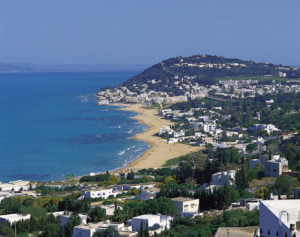
The first half of the film primarily focuses on the issues related to salt and rising sea levels. This is a concept that is drilled into my head over and over again in environmental courses, but I think I lacked understanding of how this actually impacted people on the individual level. Sea level rise has been a topic of concern for a few decades now, but I think I misunderstand how much damage the rising levels create. Morsi Fekhi, a marine ecologist with multiple appearances in the film, had a lot of insight on this. He talks about how there used to be about 2 cm of rise a year, and now people are seeing a 2-4 cm rise in the span of 6 months (Fekhi). Mere centimeters do not seem like cause for concern, but it is noticeable over time. One clip showed a waterfront hotel where the water was coming up to the steps, and a man said it seemed like the ocean was always getting closer when he looked at it. These testimonies make the situation much more real for viewers. It’s even more troubling when you consider that this was filmed nine years ago. A recent article from the Tahrir Institute For Middle East Policy reported that Tunisia’s Kerkennah islands could see a rise of 50 cm by the end of the century, and significant parts of the islands would disappear underwater (Tahrir). The other issue highlighted about salt is the fishing industry. Fishermen were interviewed and all shared similar experiences about the lack of fish. Historical overfishing and warming ocean temperatures have drastically reduced fish yields in the Mediterranean. As this continues, more people who depend on the sea to make a living will come up short.
The Sand

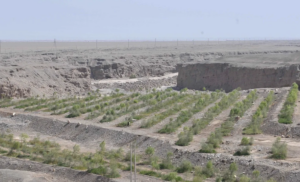
This section of the film stuck out to me because it is an environmental issue that I never considered. As stated in the film, “the sand paralyzes the development of the region” (Al-Faouar). While I knew the region deals with desertification, I never considered what that meant for people and their lives. One resident states how “the sand can annihilate a whole city” (Al-Faouar). As global warming increases, more land eventually becomes desert due to lack of rain. Wind pushes the sand around, often impacting agriculture. While sand seems not as damaging as other effects from global warming, the testimonials in the film argue differently. So many people highlighted how towns can shut down when there’s too much sand, the lack of crops, and fear for the future.
Final Thoughts

I think this was a raw and thought-provoking look at how climate change has impacted Tunisia based on their geography, and what needs to change. I like how the last part mentioned how Tunisia has embedded climate change policy into their constitution, along with Ecuador and the Dominican Republic. The only criticism I came up with this film was the lack of mention of desalination plants. I know that Tunisia now uses that technology along with many other countries in MENA, and it could have been mentioned as a strategy to help with lack of available water. Besides that, the film provided a great explanation of Tunisia’s afflictions from climate change.


Works Cited
“A Siege of Salt and Sand.” Vimeo.com, 2014, vimeo.com/stmcneil/siegesaltsand. Accessed 2 Oct. 2023.
Azouni, Adel. “Rising Seas Bring Rising Threats to Tunisia’s Kerkennah Islands.” The Tahrir Institute for Middle East Policy, 9 Aug. 2023, timep.org/2023/08/09/rising-seas-bring-rising-threats-to-tunisias-kerkennah-islands/. Accessed 2 Oct. 2023.
Images:
Murphy, Emma , Brown, L. Carl , Clarke, John Innes , Barbour, Nevill and Talbi, Mohamed. “Tunisia”. Encyclopedia Britannica, 1 Oct. 2023, https://www.britannica.com/place/Tunisia. Accessed 1 October 2023.
Pimm, Stuart L. and Rafferty, John P.. “desertification”. Encyclopedia Britannica, 29 Sep. 2023, https://www.britannica.com/science/desertification. Accessed 1 October 2023.

Oil Rents in MENA

In the Middle East and Northern Africa, the concept of oil rents is important in understanding the complexities of the region. This refers to the difference in the market price of oil and the cost of producing oil (Cammett 23). Oil rents can be damaging for multiple reasons: the concept of the resource curse, rentierism, and overall impact on political and social outcomes. 

The Resource Curse:

This applies to many oil-rich countries. The resource curse emphasizes the “correlation between resource abundance and outcomes such as poor economic performance, unbalanced growth, and low levels of private-sector development” (Cammett 23). As oil extraction technology has improved, now more countries than ever have access to oil as a natural resource. Birdsall and Subramanian explain how there are now 34 “less-developed” countries where oil and natural gas make up at least 30% of the country’s total export revenue (Birdsall and Abramanian 1). When a country can heavily rely on one resource to generate revenue, other areas get left behind. This can lead to lack of focus on the private sector due to focus on resource generation, and lack of attention to other economic areas and interests. This all goes back to another concept applicable to the region, the idea of “Dutch Disease” (Cammett 24). This theory explains how a lot of revenue from natural resources leads to decline in a country’s industrial sector (Cammett 24). In countries inflicted with the resource curse and Dutch Disease, the oil rents can be damaging to society. The government is the one that benefits from oil rents and allows those in charge to shape society and politics as they see fit. Rulers who benefit from oil wealth can use the wealth as leverage, creating more patronage and repressive institutions (Cammett 24). While this is true on the surface, political scientists also argue that the problems from the resource curse oil rents have deeper explanations and connections. Ross argues that there is more to the resource curse, such as the fact that “oil and mineral wealth tends to make states less democratic” (Ross 328). Birdsall and Subramanian also emphasize this and explain how countries with a lot of oil wealth are more likely to have weaker political institutions (Birdsall and Subramanian 2). Ross suggests that another way of looking at the impact of oil rents is the concept of Rentier states. 

Rentierism:

Ross defines “Rentier states” as a classification for many MENA states because of how a large portion of their revenues come from external rents (Ross 329). In a basic sense, much of their money is coming from selling oil. Countries such as Jordan, Syria, and Egypt gain rents from the transportation of oil using their country’s infrastructure. In terms of damage to society, Ross mainly argues that the influx of oil in these states makes the states less democratic, and causes poor economic development (Ross 329). This occurs because when the state is heavily controlling oil exports and the economy, they control the bureaucracy and policy. Another aspect of this is the “taxation effect” (Ross 332). The taxation effect is a common component of a rentier state, where governments get so much revenue from oil that they do not heavily tax the population or do not at all. Without taxes, there is less ground for the public to “demand accountability” (Ross 332) when faced with issues like patronage and corruption. This allows social issues to stay dormant for longer. A final component of rentier states is the “group formation” effect (Ross 334). Ross explains how this is when a government has so much revenue that they are able to use some of it to “prevent the formation of social groups that are independent from the state” (Ross 334) and then may demand rights.

Are These Problems Caused by The Size of Rents or Interaction With Other Factors?

It seems that in the situation of MENA states, there are other factors at play in causing damages. Other countries have been able to surpass the resource curse and dutch disease and flourish economically. This includes Norway, Indonesia, and Botswana (Cammett 24). Indonesia is a major oil exporter and also a Muslim majority country and still manages to not have some of the social problems in MENA. I think that MENA is exceptional when looking at the case of oil rents and it is impossible to only look at that one factor when examining societal problems. So much history, geography, colonialism, and violence has shaped the region into what it is today. While oil is extremely important for many of the states, it is not the sole factor in their development. Many problems have systemic causes that go deeper than just oil. Oil rents certainly explain some of the issues, but not all of it.


Works Cited:

Birdsall, Nancy, and Arvind Subramanian. “Saving Iraq from Its Oil.” Foreign Affairs, vol. 83, no. 4, 2004, p. 77, https://doi.org/10.2307/20034048.

Cammett, Melani. A Political Economy of the Middle East. Routledge, 22 Mar. 2018.

Ross, Michael L. “Does Oil Hinder Democracy?” World Politics, vol. 53, no. 03, Apr. 2001, pp. 325–361, www.cambridge.org/core/journals/world-politics/article/does-oil-hinder-democracy/67665D8D240C8F43CD4A2DCB35894071, https://doi.org/10.1353/wp.2001.0011.


Understanding Democracy in the Middle East

Misunderstanding the Region:

Lisa Anderson’s 2006 analysis on understanding democratization in the Middle East conveys the problems that arise when political scientists attempt to understand the region. Many of these problems originate in a lack of of understanding. The Middle East’s history and geography make it different from any other region. Political scientists have forgotten this when examining the region and have tried to force “western categories and western discourse” (Anderson 191) onto it. This has led to many studies on democratization in the region, but Anderson points out that this is due to bias. She argues that there is bias in political science when it comes to applying western theories because of American foreign policy (Anderson 209). The push for democratization worldwide has historically been a core component of American foreign policy. Naturally, the United States has wanted this for the Middle East as well. Since the region is not overwhelmingly democratic, the question of why has been at the top of political scientist’s minds. The problem arises when there is an “emphasis on democratization” (Anderson 209) and not much else. Anderson uses a metaphor to describe this way of thinking, like searching in the light for something lost (Anderson 208). Political scientists have tried to uncover the mystique around the lack of democracy, but there is not much one can do when such little democracy exists. There have been “glimmers” (Anderson 208) but nothing concrete to study. This leads to a lack of understanding and missed opportunity to truly understand the region. If research was not constantly trying to fit the Middle East into western boxes, there could be new discoveries. 

How Do We Fix This?

A good way to compensate for these problems is to be aware of personal bias. This can often be very challenging to do, speaking from personal experience. As someone who was born and raised in the United States, went through American public school, and has taken many courses in American political science, it is easy to switch into a solely Western perspective. Even a majority of my past political science classes have focused on American politics or American foreign policy. It takes a lot of work to shift my thinking away from the American experience in the world and think about how other countries operate. I think awareness is a useful tool in fixing this bias. When I read about the Middle East, I try and focus on the unique factors that shape the region. It takes more effort than when I read about the politics of the United States, but Anderson states how we “may have to search a bit more in the shadows” (Anderson 210) when looking at the politics of the Middle East.

The Impact of the Arab Spring:

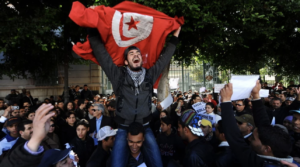
I think Anderson’s analysis would not change significantly due to the Arab uprisings in 2010 and 2011. She explains how some political scientists are “diehard optimists”(Anderson 201) and think democratization was “a matter of time” (Anderson 201) while others are pessimistic. In a way, both turned out to be true. There were glimmers of democracy when countries started to protest, but the fallback to repressive regimes also proves the point of the pessimists. If Tunisia was successful in changing to a democracy and did not slide back to the conditions that started the uprising, then Anderson’s analysis would change. A country in the Middle East becoming a true democracy would prove that democracy was waiting in the shadows all along. Political scientists would then apply their findings to the rest of the countries in the region and expect the rest to fall to democratization. The failure of the Arab uprisings shows that much of Anderson’s analysis still rings true. The complexity and mystique of the region is still there. The cases of democracy almost succeeding and then falling back to authoritarianism prove that this region does not “fit into the restrictive terms of political science” (Anderson 210). Political scientists should continue to evolve their way of thinking about democracy and the Middle East.


Works Cited:

Anderson, Lisa. “SEARCHING WHERE the LIGHT SHINES: Studying Democratization in the Middle East.” Annual Review of Political Science, vol. 9, no. 1, June 2006, pp. 189–214, https://doi.org/10.1146/annurev.polisci.9.072004.095345.

Image Credit:

NPR Staff. “The Arab Spring: A Year of Revolution.” Npr.org, 17 Dec. 2011, www.npr.org/2011/12/17/143897126/the-arab-spring-a-year-of-revolution.

Powered by WordPress & Theme by Anders Norén