In my survey, I asked questions surrounding the topic of low-carbon bridge fuels. I  wanted to gain a better understanding of what the public thought of them and how they could be used in the energy transition process. In my survey, I surveyed both people from Pennsylvania and Germany because I wanted to understand the opinions of both Pennsylvanians and Germans to analyze the differing responses in each country’s energy transition. This added a valued component of my survey and I think it gave it a good scope of comparison.
As I surveyed Pennsylvanians, I mostly found that people were knowledgeable of natural gas and most of them agreed with natural gas as a low-carbon fuel. They did not like the side effects of natural gas being fracked in their backyards as a few of them had personal experiences with troubles it may cause onto the land of its surroundings. I also found that most Pennsylvanians said that natural gas will be likely used in their country’s energy system over the next 50 years.
When speaking to Germans about the same topic, I asked them the same survey questions. Their responses differed drastically from where I was surveying. I found that most people in Berlin, like in Pennsylvania, did know a little about natural gas, but did not have immediate impacts on them, except for more expensive fuel prices. Whereas, from the responses I recorded in Bremen, they were more knowledgeable of the energy transition, and they did not think natural gas was a low-carbon fuel. They were also very strong in their opinions about the transition towards cleaner energy. I found this quite interesting because the northwest of Germany where Bremen is located is where most of the wind farms are located.
In my opinion, I expected these results roughly. It was nice to see that around different parts of Germany, there was more knowledge spread about renewable energy. Everyone in my surveys said there needs to be a transition from fossil fuels to renewable energy, so there is a positive outlook for the future.
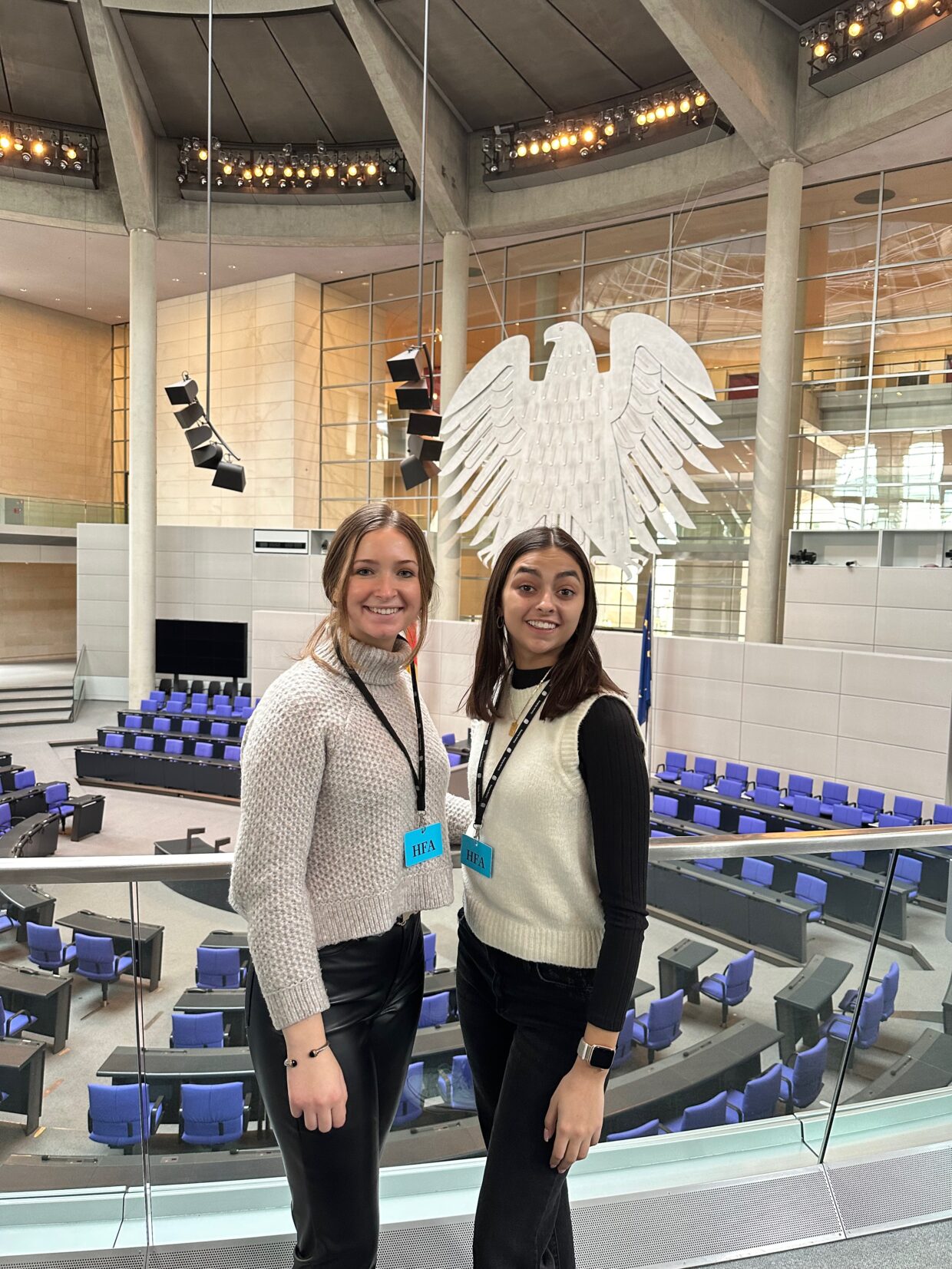
In my time spent in Germany, we were able to visit with many researchers, lawyers, policymakers, privatized wind farm companies, and much more focusing on renewable energy. It was fascinating to see how diversified people’s majors worked in these fields. Most of them coming together for a common goal of better the advocacy of our planet. Seeing so many windmills while taking the train through Germany was also gratifying.
Considering everything I have learned about the United States and Germany, I do not think that one country is far more advanced than the other with consideration of a just energy transition. I think both countries are trying to do what’s profitable for their country first and then try to do best for the earth. I think in different aspects Germany may be slightly further ahead, but they are a much smaller country than the United States.