Gender Performance in a Theater Setting: The Impact of Costumes

This post has taken me way too long to make, but here we are. 🙂

Backstory: Upon reading the excerpt of Gender Trouble for class, I immediately knew I wanted to write my blog post about that in relation to something else. From there my mind went to a recent video I’d watched from a YouTuber named Sydney Zarlengo where they talked about their attempt to direct and play Christopher (the main character) in the first all neurodivergent cast and crew of The Curious Incident of the Dog in the Night-time. However, what I want to focus on in this blog post was that they planned to wear a different costume for Christopher each night, specifically to have different gender expressions. I can’t find the clip where they mentioned why they wanted to do this, so I’m beginning to think I made it up, but I believe the idea for the different gender expressions every night was to help everyone in the audience relate to a version of Christopher. Since there is not a lot of good neurodivergent representation in the theater at the moment, this was done in an effort to show that neurodivergent people are not just “cis white boys who like trains” (as Sydney would say).

Connection to Gender Trouble: In the documentary about the process of this production (spoiler alert: it got cancelled ), Sydney brings up a vital idea about costumes in the theater when they say “it’s going to be very interesting to step into this role every single night in a completely different outfit because costumes very much create the character in the sense of physicality, in the sense of how you move and how you exist.” This connects perfectly to Butler’s quote that “The effect of gender is produced through the stylization of the body and, hence, must be understood as the mundane way in which bodily gestures, movements, and styles of various kinds constitute the illusion of an abiding gendered self” (Butler 140). Gender, as Butler puts it, is created through every little action someone takes. So, to drastically change Christopher’s outfit every night is to completely change the way in which Christopher’s gender is “read” every time. This small effort – changing a costume – completely changes Christopher’s character and how Sydney chooses to portray him each time. Arguably each outfit suggests a different version of Christopher, yet at the same time, all of the costumes could culminate in the same Christopher, just as anyone could reasonably wear these different styles from day to day. I think this really underscores the importance of clothing and costumes in everyday gender expression. If theater is just a louder, bigger expression of our usual emotions and mannerisms, are we not still acting a little in our portrayal of gender every day?

Bonus tidbit – Copyright: Something else that I found profoundly interesting was that Sydney said, “we can’t change his pronouns legally.” This wasn’t something that had crossed my mind before and, while on some level it did make sense why this would be done, I found it intriguing that we copyright gender to this extent. Why are we so hesitant to allow different productions to change the pronouns and/or names of the characters in a show? What are we really “protecting” by doing this? I’ve rambled too long already so I don’t have the space to talk more this here, but it’s something to think about.

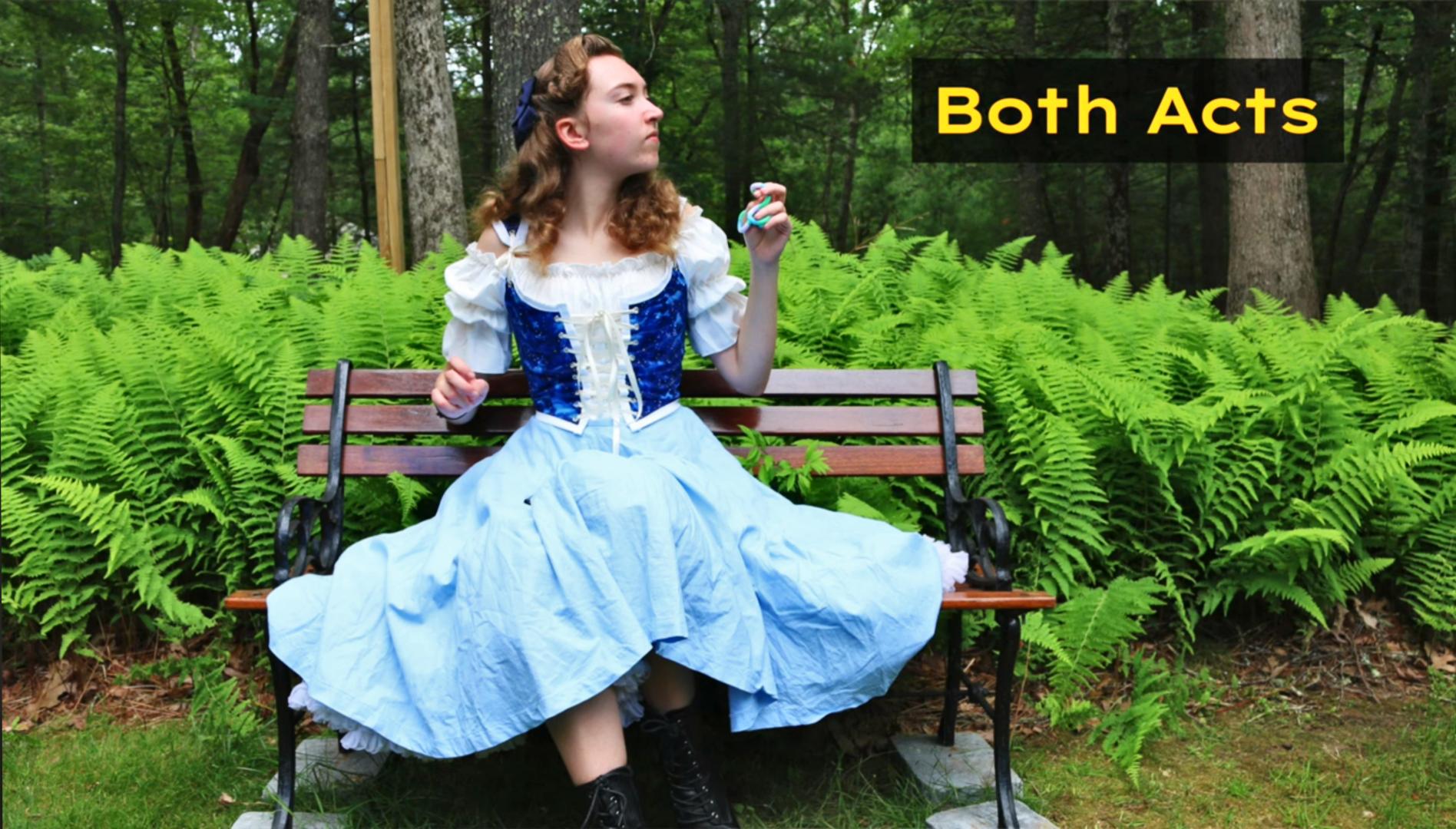
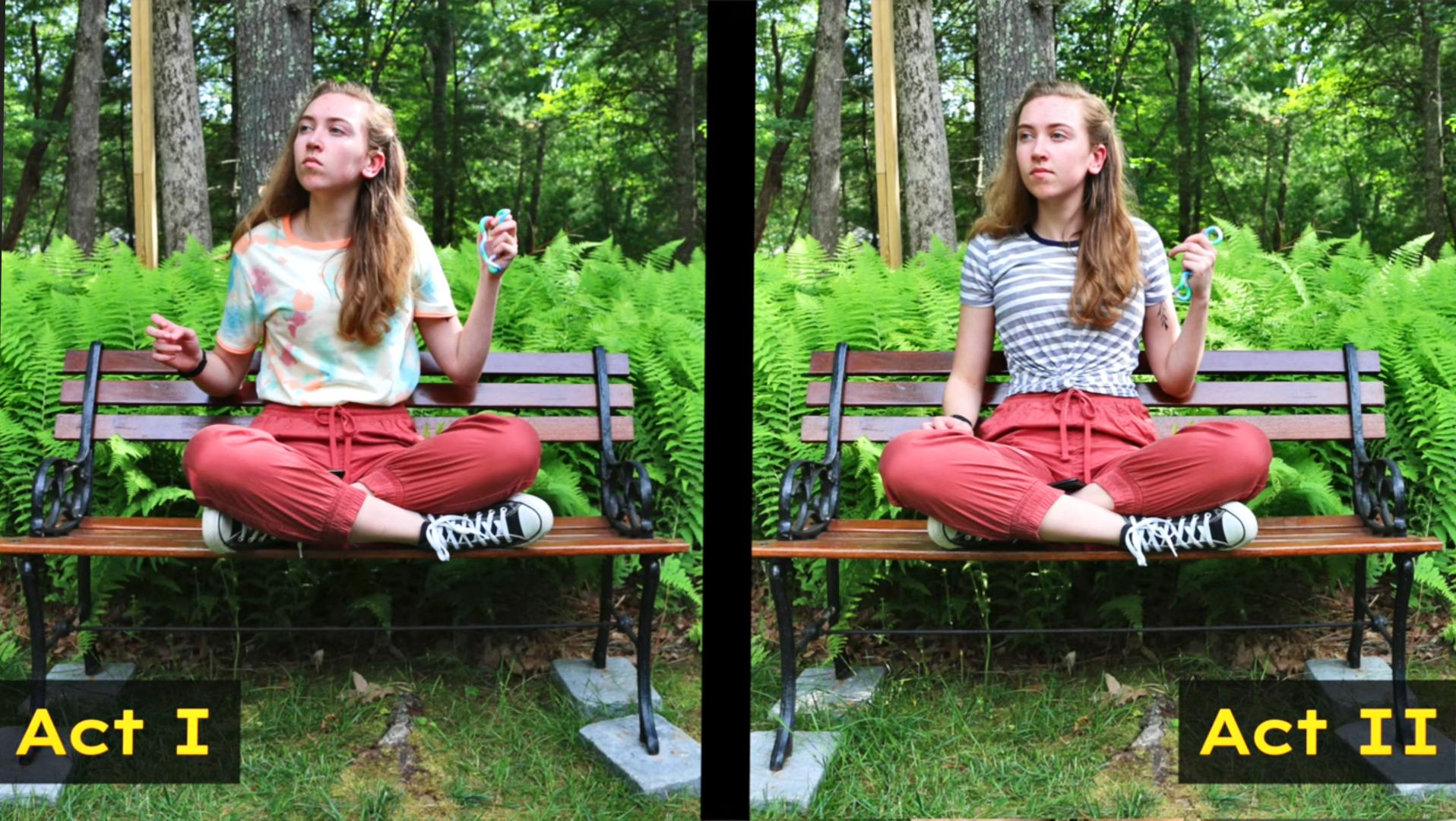
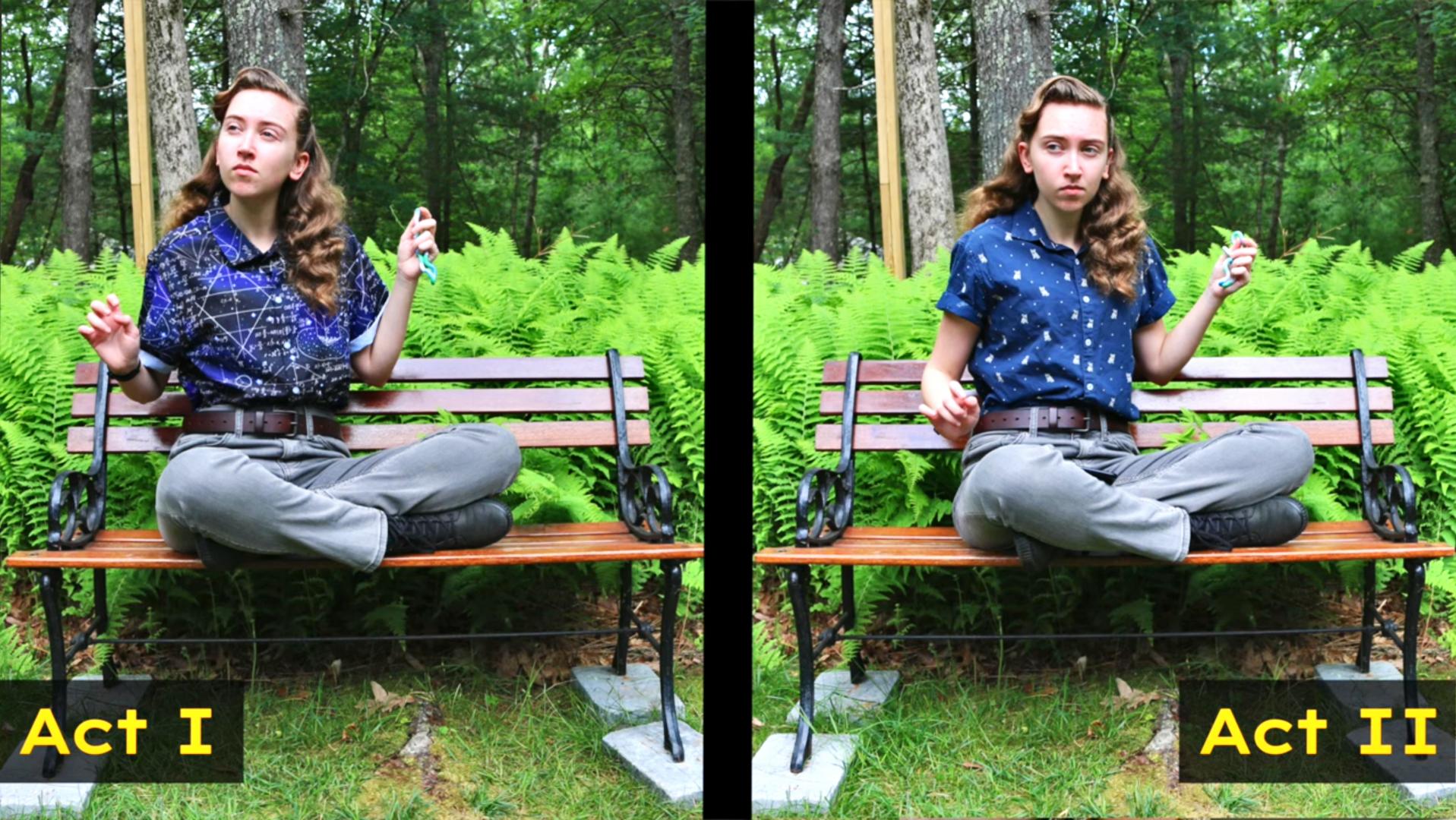
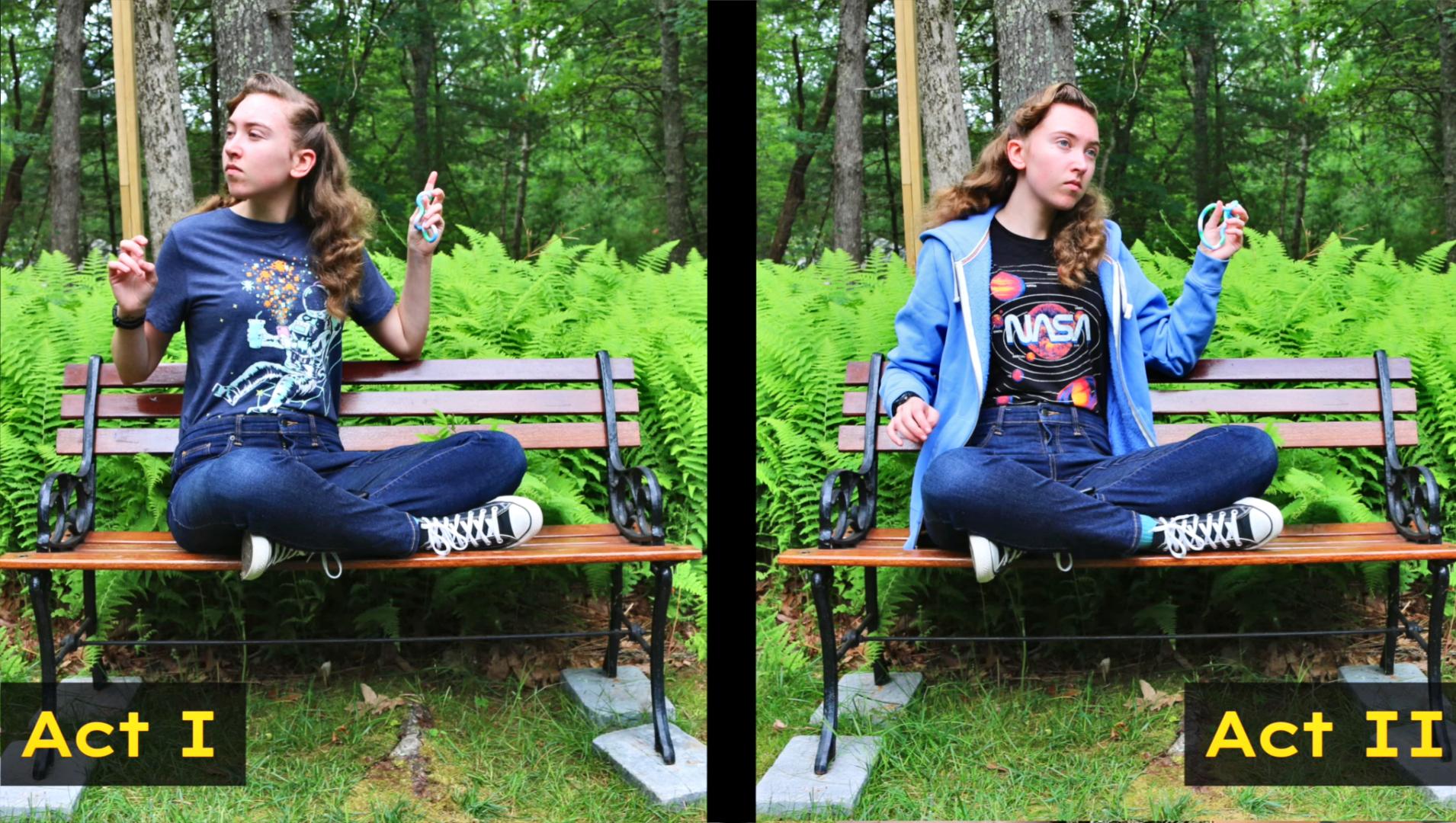
Reference Photos:
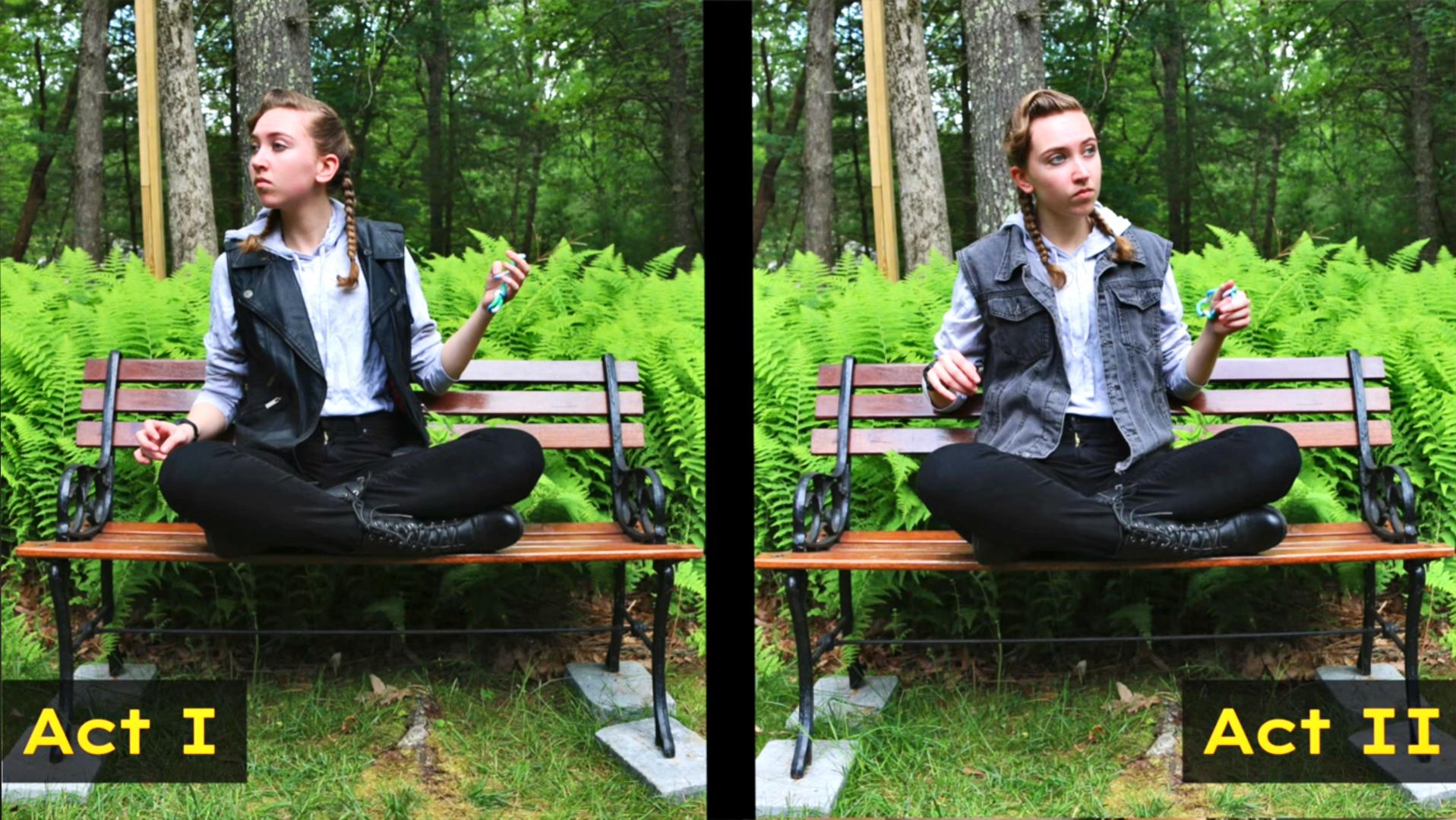
Punk butch version
Cottagecore version
Gen Z Style version
Genderbendy button-up shirt and pants version
Traditional Christopher costume

Note: If you want to learn more about the process for this production of The Curious Incident of the Dog in the Night-time, you can find the full playlist here. The main part that I’m drawing on for this post is the portion from the video titled “Crafting Curious|Full Documentary [CC]” where Sydney and their co-director Ace talk about costumes (from approximately 17:10 – 23:30).

Trapped by Circumstance

“Walter crossed over his side of the line. ‘This is my side, you can’t cross it!’ Pohpoh said. He stared at her in disbelief. He and his friends burst out cackling, hissing and jeering, as though it was the funniest joke they had ever heard. … ‘Is you who draw the line? Or me? I draw the line. I go where I want'” (Mootoo 86).

“Pohpoh took a tiny piece of blackboard chalk from her pocket. She cut across their path and encircled one of the ants in a line drawn thickly, chalk powder flying. The ants outside the circle marched up to the chalk line and one after the other backed off, refusing to cross. … Within seconds a new path bypassing the circle had been created” (Mootoo 88 – 89).

Originally when reading these two passages, I just found the parallels between them fascinating. In the first one, Walter creates an imaginary barrier – the line – for Pohpoh. While Pohpoh doesn’t dare to cross the line, she ends up establishing the importance of it when she claims that “this is my side.” When Walter dares to cross the line, Pohpoh sees this as breaking the rules. However, Walter laughs this thought off, claiming that since he made the line, he can go wherever he wants in relation to it. So it surprised me when, in the second passage, Pohpoh creates her own imaginary barrier for the ants. She seems to learn nothing from her own entrapment and instead decides to encircle an ant for her own amusement. Perhaps she wants to claim back power for herself after she seems to lose confidence from the interaction with Walter. Even so, the decision to create a circle intrigues me. If Pohpoh had decided to create a line, the ants would have stuck together and walked around it. By creating a circle, she deliberately ostracizes the ant that is stuck inside.

Now, however, I also see how closely the second passage relates to Mala’s own situation. She becomes that one ant who, slowly but surely, the rest of the townsfolk refuse to go near. Her house, her father, her overall circumstances, come together to trap Mala in her own chalk circle. While there is no real reason for everyone else to avoid her with such vigor, just as the chalk line serves no real barrier for the ants, they do so anyway until such a time as it becomes habit to treat Mala as an outsider. Both Mala and the ant believe they are stuck, but whether they truly are is up to interpretation.

Note: I decided to use the name Pohpoh in the first paragraph because I’m talking about her childhood, but I switched to Mala in the second one because I’m writing about her life overall. Hopefully that makes sense. 🙂

New Life Narratives and Queer Time

So, I decided to get ahead by reading the excerpt we were assigned from In a Queer Time and Place by Jack Halberstam and these portions in particular stood out to me:

“Queer uses of time and space develop, at least in part, in opposition to the institutions of family, heterosexuality, and reproduction” (Halberstam 1).

“part of what has made queerness compelling as a form of self-description in the past decade or so has to do with the way it has the potential to open up new life narratives and alternative relations to time and space” (Halberstam 1-2).

I find the idea of queer time as an opposition to “normality” and a “typical life path” very interesting. It definitely hits close to home for me and I think that’s why this whole passage in particular stood out in my mind. Even from a very young age, I had an “atypical” idea of where my life was headed. In elementary school, my dream when I grew up was not only to be author, but to adopt a child or two and be a single parent. (Since learning more about difficulties with LGBTQIA+ people adopting and the system of wealth in the U.S., I don’t know how obtainable this goal really is, but to little me it sounded amazing and totally plausible. Plus I’ve grown and learned more about myself and I’m not sure how much this is a goal I really want anymore, but it’s interesting looking back.) I think deep down I knew this wasn’t something I was expected to want, because my mom used to bombard me with the stereotypical idea of “oh, when you get married/have kids one day”, but even before I learned about any queer terminology I had the awareness to know what I wanted for myself.

Tying back to the second quote, I know personally after learning about what asexuality and aromanticism were, I was really hit with this idea that I could live a “new life narrative.” I had always looked up mostly to people who lived on their own with their own house/apartment and it made so much sense why I did that. On a different note, I recently read a book called Ace and Aro Journeys (which is by The Ace and Aro Advocacy Project if you want to check it out, highly recommend!) and there was a very real emphasis that being aro and/or ace can open up new avenues for your life that most cishet people don’t consider. I think this is true of all LGBTQIA+ identities; especially with regards to the “alternative relations to time and space” aspect, which makes me think of how a lot of trans people compare “second puberty” to being a teenager again. Additionally, differing ideas about family can be seen in how many queer people create their own chosen family. Overall, learning about the concept of queer time has helped me think about elements of queer culture in a new way.

The Trefoil Knot: An Important Analogy in Written on the Body

So far, I’ve been really astounded by the analogies that the narrator in Written on the Body makes about love. Each comparison seems to be a way to justify their current situation through a different lens. In this post I will be focusing on the paragraph on page 87 where the narrator talks about knots, and the larger implications that this analogy has on how the narrator views their relationship with Louise.

When the narrator claims that “the interesting thing about a knot is its formal complexity. Even the simplest pedigree knot, the trefoil, with its three roughly symmetrical lobes, has mathematical as well as artistic beauty” (87), I don’t think they are purely talking about the knot itself. Here, the narrator states three important things: 1) knots are complex, 2) a specific knot (the trefoil, pictured at the top of the post) has three lobes, and 3) the trefoil is beautiful. With the knowledge that they later bring this talk of knots back around to their relationship with Louise (see page 88), I don’t think it’s as much of a stretch to consider that this paragraph about knots relates back to the narrator’s love life. At this moment in time, the narrator considers their relationship with Louise to be much like the trefoil knot – complex and 3-sided (because Elgin is still in the picture at this point), but ultimately beautiful.

It is interesting that they continue by saying, “the challenge of the knot lies in the rules of its surprises. Knots can change but they must be well-behaved. An informal knot is a messy knot” (87 – 88). For the challenge of the knot, the narrator seems to think that the same occurs for relationships; it’s the surprises and how they are dealt with that “make or break” them (i.e. Louise telling Elgin that she’s been having an affair with the narrator and how they deal with that situation). Then there’s the word choice of “well-behaved” that really sticks out to me, I think this combined with the informal = messy bit is meant to say that much as a knot must be sturdy and held together tightly, so must a relationship if the people wish to stay together.