Moments of Recogntion in Fun Home

In Fun Home, Alison Bechdel’s graphic memoir about her family and coming of age, one moment that stood out to me was Alison’s “ring of keys” moment. The scene captures Alison’s first experience of queer recognition. While eating at a diner with her father, she notices a woman who defies typical gender norms. She has short hair and is wearing masculine clothing. Alison writes, “But like a traveler in a foreign country who runs into someone from home- someone they’ve never spoken to, but know by sight- I recognized her with a surge of joy” (Bechdel 118). It’s the first moment she recognizes someone who reflects what she has felt about herself inside.

What makes this moment so powerful is the way Bechdel uses image and text to convey this moment. Alison doesn’t have the language to understand why she may feel herself drawn to this woman, but she knows she does, and that the connection is meaningful and joyful. The woman is front a center on the page, but it’s young Alisons reaction that is the most powerful part. Her tiny face looks on with awe. She is viewing this woman with reverence, seeing what is possible, a version of herself that she didn’t know could exist.

But this moment is quickly shut down when her father dismisses her joy and the woman, rejecting what Alison is feeling. The interruption shows how fragile moments of self-discovery can be, especially when they challenge tradition norms of family or society.

In the musical adaptation of Fun Home this scene turns into a ballad sung by a young Alison. It gives voice to everything she couldn’t articulate in the moment, focusing on the woman’s “ring of keys,” something so simple but confirming for Alison. The lyrics express the longing of the encounter.

This visual memory becomes a turning point for Alison. She begins to understand her identity through recognition and seeing someone she could become. Bechdel shows how important moments of recognition are to young queer children. Visibility is important, and recognition can become transformative.
Is Ted Lasso Queer?

In Judith Butler’s Gender Trouble, she argues that gender is not intrinsic, but learned and performed. I recently rewatched Ted Lasso, a show about an American football coach who travels to England to coach a Premier League football (soccer) team. When we think about the typical gender performance of masculinity, we think of dominance, emotional restraint, and toughness. However, Ted completely contradicts these ideas. He constantly rejects the traditional norms of masculinity and instead embraces traits that are sometimes considered typically feminine like vulnerability and compassion.

Ted’s performance is the embodiment of what Butler calls gender trouble. Instead of leading through a masculine model of toughness or aggression, he encourages his players to “be the best versions of themselves, on and off the field.” He openly expresses his feelings and advocates for mental health. One of the main challenges Ted’s character faces is his anxiety and frequent panic attacks. In season 2, Ted begins seeing a therapist despite his initial reluctance, and in doing this he learns to be emotionally vulnerable and accept care from others. His kindness is not portrayed as his weakness, but his biggest strength.

Ted’s influence spreads. Every other character in the show, especially the players, begin to reject what may be considered traditional masculine norms, and follow in Ted’s footsteps of embracing vulnerability. They advocate for each other, openly accept their differences, and talk about their feelings. Jamie Tartt’s character has one of the most important arcs in the whole show because of Ted. He starts the show as a bully, constantly picking on people who he deems weaker than him and trying to take all the glory on the field. By the end of season three, Jamie is listening and communicating with his teammates and celebrating their shared victories. All together, they challenge what it means to be a man.

Ted‘s character constantly plays with the possibilities of gender performance. He constantly shifts between humor, leadership, and kindness. He breaks the traditional ideas of masculinity and embraces a version of manhood that is emotionally intelligent and kind.

Fun Home and Harsh Outdoors

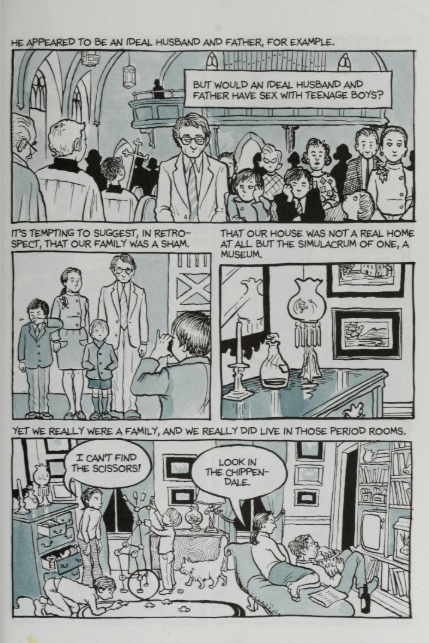
On page 17 of Fun Home, Bechdel reflects on the appearance of her family. The page begins with the line “He appeared to be an ideal husband and father” (Bechdel, 17). This line is followed by an image of her family in church, a public space, with her father looking down, dressed in a suit next to the rest of the family dressed in their Sunday best. However, despite the family’s appearance of being well dressed, the dialogue box includes the question “Would an ideal husband and father have sex with teenage boys” (Bechdel, 17). This question leads to the statement “It’s tempting to suggest, in retrospect, that our family was a sham” which is then followed by the family have their photo taken outside their church while still in the church outfits. This scene draws out the need for normalcy through appearances. This is because the family is well dressed enough to appear “normal” to be in a church service and to take family photos. Additionally, in this public moment, the camera is focused on their family symbolizing the way one moves from invisibility to hyper visibility. Society places an invisible camera on each individual person to make sure they’re always behaving “normally” which can feel exposing for one if facets of their identity don’t comply with what the camera wants. In Bechdel’s family, we see in the first drawing of the page the father is looking down, eyes appearing closed, while the mother looks up, shoulders back and head held high. The contrast between the parent’s body language indicates the mom, Helen, has a confidence in the space but, Bruce’s downturned expression hints at an un comfortability. However, this normal family unit particularly the sentiment of the father being an ideal husband and dad becomes complicated by the narration which questions if Bechdel’s father would still be considered ideal for having sex with younger men. The location of the church relates to the idea of confession present by Foucault because Bruce in this situation is hiding the truth of his affairs and seems confined within the church and the photograph due to the weight of his inner self and familial duties. 

The Importance of Shirking Domestic Responsibilities

Towards the conclusion of Alison Bechdel’s autobiographical graphic novel, Fun Home, she writes at length about her mother’s tenure as Lady Bracknell in a production of The Importance of Being Earnest by Oscar Wilde. Naturally, having recently finished my second reading of the play for Victorian Sexualities, I was fascinated by the potential ways in which Earnest‘s narrative melds and contrasts with Bechdel’s lived experiences.

If Helen is positioned in the role of Lady Bracknell, then Alison is positioned as Gwendolen, the Lady’s daughter, over whom she holds a great amount of sway. Within Earnest, Gwendolen pursues an engagement with Jack Worthing—known to her by the name Ernest—but is hampered in her efforts by the Lady’s insistence on first interviewing Jack regarding his personal assets and virtues. Bechdel includes a particular exchange between Gwendolen and the Lady on page 154 of her novel, in which Gwendolen/Alison is told that “an engagement should come upon a young girl as a surprise.”

This moment comes almost one hundred pages after Bechdel narrates her coming-out to her mother, receiving a response in which Helen claims Alison’s “choice [is] a threat to [her family and work]” (77). The outright rejection of their children’s “choices” draws the first of many parallels between the Lady and Helen. Throughout Fun Home, Bechdel consciously draws several literary parallels between her and her father, ranging from the English literary canon to Greek mythology. Helen, however, is given far less attention in this department, save for two particular notable instances: an early comparison to “The Addams Family” and this instance of theatrical interplay.

Lady Bracknell within The Importance of Being Earnest functions as a sort of dominating force to rival Algernon’s farcical power over a given room. In Bechdel’s own words, when Helen steps into the role, she becomes a veritable “Victorian dominatrix to rival Wilde himself” (164). She does, of course, place great value in her work within the home, but within Earnest, she is placed upon a stage to be gazed upon as a figure of authority. With the knowledge of Helen’s broken marriage, the role of Lady Bracknell becomes then a sort of therapeutic device through which she can devote herself entirely to something more stable than her typical activities.

Although Helen is oftentimes overshadowed by the narrative of Bruce, her husband, The Importance of Being Earnest and Lady Bracknell allow her a space for creativity and self-expression separate from her family unit. She is expanded upon as a character and a force within her family through her constant dedication to this work in a way that would not be possible without the direct connection to the literary canon Bechdel explores within her time at college.

Call Me By Your Name

I started reading Call Me By Your Name about a week ago. So when we started Autobiography of Red,  I could not help but notice the resemblance.  We have two main characters that long for this figure who pulls them in and pushes them away at the same time.

Similar to how Elio finds his life changed by Oliver as soon as they meet, something similar happens to Geryon. “Then he met Herakles and the kingdoms of his life all shifted down a few notches.”  (39).

I find the language of this paragraph interesting, “kingdoms” gives this sense of importance, but how could someone he just met cause a change in what he found important. As if he knew that Herakles would be a prominent figure in his life.

A similar thing happens with Elio in the beginning pages, he says “It is the first thing I remember about him, and I can remember it still today.” That feeling of someone becoming a prominent figure in his life.

I put these two quotes together in my mind because it is a very personal feeling. One that I hope I do not come to regret sharing. Others will find it silly that upon meeting someone you know that for better or for worse they will be a prominent figure.

When I met my partner, I realized very quickly that I had no intention on being friends. I realized, perhaps seconds later, that they were now on the list of people that I found most important. And to this day, I stand by the fact that if (knock on wood) our relationship takes a turn for the worst, I will never forget them.

I don’t yet know how this ends for Geryon, or Elio, but it is a tale all to familiar to the LGBTQIA+  community. Being held to the Earth by one person and them leaving. It is a theme seen in the best queer novels, and to close this out, perhaps the reason they are the best is because of this theme the queer community knows all too well.

Gender Performance in a Theater Setting: The Impact of Costumes

This post has taken me way too long to make, but here we are. 🙂

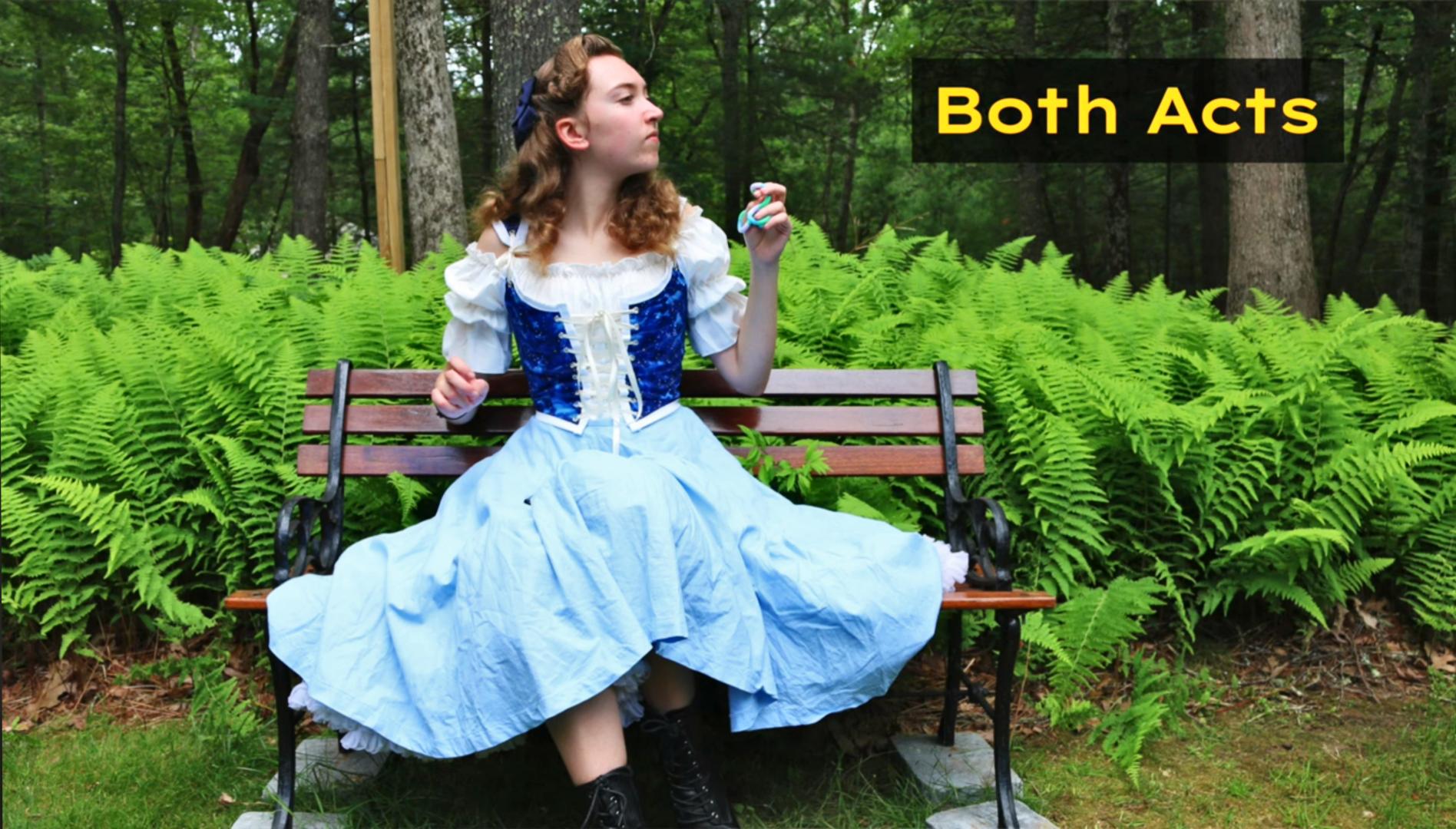
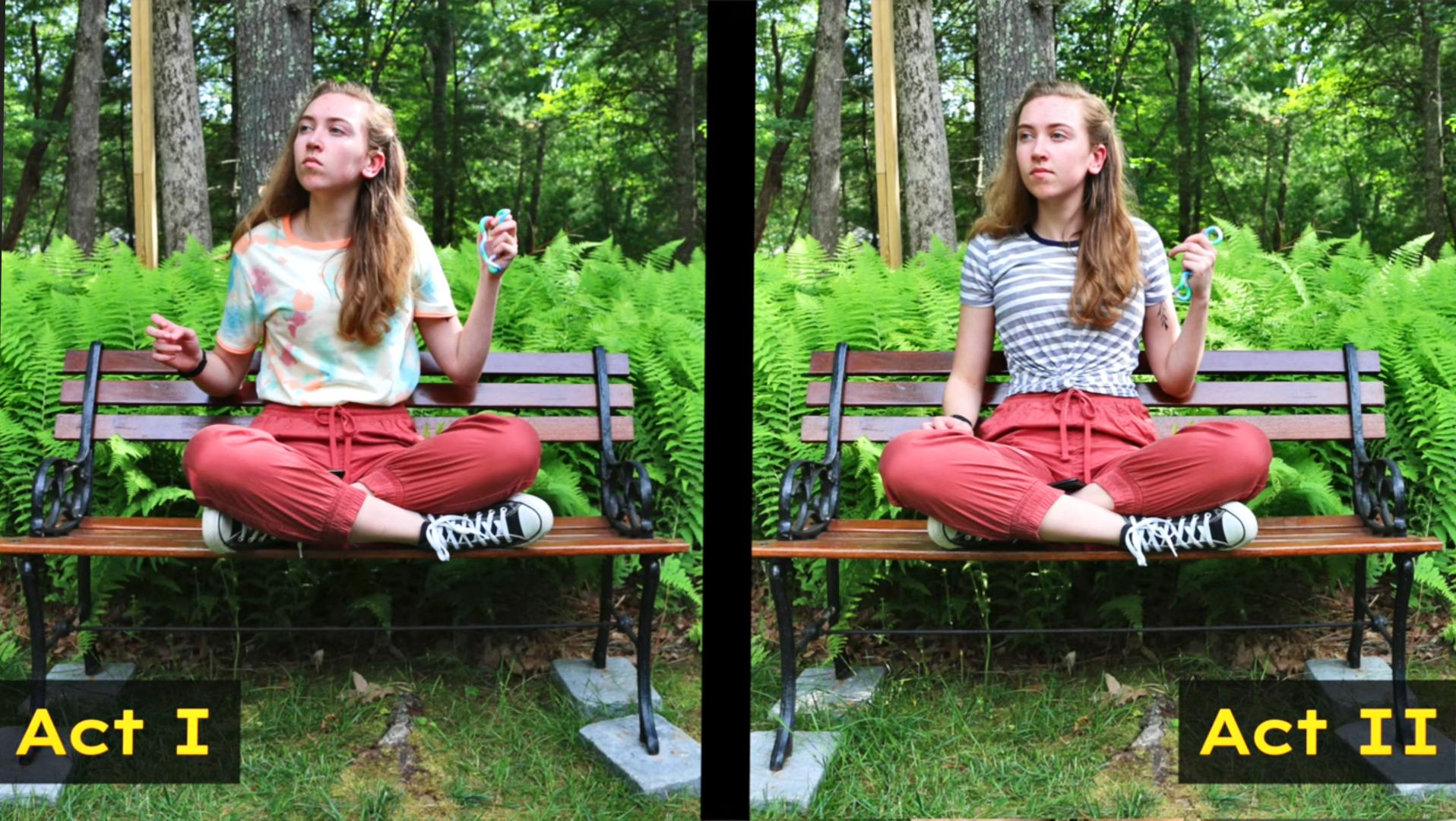
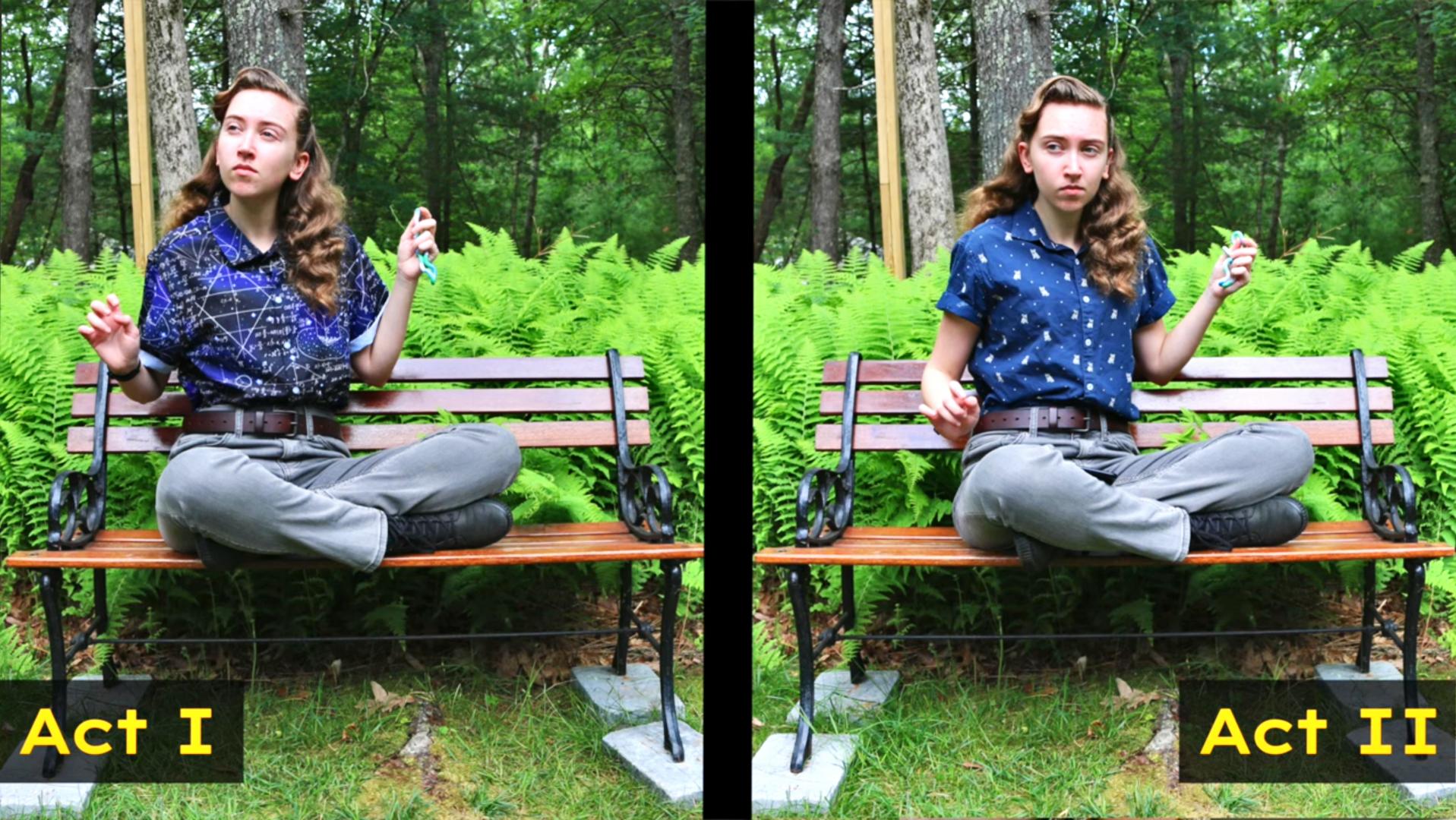
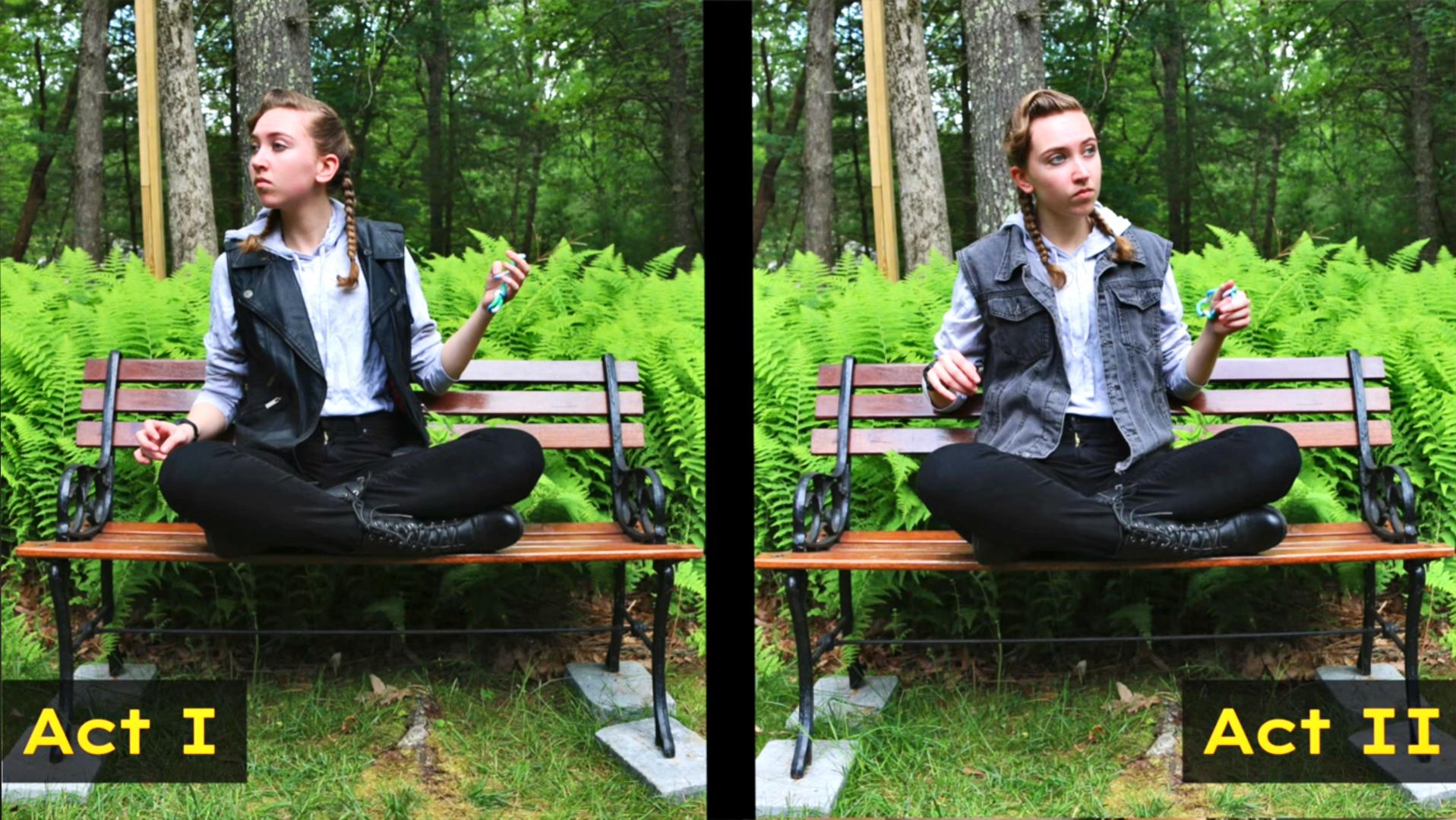
Backstory: Upon reading the excerpt of Gender Trouble for class, I immediately knew I wanted to write my blog post about that in relation to something else. From there my mind went to a recent video I’d watched from a YouTuber named Sydney Zarlengo where they talked about their attempt to direct and play Christopher (the main character) in the first all neurodivergent cast and crew of The Curious Incident of the Dog in the Night-time. However, what I want to focus on in this blog post was that they planned to wear a different costume for Christopher each night, specifically to have different gender expressions. I can’t find the clip where they mentioned why they wanted to do this, so I’m beginning to think I made it up, but I believe the idea for the different gender expressions every night was to help everyone in the audience relate to a version of Christopher. Since there is not a lot of good neurodivergent representation in the theater at the moment, this was done in an effort to show that neurodivergent people are not just “cis white boys who like trains” (as Sydney would say).

Connection to Gender Trouble: In the documentary about the process of this production (spoiler alert: it got cancelled ), Sydney brings up a vital idea about costumes in the theater when they say “it’s going to be very interesting to step into this role every single night in a completely different outfit because costumes very much create the character in the sense of physicality, in the sense of how you move and how you exist.” This connects perfectly to Butler’s quote that “The effect of gender is produced through the stylization of the body and, hence, must be understood as the mundane way in which bodily gestures, movements, and styles of various kinds constitute the illusion of an abiding gendered self” (Butler 140). Gender, as Butler puts it, is created through every little action someone takes. So, to drastically change Christopher’s outfit every night is to completely change the way in which Christopher’s gender is “read” every time. This small effort – changing a costume – completely changes Christopher’s character and how Sydney chooses to portray him each time. Arguably each outfit suggests a different version of Christopher, yet at the same time, all of the costumes could culminate in the same Christopher, just as anyone could reasonably wear these different styles from day to day. I think this really underscores the importance of clothing and costumes in everyday gender expression. If theater is just a louder, bigger expression of our usual emotions and mannerisms, are we not still acting a little in our portrayal of gender every day?

Bonus tidbit – Copyright: Something else that I found profoundly interesting was that Sydney said, “we can’t change his pronouns legally.” This wasn’t something that had crossed my mind before and, while on some level it did make sense why this would be done, I found it intriguing that we copyright gender to this extent. Why are we so hesitant to allow different productions to change the pronouns and/or names of the characters in a show? What are we really “protecting” by doing this? I’ve rambled too long already so I don’t have the space to talk more this here, but it’s something to think about.

Reference Photos:

Punk butch version
Cottagecore version
Gen Z Style version
Genderbendy button-up shirt and pants version
Traditional Christopher costume

Note: If you want to learn more about the process for this production of The Curious Incident of the Dog in the Night-time, you can find the full playlist here. The main part that I’m drawing on for this post is the portion from the video titled “Crafting Curious|Full Documentary [CC]” where Sydney and their co-director Ace talk about costumes (from approximately 17:10 – 23:30).

Butler and Written on the Body

I think that Written on the Body is an excellent example of how gender is ascribed to different actions and how gender is not real. Judith Butler wrote, “If the inner truth of gender is a fabrication and if a true gender is a fantasy instituted and inscribed on the surface of bodies, then it seems that genders can be neither true nor false, but are only produced as the truth effects of a discourse of primary and stable identity” (Butler 136). This passage tells me that it is really society and the norms of the time that create gender, gender does not create society’s trends because without those decisions or pressures, there would actually be no gender. It is the actual acts that denote gender, not the bodies. One of the important parts here is the “effects of a discourse” because gender changes and appears differently through time, it has to fit in with the current standard. 

While reading, Written on the Body by Jeannette Winterson, everyone in class had different ideas of the gender of our narrator. We wanted so badly to attribute a gender to the narrator because of certain actions they committed. If we read Written on the Body through a male lens, then it would be a very different book then if it was read through a female one. Winterson chose to make it ambiguous to challenge these ideas of societal norms that we have.

The moment that stuck out to me the most was when the Narrator hits Jacqueline. “She’d angered me and I responded by thumping her. How many times does that turn up in the courts? How many times have I curled up my lip at other people’s violence?” (Winterson 87). While this is not about gender explicitly, as a society, we have the image of domestic violence in our heads as a man hitting a woman. I think the text even leans into that by mentioning the courts and how they are disgusted by the same situation in others. The part that plays into Butler’s theory is that the “discourse” around domestic violence is that the violence is a masculine trait whereas being the one hit or hurt is more feminine. The part that matters is the conversations happening around the action to make it gendered. This of course doesn’t make it right, but it does complicate our reading of the gender of the narrator.

Botanical Imagery in Cereus Blooms at Night


In Cereus Blooms at Night, botanical imagery often works as metaphors for the characters’ inner lives (especially Mala’s). The most obvious example is the cereus flower. Tyler tells us early in the novel that “the cereus only blooms at night.” That detail is more than just a fun botanical fact—it also reflects how certain forms of beauty, truth, or healing can only emerge “in the dark.” Mala, who is nearly silent throughout the novel, is herself like the cereus: slow to open, perhaps misunderstood. Her emotional blooming happens gradually and under specific conditions. Mala’s garden also plays a major role in her characterization. Tyler describes it as wild, tangled, and overgrown, which contrasts with the neat, controlled environments of the nurses’ home or other “respectable” spaces in the novel. The garden represents a resistance to order and control— it is a space where Mala can exist on her own terms. Tyler aptly calls it, “chaotic, yes, but pulsing with life,” which mirrors how the novel frames non-normative identities and experiences as complicated and vivacious. Yet another example of botanical imagery in the novel is the poisoned almond tree, which serves as a symbol for Mala’s abusive father. The tree is described as blooming beautifully, but it produces toxic almonds. “The tree was full of almond blossoms, but the nuts were bitter. Poisoned. Just like him” (118). This metaphor is direct but effective—it shows how danger can be hidden behind beauty, and how trauma can be rooted in places that are supposed to provide safety.

Throughout the novel, Mootoo ties plants to human bodies, particularly Mala’s. Mala’s presence is often described in earthy or floral terms, and Tyler’s care for her is described in the language of tending, watering, or watching something grow. This connection between the botanical and the human suggests that healing doesn’t come through words alone.

Reflections on The Mountain and Gloria Anzaldúa’s “Speaking in Tongues: A Letter to 3rd World Women Writers”

In The Mountain, Eli Clare describes the steep and difficult climb faced by those of us with marginalized identities. That metaphor felt deeply familiar. Every step we take, every opportunity we earn, feels like a struggle, and yet, even on this climb, we must remain mindful of who we’re helping up and who we might be leaving behind.

At a school like Dickinson, where only about 7.46% of students identify as Latinx or Caribbean, I often find myself questioning whether my voice or input even matters. That’s why reading the work of a strong and confident Mestiza figure like Gloria Anzaldúa, someone who expresses herself with such certainty in academic spaces makes me feel inspired. It reminds me that I do belong here.

Honestly, I felt like I was being called out throughout most of the reading. Too many times I’ve known the answer in class but didn’t have the confidence to speak up, afraid of sounding wrong. Even when I lacked the right words or felt like I wasn’t eloquent enough, what really matters is having the courage to speak not just for myself, but for my community who can’t. While I’m actively working on this, the imaginary binds around my throat still feel strong.

The metaphor of climbing the mountain to reach success in America made me reflect on which identities are seen as most ‘equipped’ to succeed: whiteness, wealth, heterosexuality. What Anzaldúa opened my eyes to was how, sometimes, within marginalized communities, we end up pitting ourselves against each other. We measure our worth and our success by how high we’ve climbed in comparison to others from our own communities. Gloria Anzaldúa writes:

“I can write this and yet I realize that many of us women of color who have strung degrees, credentials and published books around our necks like pearls that we hang onto for dear life are in danger of contributing to the invisibility of our sister writers. ‘La Vendida,’ the sell-out.”

This line hit me hard. It felt like both a warning and a plea. Yes, we face immense obstacles from systems that were never built for us, but we also need to reflect on how we might unintentionally uphold those same systems for women in more vulnerable positions. We need to uplift one another, not compete for scraps of validation on this mountain that was never meant to welcome any of us.

In my own experience, I’m motivated to earn my degree not only for myself, my family, and my community, but also partly to prove something to the outside world, to those who see us as criminals, dirty, or unintelligent. I want to show that if I can succeed in higher education, then the narratives they push about us hold no weight. But I had never truly considered how, as women of color, we also carry a responsibility to not let our degrees or credentials make us believe we are better or more adequate than other third world women who Anzaldua addresses.

I thought about this especially in the context of recent political shifts. Within Latinx spaces, there has been a lot of finger-pointing when it comes to political preferences. Especially after the surprising number of Latinos who voted for Trump, a man who has repeatedly disrespected and dehumanized our communities. In the aftermath of the election, people were scared and fired up, and I remember how quickly the blame started flying. Many Latinos began calling their own community members ignorant, unintelligent, mindless. In doing so, we were echoing the same harmful narratives that outsiders have used to shame us for generations.

And I’ll be real. I participated in some of that blame too. I felt frustrated with my own community, trying to understand how so many of us could vote for someone who sees us as less than human. But the truth is, this reaction speaks to a deeper issue. These choices don’t come out of nowhere, they’re shaped by real barriers: poverty, lack of access to education, limited resources, systemic neglect.

Main Character Syndrome, As Experienced by A Side Character

“Geryon watched prehistoric rocks move past the car and thought about thoughts./
Even when they were lovers/
he had never known what Herakles was thinking.  Once in a while he would say,/
Penny for your thoughts!/
and it always turned out to be some odd thing like a bumper sticker or a dish/
he’d eaten in a Chinese restaurant years ago./
What Geryon was thinking Herakles never asked.” (p. 132)

Down to their colloquial name, the “Labors of Heracles/Herakles/Hercules” are inseparable from the demigod himself.  He is the one who was cursed by Hera, he is the one who pledged to redeem himself by performing labor for a wicked king, and he is the one who triumphs over all twelve challenges.  Narrativizations of the original myth focus on Herakles’s heroism and ingenuity, and on how he inspires unlikely collaborators.  Everything centers around his personal struggle against all of the monsters he must fight or fool, including the king.

On the other hand, not much time at all is spent in the minds of the monsters.  This is on purpose, of course – the original purpose of the myth is to tell long-suffering Herakles’s story, and the creatures he encounters are little more than creative obstacles.  King Augeus (the owner of the immense and never-before-cleaned Augean stables) and Queen Hippolyta (leader of the Amazons and owner of a very cool belt bequeathed to her by her father Ares) were given the most dialogue in their sections of Herakles’s story, presumably because of their humanity.  The Nemean Lion, Lerynaean Hydra, and Cretan Bull, however, are unquestionably just things to be overpowered.

Originally, Geryon is a three-bodied giant.  His first action in the myth is to attack Herakles (after the hero first kills his herdsman and two-headed dog), and Herakles promptly kills him with a poisoned arrow.  The rest of the myth is devoted to how exactly Herakles manages to transport his cattle.  Nobody focuses on Geryon’s humanity because he is there to serve a purpose – specifically, he is there to further Herakles’s growth and development as a hero.

In Ann Carson’s novel Autobiography of Red, she writes of how it may feel to be caught in Herakles’s orbit.  The reader never gets the sense that Herakles cares about Geryon in particular.  Herakles seems to prefer having a person to have sex with, or to bounce his adventurous ideas off of.  Sometimes he is kind in a romcom-male-lead sort of way: putting Geryon’s hands under his own shirt when he notices that they’re cold, or bringing Geryon along on volcanic adventures.  Still, he never convinces the reader that the person accompanying him needs to be Geryon.  He doesn’t seem to try to do so, honestly.  Over and over, Herakles shows that he doesn’t truly see Geryon, that he wishes Geryon would express himself a bit more “normally” (read: detachedly) instead of being so emotionally caught-up in their relationship, that he doesn’t understand why Geryon makes so much art about captivity, and so on.

When Herakles separates himself from Geryon near the story’s middle by offhandedly remarking that Geryon should be getting back to his own house, it doesn’t seem as though he’s particularly broken up about it.  This cavalier separation deeply hurts Geryon, and though he continues going through the motions while time passes, his thoughts are never too far away from Herakles.  When Geryon eventually happens to reunite with Herakles – as though his story is connected to the other man’s by a tether – Herakles has another partner, because of course he does.  Herakles flirts with both Geryon and Ancash, persuades them to help him steal a tiger sculpture, and leads them around South America as he pleases, all the while never really seriously engaging with either of them.  He must have charmed Ancash somehow, but the reader would be forgiven for assuming that Herakles just happens to get people to fall in love with him because of a protagonist-aura he emits.  He’s so used to getting his own way, to having people around who will do him favors and assist with his dreams, that he never puts much effort into maintaining positive relationships.  Herakles just seems to believe that things will work out for him – and so far, they have.  Even at the end of the story, when Ancash figures out that Herakles and Geryon had sex while Herakles and Ancash were still in a relationship, Herakles notices exactly why Ancash is upset, then looks back to Geryon and asks, “Volcano time?”  He doesn’t really seem to think that this will have negative ramifications for him – he’s just moving on to the next part of his adventure.

Even though the reader inhabits Geryon’s mind throughout Autobiography of Red, it becomes clear that Geryon’s story is uncontrollably tied to Herakles.  He can’t seem to help but care about him for the vast majority of the novel, even when Herakles demonstrably doesn’t care at all.  Similarly to how Herakles in the Greek myth only encountered Geryon long enough to extract what he wanted and then exit, uncaring of the damage he did to Geryon, Carson’s Herakles is always looking through Geryon to his own, singular future.  Everyone around him is just a supporting character, there to be used and then discarded in favor of the next opportunity.