When I first wrote my close reading essays, I spent hours combing through scholarly articles on JSTOR and other databases, reading each work from front to back. Although helpful with producing relevant quotes or ideas to use in my prose, this strategy prevented me from truly researching my poems in depth. I was only scratching the surface on the various arguments in existence. What I learned while researching secondary sources for Thomas Jefferson’s the Declaration of Independence, Emma Lazarus’s “The New Colossus,” and Walt Whitman’s “I Hear America Singing” was the importance of managing time while researching. Yes, it’s important to find a variety of secondary sources, but it helps to read only the most significant parts of them to save time. That way, more time can be divided between other sources rather than solely focusing on one.
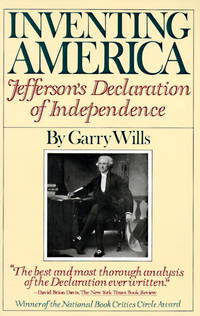
In the essence of saving time, I started my secondary source research by revisiting sources I had previously used in my close reading essays. In Gary Wills’s 1978 book Inventing America: Jefferson’s Declaration of Independence, Wills explored Jefferson’s influences when writing the Declaration of Independence. Additionally, Wills argued that the Declaration was not merely a political document, but also a foundational prose of American identity. For researching purposes, I skimmed the chapters of this book that I had previously read and continued reading certain chapters that align with my specific research on American identity.
Besides the Wills text, I struggled with managing time while exploring secondary sources on Jefferson. With a document as famous as the Declaration of Independence, there exists an abundance of articles dissecting its language on databases like JSTOR and America: History and Life. To combat the challenge of wasting time with excessive reading, I really focused on searching with key words to limit the results presented. With this strategy, I was able to find two articles that discussed race and identity in the Declaration, which was a topic I want to delve deeper into for my final essay. Both Edwin Gittleman’s “Jefferson’s “Slave Narrative”: The Declaration of Independence as a Literary Text” and Peter S Onuf’s ““To Declare Them a Free and Independant People”: Race, Slavery, and National Identity in Jefferson’s Thought” aligned with the theme I was pursuing.
Similarly, with Emma Lazarus’s “The New Colossus,” I began my secondary source research by reexamining sources from my close reading essay. I really appreciated Michael P Kramer’s argument in “The Raison d’être of “The New Colossus”, so I decided to reuse it for my final essay. I felt the same way about Max Cavitch’s “Emma Lazarus and the Golem of Liberty.” However, while both sources were great and made my research far more efficient, I felt as though there was much more to be discovered about this poem. Thankfully, due to my efficiency, I had plenty of time to continue my search.
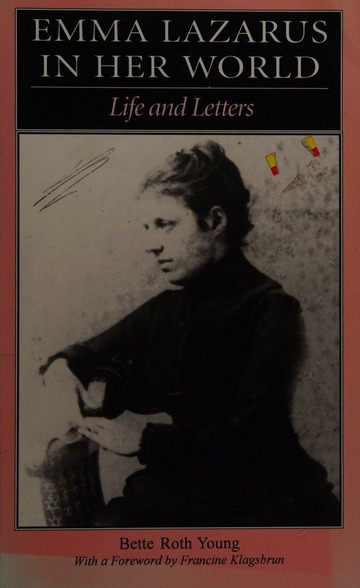
While looking for primary sources, I skimmed through every book in the Lazarus section of the Waidner-Sphar Library. Although I failed to find worthy primary sources, I discovered two useful secondary sources. Despite it only being a small portion of the book, Bette Roth Young’s Emma Lazarus in Her World: Life and Letters (1995) providedwonderful insight on “The New Colossus.” Another book, Emma Lazarus, written by Esther Schor in 2006, provided more detail on the poem and on Lazarus’s views on immigration.
Researching Walt Whitman was by far the most time consuming because of the sheer volume of material available online. As one of America’s most profound poets, every database had an almost overwhelming amount of content on Whitman. However, to save time, I only looked at articles that discussed Whitman’s views on democracy or industrialization, as those are the two main themes prevalent in “I Hear America Singing.” Jason Frank’s “Aesthetic Democracy: Walt Whitman and the Poetry of the People”(2007) and Patrick Redding’s “Whitman Unbound: Democracy and Poetic Form, 1912-1931″ (2010) analyze Whitman’s political views on democracy and the legacy those views have left on literature.
Although researching is an innately time-consuming process, there are several strategies to deploy to maximize efficiency. Through my search for secondary sources, I learned the benefit of being very intentional in the key words I was using to find articles or books as well as the importance of skimming long sources and only reading the most relevant aspects of a source.
Bibliography
Cavitch, Max. “Emma Lazarus and the Golem of Liberty.” American Literary History 18, no. 1 (2006): 1–28. [JSTOR]
Frank, Jason. “Aesthetic Democracy: Walt Whitman and the Poetry of the People.” The Review of Politics 69, no. 3 (2007): 402–30. [JSTOR]
Gittleman, Edwin. “Jefferson’s ‘Slave Narrative’: The Declaration of Independence as a Literary Text.” Early American Literature 8, no. 3 (1974): 239–56. [JSTOR]
Kramer, Michael P. “The Raison d’être of ‘The New Colossus.’” Partial Answers: Journal of Literature and the History of Ideas 22, no. 2 (2024): 355-77. [EBSCO]
Onuf, Peter S. “‘To Declare Them a Free and Independant People’: Race, Slavery, and National Identity in Jefferson’s Thought.” Journal of the Early Republic 18, no. 1 (1998): 1–46. [JSTOR]
Redding, Patrick. “Whitman Unbound: Democracy and Poetic Form, 1912-1931.” New Literary History 41, no. 3 (2010): 669–90. [JSTOR]
Schor, Esther H. Emma Lazarus. First edition. New York: Nextbook. 2006. [LIBRARY]
Wills, Gary, Jefferson, Thomas, and United States. Inventing America : Jefferson’s Declaration of Independence. First edition. Doubleday. 1978. [LIBRARY]
Young, Bette Roth. Emma Lazarus in Her World: Life and Letters. First edition. Philadelphia: Jewish Publication Society. 1995. [LIBRARY]
Be the first to reply