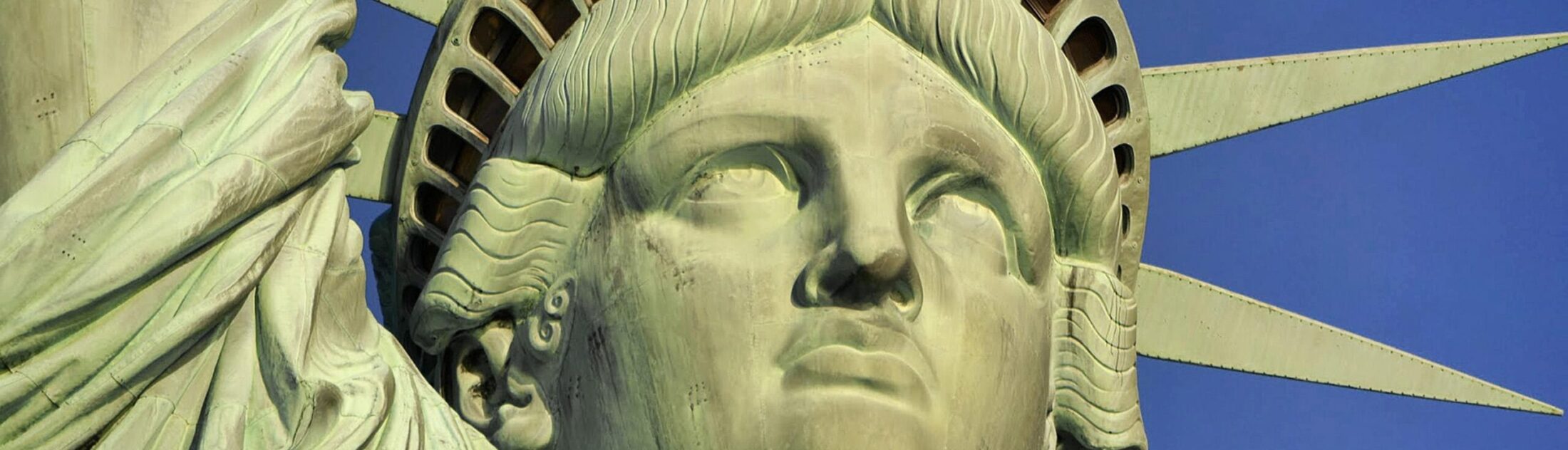
When I started writing my very first close reading essay, I already had an inkling of an idea for a theme to explore throughout the semester. I deliberately chose Thomas Jefferson’s Declaration of Independence and Emma Lazarus’s “The New Colossus” because they both redefined aspects of the American identity. Knowing that I wanted to delve deeper into this theme, I decided to continue to research these two poems while adding a third that complemented them. However, while searching for primary sources, I learned the necessity of being flexible and being able to pivot when research isn’t going exactly as planned. It’s best to keep pursuing sources without getting discouraged and rather attemptthe research from different angles. Specifically, when there is a lack of relevant writings from the author or year being researched, it can be helpful to search for the words of others, or for documents taking place in the years shortly before or after the publication of the poem being researched.
To begin my research through primary sources, I used a secondary source. In my first close reading essay on the Declaration of Independence, I explored Gary Wills’s text Inventing America: Jefferson’s Declaration of independence to gain an understanding of the reasons behind Jefferson’s prose. Wills mentioned how Jefferson described his intent in writing the declaration in a letter to Henry Lee in 1825. I searched for this letter online and found part of it on the Teaching American History’s website. However, I wanted to read the letter in its entirety to gain a better understanding of its context and continued searching. Luckily, on the Founders Online section of the National Archives webpage, I discovered the full letter from Thomas Jefferson to General Henry Lee written on May 8, 1825.
While this source was sufficient in securing my understanding of why Jefferson wrote the Declaration, it failed to answer my main question of how this literary work redefined what it meant to be an American. The only way to answer that question was to figure out how the American people responded to the Declaration of Independence. I wanted to know if they agreed with it, or if they had thoughts on certain omissions that are today deemed controversial. To accomplish this, I wanted to find an American newspaper article that was written shortly after the publication of Jefferson’s document. Not only did I find one relevant article, but I found an abundance covering a range of actions taken by the colonists in the months following July 4, 1776. I read dozens of articles, but the most relevant article, was found on Ancestry’s Newspapers website. Written on October 23, 1777,in London’s The Public Advertiser, it discussed how through the Declaration of Independence, the white and male population of Pennsylvania were required to swear an oath and relinquish their British loyalty. This article clearly dedicated how seriously American colonists took the message of the Declaration.
The main issue I ran into with the Declaration of Independence was narrowing down the wide array of sources to find the most relevant ones. I had the opposite problem with Emma Lazarus’s 1883 “The New Colossus.” Not only was there a shortage of sources written by or about Lazarus from the 1880s, but whenever I felt I found a relevant source, it was nearly impossible to access it. To start researching primary sources for Lazarus, I began with The Heart of American Poetry by Edward Hirsch. In his essay on Lazarus, Hirsch described how a woman named Constance Cary Harrison wrote about an interaction regarding “The New Colossus.” I searched for the quote Hirsch used online, due to his lack of footnotes, and found it in Harrison’s memoir titled Refugitta of Richmond: The Wartime Recollections, Grave and Gay, of Constance Cary Harrison. Initially, I could not find the book anywhere online, nor in print form through the library. After a bit of guidance, I ended up finding the memoir on Google Books. However, I decided that since the memoir was written nearly thirty years after the interaction between Harrison and Lazarus occurred, its validity might have been questionable and isn’t a source I intend on using for my final essay.
Pivoting, I began looking at Lazarus’s written work, specifically through her essays and letters. Through the book Emma Lazarus In Her World: Life and Letters, I read dozens of correspondences between Lazarus and her peers, searching for a discussion on immigrants. However, there weren’t any letters where Lazarus explicitly stated her stance on attitudes towards immigrants.
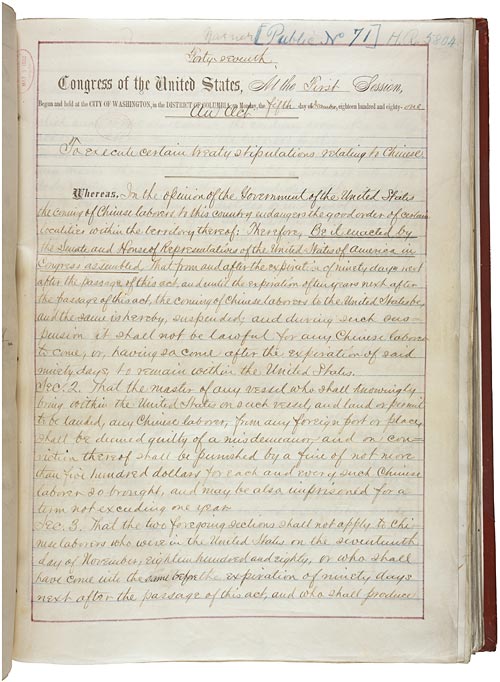
With dead-end after dead-end, I was growing increasingly concerned with finding primary sources. Perhaps because Lazarus’s death came quickly, only four years after her creation of “The New Colossus,” she never got to see the poem’s true impact and therefore did not mention it in her personal writing. I reread my own close reading essay of “The New Colossus,” hoping to find a secondary source or reference that could further push my research. In my context section, I had briefly mentioned the Chinese Exclusion Act of 1882. I searched for this legal document online and easily found it on the National Archives website. Although Lazarus never mentioned this act in writing, it is highly probable that she read it, as she was heavily involved in pro-immigration activism at the time of the act’s publication. Since it is one of the strongest examples of rising nationalism in America, and that was exactly what Lazarus was arguing against, I deemed it to be an important source.
Soon after that, I began searching for primary sources published shortly after “The New Colossus” that discussed its impact on American society. Through the Smithsonian Magazine website, I discovered a woman named Georgina Schuyler and her efforts to reignite the spirit of Lazarus’s work posthumously in a newspaper article from The New York Times. From my Lazarus research on primary sources, I learned the significance of not only examining the immediate surrounding period, but also the eras before and after an event or publication of a poem. Similarly, it’s important to search for the words and reactions of others in addition to the words of an author, as they can be just as insightful.
For my third poem, I chose to search for primary sources for Walt Whitman’s “I Hear America
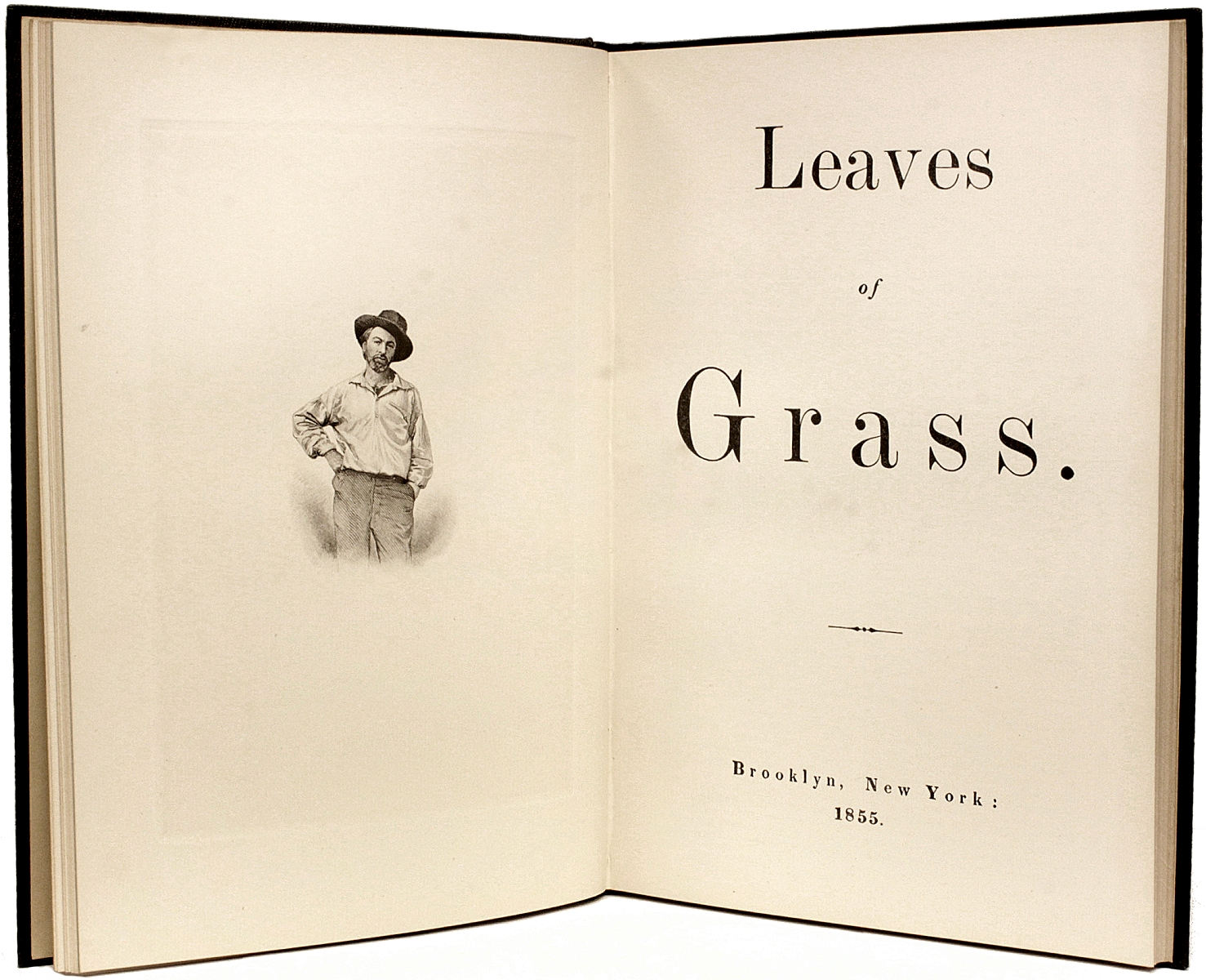
Singing” written in 1860. Whitman was by far the easiest author to research, as he wrote often and extensively. I read his other poetic works, hoping to discover similar themes across his poetry. In the 1855 edition of his collection Leaves of Grass, Whitman’s preface discussed the excellence of American democracy. Similarly, Whitman’s 1871 book Democratic Vistas explored a hope for the future of America through the expansion of unique and specific American literature. One argument for the audience of “I Hear America Singing” is that Whitman was addressing the poets of America and urging them to celebrate American culture in their works, which can be supported by his words of Democratic Vistas.
Although I had already known that searching for primary sources was a time-consuming, and often-times frustrating process, my in-depth pursuit of sources for this final essay truly taught me the value of perseverance. When one source is difficult to find, or if there is a lack of obvious sources available, it’s best to remain flexible and simply keep searching for better or different sources.
Bibliography
“An Act to Execute Certain Treaty Stipulations Relating to Chinese.” 47th Congress, 1st Session. May 6, 1882. [National Archives]
“For the Public Advertiser. To Lord North.” The Public Advertiser. October 23, 1777. [Newspapers.com]
Harrison, Burton. Refugitta of Richmond: The Wartime Recollections, Grave and Gay, of Constance Cary Harrison. Ukraine: University of Tennessee Press, 2011. [Google Books]
Jefferson, Thomas. “From Thomas Jefferson to Henry Lee, 8 May 1825.” Founders Online. National Archives. [National Archives]
“In Memory of Emma Lazarus. Tablet on Liberty Island to the Poetess Who Sang of the New Colossus.” The New York Times. May 6, 1903. [The New York Times]
Whitman, Walt, and Folsom, Ed. Democratic Vistas: The Original Edition in Facsimile. University Of Iowa Press, 2010. [EBSCO]
Whitman, Walt. Leaves of Grass: Facsimilie Edition of the 1855 text. Thomas Bird Mosher, 1919. [UPenn]
Be the first to reply