
TEXT: Dickinson, “Liberty Song” (1768) and Adams, Letters (1776)
- Dickinson’s song was a patriotic ballad organized in roughly ten quatrains with heroic couplets, inspired by Massachusetts resistance to the Townshend Duties in 1768
- Abigail and John Adams exchanged two private letters in March and April 1776; the excerpts provided here focus on Abigail Adams’s advice to her husband about the need for making any “Code of Laws” in their new country more “generous” toward women and John Adams’s teasing but perhaps also uneasy response
CONTEXT: Colonial Crisis
“Most immediately, the American Revolution resulted directly from attempts to reform the British Empire after the Seven Years’ War.” —American Yawp, Chap. 5: III
The Colonial Crisis: A Timeline of Documents
- 1763 Royal Proclamation
- 1764 Sugar Act // Currency Act
- 1765 Stamp Act // Sons of Liberty
- 1766 Repeal of Stamp Act // Declaratory Act
- 1767 Townshend Duties // John Dickinson’s Letters
- 1770 Boston Massacre // Repeal of Townshend Duties (except tea)
- 1773 Relief for East India Company // Boston Tea Party
- 1774 Coercive or Intolerable Acts // First Continental Congress (Association)
- 1774 Thomas Jefferson’s “Summary View” pamphlet
- 1775 Lexington & Concord // Second Continental Congress
- 1776 Thomas Paine’s Common Sense // State constitutions
- 1776 Declaration of Independence
SUBTEXT: Building Coalitions for Change
- What did Dickinson mean by his line: “Not as slaves, but as freemen our money we’ll give”?
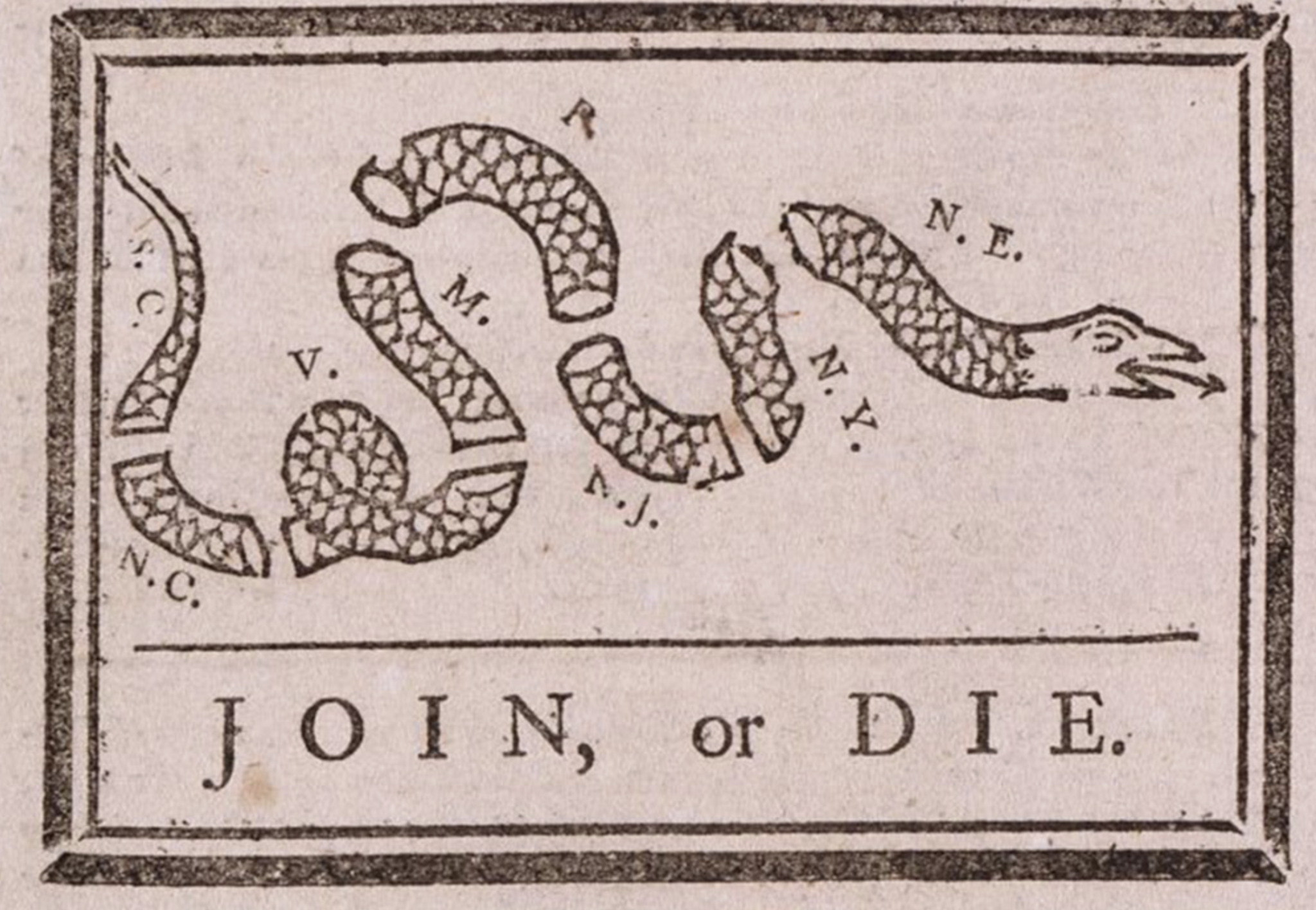
- What was the significance of this couplet from the “Liberty Song” (1768): “Then join hand in hand brave Americans all / By uniting we stand, by dividing we fall”?
- If this is a song about American liberty, then why does Dickinson end by offering a toast to the king’s “health” and to “Britannia’s glory and wealth”?
- Was Abigail Adams serious in her March 1776 when she claimed that if they were ignored in the Revolution, then American women were “determined to foment a Rebellion”?
- Was John Adams serious in his response when he insisted that “Masculine systems” were in place in “Theory” only and that men were largely “subjects” to their wives, and in danger of what he termed, “the despotism of the Peticoat”?
METHODS CENTER: Search vs. Research
- Understand the difference between searching and researching
- Image searching has special considerations:
- Original versus altered
- Aspect ratio and sizing
- File type formats
- Public domain, fair use doctrine, and copyright