
EVENT NOTICE: Today (Sept. 17) a conversation about REDESIGNING DEMOCRACY at the Library from 5pm to 730pm
TEXT: Jefferson, Declaration (1776) and Smith, Declaration (2018)
- Thomas Jefferson chaired the committee that produced the Declaration in early summer 1776; he was the principal author of the document that contained three sections: preamble, grievances against the King or “train of abuses,” and the resolution for independence
- The Second Continental Congress voted for Independence on July 2 and approved the Declaration (as amended) on July 4; the final document was not “engrossed” (or written formally in parchment) and ready for signatures until early August 1776
- Tracy K. Smith wrote her free verse “erasure” poem in 2017 (when it appeared in the New Yorker) before it was reformatted (with italics) and published in a book in 2018. Smith’s use of erasure meant the she selected and rearranged words and phrases from the Declaration of Independence
CONTEXT: American Revolution
“The majority of the [Declaration] outlined a list of specific grievances that the colonists had with British attempts to reform imperial administration during the 1760s and 1770s. An early draft blamed the British for the transatlantic slave trade and even for discouraging attempts by the colonists to promote abolition. Delegates from South Carolina and Georgia as well as those from northern states who profited from the trade all opposed this language, and it was removed.” —American Yawp, Chap. 5: IV
- Jefferson’s draft clause on African slave trade (Battlefield Trust)
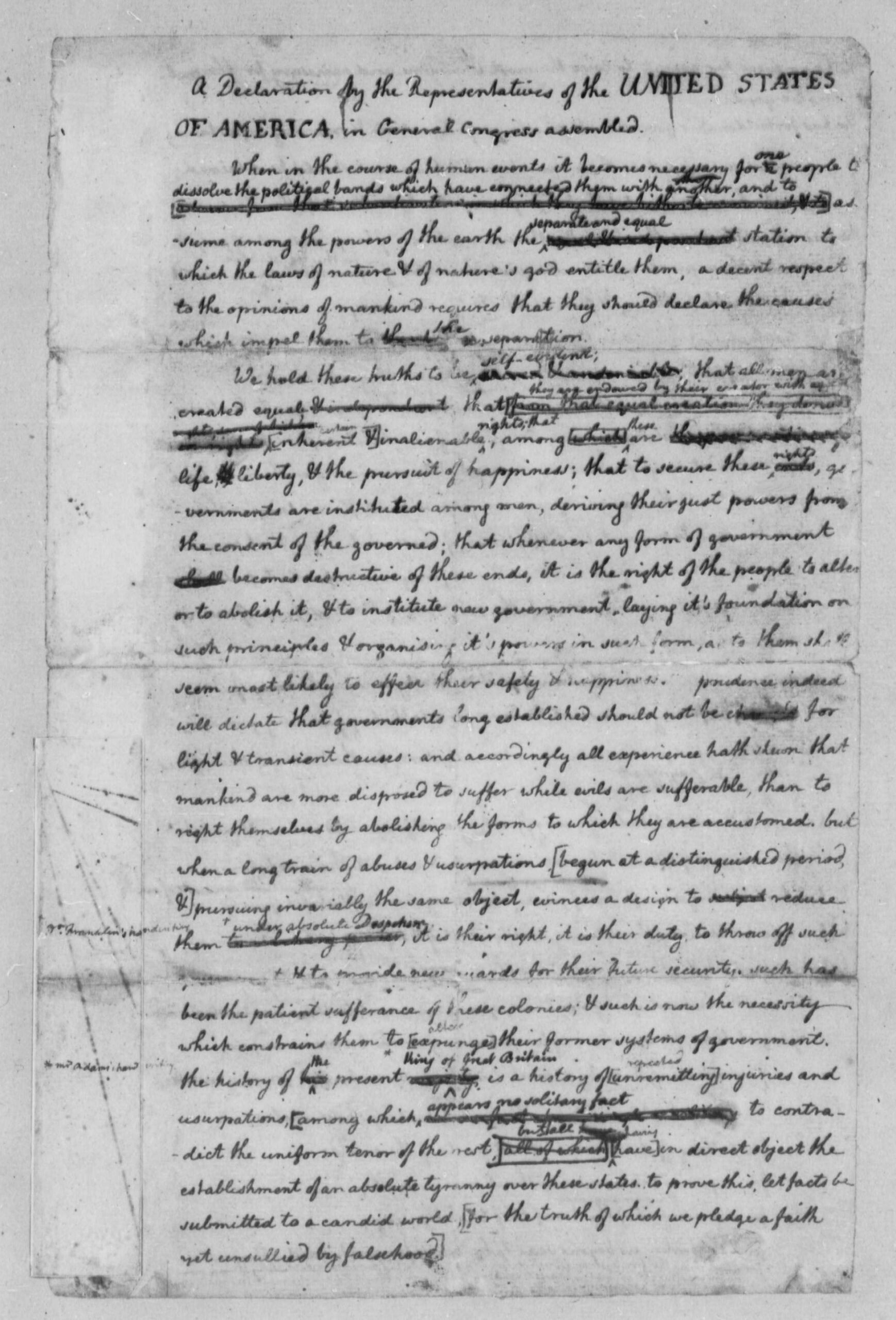
- Jefferson’s preamble provoked little debate, though Benjamin Franklin convinced him to make an important editorial change –revising the original phrase, “sacred and undeniable rights” to “self-evident rights.”
-
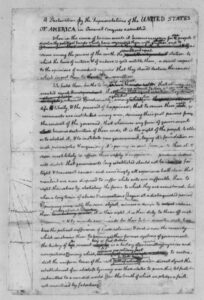
Jefferson’s original draft (Library of Congress) Jefferson’s revised preamble was truly an Enlightenment era statement that celebrated natural rights (Lockean liberalism), but modern students need to remember that Enlightenment era thinkers often separated natural rights from civil and political rights in ways that no longer seem fair or just.
- The second section of the Declaration, its “train of abuses,” invoked a different Enlightenment era philosophy: republicanism or the ideology of representative government.
- In 1848, Elizabeth Cady Stanton famously rewrote Jefferson’s document as a Declaration of Sentiments, adopted by a women and men at a convention for women’s rights at Seneca Falls, New York.
- And here’s what Abraham Lincoln said in 1857 about the Founders and their original intentions with the Declaration:
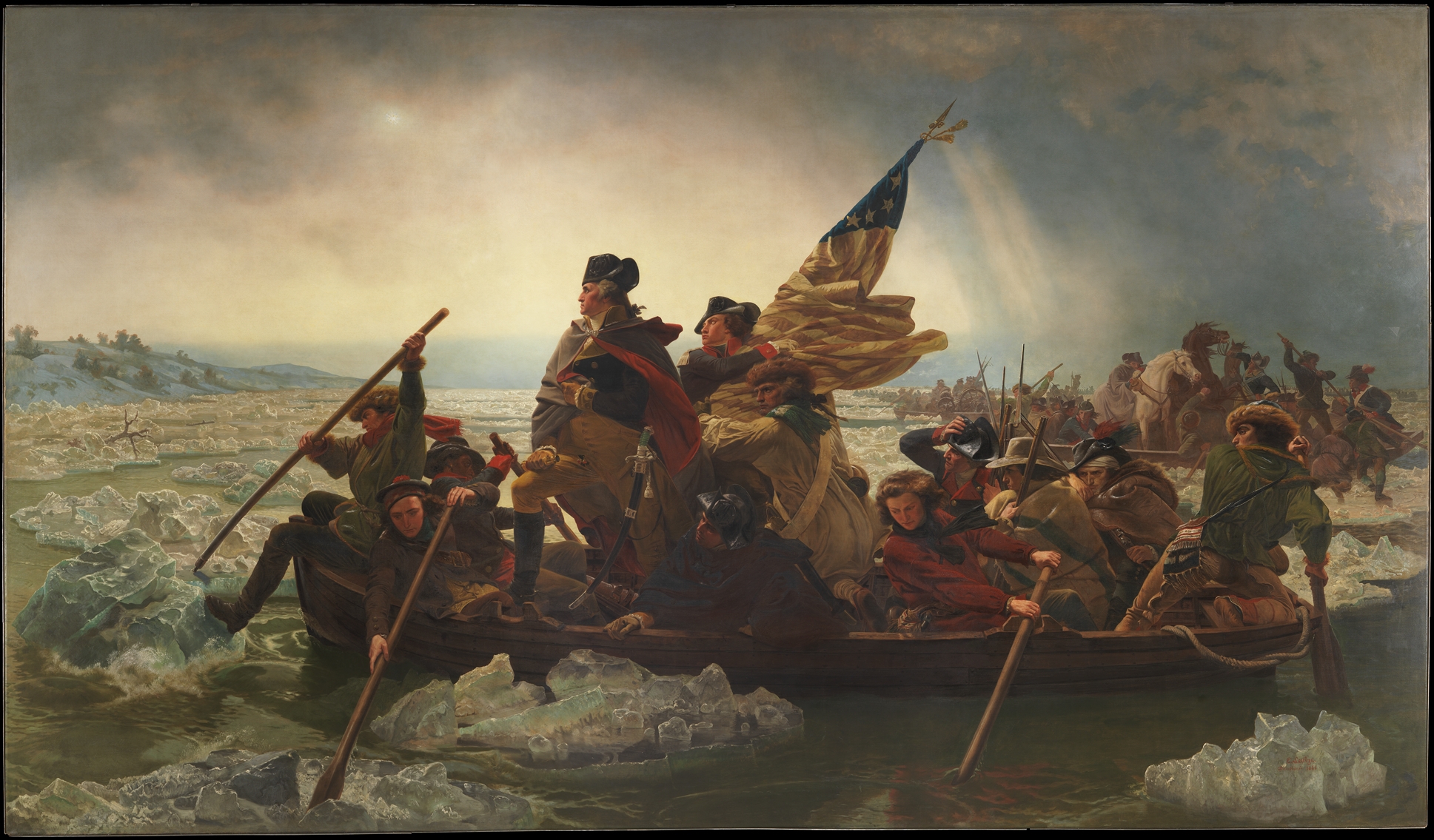
“They meant to set up a standard maxim for free society, which should be familiar to all, and revered by all; constantly looked to, constantly labored for, and even though never perfectly attained, constantly approximated…” (June 26, 1857)
SUBTEXT: Promises or Hypocrisy
- When the preamble asserted that “all men are created equal,” why didn’t the delegates recognize how hypocritical these natural rights claims sounded in an era of chattel slavery, Indian removal, and coverture?
- Most people today focus on the preamble to this Declaration, but the delegates to the Second Continental Congress devoted nearly all of their time toward revising the list of grievances against the King (known as “the train of abuses”). What can we learn about their values and priorities from a close reading of these complaints?
- Has Tracy K. Smith suggested a modern-day “train of abuses” in her poem, “Declaration”?
METHODS CENTER —Quotations and Footnotes
- Understand how to better integrate quoted material into your writing and also the basics for citing those quotations correctly
- Long-form Chicago guide + Hacker & Sommers, pp. 246-275
- And remember the adapted model for WordPress:
[1] Edward Hirsch, The Heart of American Poetry (New York: Library of America, 2022), 46.
[2] Hirsch, 53.
[3] Amanda Gorman, “The Hill We Climb,” 2021, FYS: American History Through Poetry [WEB]
[4] Gorman
And to find these sources, remember to consult the post on SEARCH VS. RESEARCH and don’t forget these extra details or nuances regarding IMAGE RESEARCH for posts and videos:
- Image searching has special considerations:
- Original versus altered
- Aspect ratio and sizing
- File type formats
- Public domain, fair use doctrine, and copyright