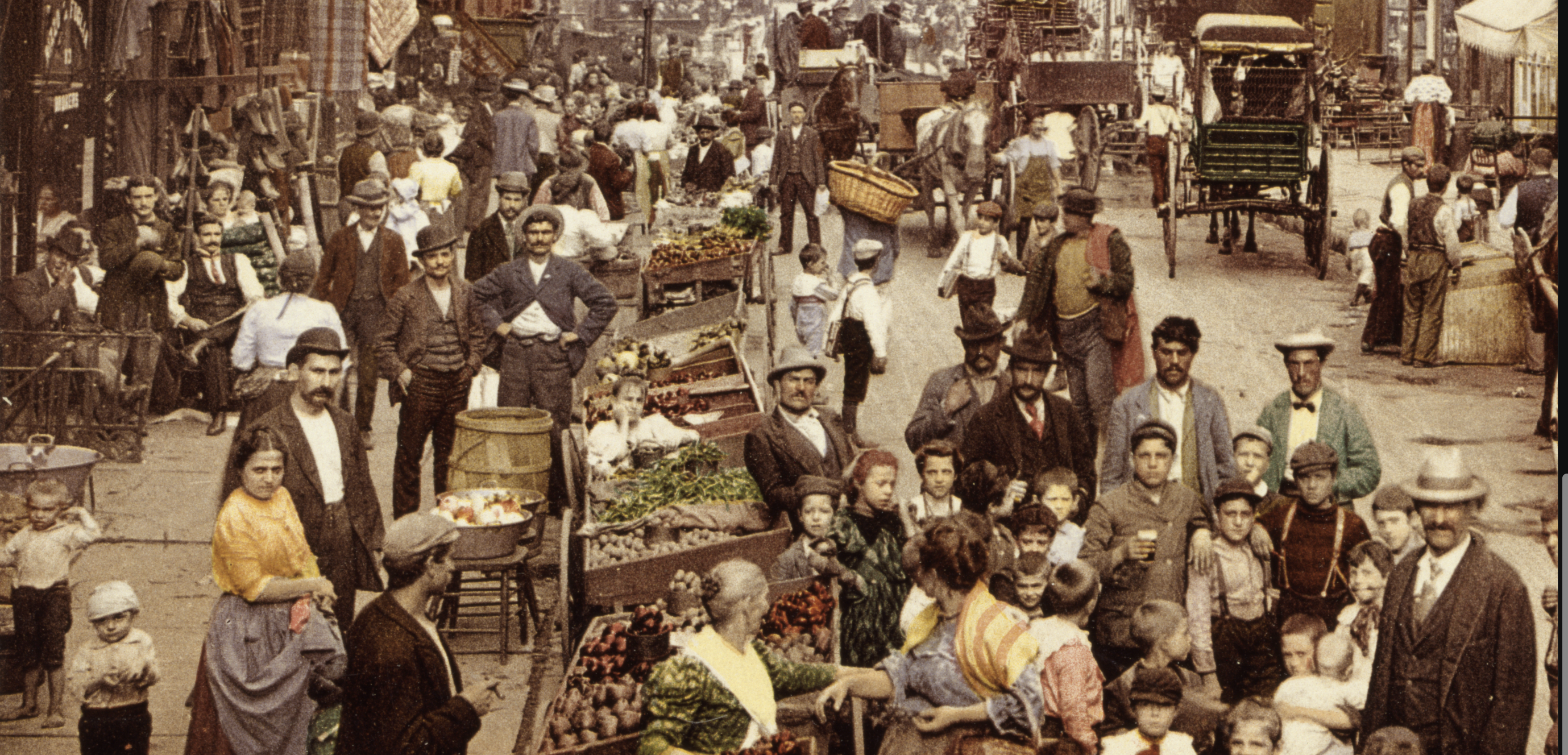
This colorized photograph captures an immigrant community on Mulberry Street in New York around 1900. For more information on a nearby tenement house and its residents (97 Orchard Street), visit the Tenement Museum in New York City.
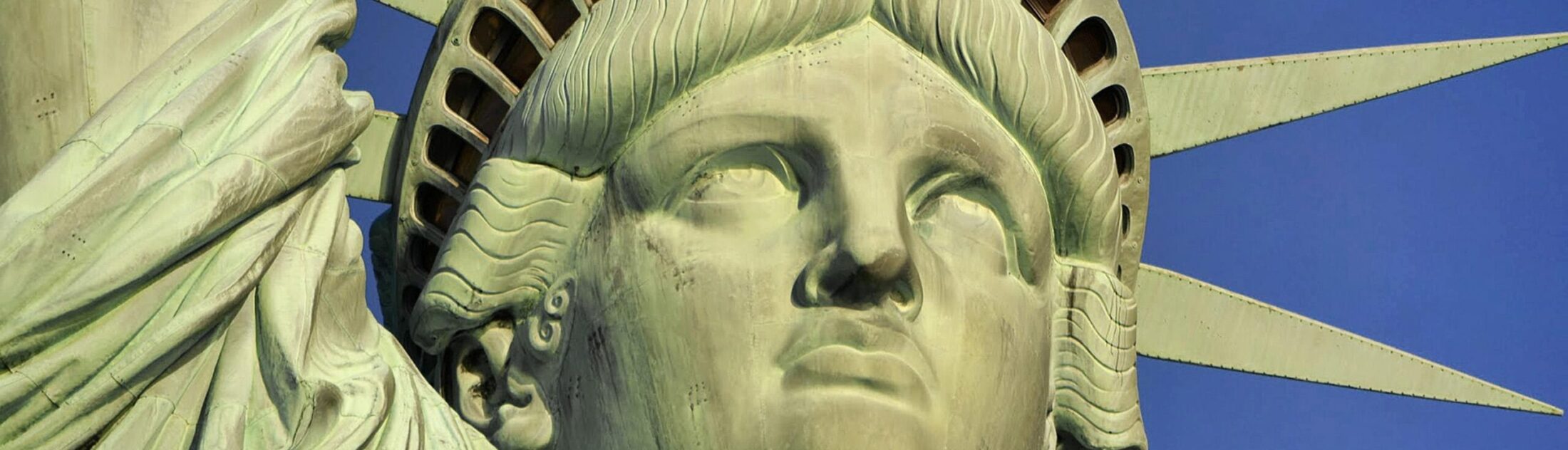
TEXT: Lazarus, “The New Colossus” (1883)
- The poem takes a Petrarchan sonnet form, which means it has two divisions: eight lines or octave followed by six lines or sestet with a change in rhyme scheme and turn in thought or volta between them
- Hirsch also emphasizes the importance of meter to Lazarus –how the poem rejects iambic pentameter and instead “echoes” traditional Greek epic meter (dactylic hexameter) (p. 73)
CONTEXT: New Immigrants
“Between 1870 and 1920, over twenty-five million immigrants arrived in the United States. This migration was largely a continuation of a process begun before the Civil War, though by the turn of the twentieth century, new groups such as Italians, Poles, and Eastern European Jews made up a larger percentage of the arrivals while Irish and German numbers began to dwindle.” —American Yawp, Chapter 19: Sec. IV
- US immigration policy was fast evolving in the 1880s, moving from a period of relatively no systemic regulation to one of increasingly tightening federal controls, embodied by the Chinese Exclusion Act (1882) and culminating with the National Origins Act (1924)
SUBTEXT: Defining Freedom
- Why did Lazarus prefer to emphasize offering freedom and equality for new American immigrants rather than former slaves?
METHODS CENTER —Research Questions
- Understand how to find a good essay or paper topic