First essay due 9/29
Second essay due 10/27
Students will submit two close reading essays (3-4 pages each or about 750 to 1,000 words) with short companion videos (about 1 minute in length), posted PRIVATE at the course website. These critical essays will focus on a poem or short piece of writing from one of the featured authors and must include at least one relevant quotation from Edward Hirsch’s book on American poetry. Students must interpret a different author each time. Essays must analyze text, context, and subtext, relying on at least three sources and incorporating Chicago-style footnotes. The essay posts must also include 2 to 3 images, properly captioned and credited with embedded companion videos that use a clear voice-over reading from the document paired with a music track, relevant images, and a credit slide. Students MUST submit at least one full or partial DRAFT of their essays to Prof. Pinsker before EACH due date, and they MUST visit the Writing Center before at least ONE of the close reading assignments. Essays will be graded on research effort, depth of analysis and quality of prose. The first close reading is due by 5pm on Monday, September 29. The second is due by 5pm on Monday, October 27. Late essays will be penalized up to 5 points per day.
[PRINTABLE CHECKLIST]
Additional Guidelines
- Here is a model close reading essay from Dickinson student Olivia Whittaker (’28) on Amanda Gorman’s 2021 inaugural poem. And here are three student models for companion videos:
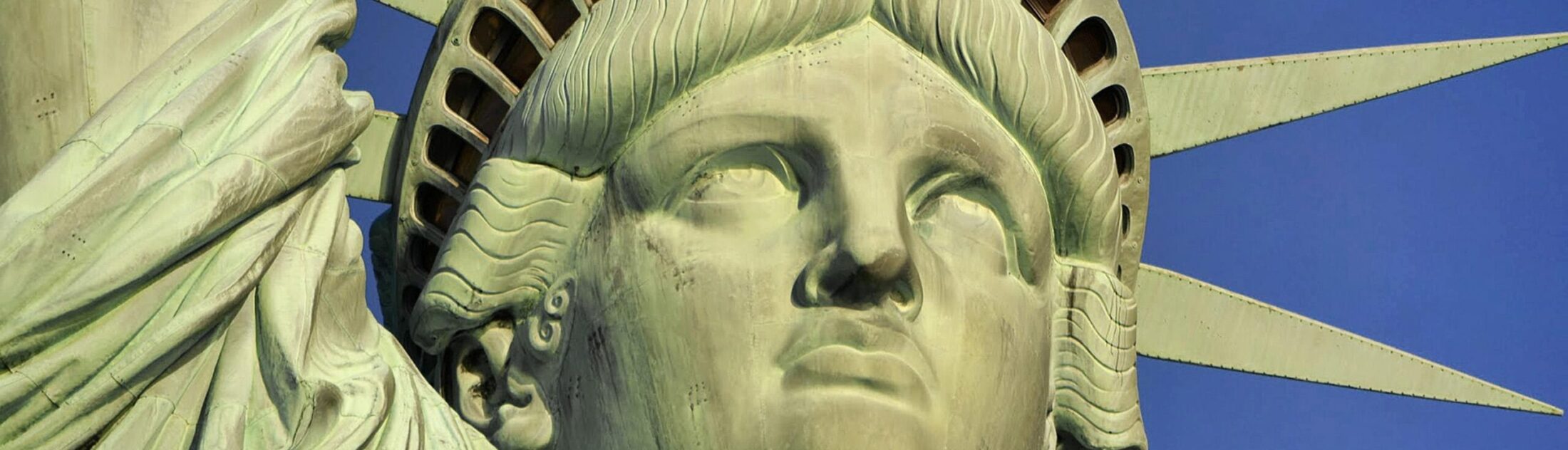
- Emma Lazarus, “The New Colossus” (By Olivia Whittaker)
- Sojourner Truth, Woman’s Rights Speech (By Jordyn Ney)
- E.B. White, On Democracy (By Andrew Culbertson)
- AND SEE WEVIDEO INSTRUCTIONS BELOW FOR FURTHER DETAILS
- Here is a handout for posting at the course site; but note that students will not be registered to begin posting until the week of Sept. 15-19 AND SEE WORDPRESS INSTRUCTIONS BELOW FOR FURTHER DETAILS
- Prof. Pinsker is available to review drafts (full or partial and multiple iterations) until the AFTERNOON BEFORE EACH assignment deadline –i.e. by 9/27 or 10/26. The minimum requirement is for students to submit at least a draft of their opening paragraph for each assignment. Please send drafts (or ask questions) by email or email attachment: pinskerm@dickinson.edu
- Students should also consider visiting the Writing Center before BOTH assignments but must do so at least ONCE for one of these two assignments: Register for an account and make a face-to-face appointment on WCONLINE.
- This is a handout on some best practices for how to approach historical close reading
- And don’t forget to rely on the Methods Center for additional guidance about research, writing, citing, and editing. See the main handouts at the top of the page, but also check out the special post on SEARCH VS. RESEARCH for guidance in finding sources
- Generally, the best way to approach for organizing these essays is to remember Prof. Pinsker’s close reading mantra: text, context, subtext. Consider opening your essay with a snippet of text, briefly explain its context and then offer a thesis statement that explains and assesses subtext (or the author’s intended strategy). Also, since this is a web-based publication, consider using bolded subheadings (like the model essay) to help clarify your organization –but note these subheadings can be descriptive and not just formulaic. Regardless, your body paragraphs should follow that structure as well. Begin by providing some well-organized paragraphs to summarize the text, using snippets of quotation and including definitions of key words and description of the format or genre. Then offer paragraphs on context, including both about the time period and also background on the author. Follow this essential background with analytical paragraphs that build on the previous information and assess subtext or the author’s strategy for achieving his or her goals. Close with a final paragraph that gracefully connects everything back to the opening.
- Make sure to use quotations from at least THREE sources with footnotes formatted correctly in the Chicago-style, including the poem, Edward Hirsch’s assigned book on American poetry, and at least one other secondary source. See this methods handout on How to Use Footnotes and consult as needed with the library’s Chicago-style guide, but make sure to use sample footnote models for formatting and NOT bibliography examples. Also, please note that there are some preferred adaptations for Chicago-style footnote format in WordPress. Here is how your citations to the Hirsch book should look online, for example, both initial and subsequent, and also how a citation to a poem’s text should look (from our course site), both initial and subsequent:
[1] Edward Hirsch, The Heart of American Poetry (New York: Library of America, 2022), 46.
[2] Hirsch, 53.
[3] Amanda Gorman, “The Hill We Climb,” 2021, FYS: American History Through Poetry [WEB].
[4] Gorman.
- IF YOU NEED ADDITIONAL HELP WITH RESEARCH OR CITATION, you may contact library liaison Jill Anderson (andersji@dickinson.edu)
- Also, please pay careful attention to how you use quoted material in your writing. This handout can help guide you to avoid awkwardness.
- Pay attention as well to how you use TENSES in your essay. Students usually write about literary texts in the present tense (“This poem reflects…”) but historical behavior needs to be cast in the past tense (“Anne Bradstreet wanted to…”), so students should consider using past tense across the board with just a few exceptions (such as when referring to the arguments of modern scholars like Edward Hirsch). Writing about literary texts from the past in the past tense is acceptable (“The Declaration presented a list of grievances…”).
- Finally, there is a difference between paraphrasing and plagiarism. You must make sure you understand the distinction. Here is a handout to help guide you.
- And don’t forget to use the Hacker & Sommers pocket manual for additional support:
Tips from Hacker & Sommers (2025)
- SECTION 1: CLARITY
- How to avoid wordiness: pp. 6-7
- Shifts in POV, tenses, and constructions: pp. 12-16
- SECTION 2: GRAMMAR
- Subjects & Verbs, pp. 23-28
- Tenses (but note difference with Prof. Pinsker), pp. 30-32
- Fragments and run-ons, pp. 43-48
- SECTION 3: PUNCTUATION
- Commas, parentheses, colons, semi-colons, pp. 58-68
- Apostrophes, pp. 69-72
- Quotation marks (and punctuation), pp. 72-75, 127-131
- Other punctuation (for poetry especially), pp. 76-79
- SECTION 4: MECHANICS
- Capitalization, pp. 81-83
- Numbers, Italics, Hyphens, pp. 84-89
Additional Links for WordPress and WeVideo
-
- DETAILED INSTRUCTIONS FOR USING WORDPRESS
- VIDEO TUTORIAL AND INSTRUCTIONS FOR USING WEVIDEO
- Video companions for these reflections should be produced in WeVideo and feature strong reading voices paired with relevant images and an effective music track. All videos must include a properly formatted credits slide.
- IF YOU NEED TECHNICAL HELP WITH YOUR VIDEOS, you may contact House Divided interns Andrew Culbertson (culberta@dickinson.edu) or Olivia Whittaker (whittako@dickinson.edu)
Directory of Humans Who Can Help
- Prof. Pinsker = pinskerm@dickinson.edu
- Intern Andrew Culbertson (WeVideo) = culberta@dickinson.edu
- Intern Olivia Whittaker (WeVideo) = whittako@dickinson.edu
- Librarian Jill Anderson (research / citations) = andersji@dickinson.edu
- Writing Center (brainstorming / drafts) = WCONLINE