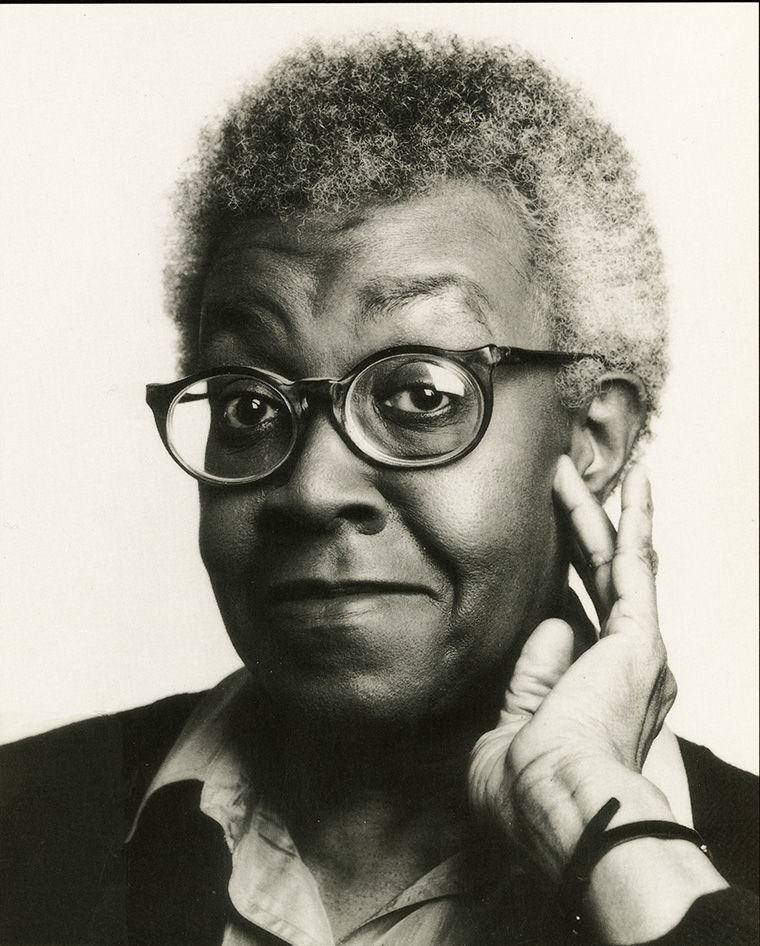
Gwendolyn Brooks (1917–2000) grew up in Chicago and began publishing poems as a teenager. She received early encouragement from Langston Hughes. Eventually, Brooks published more than twenty books of poetry, including one volume in 1949 that won the Pulitzer Prize –the first Pulitzer in any category awarded to an African American writer. The short poem, “We Real Cool,” appeared in 1960, capturing the rebellious spirit of mid-twentieth century youth and also the tension in race relations during the civil rights era. Brooks described being compelled to write this verse after seeing a Chicago pool hall crowded during the day with black teenage boys and wondering how they felt about their lives and future. The voice, and the jazz-like beat, in the poem, is theirs. The question for the reader is what did she mean by it? Edward Hirsch calls Brooks a poet capable of being “both empathetic and excoriating at the same time” (Heart of American Poetry, 283). During the 1960s and 1970s, Brooks became active in the Black Arts and Black Power movements and renounced some of her earlier work and influences. Brooks visited Dickinson College and read her poetry on campus in 1974. In the 1980s, she was appointed as the nation’s poet laureate by the Librarian of Congress. She died in 2000.
THE POOL PLAYERS.
SEVEN AT THE GOLDEN SHOVEL.
We real cool. We
Left school. We
Lurk late. We
Strike straight. We
Sing sin. We
Thin gin. We
Jazz June. We
Die soon.