
Image Gateway

TEXT: White, “Freedom” (1940) and “Democracy” (1943)
- Two short prose pieces written for magazines (Harper’s Weekly and The New Yorker) right before and during World War II
- White was then renowned as an essayist, though not yet as a children’s book author: Stuart Little (1945), Charlotte’s Web (1952), and The Trumpet of the Swan (1970)
CONTEXT: Homefront During World War II
“The 1930s and 1940s were trying times. A global economic crisis gave way to a global war that became the deadliest and most destructive in human history. Perhaps eighty million individuals lost their lives during World War II. The war saw industrialized genocide and nearly threatened the eradication of an entire people. It also unleashed the most fearsome technology ever used in war. And when it ended, the United States found itself alone as the world’s greatest superpower. Armed with the world’s greatest economy, it looked forward to the fruits of a prosperous consumers’ economy. But the war raised as many questions as it would settle and unleashed new social forces at home and abroad that confronted generations of Americans to come.” —American Yawp, Chapter 24
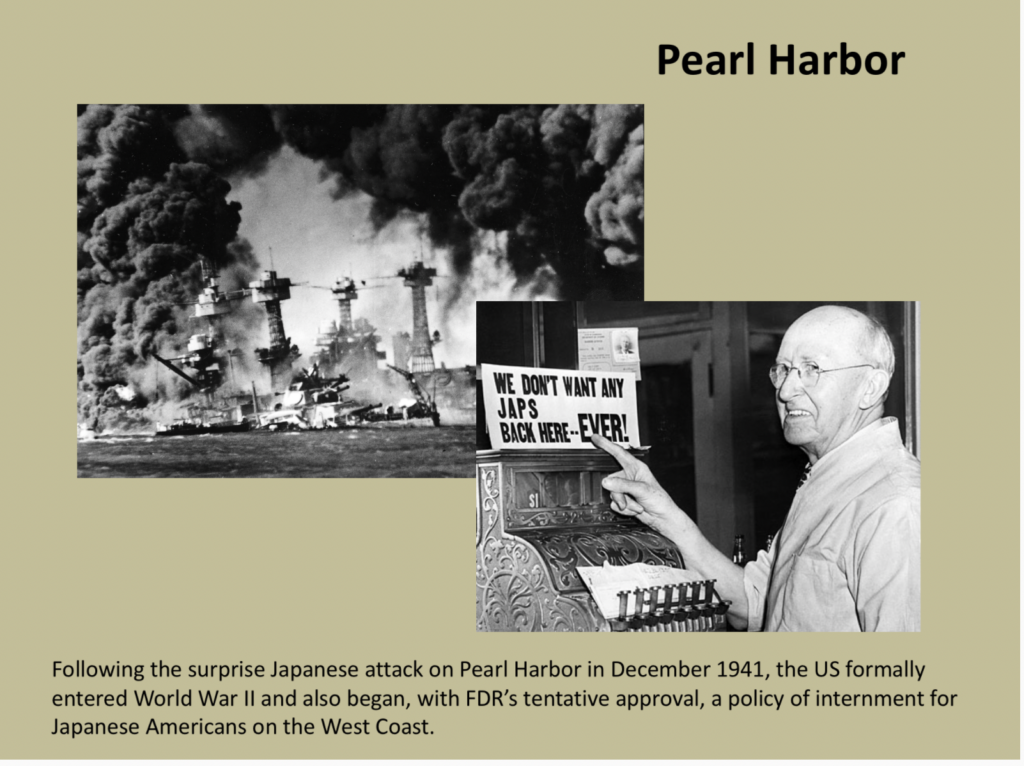
From Esther Popel:
“The Negro director of a Federal Housing Project in Chicago [Robert Taylor] was asked to find a place on his staff for a Japanese-American girl just out of a relocation center. She was seeking employment. When the director approached his colored office workers on the subject they all objected most strenuously. They didn’t want to work with a “Jap”. In order to change this feeling the director gave a long and stirring lecture to them on proper racial attitudes, until he finally succeeded in overcoming their objections. The Japanese-American girl came, and as the weeks passed she and the one girl in particular who had at first so bitterly opposed her employment became good friends. One day the latter was talking about the Nisei girl to her director. After expressing her affection for the new office worker she said: “You know, Mitsui is very glad she’s working here with us. She said she’d so much rather be here than with those Jews in the downtown office!” —Esther Popel, Personal Adventures in Race Relations (1948)
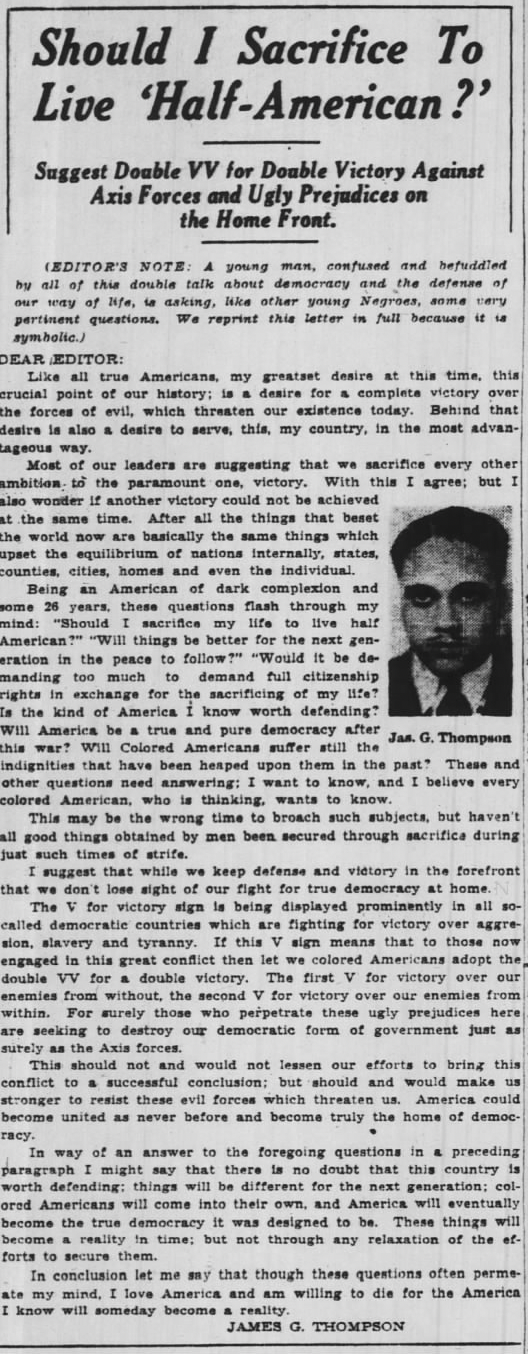
Double V Campaign
The famous letter (Pittsburgh Courier, January 31, 1942)
SUBTEXT: Last Best Hope [?]
- Which parts of White’s essays on freedom and democracy seem most resonant in the 21st century?
- How do you reconcile White’s “boyish” enthusiasm for American freedom and democracy and his “burning delight” in sharing the “same faith” as the country’s founders with the realities of American society in the 1940s?
METHODS CENTER —Openings and Thesis Statements
- Start with a striking statement:
- Some concise narrative vignette, thought-provoking quotation or statistic, or a crisp sentence or two of your own
- Pivot to a few sentences of concise summary about the topic and its essential context
- Close the opening with an interpretive thesis statement
- A good opening paragraph should both engage and inform a general reader or fellow student