INTRODUCTION
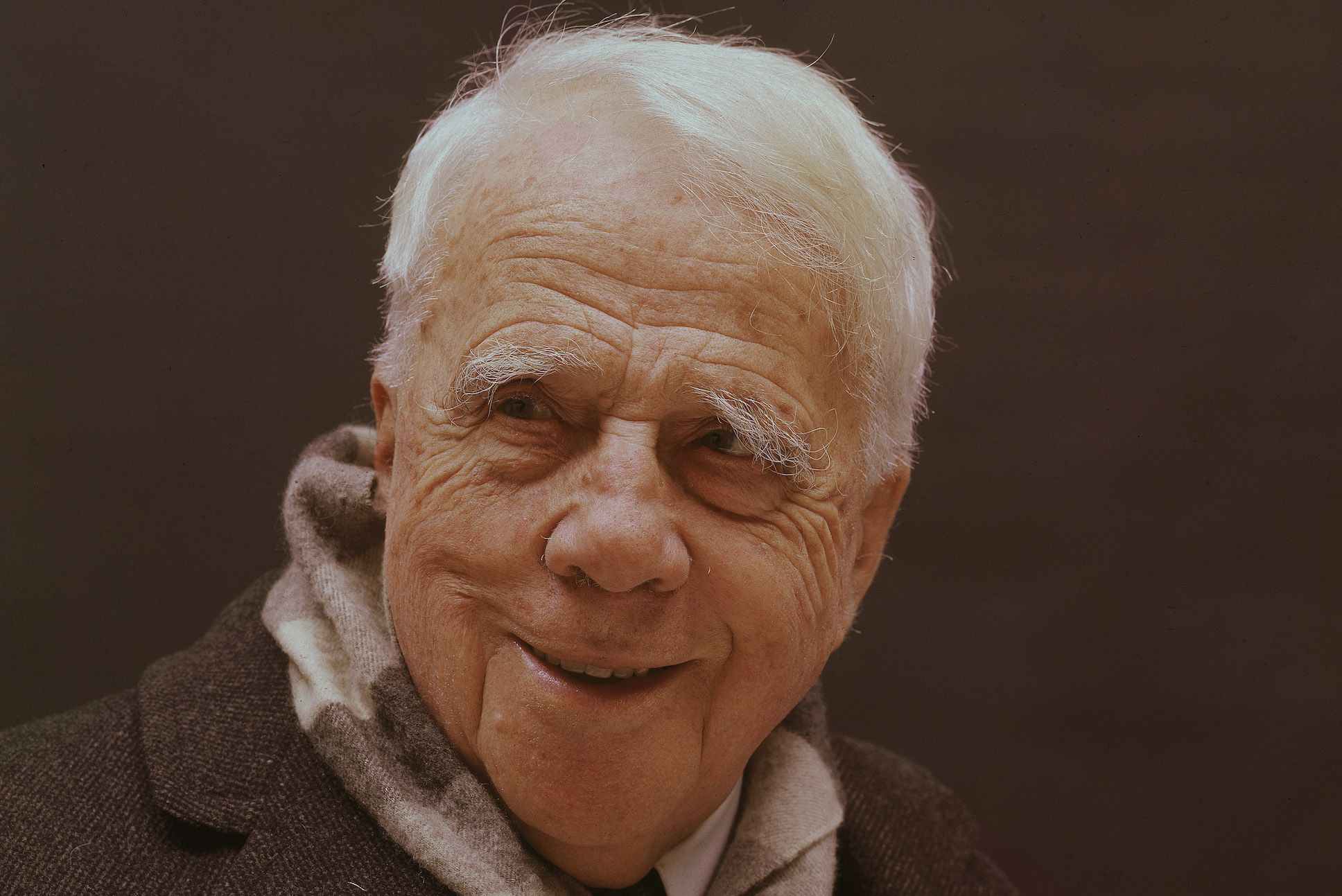
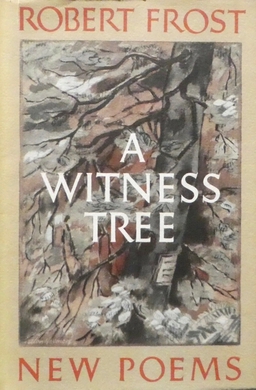
Robert Frost (1874-1963) was probably the best known American poet of the twentieth century. He was born in San Francisco, California but spent most of his life in New England states such as Massachusetts, New Hampshire, and Vermont. This was a return to his roots since some of Frost’s ancestors had been early Puritan settlers in the seventeenth century. Frost always aspired to write poetry but passed through several jobs and occupations before publishing his first book of poetry just before World War I, when he was 40 years old. He quickly became famous as a poet, however, and over the next few decades won four Pulitzer Prizes for his poetry, including for A Witness Tree (1942), the volume in which this poem appeared. He was a poet laureate (or consultant in poetry as it was then called), as designated by the Librarian of Congress, during the 1950s. In 1961, he recited this poem, “The Gift Outright” (1942), at the inaugural ceremony for John F. Kennedy at the president-elect’s request. The choice of poem, however, was almost accidental. Kennedy had asked him to read the 1942 poem (though the president-elect wanted a small change in the last line –see below). However, the poet had other ideas. Frost wrote a special poem for the ceremony (called “Dedication”), but he found himself unable to read the pages in the glare of the midday sun and so instead recited this verse from memory (changing the last line, though, as Kennedy had suggested, from “would become” to “will become”). It was the first reading of a poem at any presidential inaugural but it began a tradition that has continued intermittently ever since. Frost died two years later, at the age of 88.
 The Gift Outright
The land was ours before we were the land’s.
She was our land more than a hundred years
Before we were her people. She was ours
In Massachusetts, in Virginia,
But we were England’s, still colonials,
Possessing what we still were unpossessed by,
Possessed by what we now no more possessed.
Something we were withholding made us weak
Until we found out that it was ourselves
We were withholding from our land of living,
And forthwith found salvation in surrender.
Such as we were we gave ourselves outright
(The deed of gift was many deeds of war)
To the land vaguely realizing westward,
But still unstoried, artless, unenhanced,
Such as she was, such as she would become.
Additional Resources
Prof. Pinsker on the complicated story behind the slogan Manifest Destiny:
- Ted Genoways, “Frost and the Kennedy Inauguration,” VQR (Jan 2019)
- Jay Parini, “Listening for God in Unusual Places: The Unorthodox Faith of Robert Frost,” America: Jesuit Review (2013)
- Siobhan Phillips, “Political Poeticizing: ‘The Gift Outright’ and how Poetry is Built on Problems,” Poetry Foundation (July 2015)
- Jennifer Schuessler, “The Road Back: Frost’s Letters Could Soften a Battered Image,” New York Times, Feb. 4, 2014
- Handout –Frost