Field Guide for Greenlandic Birds


Archive for the 'Waterfowl' Category

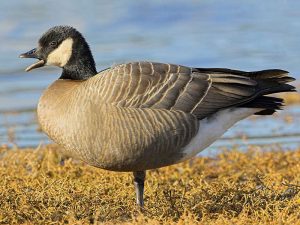
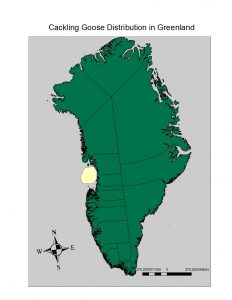
Cackling Goose

Posted in Geese, Waterfowl on March 24, 2018 by macpherc
https://www.birdzilla.com/bird-identification/id-skill-development/bird-families/waterfowl-identification/identification-of-geese/identification-of-cackling-goose.html

Also known as the Tundra Goose, and the Lesser Canada Goose, and Baffin Canada Goose

Danish : Dværgcanadagås, Lys Dværgcanadagås

Greenlandic : Nedlenuk, Nookliuk

Scientific:
Branta canadensis

Order:
Anseriformes
Family:
Anatidae
Genus:
Branta

Length: 21.6-29.5 in (55-75 cm)

Weight: 33.5-105.8 oz (950-3000 g)

Patrik Åberg, XC406173. Accessible at www.xeno-canto.org/406173
References :

Avibase The World Bird Database. Branta [canadensis or hutchinsii. 2018.

Mowbray, Thomas B., Craig R. Ely, James S. Sedinger and Robert E. Trost. 2002. Cackling Goose (Branta hutchinsii), version 2.0. In The Birds of North America (P. G. Rodewald, editor). Cornell Lab of Ornithology, Ithaca, New York, USA.

Sibley, David Allen. 2014. The Sibley guide to birds, second edition. Alfred A Knopf, New York.
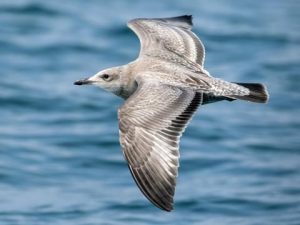
 

Arctic Fulmar

Posted in Waterfowl on March 23, 2018 by macpherc


Scientific:
Fulmarus glacialis

Order:
Procellariiformes
Family:
Procellariidae
Genus:
Fulmarus

English: Arctic Fulmar, Northern Fulmar

Danish : Mallemuk

Greenlandic : Qaqulluk

Length: 15.3-19.7 in (39-50 cm)

Weight: 15.9-35.3 oz (450-1000 g)

Wingspan: 39.4-44.1 in (100-112 cm

The Northern Fulmar species has one of the longest lifespans amongst birds. Data from one study indicates a mean adult life span of about 32 years. The Northern Fulmar begins breeding normally at eight to ten years old, however there have been records of Northern Fulmars starting to breed at 20 years, which is an exceptionally old age for birds.

Northern Fulmars may feed some 50-600 km from the colony; the longest foraging trips usually occur during the pre-laying exodus and after the brooding period.

Timo Janhonen, XC319897. Accessible at www.xeno-canto.org/319897

Avibase The World Bird Database. Fulmarus glacialis. 2018

Mallory, Mark L., Scott A. Hatch and David N. Nettleship. 2012. Northern Fulmar (Fulmarus glacialis), version 2.0. In The Birds of North America (P. G. Rodewald, editor). Cornell Lab of Ornithology, Ithaca, New York, USA.

Sibley, D. A. (2014). The Sibley guide to birds, second edition. Alfred A. Knopf, New York, USA.

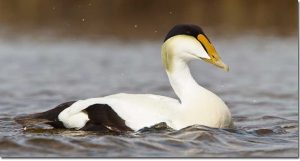
Common Eider

Posted in Ducks, Geese, Waterfowl on March 21, 2018 by macpherc

https://www.birdzilla.com/bird-identification/

Scientific:
Somateria mollissima

Order:
Anseriformes
Family:
Anatidae
Genus:
Somateria

Danish : Ederfugl

Greenlandic : Miteq siorartooq

Length: 19.7-27.9 in (50-71 cm)

Weight: 41.6-107.2 oz (1180-3040 g)

Fun Fact: Common Eider broods assembles to form a “crèche,” a creche can vary from   a couple to over 150 ducklings.


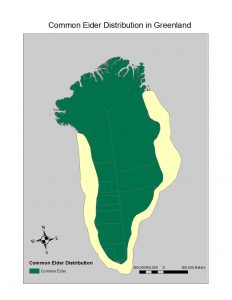
Background: Common eiders are the largest duck found in the northern hemisphere.  Common Eiders wintering in West Greenland were estimated in 1999 to number around 500,000 birds, but the number has likely risen since then. Common Eiders are widely distributed all across West Greenland, with the largest concentrations in North West Greenland. The Common Eider is also distributed as a breeding bird in Northeast and Southeast Greenland.

Mats Rellmar, XC373764. Accessible at www.xeno-canto.org/373764.

References :

Aviabase: The World Bird Database (2018). Somateria mollissima. Found at https://avibase.bsc-eoc.org/species.jsp?avibaseid=B77377EEB852D0AF

Merkel, F. Rasmussen, L. Somateria mollissima.Greenlands Institute of Natural Resources. 2016.

Goudie, R. Ian, Gregory J. Robertson and Reed, A. 2000. Common Eider (Somateria mollissima), version 2.0. In The Birds of North America (P. G. Rodewald, editor). Cornell Lab of Ornithology, Ithaca, New York, USA.

Sibley, David Allen. 2014. The Sibley guide to birds, second edition. Alfred A Knopf, New York.
Brent Goose

Posted in Waterfowl on March 21, 2018 by macpherc

https://www.hbw.com/ibc/species/brent-goose-branta-bernicla

Scientific:
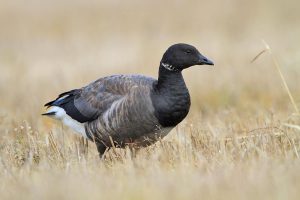
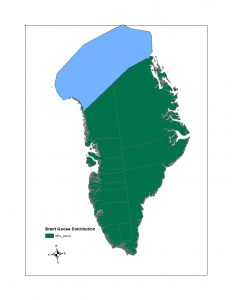
Branta bernicla

Order:
Anseriformes
Family:
Anatidae
Genus:
Branta

Danish : Knortegås

Greenlandic : Nerlernaq

Length : 56-61cm
Wingspan : 110-120cm
Weight : 1.3 to 1.6 kg

Martin St-Michel, XC295512. Accessible at www.xeno-canto.org/295512

References :

Avibase: World Bird Database. Branta bernicla. Found at https://avibase.bsc-eoc.org/species.jsp?avibaseid=3163ED86A508BB83

BirdLife International (2018) Species factsheet: Branta bernicla. Downloaded from http://www.birdlife.org

Lewis, T. L., D. H. Ward, James S. Sedinger, Austin Reed and D. V. Derksen. 2013. Brant (Branta bernicla), version 2.0. In The Birds of North America (P. G. Rodewald, editor). Cornell Lab of Ornithology, Ithaca, New York, USA.

Sibley, David Allen. 2014. The Sibley guide to birds, second edition. Alfred A Knopf, New York.
Little Auks

Posted in Murres, Puffins, Waterfowl on March 20, 2018 by macpherc

http://www.bbc.co.uk/programmes/b03dx98q

Scientific:
Alle alle alle

Order:
Charadriiformes
Family:
Alcidae
Genus:
Alle

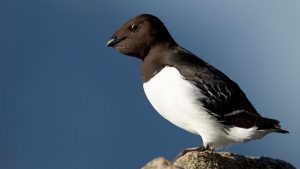
English: Arctic Auklet, Dovekie, Little Auk, Little Auk/Dovekie, Sea Dove

Danish : Søkonge

Greenlandic : Appaliarsuk

Length: 7.5-9.1 in (19-23 cm)

Weight: 4.7-7.2 oz (134-204 g)

Wingspan: 15.0 in (38 cm)

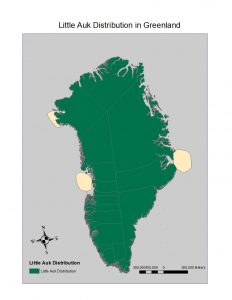
Fun Facts: Little Auks reside along the both the East and West Coast of Greenland. While Auks resemble penguins they are not particularly related. One of the main differences is that all existing species of Auks can fly, though they have to flap their stubby little wings at extremely fast speeds to stay airborne.

A famous Greenlandic delicacy is Kiviak- which consists of 500 fermented auks stuffed into a seal, left to ferment for two to three months. It is eaten for special occasions.

Fernand DEROUSSEN, XC135910. Accessible at www.xeno-canto.org/135910.

References:

Avibase : The World Bird Database (2018). Alle Alle Alle. Found at https://avibase.bsc-eoc.org/species.jsp?lang=EN&avibaseid=B0932D89F1F74318

Sibley, David Allen. 2014. The Sibley guide to birds, second edition. Alfred A Knopf, New York.
Montevecchi, William A. and Iain J. Stenhouse. 2002. Dovekie (Alle alle), version 2.0. In The Birds of North America (P. G. Rodewald, editor). Cornell Lab of Ornithology, Ithaca, New York, USA.


Purple Sand Piper

Posted in Waterfowl on March 19, 2018 by macpherc

https://www.allaboutbirds.org/guide/Purple_Sandpiper/lifehistory

Scientific:
Charadriiformes

Order:
Charadriiformes

Family:
Scolopacidae

Genus:
Calidris


Danish : Sortgrå Ryle

Greenlandic: No translation

Size

Length: 7.9-8.7 in (20-22 cm)

Weight: 1.8-3.7 oz (50-105 g)

Wingspan: 16.5-18.1 in (42-46 cm)


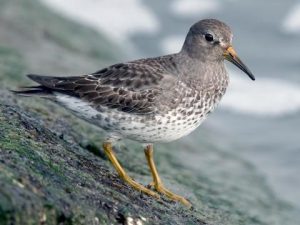
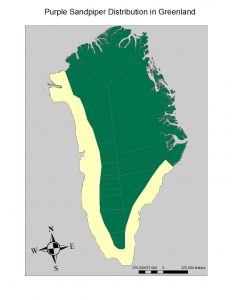
The Purple Sandpiper is a resident of Greenland’s southern Coast, as well as breeds alongside the entire West Coast of Greenland. The bird is recognizable by it’s dark brown winter plumage and it’s elongated, curved mostly black beak. The purple sandpiper predominantly feeds on small crustaceans, insects, spiders and some vegetative matter.


Jens Kirkeby, XC312419. Accessible at www.xeno-canto.org/31241


References :

Avibase The World Bird Database (2018) Charadriiformes. https://avibase.bsc-eoc.org/species.jsp?avibaseid=0A0B84313ACFFB2F

BirdLife International (2018) Species factsheet: Calidris maritimahttp://www.birdlife.org on 21/04/2018

Payne, Laura X. and Elin P. Pierce. 2002. Purple Sandpiper (Calidris maritima), version 2.0. In The Birds of North America (P. G. Rodewald, editor). Cornell Lab of Ornithology, Ithaca, New York, USA.

Sibley, David Allen. 2014. The Sibley guide to birds, second edition. Alfred A Knopf, New York.
 

All birds

Posted in Waterfowl on January 27, 2018 by macpherc