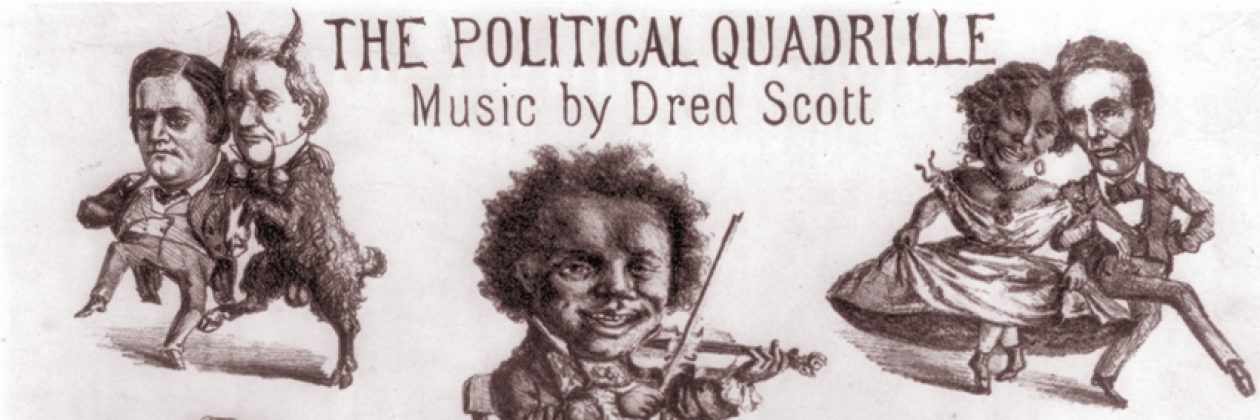
Politicians
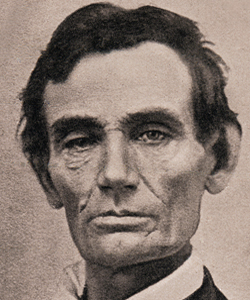
Abraham Lincoln, a Kentucky native, served as a lawyer, an Illinois Representative and the sixteenth president of the United States. With the crisis over slavery in Kansas in 1854, Lincoln spent the next six years writing speeches about the need to not only prohibit, but gradually eliminate slavery in the territories. Lincoln perceived the whisper between Chief Justice Roger Taney and President-elect Buchanan moments before his inaugural address to be a part of a conspiracy involving the Dred Scott case. In 1858 Lincoln delivered a speech in Springfield where he accused Taney, Buchanan, Douglass and Pierce of collaborating to use the Dred Scott decision as a means to preserve slavery.
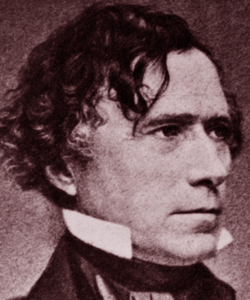
Franklin Pierce, served as a Representative and U.S Senator from New Hampshire, later elected the fourteenth president of the United States. As the outgoing Democratic president in 1856, Pierce’s last message to Congress criticized the Republicans for attacking the slave institution and denounced to the Missouri Compromise. Pierce lost re-election; however, he viewed Buchanan’s win as a continuation of his pro-slavery policies and admiration of the Constitution.
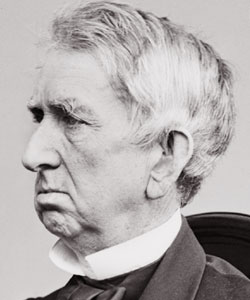
William Henry Seward, a New York native who served as both his state’s governor and senator, was a leading figure in the anti-slavery movement. On March 3, 1858, Seward accused the Supreme Court and President Buchanan for unethically intervening in the Dred Scott case in the interest of slavery. Seward claimed the whisperings between Taney and Buchanan to be linked to Buchanan’s inaugural address, asking the country to “cheerfully submit” to the Court’s pending decision in the Dred Scott decision. Seward became Lincoln’s secretary of war to handle the anti-slavery efforts domestically and affairs internationally.
Press
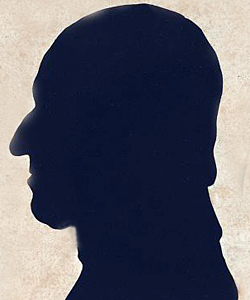
James E. Harvey, an anti-slavery New York Tribune correspondent, played a critical role during the Dred Scott deliberations. He relayed information about members of the Supreme Court to his friend Justice McLean. After the case, on April 3, 1856, Harvey disclosed to McLean that his dissenting opinion was celebrated in the North whereas the South focused on the majority opinions of the Court. In the Lincoln Administration, Harvey was appointed as U.S Minister to Portugal. Harvey’s reputation was tarnished when he released a telegram to his old friend, Judge McGrath of South Carolina, about the Administrations plans for Fort Sumpter.
James S. Pike, a Maine native, and correspondent for the New York Tribune, reporting heavily on Reverdy Johnson’s arguments for Sanford in Dred Scott. Horace Greeley, the creator of the New York Tribune, assigned Pike as the Washington correspondent, responsible for reporting the sectional tensions during the 1850s. Pike became well known for his opposition to slavery and the South, but also for his racist remarks. Pike continued to write for the Tribune during the Civil War and Reconstruction period focused on the Union and its anti-slavery efforts.