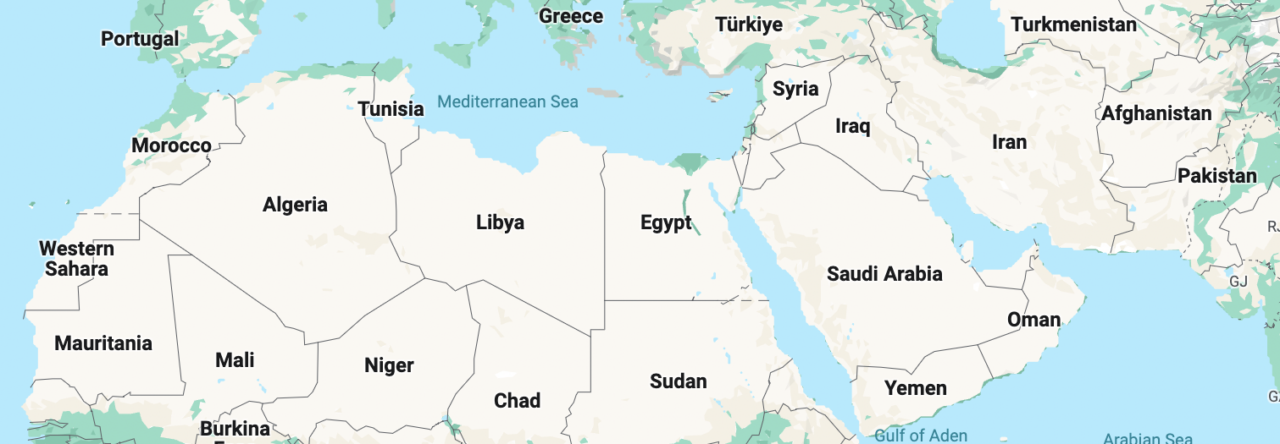
In the Middle East and Northern Africa, the concept of oil rents is important in understanding the complexities of the region. This refers to the difference in the market price of oil and the cost of producing oil (Cammett 23). Oil rents can be damaging for multiple reasons: the concept of the resource curse, rentierism, and overall impact on political and social outcomes.
The Resource Curse:
This applies to many oil-rich countries. The resource curse emphasizes the “correlation between resource abundance and outcomes such as poor economic performance, unbalanced growth, and low levels of private-sector development” (Cammett 23). As oil extraction technology has improved, now more countries than ever have access to oil as a natural resource. Birdsall and Subramanian explain how there are now 34 “less-developed” countries where oil and natural gas make up at least 30% of the country’s total export revenue (Birdsall and Abramanian 1). When a country can heavily rely on one resource to generate revenue, other areas get left behind. This can lead to lack of focus on the private sector due to focus on resource generation, and lack of attention to other economic areas and interests. This all goes back to another concept applicable to the region, the idea of “Dutch Disease” (Cammett 24). This theory explains how a lot of revenue from natural resources leads to decline in a country’s industrial sector (Cammett 24). In countries inflicted with the resource curse and Dutch Disease, the oil rents can be damaging to society. The government is the one that benefits from oil rents and allows those in charge to shape society and politics as they see fit. Rulers who benefit from oil wealth can use the wealth as leverage, creating more patronage and repressive institutions (Cammett 24). While this is true on the surface, political scientists also argue that the problems from the resource curse oil rents have deeper explanations and connections. Ross argues that there is more to the resource curse, such as the fact that “oil and mineral wealth tends to make states less democratic” (Ross 328). Birdsall and Subramanian also emphasize this and explain how countries with a lot of oil wealth are more likely to have weaker political institutions (Birdsall and Subramanian 2). Ross suggests that another way of looking at the impact of oil rents is the concept of Rentier states.
Rentierism:
Ross defines “Rentier states” as a classification for many MENA states because of how a large portion of their revenues come from external rents (Ross 329). In a basic sense, much of their money is coming from selling oil. Countries such as Jordan, Syria, and Egypt gain rents from the transportation of oil using their country’s infrastructure. In terms of damage to society, Ross mainly argues that the influx of oil in these states makes the states less democratic, and causes poor economic development (Ross 329). This occurs because when the state is heavily controlling oil exports and the economy, they control the bureaucracy and policy. Another aspect of this is the “taxation effect” (Ross 332). The taxation effect is a common component of a rentier state, where governments get so much revenue from oil that they do not heavily tax the population or do not at all. Without taxes, there is less ground for the public to “demand accountability” (Ross 332) when faced with issues like patronage and corruption. This allows social issues to stay dormant for longer. A final component of rentier states is the “group formation” effect (Ross 334). Ross explains how this is when a government has so much revenue that they are able to use some of it to “prevent the formation of social groups that are independent from the state” (Ross 334) and then may demand rights.
Are These Problems Caused by The Size of Rents or Interaction With Other Factors?
It seems that in the situation of MENA states, there are other factors at play in causing damages. Other countries have been able to surpass the resource curse and dutch disease and flourish economically. This includes Norway, Indonesia, and Botswana (Cammett 24). Indonesia is a major oil exporter and also a Muslim majority country and still manages to not have some of the social problems in MENA. I think that MENA is exceptional when looking at the case of oil rents and it is impossible to only look at that one factor when examining societal problems. So much history, geography, colonialism, and violence has shaped the region into what it is today. While oil is extremely important for many of the states, it is not the sole factor in their development. Many problems have systemic causes that go deeper than just oil. Oil rents certainly explain some of the issues, but not all of it.
Works Cited:
Birdsall, Nancy, and Arvind Subramanian. “Saving Iraq from Its Oil.” Foreign Affairs, vol. 83, no. 4, 2004, p. 77, https://doi.org/10.2307/20034048.
Cammett, Melani. A Political Economy of the Middle East. Routledge, 22 Mar. 2018.
Ross, Michael L. “Does Oil Hinder Democracy?” World Politics, vol. 53, no. 03, Apr. 2001, pp. 325–361, www.cambridge.org/core/journals/world-politics/article/does-oil-hinder-democracy/67665D8D240C8F43CD4A2DCB35894071, https://doi.org/10.1353/wp.2001.0011.
 , but the fallback to repressive regimes also proves the point of the pessimists. If Tunisia was successful in changing to a democracy and did not slide back to the conditions that started the uprising, then Anderson’s analysis would change. A country in the Middle East becoming a true democracy would prove that democracy was waiting in the shadows all along. Political scientists would then apply their findings to the rest of the countries in the region and expect the rest to fall to democratization. The failure of the Arab uprisings shows that much of Anderson’s analysis still rings true. The complexity and mystique of the region is still there. The cases of democracy almost succeeding and then falling back to authoritarianism prove that this region does not “fit into the restrictive terms of political science” (Anderson 210). Political scientists should continue to evolve their way of thinking about democracy and the Middle East.