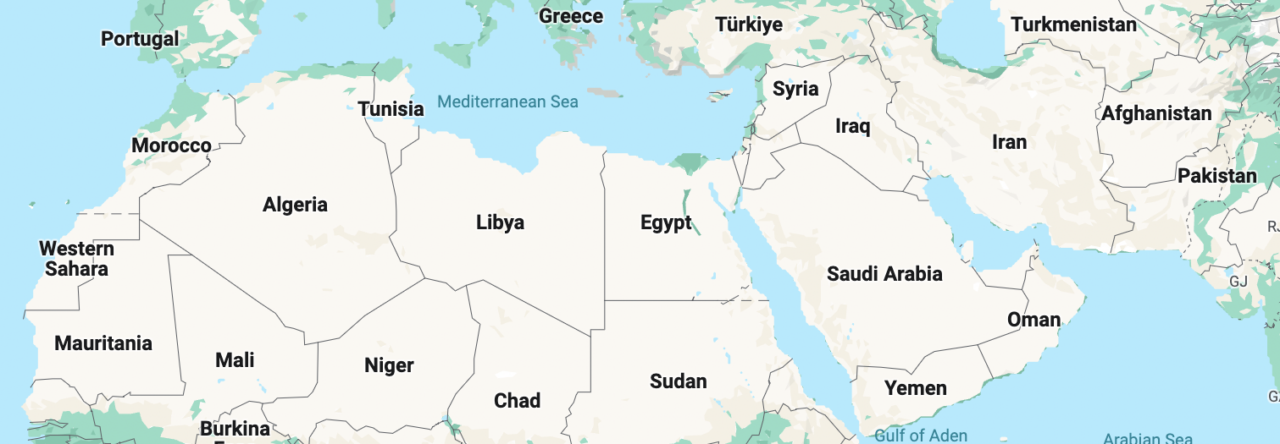
Monarchical rule in the 21st century is a topic deserving of analysis. The concept of monarchies stretches so far back into history yet they still exist today. They often were created as a result of violence and war, where one lucky family would get to be in charge for centuries after based on lineage. While a large portion of the world has transitioned away from democracy, the Middle East is an exception. There is still a heavy presence of monarchies that have stood their ground even after the protests for democracy in 201l. Although as time has gone on, monarchical rule has continued to be challenged in a number of ways.
Challenges to Monarchical Rule
Monarchies in the Middle East have continued to face protests among the people, especially in 2011. This occurs because the structure of monarchies does not include the voices of the people. Monarchies feed into patrimonialism and create less opportunity for regular citizens. Both dynastic and linchpin monarchies perpetuate this. In a dynastic monarchy, the ruling family “monopolizes the highest state offices, controls the institutions of the state by distributing family members throughout the bureaucracy” (Lucas 2004). In a linchpin system, “the royal family generally participates only in the political institutions of the monarchy” (Lucas 2004). Regardless of what system is in place, these systems restrict political and bureaucratic participation to the elite ruling family. This can spiral into grounds for protests when looking at the economy and employment rates. If a country is struggling to find jobs for everyone, it is only natural to blame the family hogging the industries. The youth bulge in the 2010s contributed to the need to protest. Young people with the qualifications to work could not find it, therefore leading to distress and a cause to complain.
Another challenge to monarchical rule is the presence of social media and its connection to protesting. One of the reasons the uprisings of 2011 gained so much speed was due to the internet. Facebook groups and networks of users were able to share ideas between countries and share strategies (Khatib and Lust, 2014). A prime case study of social media challenging a monarchy was Morocco in 2011. The February 20th protest against King Mohammed V was sparked by the internet. The idea of Feb20 first came to fruition with the “Alternative Movement for Individual Freedoms” facebook group in 2009 (Khatib and Lust, 2014). This led to the creation of more and more groups supporting democracy and the agreement of February 20th. Due to the internet planning, “the February 20th protests hit fifty-three Moroccan towns simultaneously” (Khatib and Lust, 2014). While the protests ultimately did not change the monarchy due to the assets of the regime, it proved how internet communication can mobilize people.
Assets to the Regime
While protesting proves monarchies have been challenged, there are also a lot of factors that keep them in place. One large factor is how monarchs were able to stamp out protests using coercion and manipulation. In the case of Morocco, the king “promised a spectacular constitutional reform” (Khatib and Lust, 2014). The media and the public were floored by this response and excited for a more democratic future, but this did not prove to be true. The king’s words were more a “clever preemptive move” (Khatib and Lust, 2014) than actually listening to the people. A committee was created to voice concerns, but so many groups were included that the process became convoluted. The king never gave a strong timetable for reform and there were so many groups in the committee that a consensus could not be reached.
Another asset these monarchs have that makes them exceptional is oil resources. Monarchies that have large oil rents and access to natural resources can more easily control their populations. Oil wealth allows the monarch to keep systems of patronage in place, and the lack of taxes creates less incentive for citizens to protest.
A final attribute of monarchies in the Middle East and their consolidation of power is the history behind these monarchies and role in constructing nations. Lucas explains how “Middle Eastern monarchies have used nationalist ‘traditions’ to imagine both the regime and the state into the past to solidify their rule” (Lucas, 2004). Monarchies were important in nation-building after colonial rule because they helped bring people together under a common ruler. Monarchs in this region claim a “traditional” right to rule based on lineage and the encouragement of pluralism. These monarch act as a way to “stand above the tribal, religious, ethnic, and regions divisions” (Lucas, 2004). It is easier to solidify rule and keep it that way for centuries when the monarchy was what established the identity of the state after colonialism.
These factors on both sides show how precarious monarchies can be. While they have stayed in place for decades, this could change at any time. Monarchs have already dealt with the 2011 protests but there is no telling what people may do in the coming years. No king in this region can confidently say that their population will never revolt, because there are always things people will rise up for. It is a heavy weight to carry, but every monarchy in this region bears it to keep their power.
Khatib, Lina, and Ellen Lust. 2014. Taking to the Streets : The Transformation of Arab Activism. Baltimore, Maryland: The Johns Hopkins University Press.
Lucas, Russell E. 2004. “MONARCHICAL AUTHORITARIANISM: SURVIVAL and POLITICAL LIBERALIZATION in a MIDDLE EASTERN REGIME TYPE.” International Journal of Middle East Studies 36 (1): 103–19. https://doi.org/10.1017/s0020743804361064.