Tuesday, September 26th, 2023...2:43 amkmetzw
Why are oil rates so damaging in the Middle East?
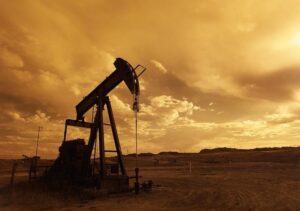
The Middle East and North Africa have a unique reliance on oil compared to the rest of the world. Out of the 15 states most reliant on oil for their economy, 10 of them are in the region. Given this reliance, many states in the region are often described as rentier states, meaning they generate a large percentage of their revenue from external rents. While some countries can be considered rentier through other means, such as Egypt allowing passage through the Suez Canal, most states are rentier through the selling of oil.
In the oil based countries, there are several political and social factors that are damaged, such as an increase in authoritarianism. While these states do have a lot of these factors impacted by their oil, it is reasonable to consider whether the factors arise because of the size of the rents in the region, or because of other issues that involve them.
In his 2001 article, “Does Oil Hinder Democracy,” Michael Ross outlines a model to understand the way that different factors play a role in determining the levels of democracy within a state. The main ones that Ross observed were regime type (how democratic or authoritarian a country is) and oil and minerals (independent variables that look at the export value of these respective products).
He ultimately found that reliance on oil and minerals both had strong antidemocratic effects – with it marginally higher for minerals. When more results were tabulated and accounted for countries specifically in the Middle East or North Africa, the impact of those regional variables compared to other regions was very significant for authoritarian governments, and these regions still see oil and minerals being very significant.
When it comes to measuring the actual impact of renting oil, Ross measured Taxes, which he outlines simply as “the percentage of government revenue collected through taxes on goods, services, income, profits, and capital gains.” After accounting for this, he found a trend of higher taxes – both on individuals and corporations – leading to more democratic governments. He also found that taxes being included can be implied as a reason for the antidemocratic tendencies of oil based countries.
I find it interesting that while many of these trends were found to be true of countries in MENA, it was not exclusive to them. Countries in the Americas, East Asia, and the rest of Africa have these same trends – such as oil reliance leading to less democratic states and that mineral wealth can also lead to weaker democracies. However, the manner and degree to which they impact the Middle East is far stronger.
I am also interested in the manner that the countries who make their national wealth from renting are more likely to be anti-democratic, and that most of the most-oil-reliant states are in this region. I feel as though it is a cycle that feeds into itself – the system that allows for vast wealth for the state is fueled by an authoritarian style of government where citizens are not represented through taxation because of the system that brings the state its wealth.
Leave a Reply