
This summer, three of our student watershed coordinators had the opportunity to attend Carlisle’s “Farmers on the Square” as vendors representing water quality efforts in the region. On June 24th and July 22nd, they set up a table and answered questions regarding local water quality, performed unique food safe pH tests, and strengthened ALLARM’s bond with our local community. Continue reading to learn more about their experiences!
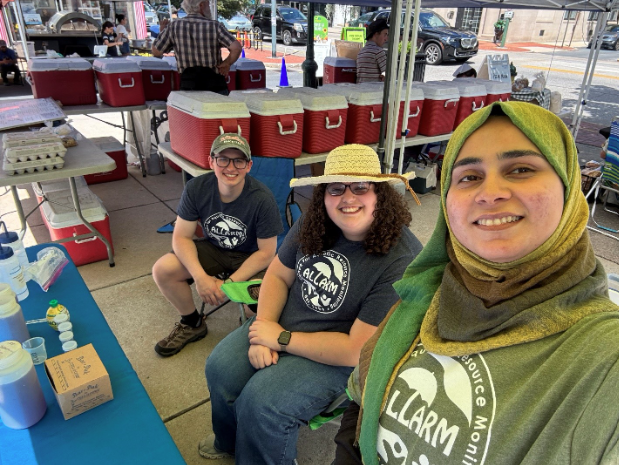
Hakeema, Alyssa, and Ryan tabling at Farmers on the Square in June.
Ryan:
Getting the chance to table for ALLARM this summer at Farmers on the Square right here in Carlisle was an amazing experience. I love going to the farmer’s market every Wednesday as a student but being able to be part of it was a fun switch in perspectives. Being there for the entire event meant that I got to meet a lot of really nice and interesting people, many of whom were excited to hear about ALLARM’s work. Some people knew who we were through our Stream Team program, but most had never heard of ALLARM. Everyone we talked to was super excited to learn about our work, and I had a blast talking with them all. It was also exciting to be able to talk to some of the other venders, especially some of the farmers, about the waterways that they interact with in their own back yards. This experience showed me that science is much more than lab experiments and field tests but also communication and connection with the people that our work is for: everyone.
Alyssa:
This summer ALLARM brought cabbage to Carlisle’s Farmers on the Square – but not for eating!
We made a pH indicator with blended red cabbage juice, which contains anthocyanin, a substance that changes color when interacting with acidic or basic solutions. Blueberries also contain this compound, which is what causes their characteristic blue color. At our table, people could test the reaction of cabbage juice with baking soda, soap, lemon juice, and even their own breath!
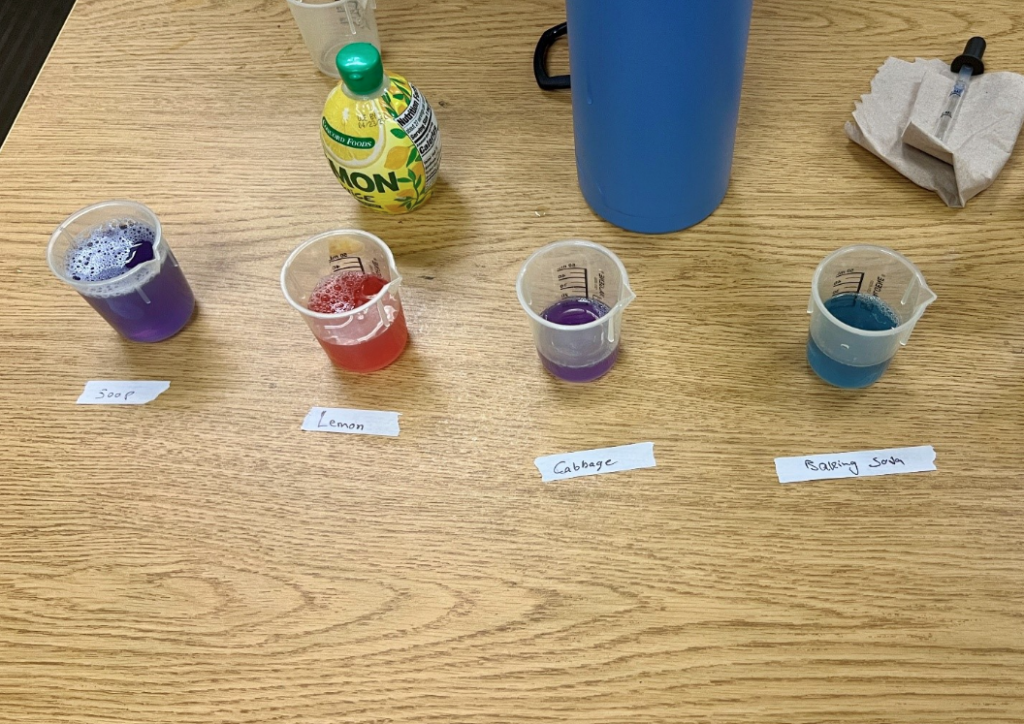
From left to right: pH reactions involving soap, lemon juice, cabbage (neutral), and baking soda.
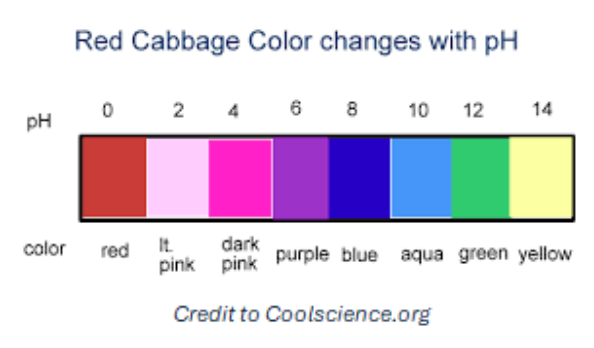
The Red Cabbage pH scale.
My favorite part of the experiment was the breath test, which shows the effect of carbon dioxide on water. When CO2 dissolves in water, it forms carbonic acid, which lowers the pH of the water. This is the same effect that causes ocean acidification on a larger scale — except instead of someone taking a VERY large straw to our ocean, excess carbon dioxide from fossil fuels in our atmosphere is being absorbed into the water. With the cabbage pH indicator, we saw this effect in action: after blowing into the water for about as long as it takes to brush your teeth, we saw the color become pinker as carbonic acid formed.
Though most of the adults who stopped by our table were more interested in our water quality testing program than our cabbage, the kids still got a kick out of our “magic potions”.
Many people came to us with concerns about PFAS and microplastics, which we don’t currently monitor. But for the health of the streams themselves, parameters like nitrate-nitrogen and pH are great indicators. When they found out they could get training to monitor the streams in their backyard, they were almost as excited as the kids. I really enjoyed talking to them and hearing about the concerns they have with their local streams.
Hakeema:
Farmers on the Square was one of my favorite parts of this summer! We had the chance to attend the farmer’s market, present what we do at ALLARM, and give people information about local streams and their water quality. My favorite part was interacting with people and answering their questions, as it was such a great opportunity to talk about what we do at ALLARM. My second favorite part was our cabbage experiment; this activity was especially fun for the children, and they were very excited to learn how it works and what it means.
Additionally, we had the chance to look around at other tables and buy from them. My favorite purchase was the baklava, which was delicious! Overall, this event was very informative and fun for the three of us!