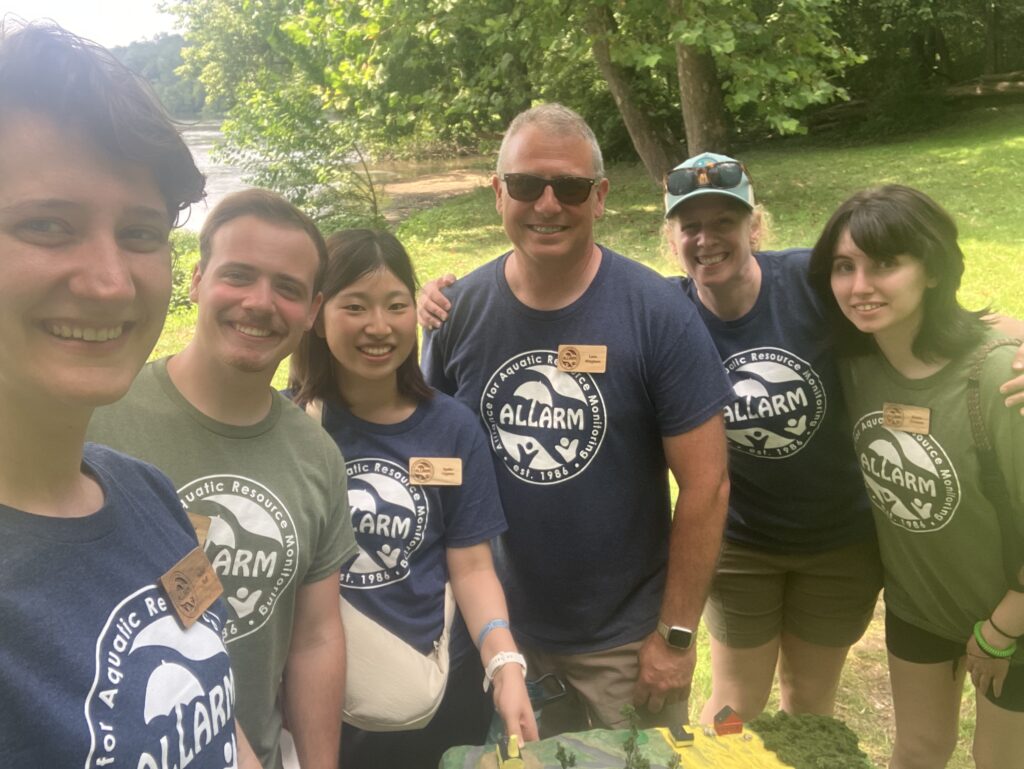
Last year, ALLARM had the privilege of visiting the East Pennsboro Summer Camp to teach students about macroinvertebrates and their importance in aquatic ecosystems. We were fortunate enough to be invited back to host a similar event this year on July 21st, where we once again had 5–12-year-old campers participate in various educational activities at different stations. By looking at watershed models, identifying live macroinvertebrates, and even getting into the stream, the children were able to have fun while learning a little more about their local waterways.
Kristin:
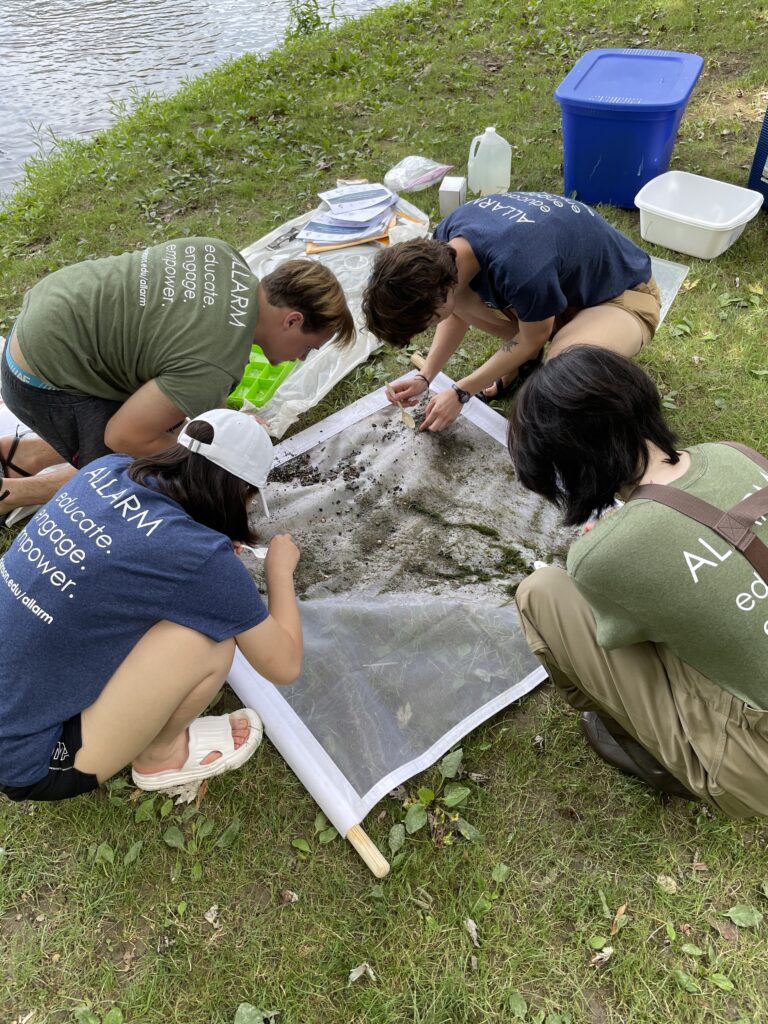
I oversaw the macroinvertebrate habitats station during the event, so I got to teach the campers about the importance of macroinvertebrates in the food web and the influence of their feeding habits on the habitats they prefer. I spent some time beforehand creating an interactive poster of habitats in a stream; the kids could attach pictures of macroinvertebrates to the poster in spots that resembled their ideal habitat. Not only was this a fun way to explain the material, but it was also helpful for introducing our next activity: entering the stream! I really enjoyed getting in the water, pointing out different habitats, and finding macroinvertebrates to show the kids. It was also fun to watch them look for macros themselves, especially since they found so many- there were a lot of mayflies and snails hanging out in the area that day!
David:
I ran the macroinvertebrate ID station for the campers in East Pennsboro. I taught the campers about the food web, macroinvertebrate feeding roles, and how to identify some macros based on key characteristics like number of legs or tails. My preparation focused more on developing soft skills and adapting the curriculum to different age groups, rather than advancing my ID skills which I had developed in preparation for previous workshops. During the event itself, I was very surprised by just how different each of the age groups responded to the station. They were all close in age, so I expected them to act fairly similar only having different background knowledge. However, each group brought a unique energy and interest level to the station. Easily my favorite moment was when a damselfly landed on my hand and sat still long enough for me to show the campers and to show them a picture of their nymph form.
Ayako:
This summer, I have primarily adult education events, so in preparation, I practiced how to communicate with younger kids and how to gain attention from them for a 15-minute workshop. During the event, I led a station on watershed models with Lane and demonstrated how human activities affect water quality and what the impact on macroinvertebrates is, using watershed model and a bunch of sprinkles. The campers liked interactive activities such as spraying and sprinkling. When I asked for volunteers, almost all the kids’ hands were up. Older kids indicated a good understanding of their watershed address. I was impressed by their curiosity and energy throughout the whole day. Kids seem to understand better by using five senses like touching the materials on the model and seeing the water getting dirty. Additionally, it made it easier for them to comprehend difficult concepts when I related general information to things that are familiar to them. When I saw kids teaching their friends about what they know, I looked back on the importance of youth education.
After a long day at the park, we were amazed at how excited the campers were to learn and impressed by their understanding of the material. We hope that our visit to the park helped support the kids’ interests in science and the environment, and we look forward to hosting more events like this in the future!