Transformative Change Needed, Tax Carbon!

news environment
From http://blogs.ubc.ca/shimengz/revenue-neutral-carbon-tax-in-british-columbia/

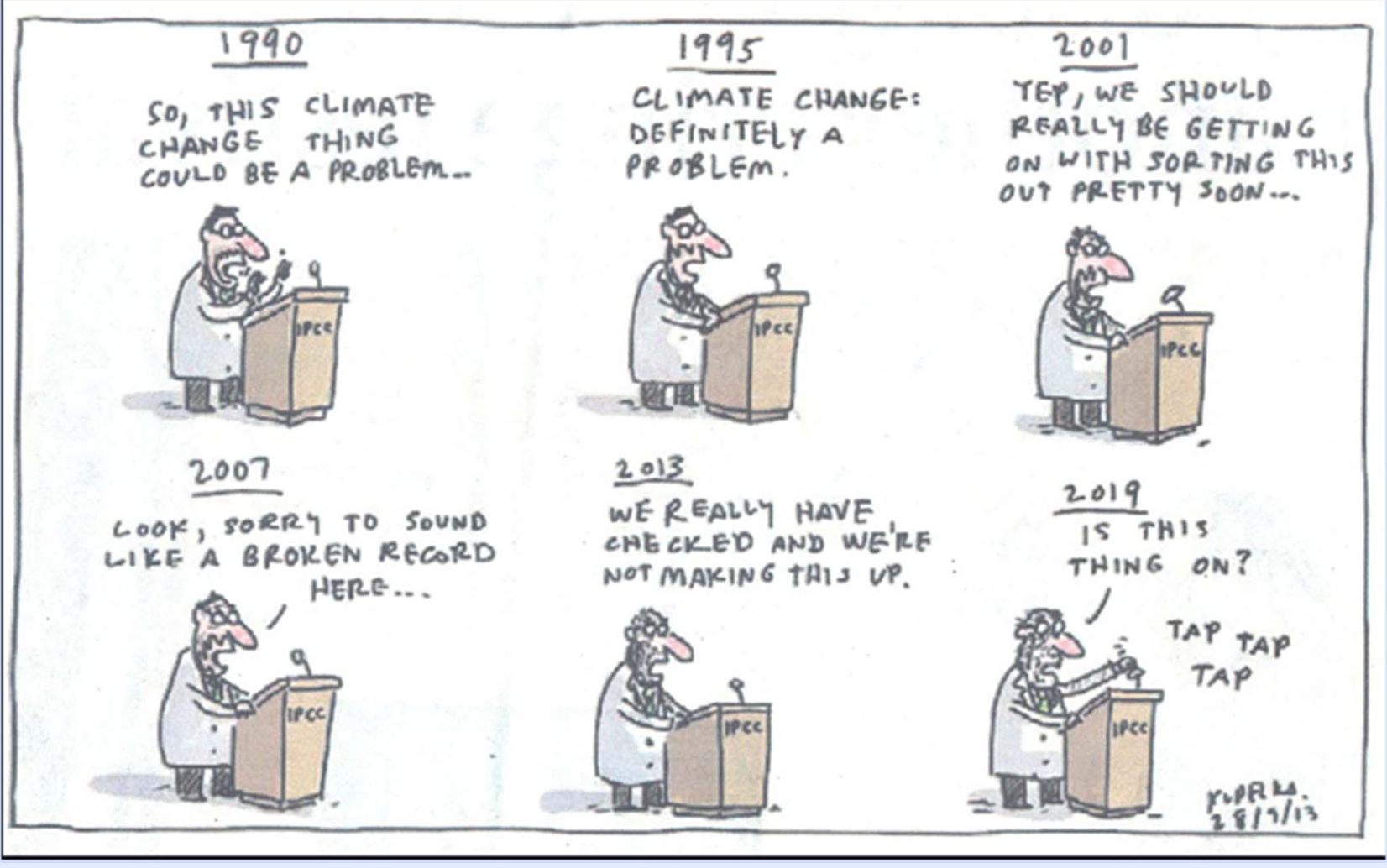
In the Copenhagen Accord (UNFCCC, 2010), during COP15, 114 countries agreed that “the increase in global temperature should be below 2°C, on the basis of equity”. This has been interpreted as the “dangerous” level agreed to by the parties in the UN Framework Convention on Climate Change (1992). To have a more likely than not chance at staying below 2°C, the concentration of carbon dioxide in the atmosphere cannot exceed 500ppm (IPCC, 2014). Every 2.13 GtCO2 emitted will raise the concentration of carbon dioxide in the atmosphere by 1ppm (Carbon Dioxide Information Analysis Center, 2012). As of September 2014, the carbon dioxide concentration in the atmosphere was 395 ppm (NOAA, 2014). Thus, there is approximately 224 more GtCO2 that can be emitted until there is a less likely than not chance of having warming greater than 2°C. To reach this level of atmospheric carbon dioxide, global emissions must be reduced by 40-70% by 2050 and be at zero or negative emissions by the end of the century (IPCC, 2014). A carbon tax is the most effective way to make the transformative change needed to keep emissions below the agreed upon dangerous level of atmospheric GHGs. An aggressive carbon tax will allow dangerous climate change to be avoided because it is proven to work, it can be implemented quickly, and it has the potentially to drastically reduce emissions.

A carbon tax is an effective tool to mitigate emissions in a least cost manner. Every use of fossil fuels that is worth less than the price of the emissions will not occur and thus reduce emissions. As the fee rises, more carbon intensive activities will become economically infeasible, driving down GHG emissions. Depending on the original fee and rate of increase this would be an effective tool to rapidly decrease emissions at the least cost because market forces will drive carbon reductions. By setting a tax floor, emission reductions are ensured (as opposed to a price cap in cap-and-trade systems) and increase over time with price increases (Sawin and Moomaw, 2009). A cap-and-trade system will be associated with less certain emissions reductions because an emissions cap is also an emissions floor (Burtraw and Woerman, 2012). This means that maximum emissions reductions cannot always be achieved because the number of permits issued sets the reduction amount as opposed to market forces pushing emissions with economic forces. This tax scheme allows for efficient carbon reductions.

Several European countries have already put a tax on carbon. Denmark was able to do this successfully by taxing industry emissions to fund renewable energy projects (Sawin and Moomaw, 2009). Denmark proved that the carbon tax works when you tax the polluters and subsidize renewable energy (Prasad, 2008). A recent study even found that a majority of republicans, democrats and independents in the United States would support a carbon tax similar to Denmark’s in which all revenues would be returned to research and development of renewable energies (Amdur, 2014). This could make a carbon tax feasible in the US and allow for economically efficient emissions reductions.

During the last week of October 2014, Senator Sheldon Whitehouse announced his intentions to introduce a carbon fee bill to the US Senate (Pantsios, 2014). This bill would put a price on the carbon to fund social programs including helping workers transition out of carbon intensive jobs (Pantsios, 2014). Two MIT economists hypothesize that it is better for the economy to have carbon taxes than high federal taxes (specifically looking at the expiration of the Bush-era tax cuts) even if those funds go towards social programs or tax cuts (Rausch and Reilly, 2012). For all these reasons, it seems like a carbon fee bill would do well in US congress; it makes logical sense, but the politics can get messy.

Australia passed a carbon tax in 2012 (Meng and others, 2013) under a pro-labor government attempting to reach across party lines to gain votes (Taylor and Hoyle, 2014). The politics around this legislation have been messy for a number of years and in 2014 the law was repealed under the notion that it hurts business and is preventing Australia from exporting its rich energy resources to countries across the world (Taylor and Hoyle, 2014). AGL Energy was cited as saying that this would cause a loss in revenue in the near term due to loss in assistance from the government/carbon tax; however, long-term profits are now looking up (Taylor and Hoyle, 2014). This could lead to backlash from citizens as the government takes away a A$500+ check, which was promised to households in the form of yearly savings (Taylor and Hoyle, 2014). Australia is the first example of a nation to pass a carbon fee and then later repeal it. A program, which gives money to the citizens, would seem to have broad voter appeal, like British Columbia’s program (2014). It appears that the politics were not set up properly for Australia to have a carbon fee that sticks. This does not mean that a carbon fee is impossible, but rather that care must be taken to set up a program that is politically feasible.

Nationally Appropriate Mitigation Actions (NAMAs) are a good first step and should not be discourage amongst UNFCCC parties. To be effective, an agreement with a great deal of stringency, participation and compliance must be reached in Paris. It does not appear to be politically feasible, but if a global price on carbon could be agreed upon, this would allow for the best system to tie everyone together ensuring participation and compliance. The tax could provide increasing stringency over time to ensure effectiveness. This would allow certainty around carbon leakage out of countries with strict carbon rules and into low regulation nations. The carbon tax is a clear transformation change that would work to drive emissions down. Incremental changes and small policy reforms are unlikely to put the world in a position to mitigate warming below 2 degrees Celsius. Effective and decisive action is needed immediately to instill transformative change.

Works Cited

Amdur, D., Rabe, B., Borick, C. Public Views on a Carbon Tax Depend on the Proposed Use of Revenue. Issues in Energy and Environmental Policy. Number 13. July, 2014.

British Columbia. Carbon Tax. Ministry of Finance. 2014.

Burtraw, Dallas, and Matt Woerman. “US status on climate change mitigation.” Resources for the Future (RFF) Discussion Paper (2012): 12-48.

Carbon Dioxide Information Analysis Center. Carbon Dioxide Information Analysis Center – Conversion Tables. September, 2012.

IPCC, 2014: 5th Assessment Synthesis Report, Summer for Policy Makers. [Myles R. Allen (United Kingdom), Vicente Ricardo Barros (Argentina), John Broome (United Kingdom), Wolfgang Cramer (Germany/France), Renate Christ (Austria/WMO), John A. Church (Australia), Leon Clarke (USA), Qin Dahe (China), Purnamita Dasgupta (India), Navroz K. Dubash (India), Ottmar Edenhofer (Germany), Ismail Elgizouli (Sudan), Christopher B. Field (USA), Piers Forster (United Kingdom), Pierre Friedlingstein (United Kingdom), Jan Fuglestvedt (Norway), Luis Gomez-Echeverri (Colombia), Stephane Hallegatte (France/World Bank), Gabriele Hegerl (United Kingdom), Mark Howden (Australia), Kejun Jiang (China), Blanca Jimenez Cisneros (Mexico/UNESCO), Vladimir Kattsov (Russian Federation), Hoesung Lee (Republic of Korea), Katharine J. Mach (USA), Jochem Marotzke (Germany), Michael D. Mastrandrea (USA), Leo Meyer (The Netherlands), Jan Minx (Germany), Yacob Mulugetta (Ethiopia), Karen O’Brien (Norway), Michael Oppenheimer (USA), R.K. Pachauri (India), Joy J. Pereira (Malaysia), Ramón Pichs- Madruga (Cuba), Gian-Kasper Plattner (Switzerland), Hans-Otto Pörtner (Germany), Scott B. Power (Australia), Benjamin Preston (USA), N.H. Ravindranath (India), Andy Reisinger (New Zealand), Keywan Riahi (Austria), Matilde Rusticucci (Argentina), Robert Scholes (South Africa), Kristin Seyboth (USA), Youba Sokona (Mali), Robert Stavins (USA), Thomas F. Stocker (Switzerland), Petra Tschakert (USA), Detlef van Vuuren (The Netherlands), Jean-Pascal van Ypersele (Belgium)]. November 1, 2014.

Meng, S, Siriwardana, M., and McNeill, J. “The environmental and economic impact of the carbon tax in Australia.” Environmental and Resource Economics 54.3 (2013): 313-332.

Monica Prasad, “On Carbon, Tax and Don’t Spend,” New York Times, 25 March 2008.

NOAA. National Oceanic and Atmospheric Administration Earth Systems Research Laboratory Global Monitoring Division. Trends in Atmospheric Carbon Dioxide. October, 2014.

Patsios, Anastasia. Sen. Whitehouse Proposes Carbon Tax to Repay Citizens for Pollution Costs. Eco-watch. October, 2014.

Rausch, S., and Reilly, J. Carbon tax revenue and the budget deficit: A win-win-win solution?. MIT Joint Program on the Science and Policy of Global Change, 2012.

Sawin, J., and Moomaw, W.. Renewable revolution: low carbon energy by 2030. Worldwatch Institute, 2009.

Taylor R. and Hoyle R. Australia Becomes First Developed Nation to Repeal Carbon Tax. The Wall Street Journal. July, 2014.

UNFCCC. Copenhagen Accord. “Report of the Conference of the Parties on its fifteenth session, held in Copenhagen from 7 to 19 December 2009.” UNFCCC/CP/2009/11/Add.1. March 30, 2010.

UNFCCC. United National Framework Convention on Climate Change. UNFCCC/INFORMAL/84. 1992.
A Complete Overhaul of the Global Energy System

Until this point, climate change negotiations have attempted to make incremental changes to address the problem. The Kyoto Protocol and Cancun Agreements both attempted to take beginning steps—such as setting emissions targets–to mitigate climate change, such as through emissions reductions targets, and there are other ways that countries are attempting to mitigate climate change. Individual countries have attempted to use carbon trading schemes or the creation of carbon sinks to address the problem. But, while all of these actions will definitely help to alleviate climate change, what is needed is actually much larger: a transformation of the whole of the global economy (Sawin). Transformative changes are needed to avoid what the UNFCCC defines as “dangerous” climate change, because incremental changes will not be quick enough to avoid the 2 degrees Celsius warming limit, and because the global economy is dependent on fossil fuels, which must be change to avoid dangerous warming.

“Climate change is fundamentally a development issue, not a pollution problem,” states a Worldwatch Institute report entitled “Renewable Revolution: Low Carbon Energy by 2030” (Sawin) What this means is that, while there definitely is a pollution problem that comes with carbon emissions, the way to solve climate change is not necessarily to cut down on air pollution. In fact, in a study by MIT researchers found that pollution-related benefits can only decline so far as carbon policies become more stringent (Resutek). At some point, health-related benefits will stop coming with the reduction of emissions, which means that even though one city or region might have solved the problem of air pollution, its citizens and industries they could still be emitting a substantial amount of carbon into the atmosphere. While reducing local air pollution can definitely help, the best way to mitigate climate change is to alter the way the global economy works, and that could start with how items you see and use every day are produced. Consider this: Fossil fuels are required to produce the clothes you wear, the foods you eat and the computers, cars, appliances and countless other goods you use. Even the fertilizers used in your garden and on farms require fossil fuels in order to be produced (Things Made). Reducing our dependence on fossil fuels in the crucial production cycle of every day goods could go a long way toward alleviating global warming.

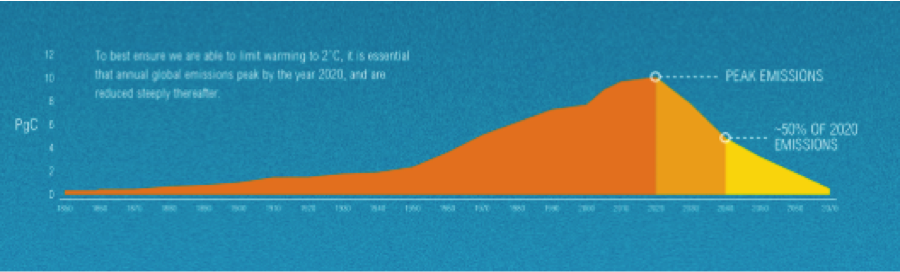
Of course, even if we reduced emissions only incrementally, the global energy system would eventually be changed in sufficient ways. The problem with this is that that change probably would not come fast enough. As the Worldwatch report states, “Many scenarios show a gradual shift to renewables that still envisions a major role for fossil fuels for most of this century” (Sawin). But as the graph below in figure 1 shows, that won’t be enough to keep warming below the 2 degrees Celsius limit agreed upon in the Copenhagen Accords and Cancun Agreements. To ensure that we stay within the 2 degrees Celsius limit, emissions must be peak in 2020, and be reduced rapidly from there on out. Of course, this is still possible, as it is not yet the year 2020, but, at the incremental rate that negotiations are moving, it will not be possible to have peak emissions in 2020, and then reduce them as rapidly as needed after 2020 (IPCC). To achieve this rapid reduction of emissions, the world needs a deeper developmental transformation of the global energy system, not gradual increments of emissions reduction.

Transformative changes are needed to avoid “dangerous” climate change. Incremental changes of emissions reductions, such as those in the Kyoto Protocol and the Cancun Agreements, will not move the global energy system away from fossil fuels fast enough to avoid breaking through the 2 degrees Celsius limit of average global temperature change agreed upon in the Cancun Agreements. Also, merely reducing emissions will not be enough to avoid dangerous climate change; A complete overhaul of the global energy system is needed to do this (Sawin). At present, the world economy is so dependent on fossil fuels that their use cannot be reduced if typical living standards are to be maintained. We will need to change over from fossil fuels into other renewable sources of energy (Sawin). Of course, this complete developmental transformation of the modern global energy system is only theoretical. In real life, there would be few countries that would agree to this kind of complete overhaul of the global economy. This is exactly the reason we have treaties like the Kyoto Protocol: It might not be as stringent as many scientists would like it to be, but it might be the best agreement because it attracts such wide participation. So, while transformative changes of the global economy would be optimal for avoiding dangerous climate change, it might be that incremental policy changes are more realistic for our world.

Figure 1
Figure 1, from http://www.wri.org/ipcc-infographics


Works Cited

IPCC. “Understanding the IPCC Reports.” World Resources Institute. IPCC, n.d. Web. 02 Nov. 2014.

Resutek, Audrey. “Study: Cutting Emissions Pays for Itself.” MIT News. MIT, 24 Aug. 2014. Web. 02 Nov. 2014.

Sawin, Janet L., William R. Moomaw, Travis Bradford, Eric Martinot, Richard Rosen, Kelly S. Gallagher, Youba Sokona, Leena Srivastava, and Monika Zimmerman. Renewable Revolution: Low-Carbon Energy by 2030. Rep. Ed. Lisa Mastny. Danvers, MA: Worldwatch Institute, n.d. Print.

“Things Made From Oil That We Use Daily (a Partial List).” Community Classroom. PBS, n.d. Web. 2 Nov. 2014.


Both Danger and Opportunity for Sustainable Development in the Climate Crisis

A Green Economy

President John F. Kennedy once remarked that, “when written in Chinese, the word ‘crisis’ is composed of two characters; one represents danger, and the other represents opportunity.”[1]  The crisis of climate change poses many threats to the current global economic status quo, especially as many nations are developing at a rapid rate of speed.  Their predecessors, the developed nations, experienced growth under the mantra of “grow fast, clean up later;”[2] this second group of nations, however, doesn’t have that same luxury due to the threats posed by climate change.  But, while it poses threats to the old economic ways and development paths already taken, there are also a plethora of opportunities presented through the climate crisis, which could carve a new development path that is more economically, environmentally, and socially sustainable.

The current system at the core of the global economy emerged as a result of the development paths taken by the Annex-I nations, which gave very little weight to environmental costs and degradation; this economy is still the one currently installed.  Central to its philosophy and functionality is a “growth fetish” or “growth imperative”[3] that places absolute focus upon GDP and whether or not it is increasing as the main indicator for development and growth.  However, GDP doesn’t represent the full picture of economic growth, as it doesn’t indicate whether there is a fair or equitable distribution of benefits or an increasing or decreasing environmental quality.  These two factors are an inseparable part of the threats climate change poses to society, and, if not taken into account as economies grow, could lead to “a lot of people [being] poor and polluted – the worst of all possible worlds.”[4]  With uncontrolled economic growth as has been seen historically, the world and global economy will be a great departure from what is currently enjoyed, with higher social inequality, lower environmental quality, and potentially severe climate change, all of which will make sustainable development increasingly more difficult to achieve.

Without making drastic changes to the current economic system and philosophy in response to the threat of climate change, sustainable development will be out of reach for developing countries.   The effects of anthropogenic climate change will directly and negatively affect many of the essential drivers of sustainable development, namely food, water, and infrastructure, among others.[5]  These pose considerable economic threats to emerging and developing economies; it was estimated that the “total annual damage to China’s economy from environmental degradation is the equivalent of 9% of GDP…[and] bad sanitation and water pollution cost India 6% of national income,”[6] to name a few examples.  That is a crippling cost for an economy to absorb year after year, and, if perpetuated and extended, would have the potential to halt any growth that nations plan to achieve in the future.

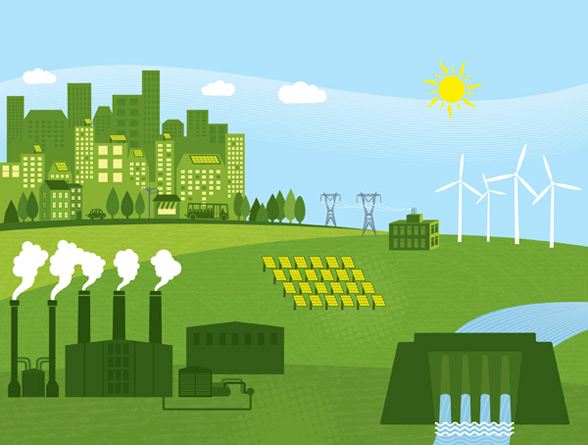
However, there are numerous beneficial opportunities for sustainable development that arise in response to the threats posed by the climate crisis.  These opportunities must be taken in light of the new economic reality that all future growth and development must be sustainable and sensitive to its effects upon the social, environmental, and economic systems in play.  A green economy, as described above, is “characterized by substantially increased investments in economic activities…such as renewable energy, low-carbon transport, energy- and water-efficient buildings, sustainable agriculture and forest management, and sustainable fisheries.”[7]  All of these create good jobs and increase investment in local, regional, and national economies, while also establishing environmentally-friendly and sustainable infrastructure that will have impacts for its entire lifespan.  Infrastructure plays a major role in the future of the economy and the scale at which sustainable development is achieved; “about two-thirds of the $8 trillion need for infrastructure investment in Asia and the Pacific between 2010 and 2020 will be in the form of new infrastructure, which creates tremendous opportunities to design, finance, and manage more sustainable infrastructure.”[8]

This is a defining characteristic of green growth, as it, by definition and in practice, “means looking for investment-hungry projects that bring high returns in broad environmental and narrow commercial terms.”[9]  Green growth or sustainable development policies incentivize the private sector to innovate and discover even better and more sustainable methods in order to maximize their profits and market share.  In effect, this allows for economic growth to be sustained over time, while also protecting and increasing the value of the environment as an asset for future generations.  As the Stern Report declared, “tackling climate change is the pro-growth strategy for the longer term, and it can be done in a way that does not cap the aspirations for growth of rich or poor countries.”[10]


[1] Kennedy, John F.  BrainQuote.com, Xplore Inc, 2014.  http://www.brainyquote.com/quotes/quotes/j/johnfkenn103820.html, accessed November 2, 2014.

[2] “Shoots, greens, and leaves.”  The Economist, June 16, 2012, accessed November 2, 2014.  http://www.economist.com/node/21556904.

[3] Speth, James Gustave. “A New American Environmentalism and the New Economy.” Lecture, Tenth Annual John H. Chafee Memorial Lecture on Science and the Environment from the National Council for Science and the Environment, Washington, DC, January 21, 2010.

[4] “Shoots, greens, and leaves,” The Economist.

[5] United Nations and Asian Development Bank.  Green Growth, Resources, and Resilience: Environmental Sustainability in Asia and the Pacific.  Accessed 9 October 2014.  http://www.unep.org/dewa/Portals/67/pdf/G2R2_web.pdf.

[6] “Shoots, greens, and leaves,” The Economist.

[7] United Nations and Asian Development Bank, Green Growth, Resources, and Resilience: Environmental Sustainability in Asia and the Pacific. xv.

[8] United Nations and Asian Development Bank, Green Growth, Resources, and Resilience: Environmental Sustainability in Asia and the Pacific. xviii.

[9] “Shoots, greens, and leaves,” The Economist.

[10] Stern, Nicholas, “The Stern Review on the Economic Effects of Climate Change,” Population and Development Review 32 (2006): ii, accessed November 2, 2014, doi: 10.1111/j.1728-4457.2006.00153.x.

Without Renewables, Climate Change Will Stunt Your Growth


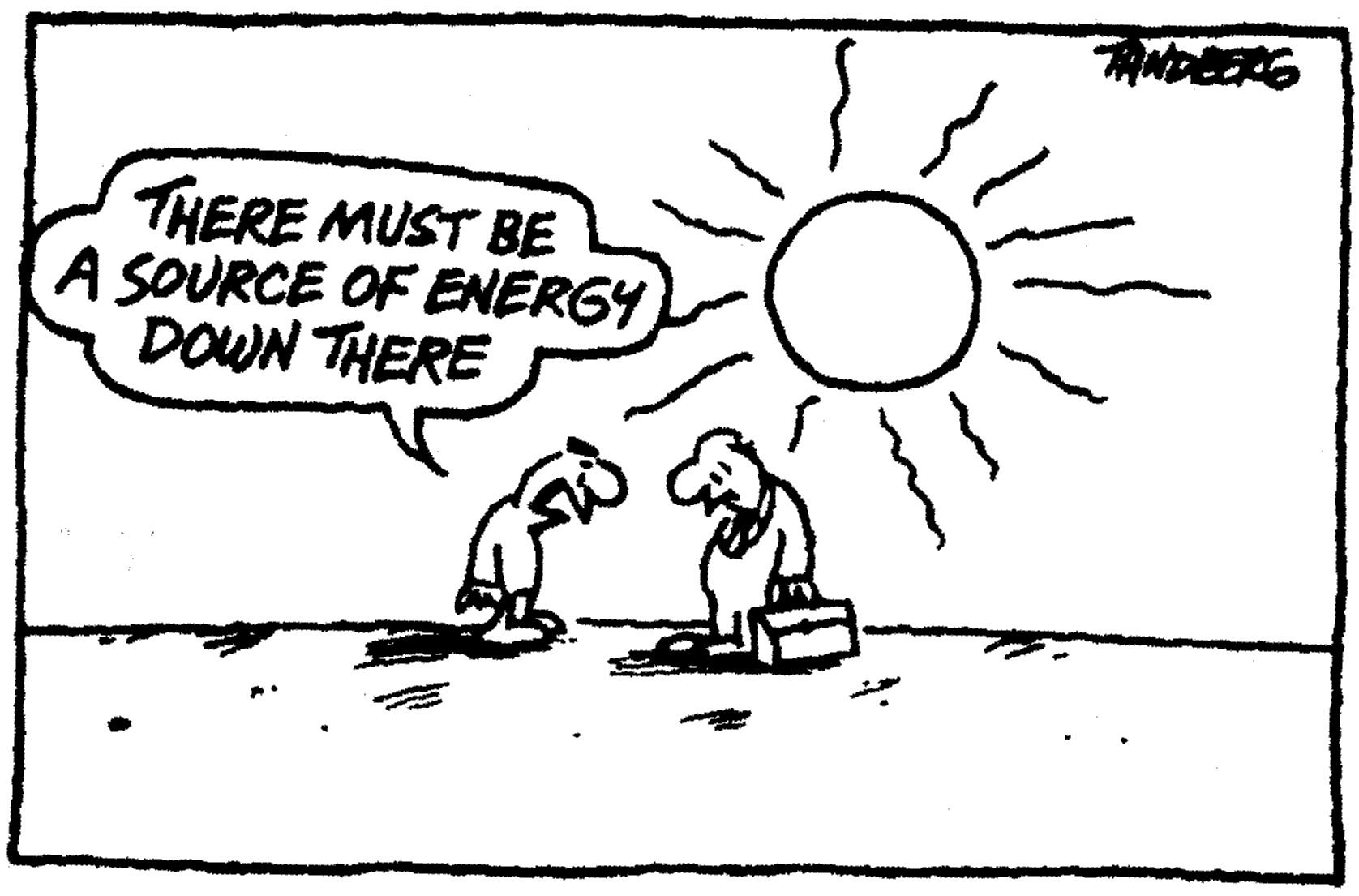
Image From http://thebreakthrough.org/archive/in_love_with_the_sun
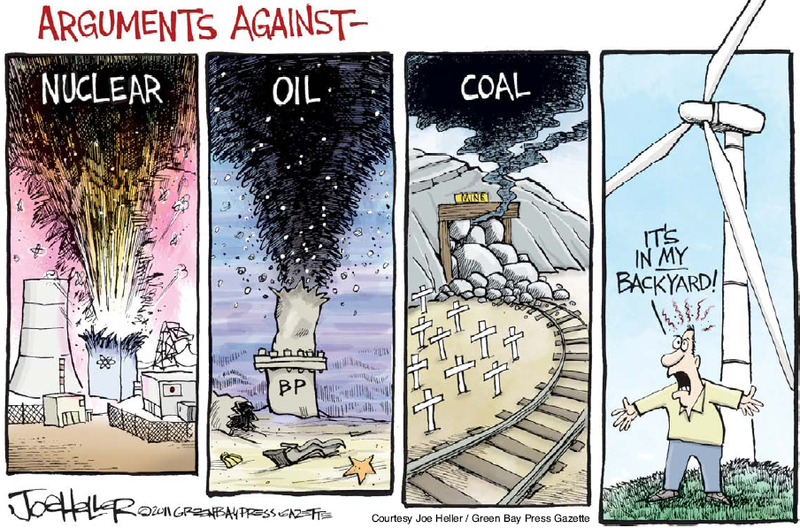
Not In My Backyard by Joe Heller

Climate change does pose significant threats to prospects for sustainable development as it threatens the ability to sustain the development with causing territories being submerged by water, reducing food supplies, and increasing health threats to populations. Luckily, there are some methods of development which simultaneously promote climate change mitigation and development. If the world continued to develop “business-as-usual” than there is no way that that type of development could be sustainable. The massive amounts of fossil fuels necessary for continued development on our current trajectory would push the Earth beyond the levels of climate change “dangerous” to human civilization. Non-fossil fuel intensive development methods, if employed globally, could mitigate further climate change, thus protecting development efforts from more dangerous climate change. The fact that non-fossil fuel methods reduce the danger of climate change makes it better able to sustain continued development through climate change. One alternate development strategy looking more and more hopeful is that of using renewable energies.

A strong paper written in support of low-carbon development is Sawin and Moomaw’s Worldwatch report “Renewable Revolution: Low-Carbon Energy by 2030”. Sawin and Moomaw make the case that combining renewable energy utilization with better energy efficiency efforts could lead to a low-carbon energy sector by 2030 without hindering development in any way, and perhaps even helping it. Currently, most of the world’s power plants lose about 2/3 of the energy they produce as heat (Sawin and Moomaw 10). There is no way that losing over half of the fossil fuel energy going into the power plants is necessary for development. With efficiency efforts capturing the excess heat and steam and updating older power plants to be more efficient, power plants are better able to serve development needs with less carbon emissions. Furthermore, combined with the use of renewable energies instead of fossil fuels, the new global energy system could in fact lead to low-carbon energy by 2030 (Sawin and Moomaw 6-7). Sawin and Moomaw claim that all of the technology required to employ renewable energies on a global scale are ready; only policy is holding back implementation (Sawin and Moomaw 23). This means that there is the capacity to energize the world on mostly renewable energy and not fossil fuels, and developing countries’ development will not be hindered by such efforts.

In fact Sawin and Moomaw give reasons that switching to renewables could in fact improve developing countries’ efforts compared to the business-as-usual approach. For one, renewable energy sources are especially rich in developing areas, offering a possibility for exporting energy and enjoying job opportunities which accompany the birth of a new industry (Sawin and Moomaw 16). Also, renewable energy can offer options for development where current fossil-fuel methods are failing. For example, in Africa where current energy infrastructure is failing, especially in light of the booming population there, fossil fuels are inadequate to serve Africans’ energy needs in order to develop. Renewable sources, and especially wind, however offer and option for more sustainable energy that can support the continent’s development (Sawin and Moomaw 39). Developing countries will still need aid in building new infrastructure, so luckily the motions are already in place to get this through UNFCCC-created funds for climate change initiatives.

As Sawin and Moomaw argue, a low-carbon energy sector offers a road to development which does not simultaneously threaten the sustainability of the very societies which are developing. The trick is not making in improving technology; this has already happened. Instead, policies such as fossil fuel subsidies need to be terminated while other programs supporting renewable energies be created. And as we are getting closer and closer to Sawin and Moomaw’s 2030 goal, time for policy change is running out. If nations want to maintain their hard-earned development, the necessity of moving away from fossil fuels cannot be ignored.


Work Cited

Sawin, Janet and William Moomaw. “Renewable revolution: low-carbon energy by 2030.” Worldwatch Institute, 2009. Web. 2 Nov. 2014.


Movement Towards A Sustainable World

Screen Shot 2014-10-29 at 12.54.48 PM

Climate change is by far one of the most pressing issues of the 21st century. Humans are creating this change in the climate; therefore humanity must take responsibility for previous actions. Developed and developing nations must switch to an energy efficient and renewable world, but it is a global effort. Climate change is expected to put pressure on natural environments as well as those constructed by humans. Therefore, in order to minimize these challenges, it is imperative to put adaptation plans into action. While the world continues to grow and develop, it is important further development is done in a sustainable manner. Sustainable development is a considerable solution towards developing in a way that lessens environmental degradation. Sustainable development is defined by the World Commission on Environment and Development  as, “a mechanism for growth without compromising the ability of future generations to meet their needs” (Warner, 2014). Sustainable development can be achieved through climate resilient pathways, which combine methods of adaptation and mitigation. However, it is argued if climate change will pose significant threats to prospects for sustainable development.

According to the UNFCCC, “Climate change poses a moderate threat to current sustainable development and a severe threat to future sustainable development.” Climate change involves a complex interaction between social and ecological systems; therefore new approaches to sustainable development must take this into consideration. Adaptation and mitigation are both essential for minimizing the risks attributed with climate change. Currently and previously, actions on sustainable development have been delayed, which poses a threat for future sustainable development because it can reduce the options for climate resilient pathways.

On the other hand, researchers at MIT, “looked at three policies achieving the same reductions in the United States, and found that the savings on health care spending and other costs related to illness can be big” (Resutek, 2014). Policies that aim at reducing carbon emissions are beneficial to health problems because these policies lead to reductions in harmful pollutants. These emission reductions also in turn have huge cost reductions for healthcare. One of the researchers Tammy Thompson states, “If cost-benefit analyses of climate policies don’t include the significant health benefits from healthier air, they dramatically underestimate the benefits of these policies” (Resutek, 2014). These results show that climate policies not only benefit the environment, but also benefit health and the economy. The recent advances in technology for renewable energy can achieve more than just meeting the goals of emissions reductions.

While the future in respect to climate change looks entirely too bleak, humanity must use existing technology and implement policy towards continuous sustainable development. We cannot move forward without doing so in a sustainable manner. All nations must work together and assist the most vulnerable nations in taking drastic measures in order to remain under the two-degree limit. Sustainable development produces global benefits in combating climate change.

Works Cited

Resutek, Audrey. “Study: Cutting Emissions Pays for Itself.” MIT News. MIT, 24 Aug. 2014. Web. 02 Nov. 2014.

Warner, Koko, Dr. “Climate Resilient Pathways to Sustainable Development.” Multiple Resilience Pathways: (n.d.): n. pag. UNFCCC. UNFCCC, 19 May 2014. Web.


Climate Change and Sustainable Development: A Perfect Fit

beijingsmog

According to the latest IPCC Synthesis Report there is a clear human influence on the climate system. The “unequivocal warming” can be seen very well over the last three decades, which have been warmed successively. The effects of this human induced climate destabilization can be seen in the present and are projected to worsen over time, regardless of the level of carbon emitted into the future. This does not mean that global and regional systems should not be overhauled to reduce carbon emissions. A rapid decrease in emissions is necessary to avert further warming of the planet and changes in the climate system. As the various effects of the shifting climate are being seen now, it can be clear that a level of dangerous climate change has been reached, although not threatening on a global scale. In order to ensure the perpetuity of our species in conditions that are not life threatening, a new development pattern must be adopted. The old way, some may say the “dirty way,” is no longer feasible. No longer may we dig up energy reserves that were sequestered over millions of years and burn them in a matter of hours. This is not as sustainable as once was thought. The planet is telling us that we must radically shift the way we build, develop, live, connect, move, eat, recreate, etc.

Sustainable development is a young notion, but a powerful one. Around it, is a conversation that attempts to unite every person on the planet in the hopes that we all might work together to further our species. Climate change fits into this conversation very well. Results of unsustainable development, the effects of climate change are a huge risk to the safety of our species. It however lends itself nicely to sustainable development. While posing significant threats to the stability of society, it is a driving force of this newfound development scheme. With changes in line with sustainable development, great gains in living conditions can be seen.

Wedding photos from a smog-day in Beijing, China. Source: http://bit.ly/1o6jan6

In looking at the driver of climate change, fossil fuels, an obvious need for doing away with all fossil fuels can be seen.
Just as important to look at though, are the public health benefits that come from reducing the burning of fossil fuels. Smog and airborne particulate matter are a huge health risk all over the world, from the smog filled skies of Beijing to the United States, where in 2013 118 of the 231 counties in the United States exceeded the EPA’s allowed level of ozone.[1] These dangers are a direct result of burning fossil fuels. Switching to power-generation systems that do not emit will not only slow global warming, it will directly save lives and promote healthier activities.

The alleviation of poverty is one of the United Nation’s direct responsibilities.[2] Taking a look at poverty one will find that about 1.3 billion people in the world do not have access to electricity.[3] One solution to this would be to build large centralized coal plants, which would be the centers of massive electricity transportation networks. This inefficient and unsustainable system is currently in place in much of the developed world. However other solutions exist. There has been a great deal of work done on the link between renewable energy and poverty alleviation. Not only studying the prospects, but actual tangible change. For instance in India, Project Chirag is bringing light to rural villages across the nation and it is being done with the use of solar panels and batteries.

Source: http://www.ids.ac.uk/news/can-renewable-electricity-reduce-poverty
Effect of electricity on poverty. Source: http://www.ids.ac.uk/news/can-renewable-electricity-reduce-poverty


Climate change has been described as the biggest challenge our species has ever faced. And a challenge it is, altering the way nature of the planet that humans have grown up in. Why look at climate change merely as a challenge? The notion that by 2100 fossil fuels must be phased out and renewable grids in place is just incredible. A recent study estimates, with an 80% chance, that the projected population by 2100 will range between 9.6 and 12.3 billion. They will all need electricity, food, water, and space. Developing for sustainability is the only option if we want to be sure that this population will be able to live safely and without struggle. Using climate change as a tool, rather than looking at it simply as challenge, to make the world a better place seems like a reasonable way to ensure that type of development.


Works Cited

“Bodies, History, Visits, Employment, Address, Members, Budget, Information.” UN News Center. Web. 2 Nov. 2014.


“Can Renewable Electricity Reduce Poverty? – Institute of Development Studies.” 13 Jan. 2014. Web. 2

Nov. 2014.


“Climate Change 2014: Synthesis Report, Longer Report.” Intergovernmental Panel on Cliamte Change.

November 1, 2014.


Gerland, Patrick, Adrian E. Raftery, Hana Sevcikova, Nan Li, Danan Gu, Thomas Spoorenberg, and John

Wilmoth, et al. 2014. “World population stabilization unlikely this century.” Science no. 6206: 234.


Resutek, Audrey. “Study: Cutting Emissions Pays for Itself.” MIT News. 24 Aug. 2014. Web. 2 Nov.


[1]http://newsoffice.mit.edu/2014/cutting-carbon-health-care-savings-0824

[2]http://www.un.org/en/aboutun/index.shtml

[3]http://www.ids.ac.uk/news/can-renewable-electricity-reduce-poverty


Sylvia Earle: Mission Blue

sylviaearle

By Elizabeth Plascencia

[youtube_sc url=”https://www.youtube.com/watch?v=B1wp2MQCsfQ” title=”Mission%20Blue%20-%20Official%20Trailer”]

This weekend I finally watched the documentary, Mission Blue, which has been at the top of my Netflix list for months. The documentary showcases legendary oceanographer and marine biologist Sylvia Earle. As a fellow female scientist, Earle has been somewhat of a hero to me. I first heard about Earle’s work in my Introduction to Marine Biology course in the eighth grade. Within the course we spoke about leading female scientists in the field and naturally Sylvia Earle was at the top of the list as the first female chief scientist at the U.S National Oceanic and Atmospheric Administration (NOAA). She has been on my radar ever since. Earle has spent her entire life studying and protecting the ocean and the documentary, Mission Blue, is all about her campaign to create a global network of protected marine sanctuaries.


I find her work particularly moving because although she is witnessing devastating damage to the ocean she often remarks that she will never give up because there is nothing else that she loves more than the ocean.

Sylvia Earle
Sylvia Earle


Why should I care about the ocean? Because the ocean is the cornerstone of earth’s life support system, it shapes climate and weather. It holds most of life on earth. 97% of earth’s water is there. It’s the blue heart of the planet — we should take care of our heart. It’s what makes life possible for us. We still have a really good chance to make things better than they are. They won’t get better unless we take the action and inspire others to do the same thing. No one is without power. Everybody has the capacity to do something – Sylvia Earle


In 2000, Earle was honored as a new member of the National Women’s Hall of Fame. In 2009, Earle received the TED prize after the global launch of Mission Blue and in 2011, she received an honorary doctorate from Smith College, followed by delivering the commencement address at Warren Wilson College. I am deeply moved by Earle’s activism and it is without hesitation that I informally nominate Sylvia Earle for next year’s Rose-Walters Prize at Dickinson College. Am I right?

For more information, please feel free to watch Sylvia Earle’s TED Talk: [youtube_sc url=”https://www.youtube.com/watch?v=43DuLcBFxoY” title=”Sylvia%20Earle:%20How%20to%20protect%20the%20oceans”]

Another Obstacle on the Road to Sustainable Development

sdg

By Maeve Hogel

When it comes to talking about climate change, it is easy to leave the conversation feeling like there is no hope left for the world. Greenhouse gas emissions are rising and policies have yet to be drastic enough to bring levels down where they need to be. Sitting in the comfort of a highly developed country, climate change means having to sacrifice some luxuries, like driving large SUVs, that have become customary. Looking through the eyes of a developing country, climate change hits harder and faster, interfering with the ability to ever reach a point where the developed country’s luxuries would even be attainable. Climate change, among other factors, is certainly an obstacle in the way of sustainable development. Developing countries need financial support, incentives to develop sustainably and help adapting to the damage that has already been caused.

The global nature of climate change requires cooperation from all countries, both developed and developing, despite who was historically the source of emissions. However, even with the idea of “common but differentiated responsibilities” supported by the UNFCCC, developing countries inherently get hit harder by climate change and have less ability to do anything about it. South Center’s report, Integrating Development in Climate Change, discusses that idea of developed countries taking a larger role in decreasing emissions in order to give incentives to developing countries to develop in a sustainable manner (South Center, 7). Developing sustainably, by diversifying the energy sector and increasing reliance on renewable energies can be both environmentally and economically beneficial for a developing country. However, most developing countries do not have the money or resources to implement new policies or develop new technologies. If climate change was not a concern, developing countries could continue to develop exactly how the United States did; by industrializing rapidly without a care about how much CO2 is being emitted. Climate change does exist though, and therefore countries need to develop with climate-friendly policies and technologies. South Center states that future climate change policy “should ensure that the best appropriate technologies for climate change monitoring, mitigation and adaptation be a made available to developing countries…”(17). However, how to make these technologies available and how to finance them are the more difficult questions. Essentially, developing countries cannot develop sustainably, in a world where climate change exists, without the assistance of developed countries.

The path to development is a long one. Climate change adds just another obstacle in order for a developing country to develop sustainable. However, obstacles are meant to be overcome, and it is still possible to develop sustainably in a world with climate change. Global cooperation is necessary and shared responsibilities between developed and developing countries. Getting all countries to make the best decisions, not only for themselves, but for the environment has certainly shown not be an easy feat. Climate change makes sustainable development more difficult, but it doesn’t make it impossible.


South Center, Intergrating Development in Climate Change. Nov. 2007.