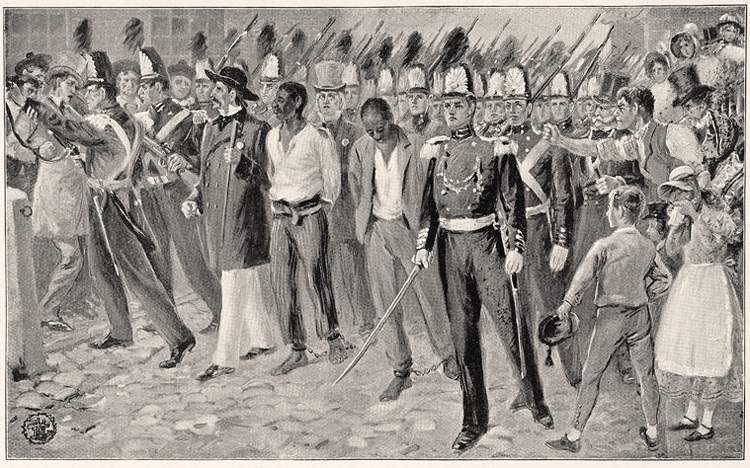
The muster of men at the barrack door,
The sound of arms, and the tramp of feet,
And the measured tread of the grenadiers
Marching down to their boats on the shore.
TEXT: Longfellow, “Paul Revere’s Ride” (1861)
CONTEXT: Toward Secession
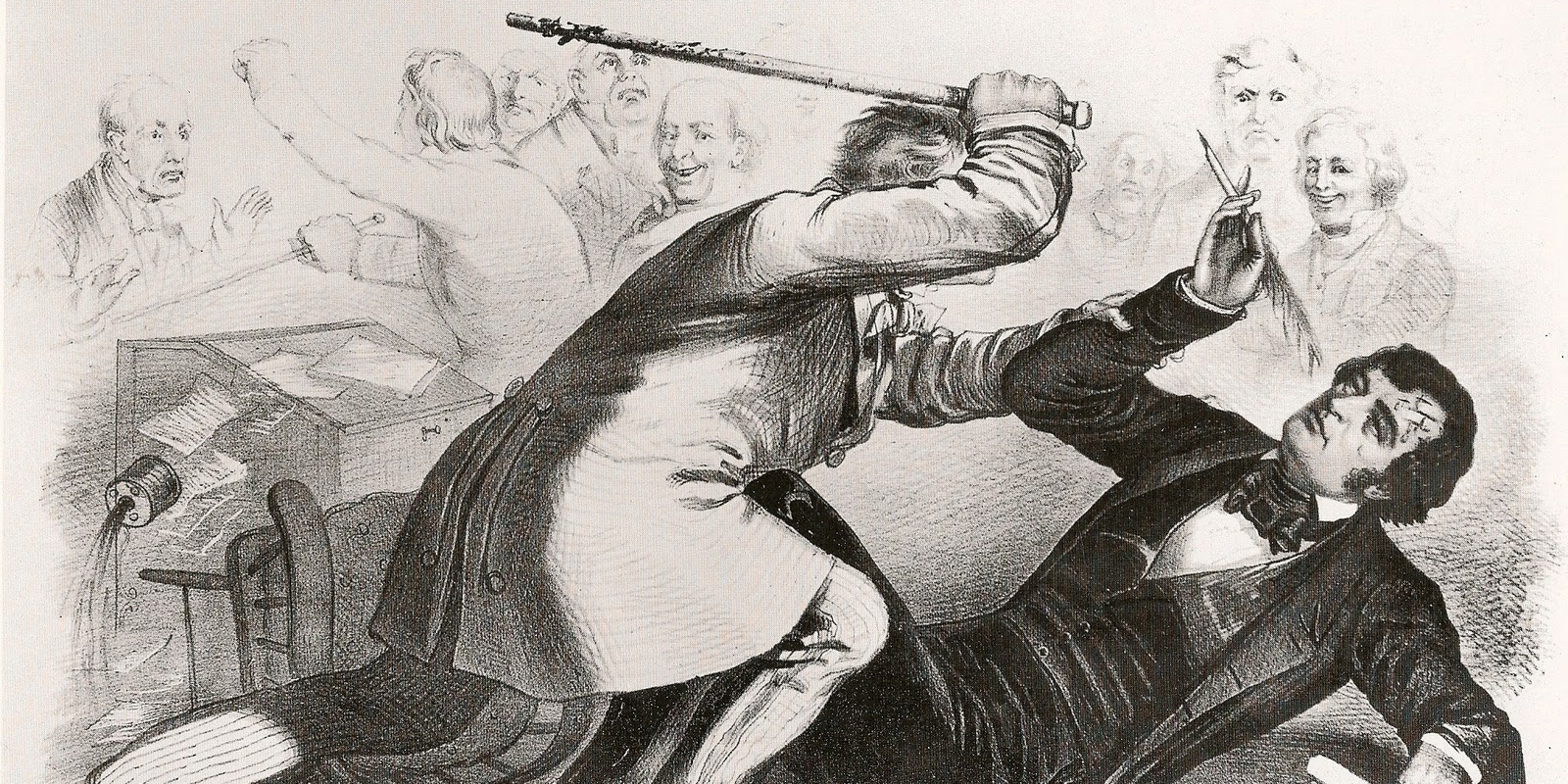
Caning of Charles Sumner, 1856 (American Yawp)
- Longfellow and U.S. Senator Charles Sumner (R-MA) were close friends and political allies. Both might be termed political abolitionists (evolving from Liberty party to Free Soil party to Republican party during the 1840s and 1850s), but Sumner was public and vocal about his political views –both when he was in office and out of office– while Longfellow was more circumspect. However, each man opposed the spread of slavery and detested the power of slaveholders in America during their lifetime.
- Longfellow was also friendly with –though not active with– transcendentalists in Boston and New England. Transcendentalism was an intellectual movement in the 1830s, 1840s, and 1850s, led by figures such as Ralph Waldo Emerson and Henry David Thoreau, that championed individualism and nature, principles that Longfellow also embraced.
SUBTEXT: Taking Lessons from History
- How does historian Jill Lepore build the case for understanding that a poem ostensibly about 1775 was really about the sectional crisis over slavery?
METHODS CENTER —Creativity and History
- Understand the genre of historical fiction