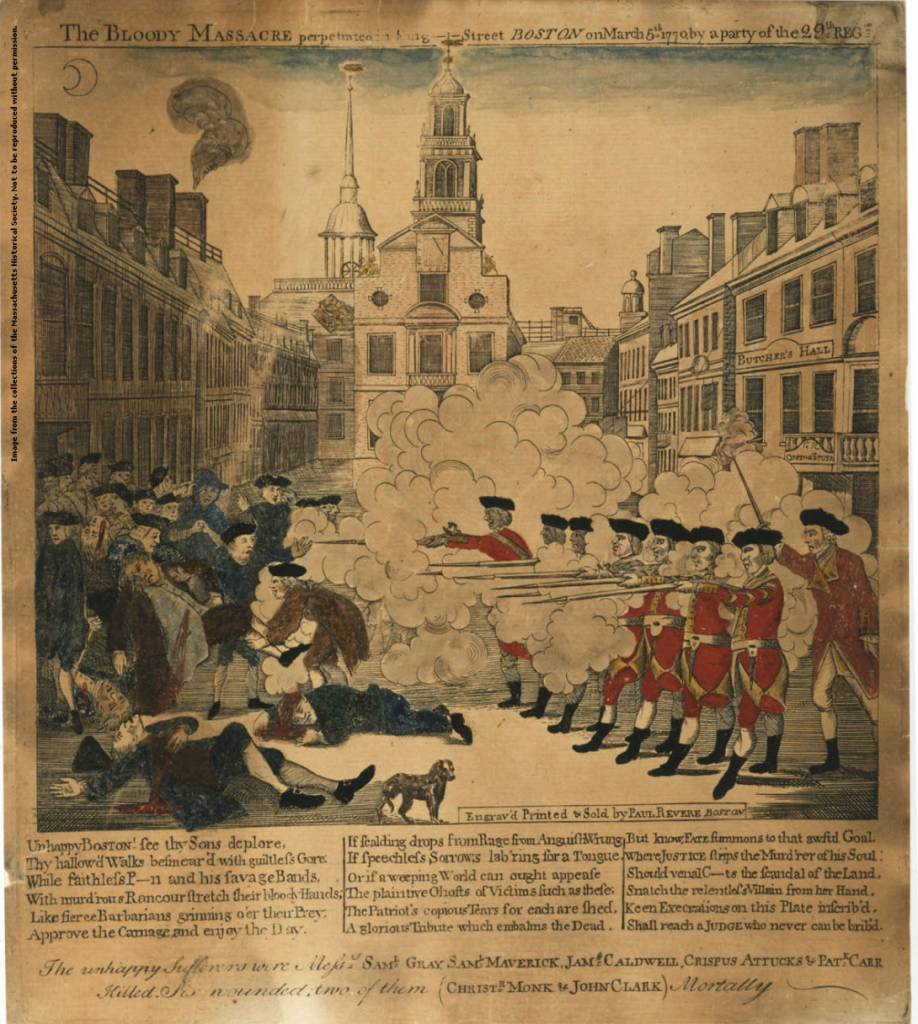
Image Gateway: Boston Massacre (1770)
Paul Revere’s print depicting the Boston Massacre (1770)
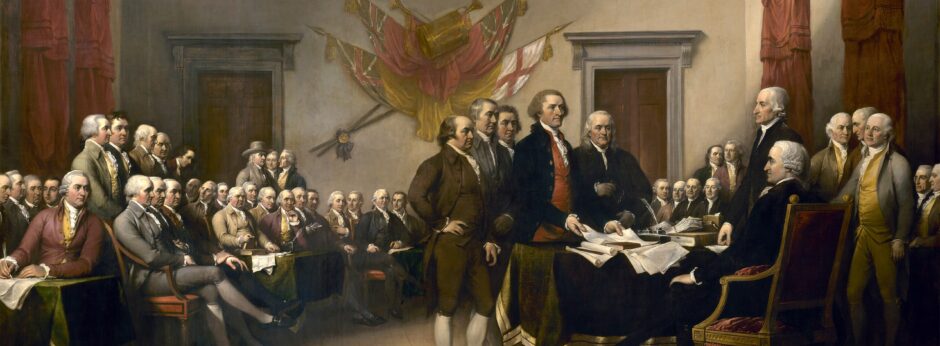
The Colonial Crisis: A Timeline of Documents (abbrev.)
-
- 1770 Boston Massacre // Repeal of Townshend Duties (except tea)
- 1773 Relief for East India Company // Boston Tea Party
- 1774 Coercive or Intolerable Acts // First Continental Congress (Association)
- 1774 Thomas Jefferson’s “Summary View” pamphlet
- 1775 Lexington & Concord // Second Continental Congress
- 1776 Thomas Paine’s Common Sense // State constitutions
- 1776 Abigail Adams: Remember the Ladies
- 1776 Declaration of Independence
We hold these truths to be
sacred and undeniableself-evident, that all men are created equal, that they are endowed by their Creator with certain unalienable Rights, that among these are Life, Liberty and the pursuit of Happiness. That to secure these rights, Governments are instituted among Men, deriving their just powers from the consent of the governed. —Declaration of Independence (1776)
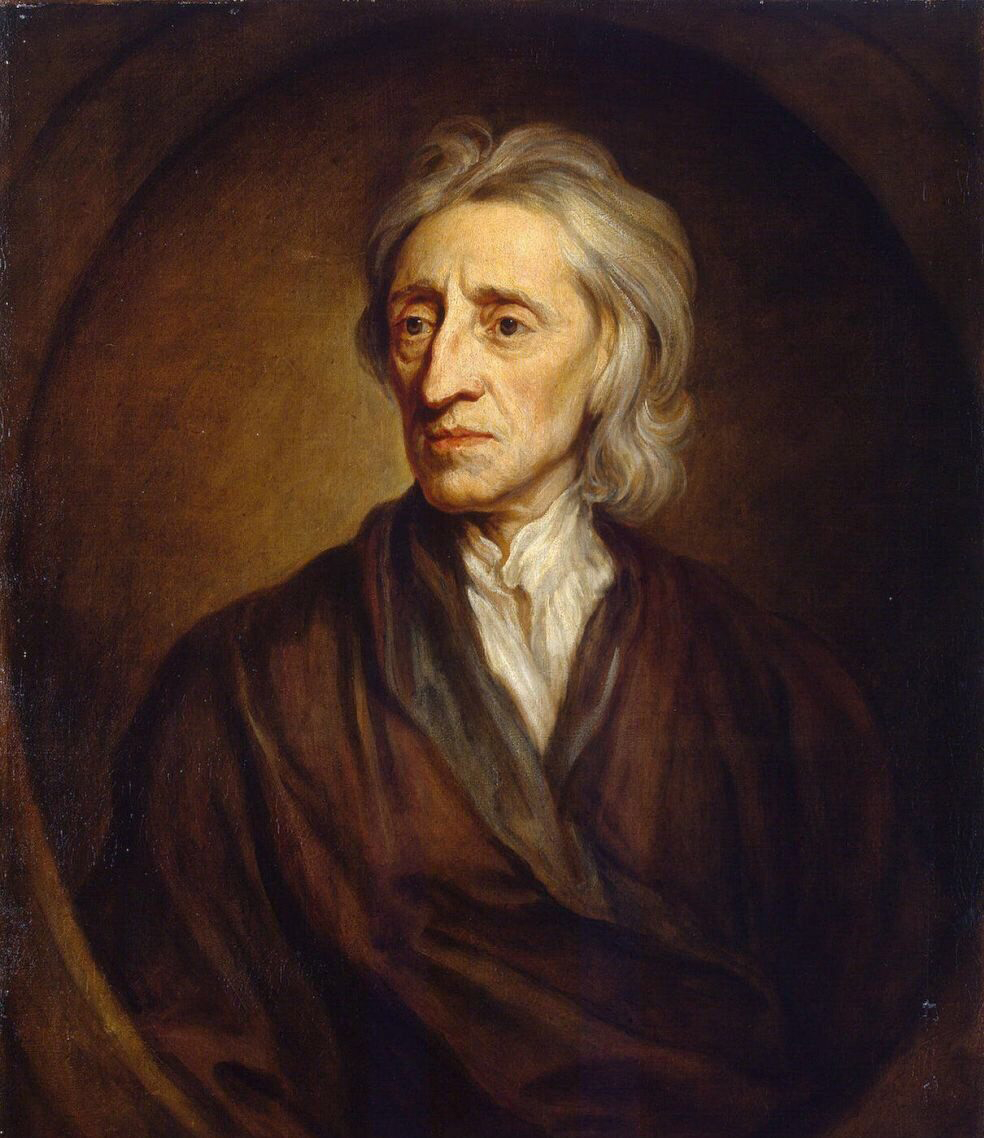
Liberalism
British philosopher John Locke was one of the founders of modern liberalism
- Ideology of SELF (autonomy)
- 18th-century: Property (“pursuit of happiness”) and Natural rights
- 19th-century: an evolution toward prioritizing markets & interests (capitalists)
- 19th-century: an evolution toward prioritizing human rights (abolitionists)
Republicanism
American revolutionaries who embraced Lockean liberalism for individual rights also believed in a governing philosophy of republicanism to manage a contentious society
- Ideology of SELF-GOVERNMENT (representative democracy)
- 18th-century: court vs. country // Tory vs. Whig
- 19th-century: an evolution toward legitimizing partisanship
KEY DATES
1688 // Glorious Revolution
1775 // American Revolution
TEXT