
While one of the most prolonged conflicts in American history, seeing the deaths of millions of civilians, the Vietnam war exists in a nuanced space in public memory. Infinitely more polarizing to contemporaries than previous twentieth century American combat involvement, the Vietnam war would lead to immense cultural and political change.[1] The World Wars faced domestic opposition, but not on the same scale as the Vietnam war, and the scale of domestic involvement in the Southeast Asian conflict compared to the vast production needs of the Second World War meant the distant fighting of American troops did not occupy the same level of thought in many American minds.[2] World War II, especially, holds a level of mythos in American culture as being an unequivocable triumph of democracy while other American wars are actively condemned by sitting politicians.[3] To military families and those young people who faced death in the jungle, however, Vietnam looms large. Marrying a Naval officer a few months after graduating from the University of Maryland with her Bachelors in English, Sue Nunn found herself, like many Americans, believing in the necessity of US involvement in the Vietnam conflict based upon the protection of civilian lives against the evil forces of Communism.[4] Growing up in an America that seemed to hold infinite potential and obligation to the international community, Nunn aligns with Brands’ assertion that following the Second World War, “Aware of their own power, primed to respond forcefully to aggression, Americans deemed themselves responsible for world order…”[5]
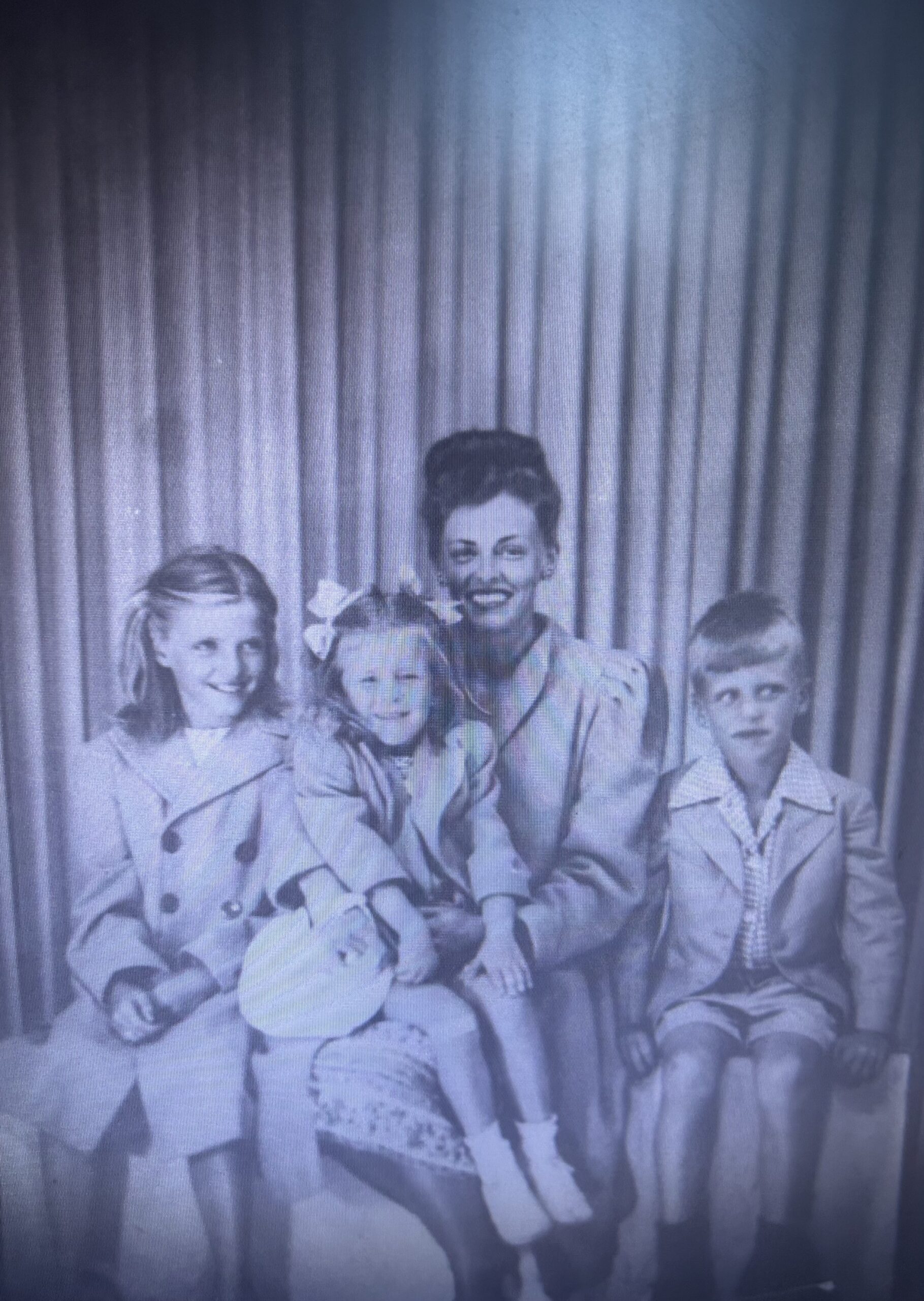
Collins Family, Sue middle, seated on her mother’s lap (via Nunn)
Born three weeks before the bombing of Pearl Harbor, Sue Nunn’s earliest years are washed in memories of turtles eating strawberries from the family victory garden, seeing her uncles and gardener return home in uniform, and playing with her siblings in an Army surplus command car purchased by their father (pretending to kill Germans, of course).[6] Two of her uncles served in World War II, one in the Pacific theatre and one on the Eastern front in Europe.[7] Her upbringing in a post-war nation would influence her geopolitical outlook, “…I grew up thinking America was the world’s white knight, you know we save people in trouble, that’s what we did. And it felt good, we were on a power trip, I was on a power trip about America.” [8] Beyond familial ties to service and personal feelings about American interventionism, she was a firsthand witness to the growth of the military-industrial complex. Sue recalls her father’s printing business booming in the post-war years. “His [program printing] contract with the Naval Academy started well before the war, but then after the war it really took off, of course, because he had all these defense contractors [wanting to advertise in the programs].”[9] Working a few summers manning three auto typists in the sweltering building, Nunn remembers many of the letters sent to potential advertisers going to those in the burgeoning defense contracting field, especially for the annual Army-Navy football game.[10] It would be because of her father’s contract with the Naval Academy that Sue would meet recently graduated Silas O. Nunn III, the two marrying and having three children together while the eventual Captain Nunn served in various positions down the coasts and Sue raised the family at home.
Despite Nunn’s husband receiving orders to deploy to Vietnam in 1970 (getting diverted to the Persian Gulf mere weeks before the destroyer had been set to depart), Nunn asserted that Vietnam, “…was not a Navy war except for the pilots…” downplaying naval involvement as, “…our ships going offshore and bombarding the coast…” or pointing to Si’s classmate from the Naval Academy and Bronze Star recipient, Admiral Hank Mauz, who captained a river boat on the Mekong Delta as an anomaly. [11] Yet, the conflict ostensibly began due to an attack on the US Navy, and the Marines played a vital role in the war. The 1964 Gulf of Tonkin incident – widely believed to be a false flag operation – occurred when the Nunns had not yet been married a year.[12]
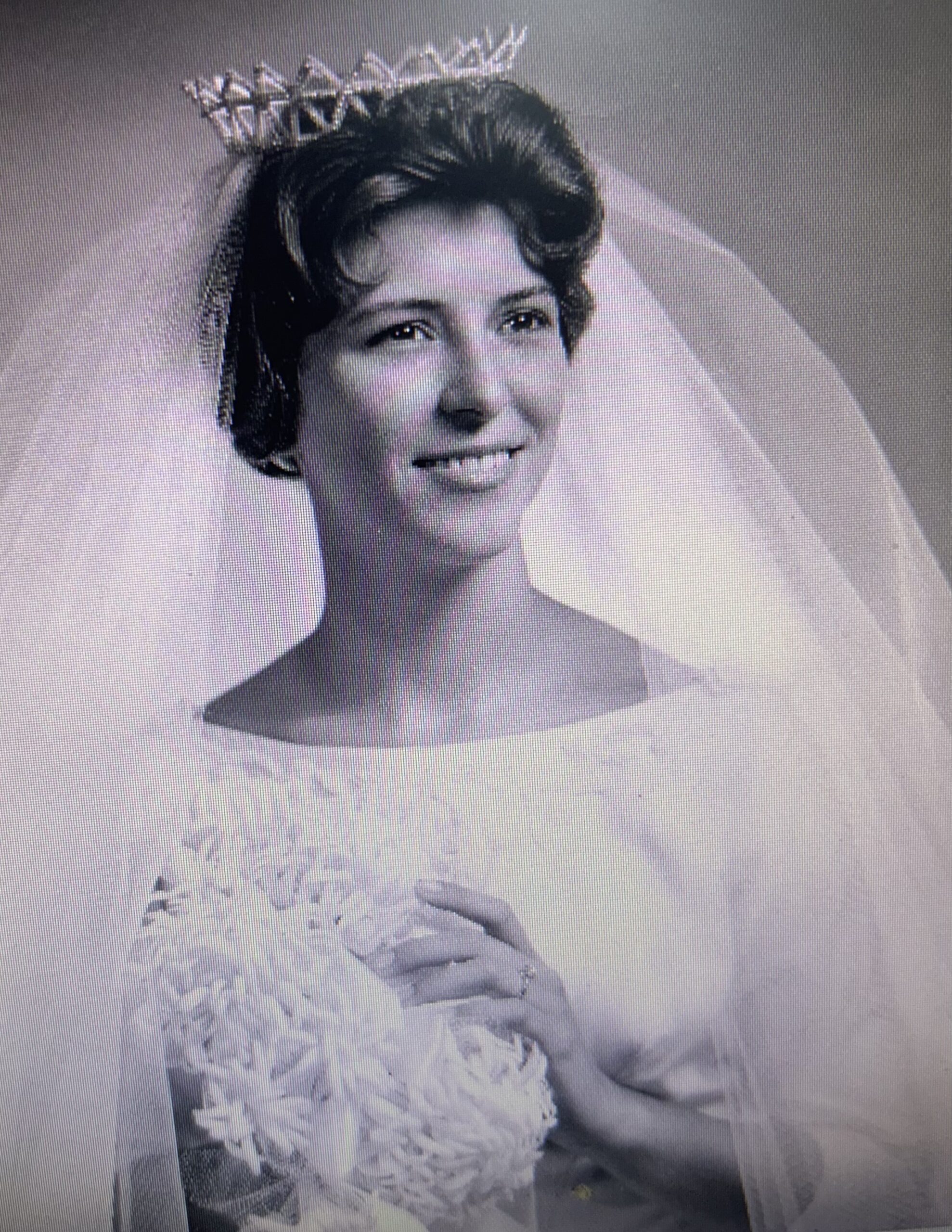
Nunn on her wedding day (via Nunn)
When asked about her feelings surrounding the supposed attack on an American destroyer by the North Vietnamese, Nunn stated, “…I remember my loyalty to NATO made me also loyal to SEATO, the Southeast Asia Treaty Organization, and that was, looking back on it, kind of a lie. It was a little bit like just an excuse to get in.”[13] This contemporary support for yet retrospective rejection of American actions in Vietnam categorized Nunn’s sentiments surrounding the conflict. She adhered to the domino theory, that the fall of Vietnam to communism meant the rest of Southeast Asia would soon follow, and believed America to be the world’s “…white knight, we help people from Communism that are being killed in their own countries, in Asia, you know I didn’t even think of the colonial powers losing their colonies as a reason. It was that these people were troubled.”[14] Modern scholarship tends to link the waning grip of imperial powers on their colonies to American entrance to Vietnam.[15] Modern public opinion on Vietnam frequently vests blame in American failure with the conflicting nature of appeasing constituents and winning a war, which many scholars deem an oversimplification.[16] Other scholarship holds media as a crucial tenant in the formation of public opinion and the electoral process, while still acknowledging the vital nature of partisan politics.[17] While not blaming the media and the antiwar movement for the loss in Vietnam, Nunn pointed to the era as a turning point in how the news media behaved, “There’s something called ‘the boys on the bus,’ and journalists were very patriotic up until Vietnam and Watergate, and then they didn’t have to be patriotic…it wasn’t just war it was everything, the media changed.”[18] Until that point, however, media rarely broke ranks with the patriotic pro-war line. Still, the depiction of Vietnam on television did not capture the reality of the war.
Like many Americans, Nunn did not see the American interventionism as a problem until the truths of the conflict came out. Even the images shown on the nightly news did little to convince Nunn of the military missteps, “I don’t think we really knew how bad the GIs had it in the jungle until later. So even though it was a television war, it didn’t look as bad as what our uncles had gone through, to be honest…It was later when we found out.”[19] Sue did not recall much unrest or pushback in the Naval communities she lived in due to the Vietnam war, “The atmosphere [in the Naval community] was patriotic. It’s our duty, it’s our job, you know, we’re the white knights, we help people from Communism that are being killed in their own countries in Asia, you know I didn’t even think of the colonial powers losing their colonies as a reason. It was that these people were troubled.” [20] The shooting at Kent State and the exposure of the Pentagon Papers would change her mind, however, and the shift toward rejecting American interventionism in Vietnam began due to her belief in poor military leadership. This trend of waning support for government actions aligns with national trends at the time, with American National Election Studies seeing a twenty-eight percent decrease from sixty-two percent in 1964 to thirty-four percent in 1974 of respondents who trusted the government ‘most of the time’.[21]
Her loss of faith in the leadership of the American military during the Vietnam war did not mean a complete rejection of militarism, as she still believes the institution vital to international relations, “I think of a strong military as a diplomatic tool, as long as it’s controlled by value-driven elected officials.”[22] Leadership is crucial in wartime, and Nunn stressed responsibility of those higher-ups for the war crimes and missteps during Vietnam and other American international missteps, “…I think those soldiers took the hit but their leadership should’ve been the ones taken to Captain’s Mast, should’ve been court-martialed.” Ultimately, while Nunn vests blame in leadership, her disdain for the Baby Boomers and their lack of desire to sacrifice for the nation is evident. When asked about reasons for draft dodging, Nunn replied, “I think they didn’t want to fight in the jungle, whether they believed in it [the antiwar movement] or not, they are really bratty and entitled.”[23] Conscientious objection for religious reasons seems to be the only way in which to avoid compulsory military service to Nunn, and even then she points to the noncombatants in uniform as medics or supply personnel during previous conflicts.[24] Her fierce love and admiration for the American military did not end because of the Fall of Saigon, and she believes the military to be better for the fundamental retooling of war colleges following the embarrassment of Vietnam. [25]
The World Wars had clearly defined heroes and villains. The Vietnam war held more gray area, opening the door to public questioning of government affairs. Vietnam changed the ways in which the American public interacted with their elected officials and the news media, leading to more distrust in these institutions than ever before. Despite her alignment with the military as a Navy wife and her long-standing admiration for the United States in general, Sue Nunn, like most Americans, eventually saw the Vietnam war for what it was – a failure of leadership, and thus a failure of America.
[1] George C. Herring, “America and Vietnam: The Unending War,” Foreign Affairs vol. 70, no. 5., (Winter 1991), 119, [WEB].
[2] John Milton Cooper, “The World War and American Memory,” Diplomatic History 38, no. 4 (2014), 730 [WEB].
[3] Cooper, “The World War and American Memory,” 732; Sue Nunn, Zoom Interview with Lillian Schupp, Heathsville, Virginia, April 11, 2025.
[4] Herring, “America and Vietnam,” 106; Sue Nunn, Zoom Interview with Lillian Schupp, Heathsville, Virginia, April 1, 2025
[5] H.W. Brands, American Dreams: The United States Since 1945, (New York: Penguin, 2010), 23.
[6] Zoom Interview with Nunn, April 1, 2025; Zoom Interview with Nunn, April 11, 2025.
[7] Zoom Interview with Nunn, April 11, 2025.
[8] Zoom Interview with Nunn, April 1, 2025.
[9] Zoom Interview with Nunn, April 11, 2025.
[10] Zoom Interview with Nunn, April 11, 2025.
[11] Zoom Interview with Nunn, April 1, 2025.
[12] Brands, American Dreams, 135.
[13] Zoom Interview with Nunn, April 1, 2025.
[14] Herring, “America and Vietnam,” 107; Zoom Interview with Nunn, April 1, 2025.
[15] Herring, “America and Vietnam,” 106.
[16] Herring, “America and Vietnam,” 109-110.
[17] Jonathan McDonald Ladd, “The Role of Media Distrust in Partisan Voting,” Political Behavior vol. 32, no. 4 (December 2010), p. 568, 581, [WEB].
[18] Zoom Interview with Nunn, April 11, 2025.
[19] Zoom Interview with Nunn, April 11, 2025.
[20] Zoom Interview with Nunn, April 1, 2025.
[21] Michael McGrath, “Beyond Distrust: When the Public Loses Faith in American Institutions,” National Civic Review vol. 106, no. 2 (Summer 2017), 47, [WEB]
[22] Email Correspondence with Sue Nunn, April 2, 2025.
[23] Zoom Interview with Nunn, April 11, 2025.
[24] Zoom Interview with Nunn, April 11, 2025.
[25] Zoom Interview with Nunn, April 1, 2025.
Further Reading
Brands, H.W. American Dreams: The United States Since 1945. New York: Penguin, 2010,
Cooper Jr., John Milton. “The World War and American Memory,” Diplomatic History vol. 38, no. 4 (September 2014), p. 727-36 [WEB].
Herring, George C. “America and Vietnam: The Unending War,” Foreign Affairs vol. 70, no. 5., (Winter 1991), 104-119 [WEB].
Ladd, Jonathan McDonald. “The Role of Media Distrust in Partisan Voting,” Political Behavior vol. 32, no. 4 (December 2010), p. 567-85, [WEB].
McGrath, Michael. “Beyond Distrust: When the Public Loses Faith in American Institutions,” National Civic Review vol. 106, no. 2 (Summer 2017) [WEB].
Appendix
“Aware of their own power, primed to respond forcefully to aggression, Americans deemed themselves responsible for world order…Isolationism had been respectable up until the moment the Japanese bombs and torpedoes struck the American ships at Pearl Harbor; by the time the American atomic bombs hit Hiroshima and Nagasaki, isolationism was the preserve of cranks.” – H.W. Brands, American Dreams, page 23.
Sue Nunn, born two weeks before the bombing of Pearl Harbor, is a patriotic former Navy wife who provides insight into the pro-Vietnam war position of the 1960s and the cultural shift in American politics.
Selections from Interviews
Zoom Interview with Sue Nunn
April 1, 2025: Heathsville, VA and Carlisle, PA
Q: What is your first recollection of hearing about the conflict in Vietnam?
A: Well the, the beginning is kind of fuzzy, um. I think it was about 1962 when I was a senior in college. The thing that was going on then though was, I was engaged and we were getting married right after graduation, as a lot of women did at that time. And, um, you know, college with all the classes and everything I wasn’t really aware of current affairs as I became almost immediately after we were married. [Right] Because of course he was in the navy, we were stationed in Charleston in 1963. I remember, um, I remember a lot of what Kennedy did for South Vietnam, or I remember seeing snippets of it but then his assassination and LBJ coming in overwhelmed everything [Yeah] in 1963 and um, um. So that-that’s kind of, those memories are really kind of fuzzy. It’s odd that I can remember World War II as a four-year-old than I can as Vietnam as a 20 year old.
Q: Right, I mean you just had a lot going on. You were a newlywed, you were getting out of college, I don’t think a lot of 20 year olds are really invested in global affairs unless it effects them directly, in a lot of ways. But, but do you think the Gulf of Tonkin was kind of like a, a thing that you picked up on because of the naval aspect to it, or…
A: Yes, and I remember, you know I remember my loyalty to NATO made me also loyal to SEATO, the South East Asia Treaty Organization, and that was, looking back on it, kind of a lie. It was a little bit like uh, like, I, it was just an excuse to get in. And I think that was as much LBJ’s, I’d have to look up the date of Gulf of Tonkin. Dien Bien Phu I remember more about, now that was in the fifties. When the French lost and, of course our allies, colonial powers, were dreading losing their colonia-colonies. And, um in fact, I remember De Gaulle pressed Eisenhower to get involved in Vietnam or he would not join NATO [Right]. Um, and Churchill dreaded losing the British Empire on his watch. And, um, so, coupled that with the fear and loathing for Communism, they were massively killing their own people at the time, um, you know, we got in. I had to think Ken Burns’ Vietnam War series, which you know was recent, I can remember watching every minute of it and thinking every minute of it was true. However, because he should’ve done the Cold War first because Vietnam makes Kennedy and Eisenhower look like idiots without it. [Yeah] So, and I have to say the reasons for going in, the domino effect, I still think the killing fields in Cambodia, you know, give me pause about the whole thing. Why, why aren’t two million Cambodians at least a third as important as six million Jews? Their lives are human lives. [Right] You know, and so, you know I grew up thinking America was the world’s white knight, you know we save people in trouble, that’s what we did. And it felt good, we were on a power trip, I was on a power trip about America. I mean, um. I’m going to stop there because things are very different just over the last two months, two to three months [Yeah], and became different in the year 2000, actually, so anyway, I’m going to digress and go far afield, we better get back to your second question.
Q: I think you kind of answered a lot of it, but at the outset, did you believe American involvement would ease the conflict? Has your opinion change over the years?
A: Right. Well still, um, you know I went to London and I worked in London in the late eighties. Alright, and there were a couple of events that happened there um, that, uh,. I’m an Anglophile, and the Brit’s opinion of America is important to me, and obviously their antipathy and resentment and jealousy really surprised me when I moved to London. And I uh, have to tell you a couple of anticdotes. Both of them are at dinner, with people I had never met before, British men, um. I was at one dinner party, it was a small dinner party, just me and my friend, um who were the only women and three men. You know, what I, do you know the term Beefeater, [Yeah] that kind of a Brit is a Beefeater, you know. Churchill versus David Niven, you know, kind of thing, and they were all Beefeaters at this dinner. And as soon as my friend got up to go into the kitchen one of em said to me “Let’s talk about Vietnam.” And I said “We lost our virginity in Vietnam.” [Yeah] Silence. Then he said “Let’s talk about the assassinations.” And I said “Well, I’m willing to talk about the assassinations, but not because you’ve run out of things to say about with Vietnam.” And then I got up and went to help Sylvia in the kitchen. And I think the other two leaned on him a little bit, because when I got back they were gracious, all of them. [Yeah] Another antecdote, this was later, I was at a banquet in Henley, you know the Henley rowing tournament, I’d gotten an invitation to go and I was sitting at a banquet table next to a man who turned out to be a submarine captain on the same NATO exercise as your grandfather’s ship, the Coontz. [Really?] Yes, so we found that out, I remembered the British Admiral that was in charge of the squadron and he said, “What was the hull number on your husband’s ship?” And I said, “It was the U.S.S. Coontz, that was, the hull number was 40.” He said, “On the wall of my den I have a photograph of the U.S.S. Coontz in the crosshairs of my parascope.” [Wow. That’s very unique, oh my gosh, what are the odds?] Okay before that, before that, your grandfather was the executive officer on a destroyer called the Dahlgren, and this was 1969 or ‘70, John [the youngest] wasn’t born yet. Anyways, they had orders to go to Vietnam. And in those days, it was not a navy war except for the pilots, this was really our ships going offshore and bombarding the coast, right? [Right] But they were diverted, they had, before they got underway their orders were changed and they were diverted to the Persian Gulf, and your grandfather said, “We’ve been diverted to the Persian Gulf because the Brits are leaving station, Brittania no longer rules the waves, now it’s our turn and I pray to God we do as good a job as they did.” But so, the Brits, really had lost their empire after WW2 and that was the reason for the jealousy, it’s a love-hate relationship kind of. More love than hate, I would say. I mean they’re the first go-to ally, and we are theirs, despite what’s happening right now.
Q: Absolutely, so you felt like it was kind of the Americans’ responsibility to be the white knight, the policeman of the world, and kind of keep everyone in line?
A: I didn’t think about it that way, I didn’t think of us being the policemen, I think that’s George Bush thinking we’re the policemen. No we, we rescued, we were rescuers. We were more like firefighters or EMT people than policeman. At least, that’s my view. And, I uh, I miss it. I think it’s our responsibility, there’s only one superpower, by definition. Who should it be?
Q: It’s a good question. Did any of your high school or college classmates enlist or were drafted?
A: Um, actually, um, I talked about Dien Bien Phu, before Vietnam there was a lot going on. Dien Bien Phu, as I remember, a lot of their soldiers escaped to Laos, after they weredefeated. And I know my, there was a 1956 graduate, I was ’59, he was ’56, and he went to Laos. I don’t know if he was drafted or if he enlisted, I can’t remember his last name, his first name was Gary. And then one of my classmates was sent to South Vietnam in 1963 as an advisor, that’s all I can remember.
Q: You were a navy wife during this period, what was the atmosphere like in that community?
A: Well, again, because Vietnam really wasn’t a Navy war, except, in, there was only one in-country exception. And that was Hank Mauz, who was a classmate of your grandfather and he was captain of a river boat. In fact he won, I think he won the [Bronze] Star because he figured out a way to keep his men safe, even though they were, they were the most dangerous Navy ships, they weren’t ships they were just small river boats. And you know, I can send you a link to his Wikipedia profile because he became, WESTPAC, he became a leader of the Western Pacific, much later. But anyway, you can also see the river boats on the Mekong Delta, on the Mekong River looked like. You know, the story was probably aprocryphal. There were things that he was supposed to do that were really dangerous, that he did not do. And he told his crew, “No one is going to get shot on this boat. Not me and not you.” I think it only had a crew of four. They were tiny, and they patrolled the river. And they were shot at by the Vietcong from both sides. So, um, that’s… The atmosphere was patriotic. It’s our duty, it’s our job, you know, we’re the white knights we help people from, uh, we help people from Communism that are being killed in their own countries, in Asia, you know I didn’t even think of the colonial powers losing their colonies, as a reason. It was that these people were troubled.
Q: Right. And that kind of fear of communism is why I would consider you a child of the Cold War, right, like you kind of grow up over this spectre of the Russians coming, coming for you, and kind of coming for your way of life.And I don’t know if you felt that way, I don’t know if you had to do the bomb drills, or,
A: Yeah, I did have the bomb drills, I remember distinctly ducking for cover out in the hall of my elementary school, and that was the fifties, no that was the late fourties even, no, yeah it was the fifties because um, um, yes, it was definitely the fifties. Alright, so it would be ’50 and ’51. Now another thing about World War II is that I had kind of an unusual experience, maybe that I’ve never told you about, it wasn’t just me. I mean we went to a Saturday matinee, every Saturday afternoon in the winter when we couldn’t play outside and when it rained. And we went there because there were Superman serials and cowboy movies, double-features, always. However, in the late fourties, or ’46-’47 were the Nuremberg Trials and Movietone News. They put on a clip of Movietone News before Superman serials, so I remember, we’re sitting there, we’re watching the Holocaust. We’re watching the ovens, we’re watching the skeletons, we’re watching the, the mass graves. I was terrified of Germans, and hated them. And I still, I still, have an, um, and this is a real prejudice because there’s nothing I can do about it. I was on a train from Frankfurt to Munich in 1987, going to meet your uncle and your mom, we were going skiing in Innsbruck for Christmas, I was just over there, I had just moved over there and they came. And I was on a train and I was the only American on a train full of Germans, for that train trip. And by the time I got off, the hair on the back of my neck was standing up, my blood pressure was up, I was breathing hard, my heartrate was up. There was nothing I could do about it. However, I have two very good German friends. You know, individually I can overcome it, but when I’m surrounded by it the old fears kick in. And so, um, I equated what was happening in Russia and China with what the Germans did, it was just a different name, it was Communism instead of Fascism but it was a viscious autocracy and um, I had a course at the University of Colorado called Communism, Fascism, and Socialism and it was taught by a Polish resistance guy, Eddie Roszak was his name, and he was a tank commander in World War II and his face had gray freckles from the powder burns, and he was really articulate. Anyway, the um, the oppression felt very much the same between Fascism and Communism to me, it’s very hard for me to separate them.
Q: Right, right. So, how did you feel about the anti-war movement and has your opinion changed over the years?
A: Well, I thought Yuppies, the Boomer generation, were bratty and depraved. And, I was appalled at their treatment of returning veterans, and I, I thought they were um, uber privileged, and they did an awful lot to dodge the draft, because they didn’t want to fight, they wanted to go to Woodstock, they wanted to do what they were doing. And they were not, um, I still think, they were the first generation, and I hope the last generation, that doesn’t want to pay it forward, they still don’t. And, you know they used to say don’t trust anybody over 35 or whatever, yeah but don’t trust anybody under 78. I feel like Im a child of the uh, I’m a child of the ‘30s, I identify with Martin Luther King, I don’t identify with the Boomers. [Right] And um, however, there was an abrupt rethink after the Kent State shootings, and then the next year the Pentagon Papers came out. So now I’m outraged at everybody, right?
Q: Right. So did the exposure of the Pentagon Papers influence your opinion on the war, overall?
A: Yeah, McNamara and LBJ were liars. Worse was General Westmoreland, who, General Westmoreland who had lied about how well the war was going. [Yeah] And um, you know LBJ’s lying speeches, and McNamara’s behavior, uh. You know Robert Karo, who is LBJ’s autobiographer, uh not autobio but biographer, alright, he’s got a book in the works about LBJ’s presidency, and I’m willing to bet, I’d bet you anything that he doesn’t let it get published. LBJ was his hero, and LBJ doesn’t come off very well during his presidency about the Vietnam War. Of course, he did other good things.
Q: Do you know anyone who has dealt with long-term consequences as a result of their time in Vietnam?
A: Actually, you met him, his name is Jim Eury and he was a combat photographer for [NBC], and he was in Vietnam and he died I guess about five years ago now of a terrible, undiagnoseable lung disease. I am quite sure it came from Agent Orange.
Q: Okay, so you are a child of World War II, um do you believe that has influenced your opinions on American international relations?
A: Oh most definitely. Most definitely it does, because um. Actually, uh. I think being magnanimous in victory is what I am most proud of. I mean what has happened to Japan and Germany – West Germany – since right after World War II, the Marshall Plan, I think is a great deal to be proud of. I think, you know even now, if you go to Google Earth and um, look at the Korean Peninsula at night you can see the difference between capitalism and communism, as it’s practiced there. I don’t think communism is really practiced there, I think it’s something different. I think there is a, a, um. You know I think communism can be really compelling, I mean, on paper, but I think as it has been practiced it’s been autocracy and very repressive. So I’m not sure how its practice is the same as its ideology. However, I’m, uh, I really think, especially since Russia’s invasion, really in Georgia, and then Crimea and then especially Ukraine, I think thinking back to the ‘90s we were not magnanimous in victory, all we wanted was a peace dividend. We did not help Russia get over its soviet sysrem and allowed oligarchy and terrible corruption to flourish, and, and I’m not sure if there was anything we could have done about it. But I think Russia should be a NATO country, it shares coastline with the North Atlantic, it shares, you know, soldiers in battle, brothers, you know, brothers in arms in World War II. And, um, I don’t know why we weren’t, or couldn’t have been smarter in the ‘90s about that.
Q: Right, yeah. Final question, do you believe there are any lessons that can be learned from Vietnam and applied to the world today?
A: Well I think actually after Vietnam, and it was a crushing defeat and the soldiers were maligned when they came back and the generals had lied, and everybody, you know, it was, it was just, just so distasteful and disheartening, and the way we left, leaving people behind with helicopters, with the helicopters taking off and you know it was it was a disgrace. And there was a big military rethink at all the war colleges, and I think they emerged, they kind of redeemed themselves a little bit, it still is the most trusted institution, the military is.
Email Correspondence with Sue Nunn
April 2, 2025: Heathsville, VA and Carlisle, PA
Q: At the outset, did you believe American involvement would ease the conflict? Did your opinion change over the years?
I can’t equate “combat involvement” to the phrase “ease the conflict.” There was no choice but to get involved and defeat communism. Lifelong fear and loathing for Russian/Chinese/North Korean/Cambodian Pol Pot communism. They brutally killed millions of their own people. I still wonder why 2 million Cambodians killed by Pol Pot aren’t at least a third as important as 6 million Jews.
Hindsight view: British and French dreaded losing colonial empires.
– Churchill pressed Eisenhower/Kennedy to get involved (dreaded UK losing its empire after WWII)
– De Gaulle pressed Eisenhower after 1954 Diem ben Phu – used French resistance to joining NATO as threat.
Q: You are a child of the Cold War; do you believe that has influenced your opinions on American international relations?
I’m also a child of WWII. Born 3 weeks before Pearl Harbor. Elisha (gardener) and uncles wearing uniforms returning home 1945-1948 are vivid memories, even though I was really young. Dad bought a command car from Army surplus; we played endless games killing Germans. Saturday matinees at the movies started with Movietone News. Ghastly scenes of the 1945-1946 holocaust trial at Nuremburg gave me nightmares. Newsreels were shown to a theater full of young children who came to watch Superman serials and cowboy movies….
However, when the Soviet Union fell, we lost an opportunity to be ‘magnanimous in victory’ in the 1990’s and instead basked in a ‘peace dividend.’ We should have helped Russia solve its transition from communism as we did Japan and Germany from fascism. It should have been ushered into NATO somehow. I believe NATO is the best hope for world peace. I think of a strong military as a diplomatic tool, as long as it’s controlled by value-driven elected officials.
I believed that “America is great because America is good” for my whole life. I worried, too late, about the Iraq invasion in 2003 and became an Independent. Now, especially since Trump’s 2nd inauguration, I have to say, “America will be great again when America is good again.” Countries with friends thrive, countries without friends wither. I’m heartbroken by Trump’s retreat from foreign aide.
Strong antipathy toward communist countries remains….
Q: Do you believe there are any lessons that can be learned from the Vietnam war (within American society or the government) and applied today?
Yes, there was a successful military re-think at our war colleges. Military redemption: it’s again the most trusted institution. But politicians haven’t learned anything. I think lobbyists legally bribe congressmen/women with campaign money, who vote without 1st caring for the country’s self-interest. Sadly, I don’t see how that will change.
Zoom Interview with Sue Nunn
April 11, 2025: Heathsville, VA and Silver Spring, MD
Q: Would you consider yourself to be patriotic?
A: Yes. Very much so. I’m really proud of our country, and I really think that we were really lucky to be organized into a constitution in the way that we were. Think about it, we had 200 years of colonies, each with their own constitution – based on the Magna Carta and then subsequent laws in England – to practice. So that when our founders got to Philadelphia, they had all these thinkers, liberal thinkers in the 17th and 18th century in one place with 200 years of experience and their own codes so no other country has ever had that opportunity, we wanted other countries who had been auto-dictatorships and autocrats, we wanted them to be democracies and have their own constitution, it’s impossible to do it over night and we don’t realize how our own history helped us make this remarkable – although very flawed- document, at least it was perfectable. Like Obama used to say, it’s perfectable it has a birth defect. So, yeah I’m very proud of us, I think it’s a unique position where so many people arrived from so many different places. I think the melting pot really is true. Now, I think patriotism has gotten a new connotation over the last 20 years and it’s derogatory… I have a lifelong belief that the American military should intervene only to save civilians in danger as a diplomatic tool, it’s a diplomatic tool in their toolbox. Peace through strength, I mean if we’ve got a strong military and everybody knows it, it’s a deterrant. So a diplomat can go in with that capability, and it makes the room different when they are talking to other diplomats from other countries. I was outraged when we abandoned Cambodia in ’73…Now was it our responsibility to save those Camodians? When you think about the other pressures of colonialism at the same time, on the other side, when you think about it that way. But little children died, it was horrific what happened in Cambodia, and it was horrific what happened in the revolution with the Red Guards in China. So that informed me…. You know I don’t think if I told you what your great-grandfather did, I mean you know he had fun, he published sports programs for a living. One of the things he had a contract for was the U.S. Naval Academy Athletic Association, he published all their home football programs, he published the Army-Navy football program. I distinctly remember those guys coming to the farm. He would invite them to the farm, and take them fishing in this little pond, and give them a lunch and then take – Annapolis. He was a member of the Annapolis Yacht Club even though he didn’t own a boat, he was always there, he went to Annapolis frequently. And at our wedding, I can send you a picture of this I think, he invited a man, a retired Admiral named Gene Flucky, he won the Congressional Medal of Honor, he was a submarine captain in World War II. He took his submarine, through the submarine nets and into Tokyo Bay, he blew up a lot of their ships, just like they blew up our ships in Pearl Harbor, and escaped before they could close the nets. I mean he really took everybody into danger to do that and they gave him the Congressional Medal of Honor and so at our wedding, everybody’s in Navy uniforms, he’s got this baby blue watered silk ribbon around his neck with this huge Congressional Medal of Honor medal around his neck and all of his other medals. So even when I was a little girl, all of those guys coming to the farm, going to the Army-Navy games every Saturday after Thanksgiving, we would drive up to Philadelphia and I would go down below the stadium where they were counting all the money – the programs were a dollar each – and so Dad had to hire like twelve people to count dollar bills and so the military, even before I married a naval officer, was really important, a big part of my life.
Q: Was your dad in printing during WW2?
A: Well, he started, just quickly about his history. He went to the University of Maryland, he came from a very poor situation, his father died when he was five, he was brought up on the Eastern Shore [of Maryland]. He got to the University of Maryland and then halfway through his mom just needed him to come home and earn some money. So, the University of Maryland only at the time had like 2500 students and so the President of the University – his nickname was, everyone had a nickname in those days and this was the ‘20s, he graduated in ’28, his nickname was Curley Bird – and he said “Don’t go home, I will give you the contract to print, publish the programs for our basketball team.” So my dad had a Model T Ford and he went around and got advertisements, [Curley] said “You can have ten percent of the advertising, the rest of it will go to the athletes.” So he went around, and that’s how he started his business, he started his business [out of] the back of his car, going around to all the businesses in College Park to get ads. And after he graduated in ’28, I don’t remember when he got the contract with the Naval Academy, but it was well before the war. I remember my mother saying when they got married, he would go around to DC and get all these ads, he got a $250 ad from a milliners store, $250 in ’38 was a lot of money, she said “I had all these hats, but I had no clothes to wear them with.”… His contract with the Naval Academy started well before the war, but then after the war it really took off, of course, because he had all these defense contractors. I went to work for him in the summers when I was 16 and 17 and my job was to manage, they didn’t have Word processors of course that was ’56, but they did have something called an address – God I can’t remember the name of it – but it was the same principle as a roller piano, there were rolls of paper with holes punched in them and then air came up to press the keys of the piano – or the keys of the keyboard of a typewriter. So there were three of them, all set-up, there was a letter already written and it would stop for me to enter you know their name and address and everything, and my goal was to keep all three going at once. And so I could see how, he was writing these letters to advertisers and a lot of them went to defense contractors after the war, the Cold War, they still had to have a lot of defense contractors. The military-industrial complex. I have something more to say about the military-industrial complex all of a sudden….
Q: Did your mother contribute to the war effort? (bonds, volunteering, victory garden, etc.)
A: We had a victory garden, I distinctly remember it. I remember turtles eating the strawberries, I remember it. The gardner I told you about, Elischa, that left to go fight in France, I remember the victory garden. But as far as my mom went, remember I was born in ’41, so she was busy with me and my older brother and sister but my dad, as I wrote you, was an airraid warden and he and his buddies would go around and make sure all the housewives had closed the windows and you couldn’t see through the blackout curtains and then they would go somewhere and play poker until the all-clear. But I wrote you the story about my Uncle Jack being a paratrooper and dropped into the Eastern Front in Europe. What I didn’t tell you about is his older brother, again the family was very poor, my mom’s dad had died when she was 15, didn’t leave much insurance behind and there’s my grandmother with no education to speak of with six kids and so my Uncle Dick was a Senate page, and then he lied about his age and joined the Marines in 1938 and was sent to the Pacific. So he’s there, I don’t know if he was in Pearl Harbor, but he was there in the Pacific when the war broke out in ’41, and he stayed there…But, when the war was – VJ Day, when the Japanese surrendered – the draftees came home, but those who had enlisted before the war did not. He didn’t get home until 1948, and he drank himself to death in two years. So two brothers, two completely different stories about World War II.
Q: Do you think that the veterans coming home after World War II and the veterans coming home from other wars were treated differently by the American public?
A: There’s no doubt about it, the ones even coming home from Korea. So my brother in law went to Korea in the ‘50s and that was a hot war in the Cold War. That was really weird because it ended in a stalemate, it still is you know they still have the Demilitarized Zone and the 38th Parallel. But those veterans when they came home, were not treated like the veterans who came home after World War II. After World War II, they were heroes no doubt about it, they had really killed an evil enemy. It wasn’t so clear in Korea, so it was kind of a non-issue when they came back. Our soldiers fought and died there, there’s no question about it, but the enemy was not so clear cut and evil. Now what happened with the Vieytnam vets returning home, you had the boomer generation, and I think they were really entitled kids. I think they didn’t want to fight in the jungle, whether they believed in it or not, they are really bratty and entitled. I thought they were a really destructive generation, they still are, they’re still doing it. It’s up to you guys to behave better. Between the free love and the drugs, that’s one side of it, but the other side is you know, “I only care about going to Wall Street and making a ton of money, and I don’t care how I do it.” Their misbehavior in the ‘90s and the ‘80s. I remember being at a conference and here came some of the masters of the universe, boomer genenration, and they went to the stage, they totally disrespected our members, they slouched on stage with their hands in their pockets, they were slovenly and arrogant, and I’ve never changed my mind about it. I have beloved friends that age, but as a generation as a whole I have very little respect for them. And the way they treated our vets was shameful.
Q: How did you feel about those who circumvented and dodged the draft?
A: I didn’t know anybody who was a draft dodger, I told you about Kristina’s father who was a genuine conscientious objector, hauled away by the FBI in this court case, he’s always been a religious man, never could kill anybody. And that’s perfectly fine with me. I haven’t talked about it with him very much. But even during World War II there were conscientious objectors who became medics, I mean they wouldn’t carry weapons and they were out there with the combat soldiers anyway. So you know there are a lot of movies and stories about those people and I have a lot of respect for them.
Q: Do you think that going to Vietnam and being a ‘bad soldier’ would be better than being a draft dodger?
A: No, when you say bad soldier you’ll have to define that term for me
Q: Well there were a lot of kind of wilfull noncompliance, particularly in Vietnam amongst those who did not want to be there, there was rampant drug problems too, obviously indicative of bad soldiers, the fraggings.
A: I do think that the military leadership at that time left a lot to be desired. Witness can state at the end, witness General Westmoreland lying about the success in the field. War, somebody said war is like lightening, somebody else is talking about the fog of war – you make a plan, as soon as the battle starts that plan is toast – somebody else you may have met was a soldier in Vietnam and I just remembered him, his name was Alan, his wife Joann and I were fox hunters together, Alan did too. Alan grew up in Brooklyn. His mother was a hairdresser and he remembers teasing people and making, teasing ladies hair and making beehives. He was drafted, so he’s over there and he’s a combat soldier, and he has a lot of shrapnel in his leg, they got mixed up in a bad firefight, and they used up all their morphine on guys that were dying anyway, and so when they got to him they didn’t have any morphine left for him to get the shrapnel out of his leg, they tied his leg to a tree and dug it out, so it would hold still. You know when that kind of horror is happening, and when you’re not being led correctly, and when your enemy is guerilla warfare. The Viet Cong were different from the North Vietnamese…and they were mean to civilian villagers, because they didn’t know if they were hiding the Viet Cong and weapons or not. And the whole thing was a terrible mess, it wasn’t clear or as clear as it was in World War II in Europe. The enemy was so obvious, your allies were so obvious, the resistance was so obvious. You know I watched Ken Burns’ series on Vietnam, I don’t know you ever seen that, every word is true, when I saw the Viet Cong women driving those terrible, difficult trucks down the Ho Chi Minh Trail full of supplies, I thought they were the bravest women next to Harriet Tubman, you know when you think about it. These tiny little women driving these huge trucks down this terrible trail being bombed all the time. So I think Vietnam, there’s a lot of affection for the Vietnamese people here, at least among the military there is, like there is for Afghani people among the military, and the Korean people.
Q: Do you think you would have said that about the female truck drivers at the time, if you had known about it?
A: Well if I had known they were doing it, I don’t think I realized that women were in those trucks, I didn’t know until I saw Ken Burns, yeah I would have thought they were brave. You know John teases me, whenever I go to a game I cheer for whoever does something good, he says “Mom you’re cheering for the other side.” “But look at the goal he made!” But they were doing their patriotic, what they thought was patriotic. Yeah, I think so, that was a brave thing to do, physically risky.
Q: Vietnam is referred to as the ‘first television war,’ do you remember seeing footage of Vietnam in your home? Do you remember watching Walter Cronkite’s “Report from Vietnam” piece?
A: Absolutely, but still it was no way as hard to watch as MovieTone news when I was a little girl. In fact, yesterday, I tried to find the Movietone News clips that I remember I get to the Nuremberg ones and they warned me as an adult that I might not want to watch it, but they showed it to six year olds every Saturday, I cant explain how difficult it was to watch as a child. So the newscast from Vietnam, yeah we did watch it, it was the ‘60s. We were being lied to, Lil, so we watched kind of what they wanted us to watch, it wasn’t until the media really dug in and did things like Jim Eury with Same Mud, Same Blood, he was a combat photographer. I think LBJ had a pretty tight reign on things, the Pentagon Papers, what was that ’73? ’71? Right, so by that time, we knew that we were being suckered. And we’d had enough vets coming home that we knew it.
Q: Did you have any knowledge of returning GIs protesting the Vietnam war?
A: Remember, we were on Navy bases, we were in Navy cities. We were in Norfolk, we were in Newport, Rhode Island, we were in Norfolk a lot in the ‘60s, we were at the Navy PG school where Hugh and your mom were born, that was ’67 and ’68. So we were fenced from that basically just from where we were living, but we saw it. We saw a lot of the protests. I don’t think we really knew how bad the GIs had it in the jungle until later. So even though it was a television war, it didn’t look as bad as what our uncles had gone through, to be honest, because they stormed the beach at Normandy, and what happened to them there when they got up in the hedge rows. And Bastogne, and you know everything that was happening there. It was later when we found out.
Q: Do you think that’s why you were resistant to those who dodged the draft, you need to do your duty to your country, you’re being asked to do this before you have answered the call.
A: I don’t think I really understood how many got deferments, entitled people got deferments who could go to college, they got deferments. Unless you were really patriotic and joined. I didn’t know very many people who did that in fact I didn’t know anyone who did that…
Q: Do you remember the court martial of Lietuenant William Calley for the My Lai massacre?
A: Yes. Well, I thought it was an aberration, I thought it was, the feeling I have for him is the same one as Derek Chauvin, you know who [he] is, who killed George Floyd, no matter what their training was they had no moral code, no compass at all. And I think Calley was a disgraceful person who led that, but remember that those villages were stuffed with Viet Cong and supplies for the Viet Cong, and some were and some weren’t and they saw their buddies being killed, they saw their buddies with their legs tied to a tree digging out shrapnel, they saw awful, awful things. And it dehumanizes, the trouble with war is how dehumanizing it is for soldiers, because even peace loving wonderful people turn into monsters in the middle of it, war is really hell. Calley was certainly guilty, and Abu Ghraib gave me the same feeling…I think those soldiers took the hit but their leadership should’ve been the ones taken to Captain’s Mast, should’ve been courtmartialed. So that kind of misbehavior that is discovered, I kind of feel the same way about that as any crime. Is that I really do think that 90% of the population has a moral code, the 10% get an awful lot of attention and make it feel like there are more than there really are, I have that much faith in humans, and I think it’s everywhere, it’s not just us….
I think the media changed, the media for World War II was incredibly different than the media for Vietnam. And I think the media…I think they did not want to write about or broadcast anything that was against the war effort, anything that would’ve made the public not want to do this. That didn’t happen later, in fact I remember distinctly, and this was much later, Reagan goes into Granada, tiny little country, right, tiny little island. And I remember, it was combat, there was a man I met at the Gangplank who drove a C-130 in the dark into Granada to offload soldiers, that’s a troop ship, a troop airplane. So here is a Time Magazine journalist, with his camera men, he’s wearing a pair of docksiders, he’s wearing island clothes, he’s got his docksiders on he’s got his L.L. Bean shirt on, and he’s very yuppified-looking and he’s interviewing a combat soldier in full combat uniform and he is snotty and he’s very superior and smug and the media became very different. So I think things [war crimes] happened in World War II as well, really bad things.
Q: Right, it’s just that now the media feels comfortable going against the national interest in that way?
A: They also have the technology capabilities that weren’t around before, you know, they’ve got the technology to do it, I don’t think they had those kind of handheld cameras streaming things in World War II at all. I mean when you see World War II footage, doesn’t it look funny? And the innocence of what theyre saying compared to what was really happening, they really did glorify war then. I mean you might laud the boomers for not wanting to glorify war but I think they had, I will go to my grave thinking they had a selfish agenda [for not wanting to fight in Vietnam].
Q: Do you think that there’s a level of fatigue in America over military involvement, and that’s why maybe the media is more willing to show truths and speak out as well?
A: No, I think the media was given permission to, when you think about Kennedy’s behavior and how awful that was, really, and when you think about Ted Kennedy at Chappaquittick and what the media did with that and Kennedy, and it changed with Nixon, who richly deserved the bad media he got, but then it gave them permission. There’s something called the boys on the bus and journalists were very patriotic up until Vietnam and Watergate, and then they weren’t they didn’t have to be patriotic. Remember Bill Bradley? This was in ‘92, he went for the Democratic nomination against Clinton, I don’t know why I remember this, but the press was after him for some sort of pecadillo or other, and he said “Wait a minute, the public has a right to know if I’m a crook they do not have the right to know how I’m a sinner.” And so the media changed, they would’ve never gone after Kennedy with “Who did you sleep with last night?” Ever. So it changed, and it wasn’t just war it was everything, the media changed.
Q: Did you vote for Richard Nixon? If so, what appealed to you as a voter?
A: Well I did vote for him and that’s the only vote in my lifetime I regret. I should’ve voted for Humphrey. I think I voted for Nixon because of Eisenhower, you know he was his Vice President. So I didn’t vote for Kennedy because I thought he was so young and because his family was driving it. If his older brother hadn’t died, it would’ve been his older brother. His father was a Nazi. So. You know Nixon was the lesser of two evils.
Q: So when Watergate happened you weren’t devastated you were kind of like whatever?
A: Oh when Watergate happened! No, I regretted my vote for Nixon before Watergate. Although, I don’t know if I did or not. But Watergate, I just thought they played dirty tricks all the time, it didn’t surprise me. What surprised me was his thinking he had to do it. He had the election suitcased, why did he think he had to do that. Do you remember Archie Bunker?
Q: That was before my time.
A: I guess it was, but he was a racist. It was a satire about racists and Archie Bunker was, there was one episode where he was talking about Nixon and his son in law, who was very progressive, was living with him, that family they lived together, and he said “What about all that cussing on the Nixon tapes?” And Archie Bunker said, “Well those Germans work for him, you’ve got to curse at Germans!” He was made such fun of. I think the Archie Bunker series which was Norman, whats his name Norman Lear was the writer, of course he was a very progressive man and he was making fun of Archie – like Benjamin Franklin made fun of slaveholders, if Benjamin Franklin could’ve lived another ten years I don’t think there would’ve been a Civil War, but he was so much older than everybody else. He was making fun of, Little Richard’s Almanac made so much fun of slavery and taking the mickey out of, I think satire really has its place. I didn’t think what happened at Watergate was worse than anything else, I think they just got caught. I think they were all slimeballs. I still do.
Q: So what did you think of the pardoning of Nixon? Did you hate Ford for that?
A: No, I think Ford sort of had to do that to keep the country unified, I was really sorry that Ford didn’t win, I think he would’ve been a really good guy, better than Carter. I think Carter was in over his head. If Trump had been convicted in Georgia, I think Biden should’ve pardoned him to. I think a president’s job is to unify the country, not to do anything polarizing.
Q: Do you remember the protests and riots at the 1968 Democratic National Convention?
A: Well, again, you know I graduated from college in ’63, okay? ’64 was the year Mario [Savio] at [Berkeley] first defied his dean publicly, alright? And that was the beginning of student protest on campus. When I graduated in ’63 I still had to wear a dress to exams. I still had hours where I had to be in my women’s dorm, at eleven o’clock during the week and twelve o’clock on the weekends. The year after that everything changed, everything changed. So when I graduated as a senior, the kids I went to school with as sophomores and juniors, when they graduated as seniors they had a completely different campus. So I thought they were having fun out there. I thought they were having fun, I thought they were destructive and the cops looked terrible because they were, Richard Daley sent them in there in front of the television cameras. So they were not peaceful protests, peaceful protests are one thing, violent protests are another. And they were vandalizing, 200 people lost their homes, became homeless because of those protests. So they were not peaceful protests. They did not start that way and they did not end that way.
Q: So that wasn’t the way, for you, to enact change, they weren’t being able to be heard inside or outside.
A: Well I thought the way to enact change was the Gore Vidal, William Buckley debates on television, that’s the way to enact change, because that’s the way to change peoples minds. I don’t think violence changes peoples minds. I’m a Martin Luther King, civil disobedience, Ghandi person.
Q: Why do you think the actions at Kent State University on May 4, 1970 provoked a change in opinion for you? Because those weren’t really nonviolent either, they burned down the old ROTC building.
A: But the soldiers were killing with live ammunition. Now to have soldiers doing that? That was a terrible, they were state militia I remember.
Q: Yeah they were national guardsmen
A: Ohio State militia, and I don’t think they were, they were obviously very badly led. And to have the military do that was heartbreaking and just disgusting and disgraceful.
Q: Did that change your opinion about student protest in general or just violent suppression?
A: No, soldiers have no business being policemen, in their own, anywhere. There’s a big difference between a policeman and a soldier. And soldiers have no business – calling out the National Guard, now Eisenhower called out the National Guard for integration…I can see calling out the militia but I don’t think they had live ammunition in their rifles. I don’t know why these guys had live ammunition in their rifles. And it seems, I don’t remember, I don’t think they found the soldiers that shot them but I do think they courtmartialed the leadership, if I’m not mistaken there. I think it was a wakeup call, you know you want your students, no matter what theyre doing on campus, not to be shot and killed, not to be shot dead. So, that was, and I think still is an aberration and it brought the military up short, it was one of the things that brought the military up short. And they really changed, they went through the war colleges and they really did, they really did some very good leadership rethinking and strategy thinking after Vitenam and all the protests and everything.
Q: What do you remember of the assassinations of JFK, MLK, and RFK; and can you describe your community’s atmosphere following these events?
A: Well, when Kennedy was shot, that was 1963, we had been married two months and your grandfather was aid to an admiral down there and I distinctly remember that admiral with his head in his hands, “Just like a fucking banana republic,” were his exact words. Now, when Bobby Kennedy was killed it was surreal. When Martin Luther King was killed, I was bereft. When Bobby Kennedy was killed, I really did think that there was some sort of vendetta against the Kennedy’s father. And Bobby Kennedy, very successfully – they just did too many things, made too many enemies. I’m not sure we’ll ever get to the bottom of those two [Kennedy] assassinations. But Martin Luther King, that was different. I didn’t think that was a vendetta against the family, I thought that was an awful hatred of black success, and that’s different. And another question along that line is Malcolm X, his assassination by his own group…There’s just so much, and continues to be so much, I think the history of our gun culture – I remember sitting in class, when I came back from London I didn’t have a job for a while and I went to the local community college and I signed up for some classes and took them. There was one where we were talking about the gun culture in America and about how much more violent we were than Britain, and I had just come back from Britain, it was the only place that I saw – in person – three fist fights. And their soccer fans were squirting ammonia in each others’ eyes, oh they were horrible, violent people. And I remembered thinking, if they had our second amendment they’re much more violent than we are. And I remember sitting up and watching the Super Bowl at two o’clock in the morning while I was over there and the broadcaster said “Look at this, the most violent country in the world, 100,000 people in a stadium and no violence.” I said of course there’s no violence, there’s no violence! There is in their country, but they don’t have guns. You know I think the second amendment, I have very strong feelings about it.
Email Correspondence with Sue Nunn: April 17, 2025
Heathsville, VA and Carlisle, PA
I’ve been thinking about Movietone News coverage of WWII vs. the TV coverage of Vietnam.
> Movietone News was more ubiquitous than you might think. In the 1940s people went to the movies once or twice a week, and the US population saw its war coverage every time.
> Seeing footage on TV didn’t make the difference about our impression of the Vietnam war as much as these facts:
> WWII was fought in Europe in hedgerows and villages that were familiar ground for our soldiers. The battlefields looked like home. The Vietnam jungle was unfamiliar ground.
> Viet Nam was a guerilla war, whereas in WWII, the enemy was clearly defined. The US soldier in Viet Nam had a much tougher job than the soldier in WWII.
> European citizens looked like our soldiers’ ancestors, and they were therefore sympathetic. Soldiers and citizens had the same culture.
> In the Viet Nam war, the Viet Cong looked like the allied South Vietnam soldiers. US soldiers were understandably suspicious of every Vietnamese citizen. Because war turns every soldier into a vicious killer, ours behaved inhumanely in many instances.
> I asked the question: why aren’t 2 million Cambodian deaths in the Killing Fields at least a third as important as 6 million Jewish deaths in the Holocaust? There has to be some admission of racism here. European Jews were familiar; Asians were among ‘the other.’.
Allies’ media during WWII was patriotic first and foremost. It avoided publishing ‘bad’ press, not only about war but also about political leaders. I’m sure that the Allies committed atrocities that were not reported. Jack Kennedy’s predatory behavior towards women was not written about during his lifetime although the White House press corps surely knew. The government’s lies about Viet Nam and then Nixon’s Watergate scandal gave the media ‘permission’ to be truthful to this day.
Further Reading
John Milton Cooper Jr., “The World War and American Memory,” Diplomatic History vol. 38, no. 4 (September 2014), p. 727-36 [WEB].
George C. Herring, “America and Vietnam: The Unending War,” Foreign Affairs vol. 70, no. 5., (Winter 1991), 104-119 [WEB].
Jonathan McDonald Ladd, “The Role of Media Distrust in Partisan Voting,” Political Behavior vol. 32, no. 4 (December 2010), p. 567-85, [WEB].
Michael McGrath, “Beyond Distrust: When the Public Loses Faith in American Institutions,” National Civic Review vol. 106, no. 2 (Summer 2017) [WEB].
Leave a Reply