Critical Period (1781-87)
“The evils issuing from these sources [of state legislative instability and majoritarian threats to individual liberty], contributed more to that uneasiness which produced the Convention, and prepared the public mind for a general reform, than those which accrued to our national character and interest from the inadequacy of the Confederation to its immediate objects.” (James Madison to Thomas Jefferson, October 24. 1787)
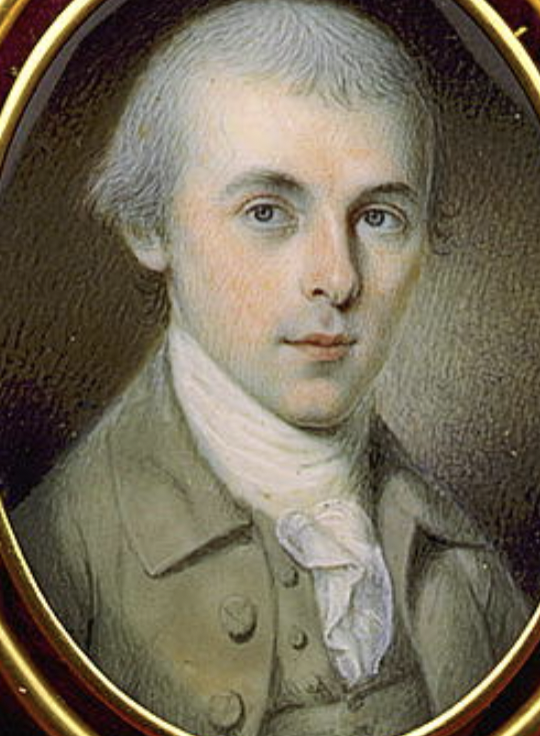
James Madison, 1783 (age 32) (Library of Congress
Discussion Questions
- During the 1780s, why did Madison (and so many other American leaders) seem more worried about signs of broken democracy at the state level than about the obvious deficiencies of the Articles of Confederation?
- Why did the debate about states and their “excesses of democracy” become such an existential crisis for the revolutionary ideology of republicanism?
Madison’s List of 11 Vices of the US political system
April 1787
1.FAILURE OF THE STATES TO COMPLY WITH THE CONSTITUTIONAL REQUISITIONS.
2.ENCROACHMENTS BY THE STATES ON THE FEDERAL AUTHORITY.
3.VIOLATIONS OF THE LAW OF NATIONS AND OF TREATIES.
4.TRESPASSES OF THE STATES ON THE RIGHTS OF EACH OTHER.
5.WANT OF CONCERT IN MATTERS WHERE COMMON INTEREST REQUIRES IT.
6.WANT OF GUARANTY TO THE STATES OF THEIR CONSTITUTIONS AND LAWS AGAINST INTERNAL VIOLENCE.
7.WANT OF SANCTION TO THE LAWS, AND OF COERCION IN THE GOVERNMENT OF THE CONFEDERACY.
8.WANT OF RATIFICATION BY THE PEOPLE OF THE ARTICLES OF CONFEDERATION.
9.MULTIPLICITY OF LAWS IN THE SEVERAL STATES.
10.MUTABILITY OF THE LAWS OF THE STATES.
11.INJUSTICE OF THE LAWS OF STATES.
Handouts
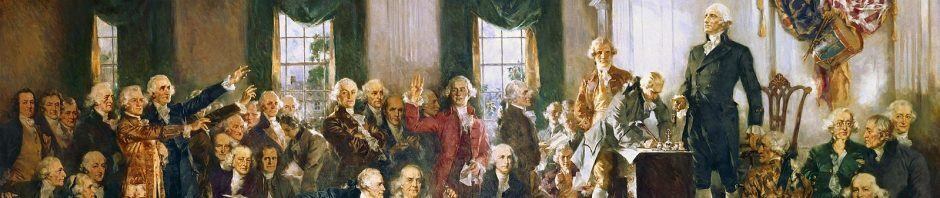
Constitutional Convention (May to September 1787)
“Startling as it was, the Constitution that emerged from the Convention in September 1787 was not the half of it. If those who were surprised at the extraordinary nature of the national government created by the Constitution had known what had actually gone on in the Convention, they would have been even more shocked. The national government that came out of the Convention was much less powerful than many of the delegates had wanted.” –Gordon Wood, Power and Liberty, p. 76
Discussion Questions
- Was the Connecticut compromise at the 1787 convention about the tension between large and small states, or was it more precisely about the fate of states themselves in the new national government?
- Why did James Madison, arguably Father of the Constitution, feel that he had failed in several of the key negotiations at the convention?
Edmund Randolph (DoJ)
“that a national government ought to be established consisting of a supreme legislature, judiciary, and executive” –Edmund Randolph, May 30, 1787, quoted in Wood, p. 78
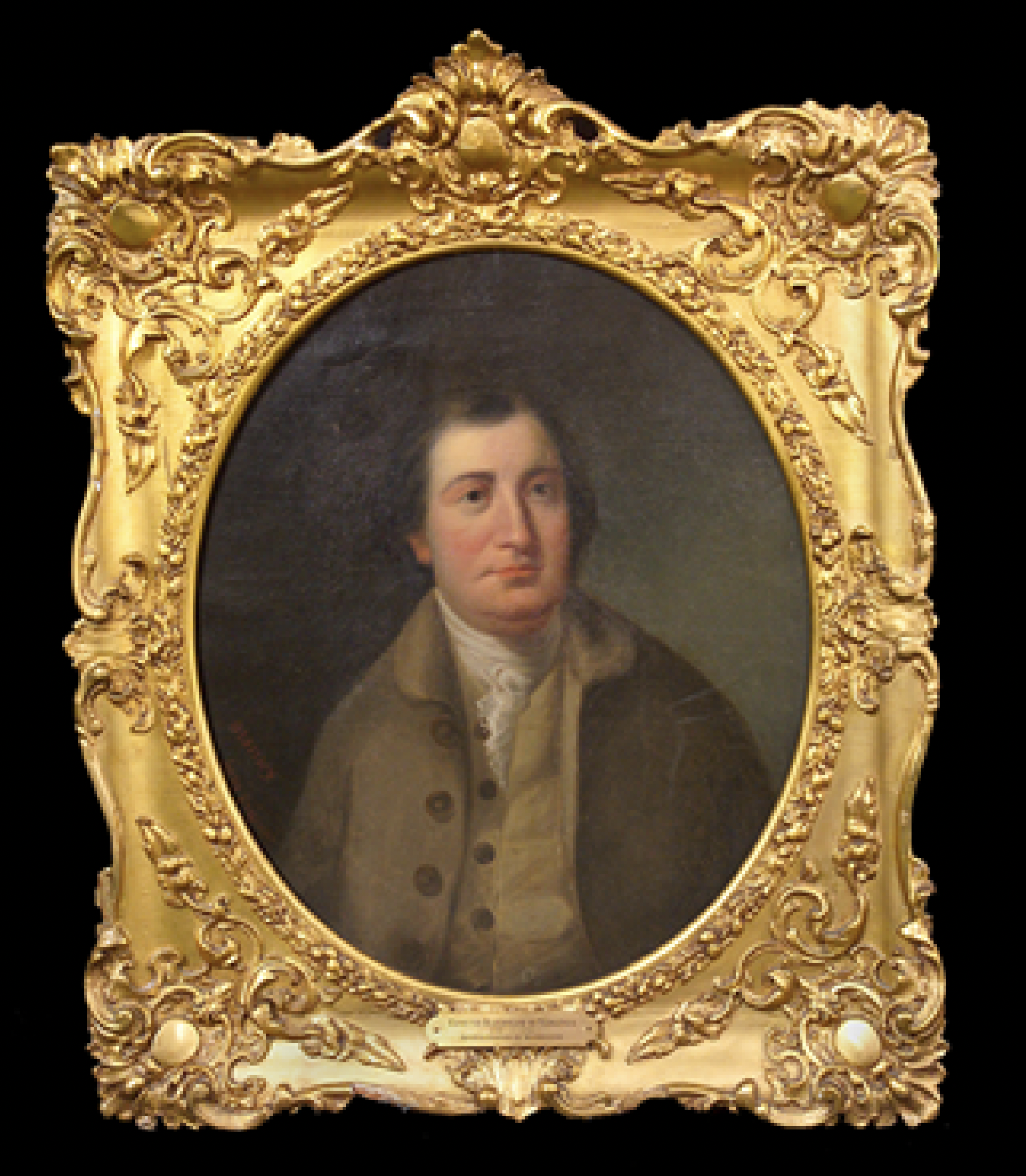
- Proportional representation in bicameral national legislature
- Lower house elected by people; Upper house elected by lower house
- National executive(s) selected by national legislature
- National judiciary (superior and inferior courts) selected by national legislature
- Council of revision (part executive / part judiciary) to veto certain state & national laws
- National legislature also retained power to “negative all laws” passed by states
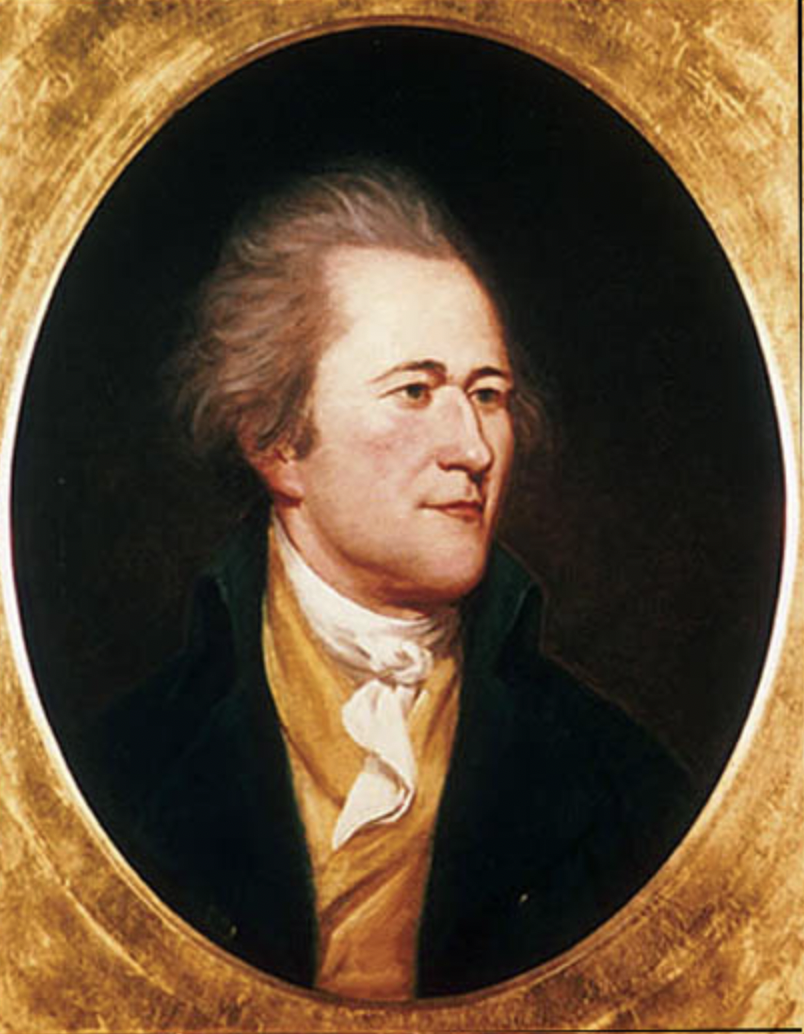
Alexander Hamilton, c. 1790 (NPS)
“On June 18, in the midst of this debate over the Virginia and New Jersey plans, Alexander Hamilton of New York suddenly rose and made his own personal proposal for a government in a four- to five-hour-long speech. His proposed government was consolidated in the extreme, virtually abolishing the states as independent entities. He wanted an executive and senate elected for life, with the executive to have absolute veto power over all legislation. The states would remain as administrative units with their governors appointed by the national government. He accompanied his plan with praise of the English constitution and criticism of the Virginia plan.” –Wood, pp. 81-82
Where you stand depends on where you sit.
–Miles’ Law (Rufus Miles, Jr.)
Electoral College
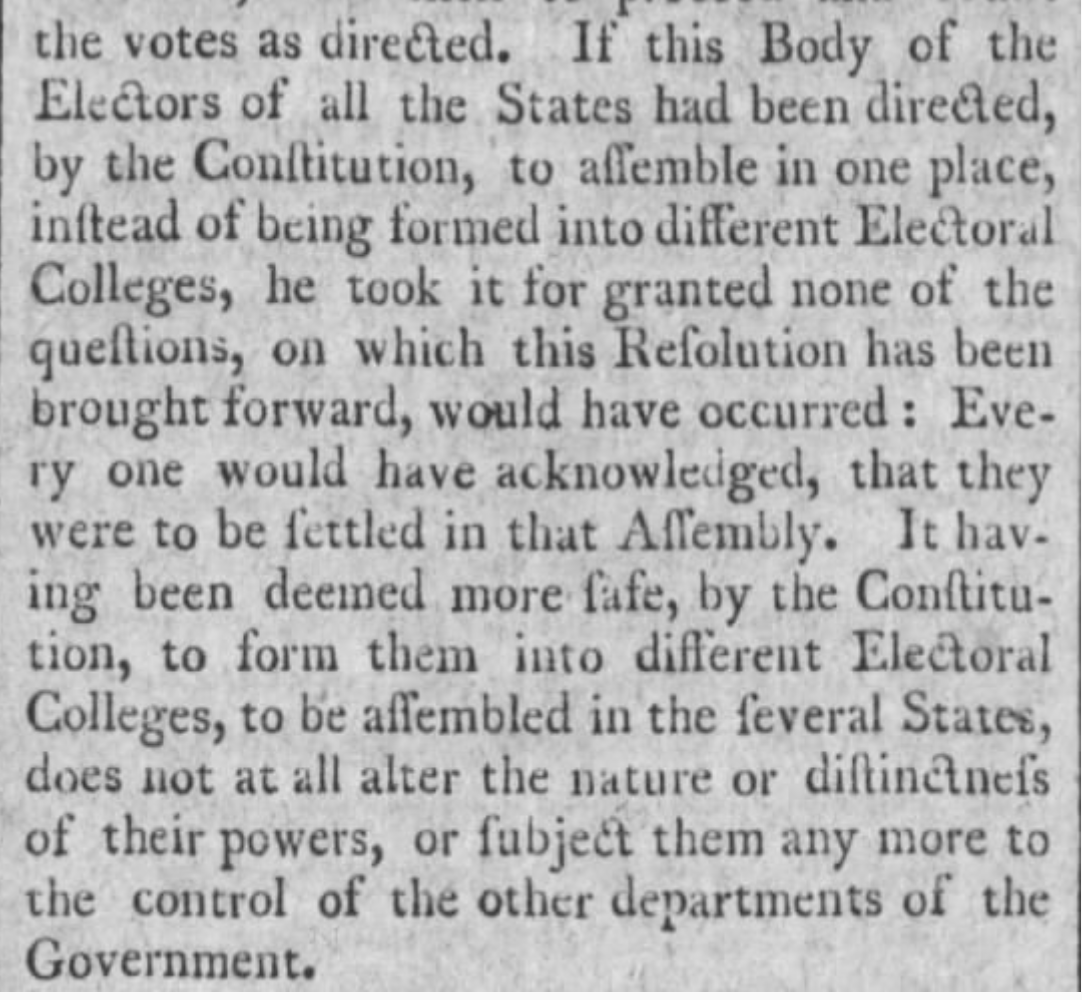
Sen. Abraham Baldwin of Georgia made one of the earliest known references to “electoral colleges” in Lancaster Intelligencer, April 9, 1800
“Finally, after much discussion and many votes, the Convention decided to create an alternative Congress composed of notables who would know who was competent to be president; it would have one function: to elect the president every four years. This electoral college seemed to solve all the problems. It guaranteed the president’s independence from Congress without limiting the terms of office. And yet, as an exact replica of Congress, it had all the advantages of the July 16 compromise on representation between the nationally minded delegates and the small-state delegates.” –Wood, p. 86