Although I would consider my research efforts largely successful, they were by no means efficient. While I have experience in qualitative research and source analysis, this exercise served as a valuable reminder that adhering too rigidly to established habits can result in unnecessary work. Beginning with American National Biography as my point of departure, I learned to focus my research on Jacob H. Hollander’s time in Puerto Rico and the Dominican Republic. As a professor of economics and a dedicated scholar of the history of economic thought who occupied numerous roles throughout his career, Hollander produced an extensive body of work. The sheer volume of available sources ultimately proved to be my greatest challenge, as it was both time-consuming and difficult to identify those most relevant to the objectives of this project.
At the outset, I found myself overly focused on primary sources. While reviewing the American National Biography page, I noted several individuals, such as President McKinley, President Theodore Roosevelt, and Hollander’s wife, Theresa G. Hutzler, whose correspondence with Hollander I began planning to investigate. However, I soon realized that pursuing these materials would mostly lead to primary sources, prompting me to shift my attention to Dickinson’s JumpStart library catalog. In conducting searches related to diplomatic history, I consciously decided to include both “Santo Domingo” and “Dominican Republic,” as well as “Porto Rico” and “Puerto Rico,” in order to account for historical variations in spelling and maximize search results. Although this approach produced numerous sources, I found relatively few secondary works and instead compiled a list of primary materials for potential future use.
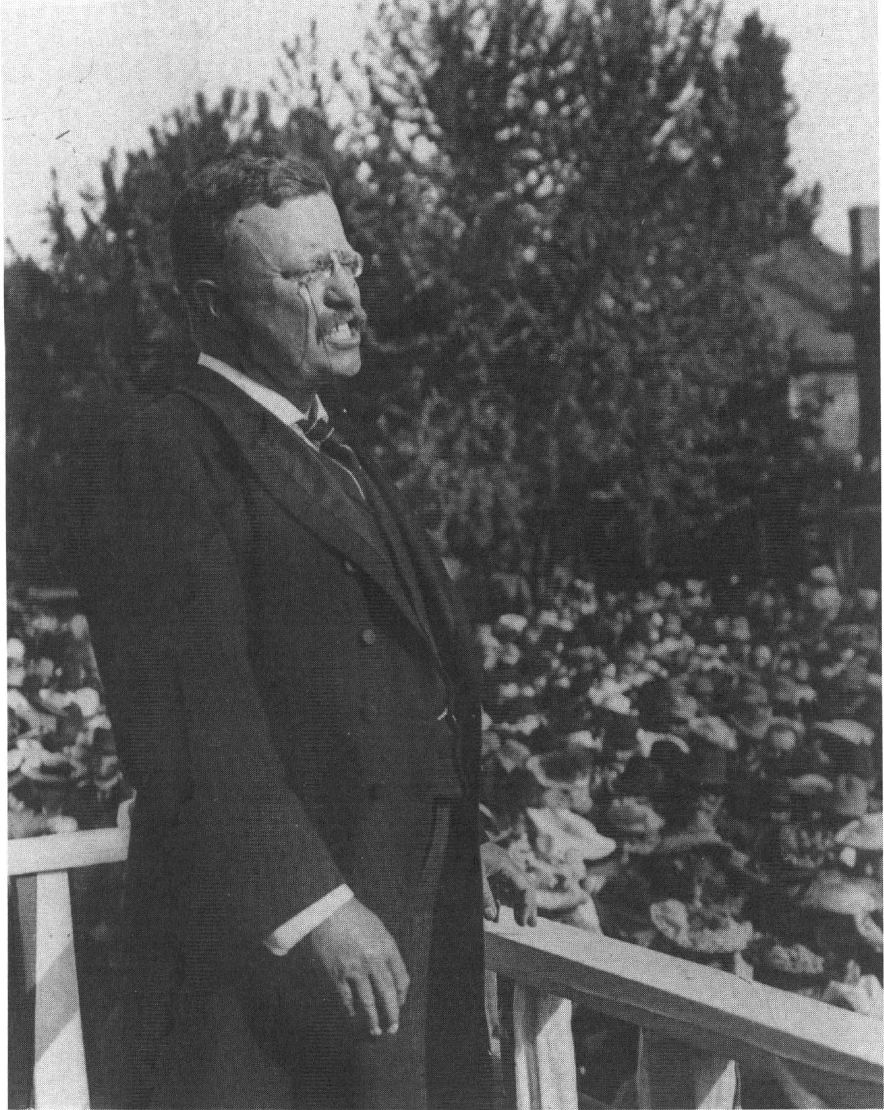
President Theodore Roosevelt (Inventing Dollar Diplomacy, courtesy of Harvard Library)
JSTOR proved to be the most productive database I searched in. I focused on modern scholarship published after Hollander’s lifetime, now specifically searching for works published between 1940 and 2026. Despite this refinement, relevant sources remained limited, requiring careful, laborious review to identify those aligned with my research interests. Periodically, however, I identified particularly relevant works, which I saved for later examination. My chosen method of saving any possible sources in a document before closely reviewing their contents ultimately contributed to the inefficiency of my process. After assembling an extensive list of potential materials, I reviewed each source using keyword searches (“control + f”).
While Hollander’s work in Puerto Rico and the Dominican Republic is significant, I found that many secondary sources condense it into only a few sentences within broader discussions of U.S. history and imperialism. Many sources only mentioned him in footnotes or in a paragraph or two of writing. Still, I was able to find a handful of solid secondary sources. This journal article, Foundations of United States International Financial Power: Gold Standard Diplomacy, 1900–1905 (1985), primarily focused on figures such as Charles Conant, Jeremiah Jenks, and Edwin Kemmerer who held similar roles to Hollander. However, the article provides important contextual analysis and does include a substantial discussion of Hollander’s work in both regions. Additional sources I found included Inventing Dollar Diplomacy: The Gilded-Age Origins of the Roosevelt Corollary to the Monroe Doctrine (2003) and The Roosevelt Corollary and the Dominican Model of 1905 (2003), both of which emphasize Hollander’s role in the Dominican Republic. During this phase of research, I also discovered that certain legislation associated with Hollander in Puerto Rico was referred to as the “Hollander Act” or “Hollander Bill,” which helped me to create more targeted and specific searches going forward.
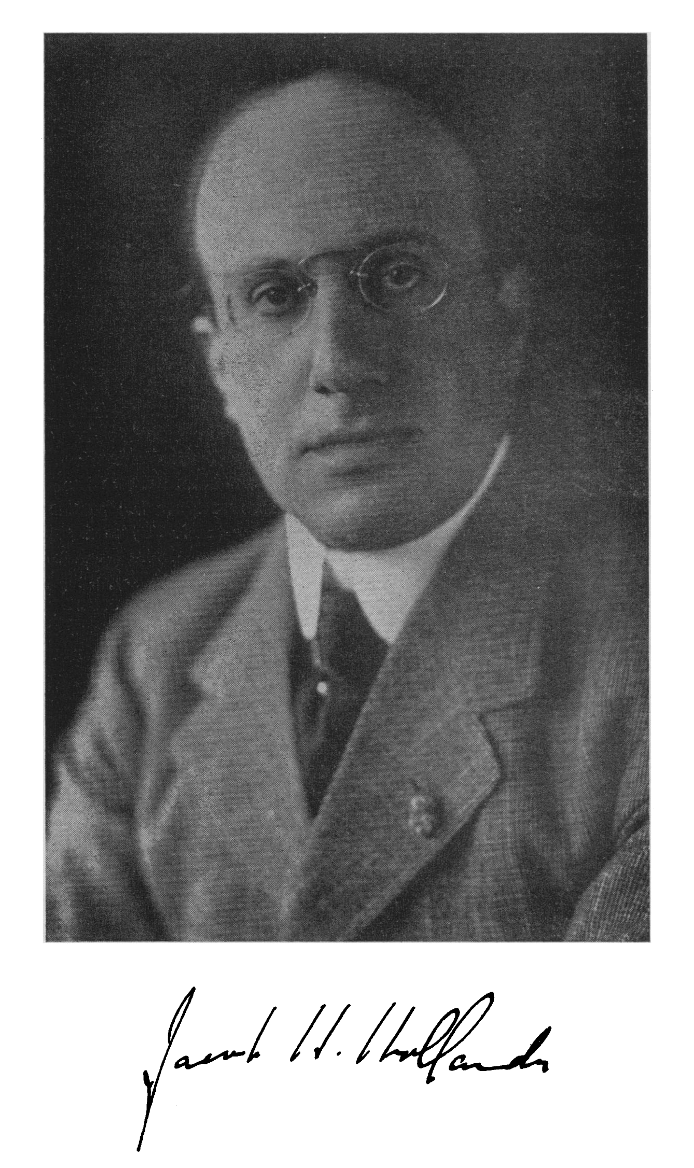
Jacob Harry Hollander (JSTOR, Twenty-third President of the American Economic Association)
The database America: History and Life yielded relatively few useful results when employing similar search strategies. Google Books, however, proved to be more productive, despite some limitations of accessibility. During this stage, I briefly attempted to use ChatGPT to identify additional sources, but the results were largely unhelpful, consisting of broken links, repeated results, or primary sources. Through Google Books, I identified several important secondary sources, including Constructing a Colonial People: Puerto Rico and the United States, 1898–1932 (2018), which examines U.S. governance in Puerto Rico following the War of 1898. Additionally, A World Safe for Capitalism (2002) by Cyrus Veeser expanded on the role of the Santo Domingo Improvement Company (SDIC) in managing the Dominican Republic’s foreign debt and infrastructure. Throughout my research, it quickly became clear how central the SDIC was to Hollander’s work. Finally, Intervention and Dollar Diplomacy in the Caribbean, 1900–1921 (2015) offered further in-depth analysis of his activities in the Dominican Republic.
Throughout the research process, I frequently encountered frustration with sources that devoted only minimal attention to Hollander. They were often repetitive, clearly rephrasing the words of another author who had themselves summarized Hollander’s work into a short piece. Despite these challenges, I was able to assemble a collection of secondary sources while also identifying many primary sources for future research. Although Hollander’s scholarly output is significant, much of it was not directly relevant to my research focus and required considerable time to sift through. In retrospect, a more narrowed and targeted approach to database searching might have improved the overall efficiency of my research.
Bibliography
Cabán, Pedro A. Constructing a Colonial People: Puerto Rico and the United States, 1898–1932. United States: Taylor & Francis, 2018.
“Jacob Harry Hollander: Twenty-Third President of the American Economic Association, 1921.” The American Economic Review 38, no. 3 (1948). http://www.jstor.org/stable/1810623.
Munro, Dana Gardner. Intervention and Dollar Diplomacy in the Caribbean, 1900–1921. United States: Princeton University Press, 2015.
Rosenberg, Emily S. “Foundations of United States International Financial Power: Gold Standard Diplomacy, 1900–1905.” The Business History Review 59, no. 2 (1985): 169–202. https://doi.org/10.2307/3114929.
Rosenberg, Emily S. “The Roosevelt Corollary and the Dominican Model of 1905.” In Financial Missionaries to the World: The Politics and Culture of Dollar Diplomacy, 1900–1930. Duke University Press, 2003. https://doi.org/10.2307/j.ctv1220kxb.6.
Veeser, Cyrus. A World Safe for Capitalism: Dollar Diplomacy and America’s Rise to Global Power. United States: Columbia University Press, 2002.
Veeser, Cyrus. “Inventing Dollar Diplomacy: The Gilded-Age Origins of the Roosevelt Corollary to the Monroe Doctrine.” Diplomatic History 27, no. 3 (2003): 301–26. http://www.jstor.org/stable/24914415.
Leave a Reply