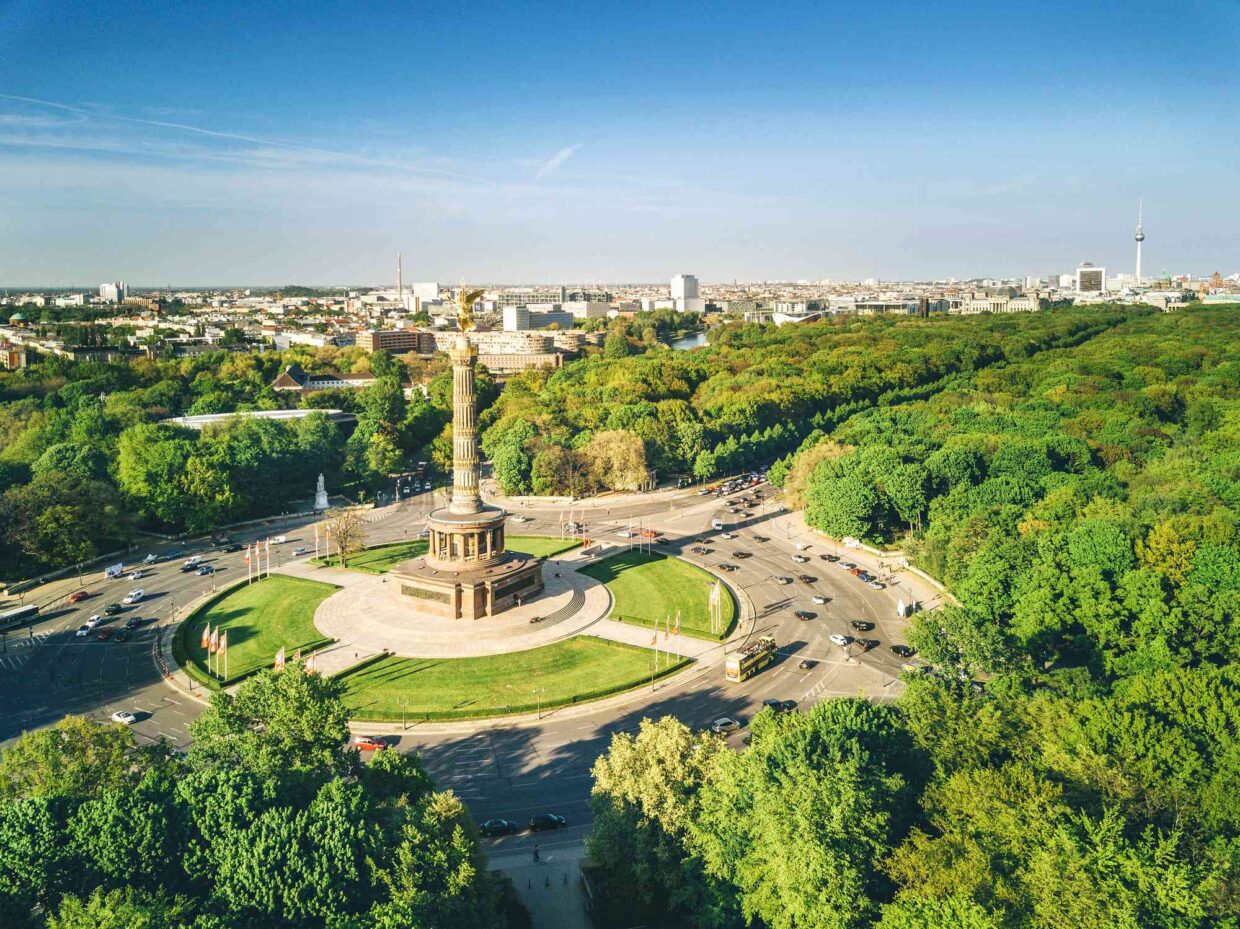
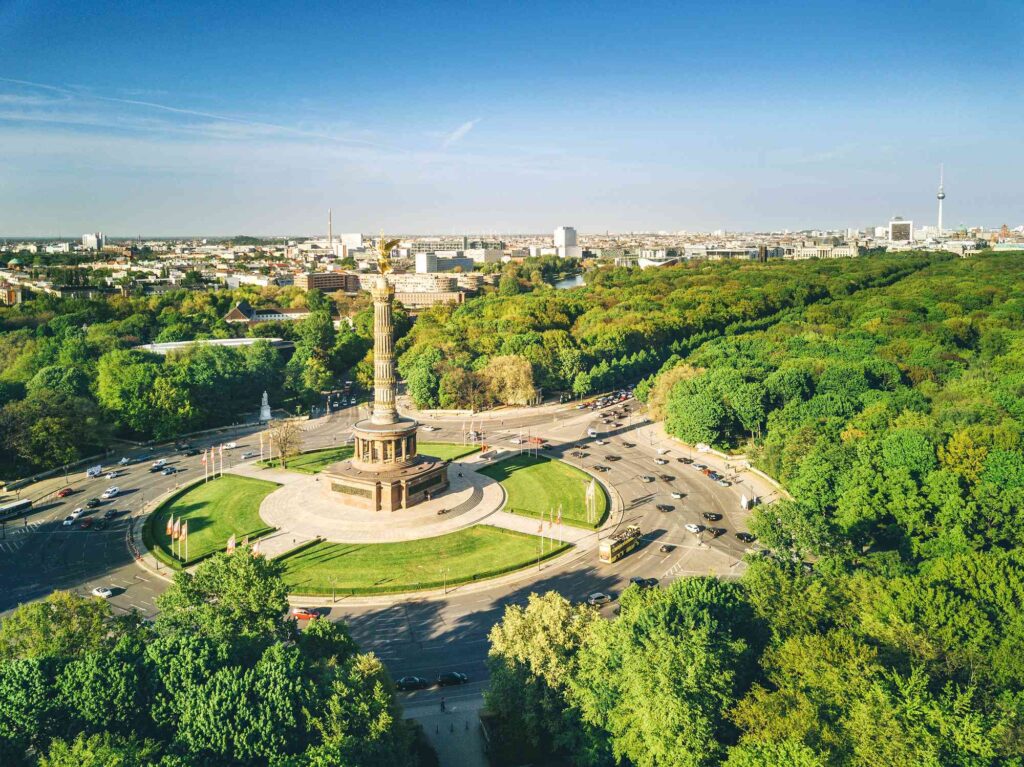
Tiergarten, Berlin, Germany. Source: https://www.tripsavvy.com/best-parks-in-berlin-5180334
Survey link: https://forms.gle/DGSXsSq1ytzVLLTc6
Note: this survey is meant to be completed by residents of Berlin, but please complete the survey with your reflection of the city you consider to be home.
My research question is: Is the presence of green spaces in Berlin, Germany a positive factor for its inhabitants’ wellbeing?
My research question is asking specifically about the benefits of urban green space on human wellbeing, specifically in the city of Berlin, Germany. Human wellbeing can include a multitude of factors, including but not limited to: mental health, physical wellbeing, social wellbeing, and spiritual wellbeing. I will bring in literature addressing largely mental, physical, and social wellbeing in terms of the inhabitants of Berlin. I would like to argue that the presence of urban green spaces in Berlin are integral to the wellbeing of inhabitants as well as visitors. I would argue that urban green spaces offer an opportunity for stress alleviation through vital human-nature interaction and outdoor socialization. I will include literature on the emotional regulatory benefits of green spaces, particularly in urban areas.
My survey will aim to understand the importance of green spaces to the general public in Berlin and interpret if they can self-recognize some of the mental health benefits of visiting these spaces. I will also seek out if survey respondents have any favorite spots in Berlin, which I will use to create a Storymap of Berlin’s green spaces. An interesting insight into the cultural benefits of green spaces includes the ability for refugees and asylum seekers, who make up a large population in Berlin, to have a space for outdoor socialization and for refugee camps and protests (Rishbeth et al., 2019). Another key part of my research is the shift in public perception of the benefits of green spaces during and after the Covid-19 pandemic. This massive change in people’s daily routines and stay at home orders left people longing for an escape and drew many to parks and other green spaces, especially to socialize at a healthy distance (Collins et al., 2022; Säumel & Sanft, 2022).
References:
Collins, C., Haase, D., Heiland, S., & Kabisch, Dn. (2022). Urban green space interaction and wellbeing – investigating the experience of international students in berlin during the first COVID-19 lockdown. Urban Forestry & Urban Greening, 70, 127543. https://doi.org/10.1016/j.ufug.2022.127543
Kabisch, N., & Haase, D. (2014). Green justice or just green? Provision of urban green spaces in Berlin, Germany. Landscape and Urban Planning, 122, 129–139. https://doi.org/10.1016/j.landurbplan.2013.11.016
Landor-Yamagata, J., Kowarik, I., & Fischer, L. (2018). Urban Foraging in Berlin: People, Plants and Practices within the Metropolitan Green Infrastructure. Sustainability, 10(6), 1873. https://doi.org/10.3390/su10061873
Riechers, M., Strack, M., Barkmann, J., & Tscharntke, T. (2019). Cultural Ecosystem Services Provided by Urban Green Change along an Urban-Periurban Gradient. Sustainability, 11(3), 645. https://doi.org/10.3390/su11030645
Rishbeth, C., Blachnicka-Ciacek, D., & Darling, J. (2019). Participation and wellbeing in urban greenspace: “curating sociability” for refugees and asylum seekers. Geoforum, 106, 125–134. https://doi.org/10.1016/j.geoforum.2019.07.014
Säumel, I., Hogrefe, J., Battisti, L., Wachtel, T., & Larcher, F. (2021). The healthy green living room at one’s doorstep? Use and perception of residential greenery in Berlin, Germany. Urban Forestry & Urban Greening, 58, 126949. https://doi.org/10.1016/j.ufug.2020.126949
Säumel, I., & Sanft, S. J. (2022). Crisis mediated new discoveries, claims and encounters: Changing use and perception of residential greenery in multistory housing in Berlin, Germany. Urban Forestry & Urban Greening, 74, 127622. https://doi.org/10.1016/j.ufug.2022.127622