

(Author, 2025)
Are you the consumer who has saved endless recipes on social media, and wishes to prepare and taste all of them, just to end up with convenience foods? Because I certainly am. Life has seemed to accelerate for years and foodways have become increasingly impactful with the rise of social media and the information which is shared on those platforms. Everyone seems to be an expert such as recipe developers or (fitness) influencers. I have gained over six years of experience working and dining the world’s finest kitchens, and I am intrigued about the rapid pace of change regarding food cultures, traditions, and foodways. I would like to share my worries about the impact of modern-day foodways, their production systems, and the impact of social media on foodways.
I recommend the article from Montanari (2013) stating that food is culture, it always has been and always will be. The impact of food has been incredible throughout our societies; in symbolic, economic, social, and political ways. All class discussions found that foodways describe these traditions and cultures, and that a foodway is therefore a glimpse of geographical moment in time. Highlighting history, lifestyle,and location. To illustrate I will highlight the Mediterranean diet. This has not always been the way it currently is. The geographical location welcomed African pasta varieties, American tomatoes and Asian spices, together creating Italy’s famous cuisine. What I am trying to share is that the ‘fluid’ foodway evolution constantly adapting to human needs and desires. This also causes cultures to lose their cuisines in the global appropriation, such as the Palestinian cuisine being objectified as Israeli food and taken away from their identity. (Washington Post, 2020)
This has resulted in beautiful dishes, interactions, and cultures in the past. In the modern day however, the flexibility of people their foodways seems to be a risk. Globalization and worldwide connection allow people to share their recipes with the globe, but it also drives convenience foods. Global producers prioritize profitability over the quality of their products. To maintain affordability, transnational corporations focus on convenienceand low costs. An example I recommend investigating is the tomato industry, mostly based in Florida and California. Food Journalist Barry Estabrook (2011) highlights the exploitation and hidden costs in the industry which are in practice to maintain a low price for the U.S.’s second most consumed vegetables. (USDA, 2020) These costs entail the inhumane exploitation of workers, the monoculture, the decreasing nutritious value, and the millions of chemicals used to remain consistent. This way, globalization prioritizes efficiency over nutritious value, flavor, or human rights.
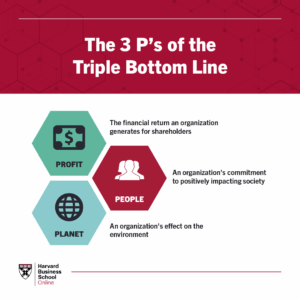
People, Planet, Profit; HBS Online (2020)
The human body still requires the same nutrients for healthy lifestyles. Social media is however overflowing with (self-proclaimed) food experts, all recommending different diets, causing confusion for consumers. Delivery services offer convenience foods, which are often cheaper than fresh meals in the U.S. (Lewis et al., 2022) Since convenience and profitability is the new focus in the modern (western) world, I wonder if the pleasure of eating still belongs in the current society? Based on the Italian Slow Food Movement, this pleasure should be the focus. When I lived in Italy, I noticed traditions, local and unprocessed foods. I understand that this currently not a sustainable way to feed the ever-growing human population. Yet I believe that the current systems are far less sustainable, for people, our planet, and a fair distribution of profit. Which are the three pillars of corporate sustainability according to John Elkington. (1944) I wonder where how consumer priorities will change, since our current, addictive, and obesity causing foodways are unsustainable.
Sources and recommended literature:
Chen, X., Huang, M., Li, J., Yu, Z., et al. (2023). Healthy Food Prices Increased More Than the Prices of Unhealthy Options during the COVID-19 Pandemic and Concurrent Challenges to the Food System https://pmc.ncbi.nlm.nih.gov/articles/PMC9967271/
Estabrook, B. (2011). Tomatoland: How modern industrial agriculture destroyed our most alluring fruit. Andrews McMeel.
Kassis, R. (2020, February 14). Here’s why Palestinians object to the term “Israeli food”: It erases us from history. The Washington Post. https://www.washingtonpost.com/lifestyle/food/heres-why-palestinians-object-to-the-term-israeli-food-it-erases-us-from-history/2020/02/14/96974a74-4d25-11ea-bf44-f5043eb3918a_story.html
Montanari, M. (2013). Italian identity in the kitchen, or food and the nation Columbia University Press.
Harvard Business School. (2020). What is the triple bottom line? https://online.hbs.edu/blog/post/what-is-the-triple-bottom-line
U.S. Department of Agriculture, Economic Research Service. (2020) Potatoes and tomatoes are the most commonly consumed vegetables https://www.ers.usda.gov/data-products/chart-gallery/chart-detail?chartId=58340#:~:text=Potatoes%20and%20tomatoes%20are%20the%20most%20commonly%20consumed%20vegetables%20%7C%20Economic%20Research%20Service
Knud
Thank you for your article. I nodded approvingly at your description of the way that social media allows self-proclaimed experts to make their many bids to influence the evolution of our food consumer cultures, as well as providing a venue for food producers to promote their own profit maximizing agendas.
Learning the truth about food systems has become more formidable in recent times. All the more reason to appreciate our class about food systems!
Dear Knud,
This was such an insightful post. It’s so interesting to hear about your experiences with international and European foodways as a chef, and your incorporation of our class readings and discussions helped weave together your personal insights and our course themes. Your explanation of how foodways are constantly evolving, citing examples from class readings like “Here’s why Palestinians object to the term “Israeli food”: It erases us from history” to exemplify why global food appropriation is harmful yet widespread. One thought-provoking aspect you brought up that was fairly new to me is the “three pillars of corporate sustainability” from John Elkington/Harvard Business School. It seems that in places like Italy, where you noted the strong influence of the Slow Food Movement, the more local producer and consumer relationship guarantees healthier, less processed foods. In the larger scale food industrial complex, which defines much of our food culture in the United States, I agree with you that it’s important to investigate unsustainable corporate practices such as those in the tomato business. We must come to terms with the realities of big agrobusiness and how our culinary traditions and foodways suffer from a lack of connection to where our food comes from and how it’s grown and transported.
Best,
Parker
Knud,
I enjoyed reading your reflection on the fluid and ever-evolving nature of foodways, and the impact of the modern convenience culture on our foodways. Like you emphasized, due to globalization, our current food systems are not sustainable as they harm not only humans but the environment too. Our standardized, fast food reliant, convenience based food system is leading to a lack of biodiversity, narrowing taste, unhealthy eating, and disappearing foods and traditions. You asked whether the pleasure of eating still belongs in our current society. While it is fading, I think it does. I also think that it is our path back towards a sustainable food system. I agree with the message of the Slow Food movement that people need to experience clean, unprocessed, local, and tasteful foods to be able to appreciate and value the importance of quality food which will lead to more sustainable systems. As brought up in a class discussion though, it’s a privilege to be able to eat food close to its source (Jenn Halpin, personal communication, October 2, 2025). There are many who don’t have the money, time, or ability to buy and prepare quality food. Like Parker mentioned, we need to accept and address the reality that our foodways are currently unsustainable. I think increasing access to quality food is an essential first step to combat the unsustainable issues of our convenience culture. The adaptability of foodways gives me some hope that we can find our way toward a sustainable food system.
Adleigh Franke
Knud,
Describing foodways as a lens providing a brief glimpse into a geographical and cultural context is particularly interesting considering the fusion of cuisines and ingredients is reflective of geopolitical relations. While cuisines provide unique insights into a particular culture, they can also contribute to assumptions and generalizations. For example, Montanari mentioned that simplifying the Mediterranean diet overlooks geographical differences and contributing factors (2013).
The nature of our rapid-paced food system is further ingrained by prioritizing profitability over quality. Several of our class discussions have reflected this concept, particularly conventional agriculture and monoculture. This reminded me of how fragile produce, such as tomatoes, is picked before ripening to allow transportation through longer supply lines. This exemplifies how optimal quality is sacrificed in order to abide by current standards of convenience and efficiency.
This post emphasizes the urgency of developing a large-scale sustainable food system centering the pleasure of eating. The concluding sentence was reminiscent of the definition of sustainability as the ability to meet present needs without compromising the future. Like previously mentioned, our current food systems are unsustainable. Although consumer behavior is often unsusceptible to change, seeing the reality of resulting environmental degradations and human health impacts could alter our priorities.
Hazel Weisberg