Nutrition: From the Individual to the Whole Picture
Source: Rachel Helfferich, Everglow Nutrition, “5 Examples of Gentle Nutrition in Real Life”, 2022.
This week, our class explored food studies through the lens of nutrition and health. Discussing popular and oftentimes controversial topics like global diet recommendations and intuitive eating, we learned about how what we eat connects to our wellbeing not only individuals but as a species. Our class readings for Monday, 10/27 focused on issues like obesity and social determinants of health, topics that have political, social, as well as personal connotations for many. I gained immense insight from Alice Julier’s 2008 article, “The Political Economy of Obesity: The Fat Pay All”, which frames the issue of obesity within a sociological and political context, rather than an individual one. Julier insists that blaming individuals for the leading factors of obesity, from lack of access to healthy foods to the social constructs in the United States promoting consumption, is unproductive and misplaced. Instead, she suggests the federal government take a more active role in hunger prevention and combating food insecurity, because the “unsteady flow of federal funds” assisting non-profit organizations such as food banks “makes good food, leisure, and physical exercise into commodities that are only affordable to those who have disposable income, time, and cultural capital” (Julier, 2008).
Social Determinants of Health and Dietary Guidelines
Source: Dr Marco Springmann (Lead author), Dr Dariush Mozaffarian, Dr Cynthia Rosenzweig, Dr Renata Micha. “Food intake by food group, year and region (grams per person per day), 2010 and 2018”. Global Nutrition Report. (2021). https://globalnutritionreport.org/e67d6e#2039f4ec.
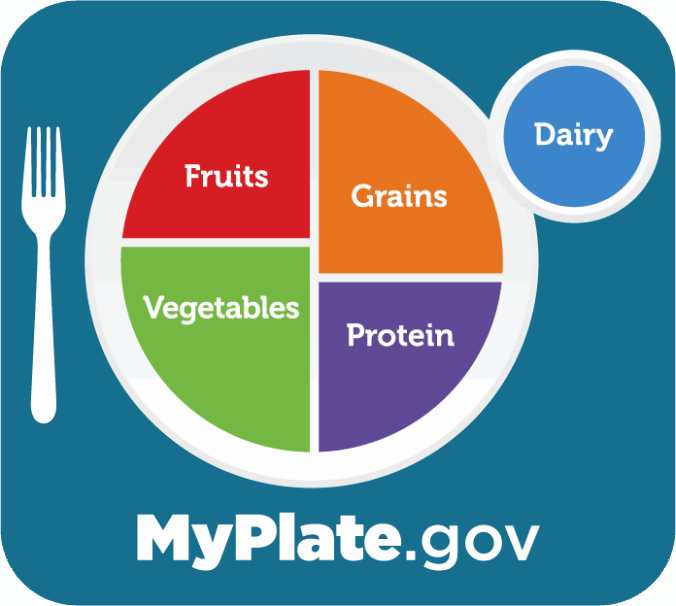
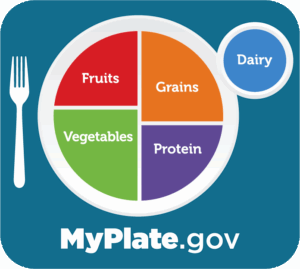
This perspective connects with our reading on Social Determinants of Health, which according to Jiao, are the “non-medical conditions in which people are born, grow, work, live, worship, and age” (Jiao, 2024). Both Jiao and Julier emphasize a necessity for holistic action by governing bodies to craft culturally and dietarily appropriate nutrition policy. In class, we talked about our different experiences with nutritional education growing up, with some recalling federal programs such as MyPlate, and others mentioning that programs like First Lady Michelle Obama’s ‘Let’s Move!’ initiative made them feel overly responsible for their food choices as individuals despite many school lunches including ultraprocessed foods (The Lancet Regional Health – Americas, 2022). During our Thursday, 10/30 class, we met with Dickinson College’s nutritionist Courtney Hager to learn more about dietary recommendations and how they’re communicated in the U.S. One example we explored was the USDA’s MyPlate website (https://www.myplate.gov), which provides tools to calculate the recommended quantities of fruits, vegetables, grains, protein, and dairy or soy products each individual requires depending on various factors.
MyPlate, Intuitive Eating, and the Future of Nutritional Education
U.S. Department of Agriculture. (2025). MyPlate (infographic). https://www.myplate.gov/.
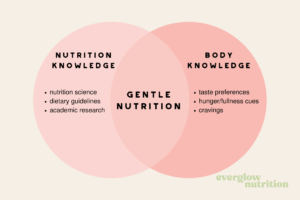
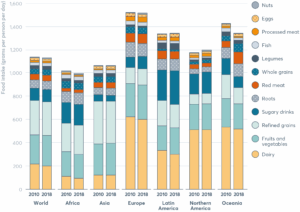
While I recall the MyPlate image from secondary school, it has been interesting to see how the USDA’s recommendations have evolved to include diets such as vegan and dietary restrictions like lactose intolerance. In fact, the deeply nuanced and personal quality of diet was made clearer to me through another reading from Week Nine by Jackson et. al., “Intuitive eating and dietary intake”, which highlights four areas of eating that factor in physical signs of hunger and satisfaction over other reasons why we eat. These areas include “unconditional permission to eat (UPE)”, “eating for physical rather than emotional reasons (EPR)”, “reliance on hunger and satiety cues (RHSC)”, and “body-food choice congruence (B-FCC)” (Jackson, et. al., 2022). As exemplified in Chapter 2 of the 2021 Global Nutrition Report, most adults in the United States are not meeting dietary intake recommendations, specifically those for fruits and vegetables. Considering this, our class discussion on intuitive eating touched on the difficulty in balancing personal practices with the global dietary recommendations. How do we as individuals reconcile our wants and needs when it comes to food and nutrition, considering both social determinants of health and federal nutritional education programs? After all, a study as recent as last year found that “nearly 1 in 3 U.S. adults reported knowing about the MyPlate plan” but that “only about 1 in 7 U.S. adults reported knowing about and trying to follow MyPlate plan recommendations” (Restrepo, 2024). Perhaps the answer lies in improving the quality of nutritional education for future generations, by ensuring it encompasses diverse experiences with food – from social determinants of health, allergies, other dietary restrictions, and beyond.
References
Helfferich, R. (n.d.) 5 Examples of Gentle Nutrition IRL. Everglow Nutrition. https://everglownutrition.com/category/intuitive-eating/page/2/.
Jackson, A., Y. Sano, L. Parker, A. E. Cox, J. Lanigan. (2022). Intuitive eating and dietary intake. Eating Behaviors, 45. https://doi.org/10.1016/j.eatbeh.2022.101606.
Jiao, L. (2024). Social Determinants of Health, Diet, and Health Outcome. Nutrients, 16, 3642. https://doi.org/10.3390/nu16213642.
Julier, A. (2008). The Political Economy of Obesity: The Fat Pay All. Food and Culture, 2019. Edited by Carole Counihan and Penny van Esterik.
Restrepo, B. (2024). Awareness and Use of MyPlate Among U.S. Adults: Evidence From Nationally Representative Data, 2024. American Journal of Preventive Medicine, Volume 69, Issue 5. https://www.ajpmonline.org/article/S0749-3797(25)00503-3/abstract.
The Lancet Regional Health – Americas (edit.). (2022, Dec. 8). Unhealthy school meals: A solution to hunger or a problem for health? Lancet Reg Health Am, Volume 16. https://www.sciencedirect.com/science/article/pii/S2667193X22002307?via%3Dihub.
The Original Intuitive Eating Pros. (n.d.) 10 Principles of Intuitive Eating. The Original Intuitive Eating Pros. https://www.intuitiveeating.org/about-us/10-principles-of-intuitive-eating/.
Springmann, et. al. (2022). Chapter 2: What we eat matters: Health and environmental impacts of diets worldwide. 2021 Global Nutrition Report: Stronger commitments for greater action. Bristol, UK: Development Initiatives. https://globalnutritionreport.org/reports/2021-global-nutrition-report/health-and-environmental-impacts-of-diets-worldwide/#section-2-8.
U.S. Department of Agriculture. (2025). Eat Healthy with MyPlate. MyPlate U.S. Department of Agriculture. https://www.myplate.gov/.
Parker I found this blog post super engaging and there is a clear translation of information we received from class and the in-class visit. I was able to connect with your post when you explained about myPlate. Similarly to you, I learned about MyPlate in grammar school as it was posted everywhere in our cafeteria and implemented into school lunches. However, after I left middle school it was not widely talked about. Which supports your point that not all adults in the US now or try to follow MyPlate recommendations. In addition, I really appreciated how you connected Julier’s (2008) argument about the political economy of obesity with the concept of social determinants of health from Jiao (2024). I also found Julier’s point about structural barriers to health eating eye-opening, especially how economic inequality is a main factor for food access. It made me think of our class discussion about school lunches and how different programs have shifted responsibility towards individuals rather than addressing systemic issues. The Jackson (2022) articles on intuitive eating was a refreshing point to address because it centers individual awareness rather than moralizing food choices. However, as you mentioned, intuitive eating can only work when people have access to nutritious options. I agree that future national education should merge personal awareness while acknowledging economic, cultural, and political barriers. Merging this gap could help people finally understand the diet they need and why they need it.
Parker,
You have provided valuable insight regarding the myPlate, intuitive eating, and an overall synthesis of our classes regarding these topics. I did not know that only about 1 in 7 (~15%) of people actively use the myPlate plan or have attempted to integrate this into their lifestyle. Statistics such as these may suggest where myPlate is failing to market or involve demographics of people. I also recall being taught about this in previous years and throughout primary school. This makes me wonder where along the way nutrition education becomes lost or inaccessible throughout the progress of life. Do you have insight into potential ways to increase nutritional literacy into adulthood? As we discussed in class, there are many barriers to successfully implementing campaigns in schools, although it is possible there is a strategy we have yet to try as a society. Additionally, both you and our class discussion mention the intersections of intuitive eating and myPlate. As mentioned in the article on intuitive eating, there is often an association between reduced vegetable and increased sugar intake. Are there any strategies that could be taken to combine myPlate with intuitive eating or is this a necessary fallback of intuitive eating?
Dear Parker,
Thank you for your insightful post, I wanted to share that I have enjoyed reading, and learning from your report. I found the 2008 article from Alice Julier thought-provoking and it shared an economical sense of urgency. The urgency for a governmental guideline seems to be proving itself ongoingly, even in in the current times. It is a challenging situation, knowing that most adults do not meet the MyPlate intake, mostly in fruits and vegetables, while not being able to further steer their decisions. I was wondering what you think of this situation, and the governmental regulations which allow this? For example the price distribution between healthy and processed foods. I agree that governmental structure would be a valuable addition to society, steering us away from the obesity crisis.
Improving consumption habits starts with knowledge, which leads to motivation. Do you think it would be helpful to make nutrition programs mandatory in the modern educational systems?
Thank you again for you insights. Kind regards,
Knud
Hi Parker,
Thank you for your intriguing and relevant post!
What I found particularly interesting was your discussion of social determinants of health, and how culture holds such a strong influence on what and how we eat. Our class discussion surrounding the gut microbiome comes to mind, in which we discussed the practice of wealthy mothers in Niger feeding their babies cow milk rather than breast milk, leading to Niger having the highest rate of infant mortality. Cultural practices can have a real and apparent affect on health. In the United States, our society promotes ultra-processed and fast foods. This has its own impact, making it much more difficult for people to reach the MyPlate guidelines given the lack of importance attributed to a whole and nutritious diet throughout the United States. Additionally, economic barriers prevent many from simply being able to access nutritious foods, particularly fresh fruits and veggies. While I agree with the Jiao and Julier articles on the necessity of crafting appropriate dietary policy, I believe it is just as important to ensure that every citizen has access to foods which can fulfill such an appropriate dietary guideline.
Thank you again for your post surrounding such a critical matter!
Claire