The Devil’s Den is Dickinson’s on-campus storefront for packaged and unprepared foods. Students have the option to use their meal plan at this location – with the exception of swipes. “The Den”, as students affectionately refer to it, offers a niche selection of items not found at other dining locations, including packaged snacks, frozen foods, and ingredient items.
The Den is advertised to students as an opportunity to use their meal plans to grocery shop; however, it could be more aptly described as a convenience store. The selection of items offered places emphasis on ultra-processed snacks. For example, almost an entire wall is dedicated to soft drinks, whereas students are presented with a small cooler of fresh fruits and veggies.
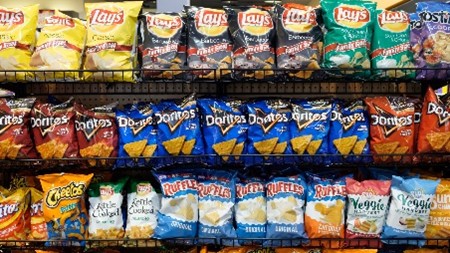
Kenishirotie. (2022). Shutterstock. Retrieved 2026, from https://www.tastingtable.com/img/gallery/when-it-comes-to-food-what-does-ultra-processed-really-mean/intro-1671049948.webp.
“So what, the Den isn’t the only option on campus?”
True, it is notable that there are other on-campus food options and that farmers’ market vouchers are available for purchase at the Den. Importantly, though, it is the main option to get ingredients and non-prepared foods, having the longest hours, the biggest selection, and being most centrally located. These features all lend it to serving the student body as a true grocery store, and it is being held back by its selection.
What does a solution look like?
(N.d.). Good Foods Co-op. Retrieved 2026, from https://goodfoods.coop/wp-content/uploads/2015/12/iStock-540523796-e1499882765393-1024×684.jpg.
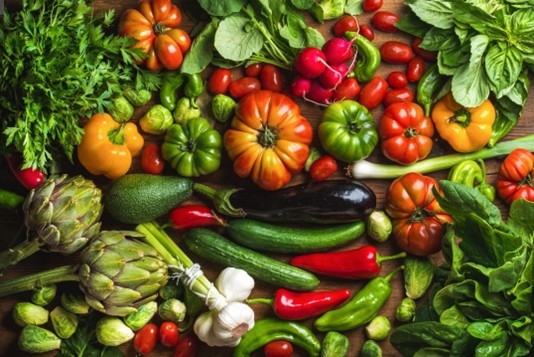
I suggest that the Den switch out some of its current products for more fresh foods. One potential avenue to accomplish this would be to form relationships with local farms. This would have the added benefits of a shortened supply chain – making it more sustainable – and strengthening Dickinson’s community relationships. The Den already sells products like meat and eggs from the College Farm, so broadening to other producers is certainly not far-fetched.
Why does this matter?
Unprocessed foods are an important part of a full diet. Ultra-processed foods tend to have high sodium and fat content, making them more difficult to incorporate into a balanced and nutritionally complete diet (Salomé et al., 2021).
Additionally, agency over the food people consume is important to mental health. It has been shown that cooking can have a positive impact on mental health and quality of life (Rees et al., 2022).
How can students get involved?
I encourage my fellow students to make their own opinions known and participate in Dining Services’ surveys. I also note that Student Senate is an avenue to start initiatives, including those in regard to our food options on campus.
References
Rees, J., Fu, S. C., Lo, J., Sambell, R., Lewis, J. R., Christophersen, C. T., Byrne, M. F., Newton, R. U., Boyle, S., & Devine, A. (2022). How a 7-week food literacy cooking program affects cooking confidence and Mental Health: Findings of a quasi-experimental controlled intervention trial. Frontiers in Nutrition, 9. https://doi.org/10.3389/fnut.2022.802940
Salomé, M., Arrazat, L., Wang, J., Dufour, A., Dubuisson, C., Volatier, J.-L., Huneau, J.-F., & Mariotti, F. (2021). Contrary to ultra-processed foods, the consumption of unprocessed or minimally processed foods is associated with favorable patterns of protein intake, diet quality and lower cardiometabolic risk in French adults (INCA3). European Journal of Nutrition, 60(7), 4055–4067. https://doi.org/10.1007/s00394-021-02576-2
Leave a Reply
You must be logged in to post a comment.