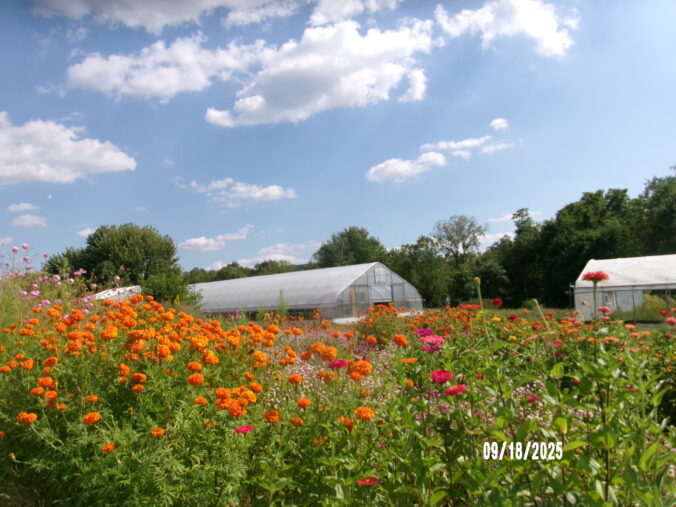
You’ve probably heard the term food system before. Perhaps you have thought of your local grocery store, and maybe you’ve considered the farmers and retailers whose work resulted in the food on your plate. The reality, however, goes far beyond a grocery, farm, and processing facility. A food system consists of the complex network of production, transformation, transportation, distribution, and disposal of food. Today’s food system is highly globalized; in one bite of a burger you are likely to consume Mexican beef, sandwiched between bread made from wheat harvested in the Great Plains, topped with ketchup produces in Italy.
Different Scales of Food Systems
Food systems occur on four distinct levels: household, local, regional, and global. A household food system occurs when a family or group of individuals produce and dispose of their own food. This can be in the form of a garden or homestead farm. A local system consists of smaller farms which provide sustenance to a community, particularly a town or small area. A regional food system exists on a much larger scale, and necessitates more transportation of food and waste, often resulting in a higher level of processing. The global scale describes the worldwide market for food. As this is far-reaching and diverse, it consists of a variety of stages, and involves a high level of processing and industrialization, as well as necessitating strict regulation.
Food Supply Chain
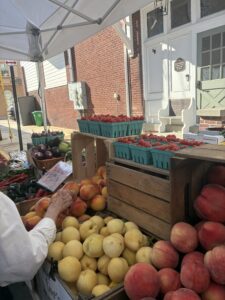
Example of Short Circuit Supply Chain: Farmers on the Square, Carlisle
One aspect of a food system is the food supply chain, which illustrates the processes by which food is produced and delivered to the consumer. A supply chain can be defined as a long circuit food supply chain (LSFSC), which is typical of a regional or global food system, or a short circuit food supply chain (SCFSC), commonly present in household or local systems. The characters in a typical long circuit food supply chain include the farmer, processor, distributer, retailer, and consumer. As a result of the lengthy separation between farmer and consumer, only 15% of the typical dollar spent on a food actually end up in the hands of the farmer; 85% of the cost is usually spent in the processing and retail stages of food production. A short circuit food supply chain, however, provides for a direct interaction between the farmer and the consumer, as the buyer purchases directly from the farm. This results in the farmer receiving 100% of the food dollar.
Models of Food Production
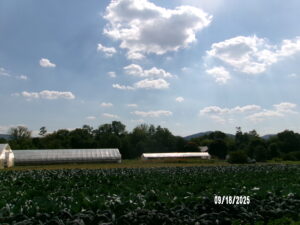
Example of Alternative Agriculture: Dickinson College Farm
Two distinct models of agricultural food production include Conventional Agriculture and Alternative Agriculture. Conventional Agriculture relies heavily on industrialization and prioritizes profit. This often leads to the exploitation of people and resources, creating a decrease in biodiversity in attempting to dominate nature. Conventional Agriculture is common in central and subsidized farms throughout the United States as productivity takes precedent over sustainability. Alternative Agriculture, however, prioritizes sustainability and harmony with nature. This approach typically works to maintain biodiversity and is typical of smaller, decentralized farms throughout the United States.
Food and the Environment
As environmental awareness grows within the US, citizens are beginning to take issue with industrial models of Conventional Agriculture. As 80-90% of the human diet now relies on 12-20 species, the mass production of these species has led to a great reduction in biodiversity. Additionally, as biodiversity decreases, the nutrient content of several industrially produced crops is also depleted. This calls for the reevaluation of the global industrial food system and its priorities.
Articles Referenced
Owino, V., Kumwenda, C., Ekesa, B., Parker, M. E., Ewoldt, L., Roos, N., Lee, W. T., & Tome, D. (2022). The impact of climate change on food systems, diet quality, nutrition, and health outcomes: A narrative review. Frontiers in Climate, 4(941842). https://doi.org/10.3389/fclim.2022.941842
Howard, P. (2016). Enforcing the new enclosures: Agricultural inputs in Concentration and Power in the Food System. PhilipHHoward-ConcentrationAndPower-2016-7EnforcingTheNewEnclo.pdf
Beus, C., and Dunlap, R. (1990). Conventional versus Alternative Agriculture: The Paradigmatic Roots of the Debate. Rural Sociological Society (Washington State University). 55(4).