

(Author, 2025)
Are you the consumer who has saved endless recipes on social media, and wishes to prepare and taste all of them, just to end up with convenience foods? Because I certainly am. Life has seemed to accelerate for years and foodways have become increasingly impactful with the rise of social media and the information which is shared on those platforms. Everyone seems to be an expert such as recipe developers or (fitness) influencers. I have gained over six years of experience working and dining the world’s finest kitchens, and I am intrigued about the rapid pace of change regarding food cultures, traditions, and foodways. I would like to share my worries about the impact of modern-day foodways, their production systems, and the impact of social media on foodways.
I recommend the article from Montanari (2013) stating that food is culture, it always has been and always will be. The impact of food has been incredible throughout our societies; in symbolic, economic, social, and political ways. All class discussions found that foodways describe these traditions and cultures, and that a foodway is therefore a glimpse of geographical moment in time. Highlighting history, lifestyle,and location. To illustrate I will highlight the Mediterranean diet. This has not always been the way it currently is. The geographical location welcomed African pasta varieties, American tomatoes and Asian spices, together creating Italy’s famous cuisine. What I am trying to share is that the ‘fluid’ foodway evolution constantly adapting to human needs and desires. This also causes cultures to lose their cuisines in the global appropriation, such as the Palestinian cuisine being objectified as Israeli food and taken away from their identity. (Washington Post, 2020)
This has resulted in beautiful dishes, interactions, and cultures in the past. In the modern day however, the flexibility of people their foodways seems to be a risk. Globalization and worldwide connection allow people to share their recipes with the globe, but it also drives convenience foods. Global producers prioritize profitability over the quality of their products. To maintain affordability, transnational corporations focus on convenienceand low costs. An example I recommend investigating is the tomato industry, mostly based in Florida and California. Food Journalist Barry Estabrook (2011) highlights the exploitation and hidden costs in the industry which are in practice to maintain a low price for the U.S.’s second most consumed vegetables. (USDA, 2020) These costs entail the inhumane exploitation of workers, the monoculture, the decreasing nutritious value, and the millions of chemicals used to remain consistent. This way, globalization prioritizes efficiency over nutritious value, flavor, or human rights.
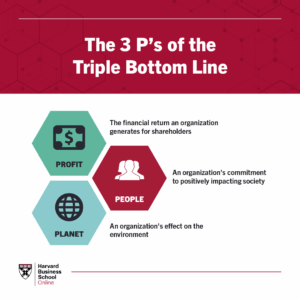
People, Planet, Profit; HBS Online (2020)
The human body still requires the same nutrients for healthy lifestyles. Social media is however overflowing with (self-proclaimed) food experts, all recommending different diets, causing confusion for consumers. Delivery services offer convenience foods, which are often cheaper than fresh meals in the U.S. (Lewis et al., 2022) Since convenience and profitability is the new focus in the modern (western) world, I wonder if the pleasure of eating still belongs in the current society? Based on the Italian Slow Food Movement, this pleasure should be the focus. When I lived in Italy, I noticed traditions, local and unprocessed foods. I understand that this currently not a sustainable way to feed the ever-growing human population. Yet I believe that the current systems are far less sustainable, for people, our planet, and a fair distribution of profit. Which are the three pillars of corporate sustainability according to John Elkington. (1944) I wonder where how consumer priorities will change, since our current, addictive, and obesity causing foodways are unsustainable.
Sources and recommended literature:
Chen, X., Huang, M., Li, J., Yu, Z., et al. (2023). Healthy Food Prices Increased More Than the Prices of Unhealthy Options during the COVID-19 Pandemic and Concurrent Challenges to the Food System https://pmc.ncbi.nlm.nih.gov/articles/PMC9967271/
Estabrook, B. (2011). Tomatoland: How modern industrial agriculture destroyed our most alluring fruit. Andrews McMeel.
Kassis, R. (2020, February 14). Here’s why Palestinians object to the term “Israeli food”: It erases us from history. The Washington Post. https://www.washingtonpost.com/lifestyle/food/heres-why-palestinians-object-to-the-term-israeli-food-it-erases-us-from-history/2020/02/14/96974a74-4d25-11ea-bf44-f5043eb3918a_story.html
Montanari, M. (2013). Italian identity in the kitchen, or food and the nation Columbia University Press.
Harvard Business School. (2020). What is the triple bottom line? https://online.hbs.edu/blog/post/what-is-the-triple-bottom-line
U.S. Department of Agriculture, Economic Research Service. (2020) Potatoes and tomatoes are the most commonly consumed vegetables https://www.ers.usda.gov/data-products/chart-gallery/chart-detail?chartId=58340#:~:text=Potatoes%20and%20tomatoes%20are%20the%20most%20commonly%20consumed%20vegetables%20%7C%20Economic%20Research%20Service