
How did the atomic age change America?
Brands, Chapter 1: Last one Standing, 1945-46
- Sunrise at Alamogordo (pp. 3-6)
- The Looming Shadow (pp. 6-9)
- The Dynamo of Ambition (pp. 9-13)
- When Johnny Comes Marching Home (pp. 13-17)
- What (Else) Hath Roosevelt Wrought (pp. 17-20)
- Flames and a Kiss (pp. 20-23)
From Abby Marthins’ oral history project on WWII homefront
Image Gateway
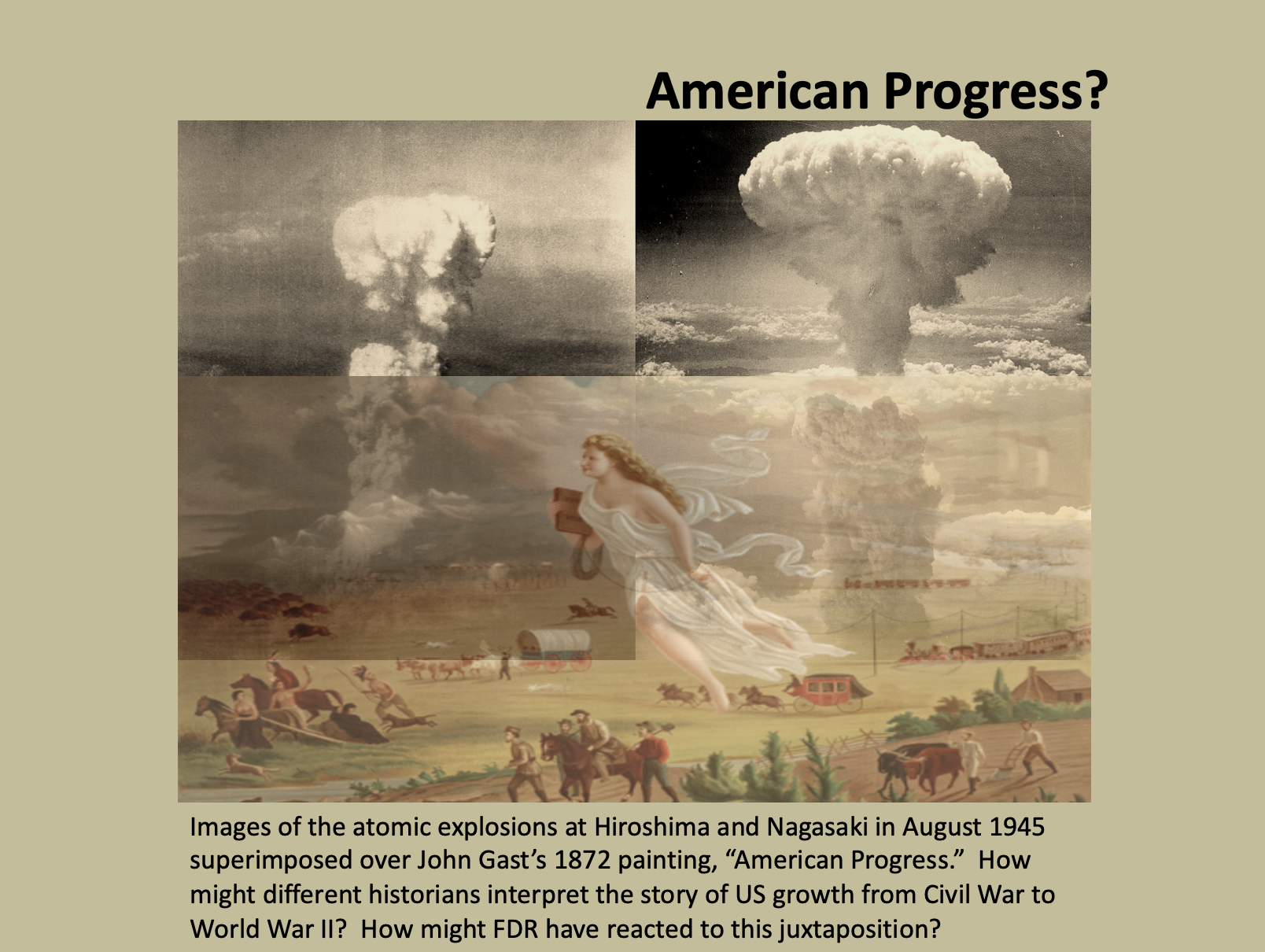
Allied Powers
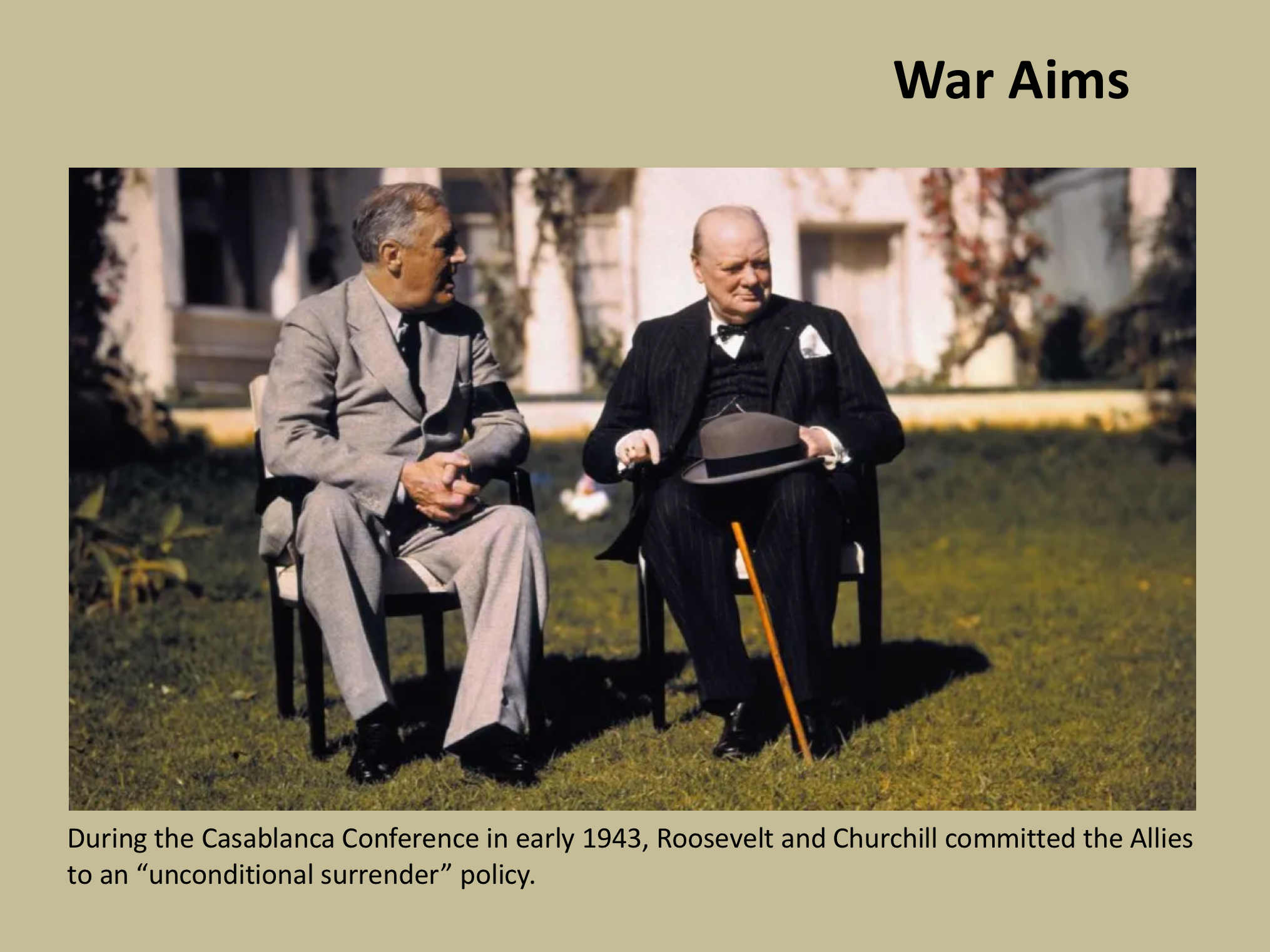
Casablanca Conference (1943)
Yalta Conference (1945)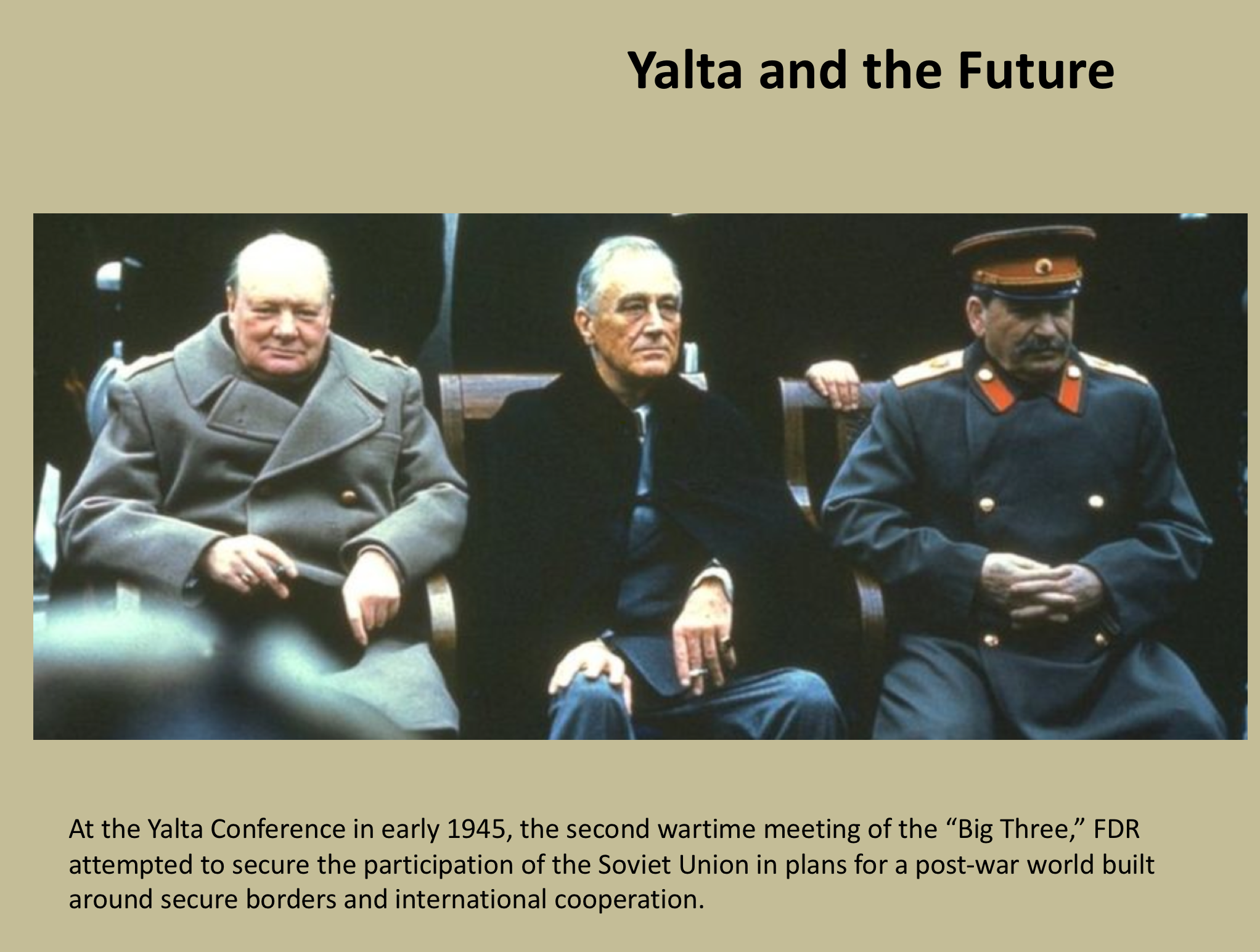
Post-War Multinational Structures
- Bretton Woods (1944): World Bank, IMF, and origins of GATT (tariffs & trade)
- Dunbarton Oaks (1944) and San Francisco (1945): United Nations Organization
- UN General Assembly
- UN Security Council (from FDR’s “four policeman”)
Atomic Age
Manhattan Project
Behind-the-scenes with Christopher Nolan’s “Oppenheimer” movie (2023), based on the 2005 Pulitzer Prize-winning biography of physicist and Manhattan Project director J. Robert Oppenheimer by Kai Bird and Martin Sherwin
Enola Gay
Col. Paul Tibbets was the pilot in command of the Enola Gay (a B-29 bomber named for his mother) that dropped the atomic bomb on Hiroshima, Japan on August 6, 1945. The city had a population of about 350,000 at that time. The explosion immediately killed about 70,000 of those residents, destroying most of the city’s buildings. Tens of thousands more died in the weeks afterward. Tibbets was interviewed on camera, not long after he returned (August 19th).
Russell Baker was a young 19-year-old naval pilot originally from Virginia who was training to go overseas in the summer of 1945. He later became a Pulitzer Prize-winning columnist for the New York Times who recalled his coming of age during the Great Depression and World War II in a famous memoir, Growing Up (1982).
“On August 9 the second atomic bomb was dropped at Nagasaki. Next night I wrote to my mother. “Well, today, to all intents and purposes, the war ended. The feeling of extreme elation which I had expected, existed for a bare moment, then life subsided back into its groove and it was just another day….” I didn’t confess that I hated the war’s ending. I knew she had been praying to God to save my skin; I could hardly tell her I was sorry her prayers had been answered… Still there was no hint in either my mother’s correspondence or mine that the arrival of the nuclear age interested us much. My mother, also excited about premature news that the war was over, had less cosmic things on her mind. The night after the Nagasaki bombing she wrote: “I’m still hoping that you’ll go to college when the war is over and study journalism; that is, if you’re still interested in that kind of work. Don’t lose hope and get married at this stage of the game.” (Russell Baker, Growing Up, p. 230)

Truman’s Decision
Churchill, Truman and Stalin at Potsdam, July 1945
John Lewis Gaddis of Yale University is one of the nation’s leading historians of the Cold War era. In this excerpt, he challenges the widely-held view that President Harry S Truman never hesitated and never questioned his decision to authorize the dropping of two atomic bombs on the Japanese in 1945.
“It took leadership to make this [containment of atomic war] happen, and the most important first steps came from the only individual so far ever to have ordered that nuclear weapons be used to kill people. Harry S Truman claimed, for the rest of his life, to have lost no sleep over his decision, but his behavior suggests otherwise. On the day the bomb was first tested in the New Mexico desert he wrote a note to himself speculating that ‘machines are ahead of morals by some centuries, and when morals catch up perhaps there’ll be no reason for any of it.’ A year later he placed his concerns in a broader context: ‘[T]he human animal and his emotions change not much from age to age. He must change now or he faces absolute and complete destruction and maybe the insect age or an atmosphereless planet will succeed him.’ ‘It is a terrible thing,’ he told a group of advisors in 1948, ‘to order the use of something that …is so terribly destructive, destructive beyond anything we have ever had …. So we have got to treat this differently from rifles and cannon and ordinary things like that.’” (John Lewis Gaddis, The Cold War, p. 53)
Brands, Chapter 2: The War That Never Ended, 1946-48
- Mild About Harry (pp. 24-28)
- Sounding the Tocsin (pp. 28-32)
- A Concept and a Doctrine (pp. 32-35)
- Cold War Dissenters (pp. 35-37)
- A Man With A Plan (pp. 37-40)
- One If By Land, Two If By Air (pp. 40-41)
- Dewey Or Don’t We? (pp. 41-44)
Image Gateway
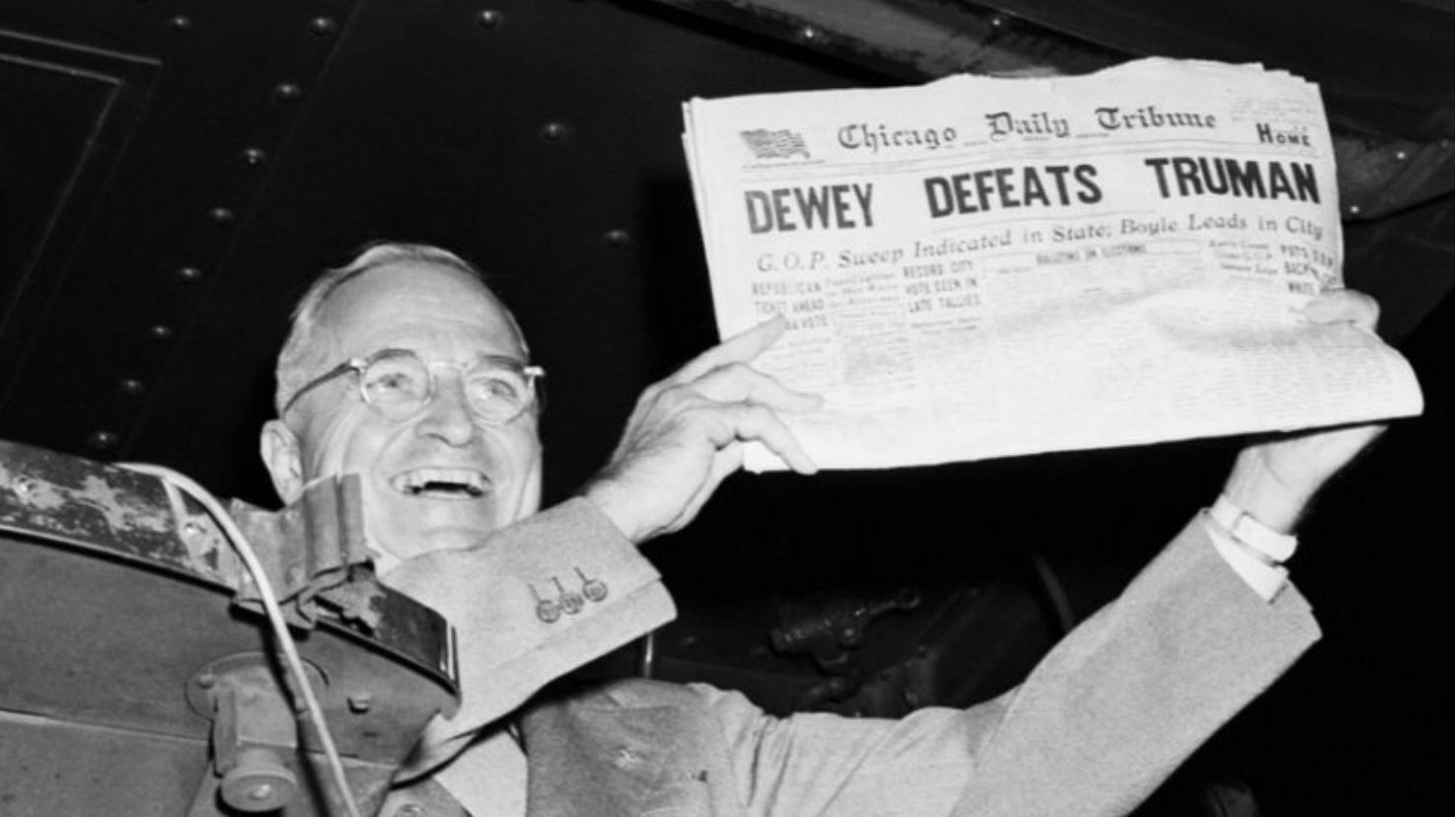
Harry Truman holding the Chicago Tribune following reelection in 1948
Timeline
- 1945 // United Nations
- 1946 // Kennan’s Long Telegram
- 1946 // Iron Curtain Speech
- 1947 // Truman Doctrine
- 1947 // National Security Act
- 1947-48 // Marshall Plan
- 1948-49// Berlin Airlift
- 1948 // Truman wins second term
From Jordan Forry’s “America on the Home Front During the Early Cold War”
Lois Shaffer recalls that after following the situation on the radio, she and her husband became impressed with the feat that the U.S. military was able to accomplish, but she was also quick to point out that they did not necessarily follow the progress of the airlift on a day to day basis.
Containment Policy
From Churchill’s “Iron Curtain” speech in Fulton, Missouri (1946)
Churchill’s stern 1946 warning about the Soviets highlighted a growing tension in superpower relations, a period that columnist Walter Lippmann described memorably as “The Cold War.” The US policy toward the Soviet Union which subsequently defined this Cold War period has come to be known as containment. State Department official George Kennan helped develop this containment doctrine, principally through two powerful documents, the so-called “Long Telegram,” and an anonymous article for the journal Foreign Affairs, titled, “The Sources of Soviet Conduct.” Here is an excerpt from the now-famous 1947 article:
These considerations make Soviet diplomacy at once easier and more difficult to deal with than the diplomacy of individual aggressive leaders like Napoleon and Hitler. On the one hand it is more sensitive to contrary force, more ready to yield on individual sectors of the diplomatic front when that force is felt to be too strong, and thus more rational in the logic and rhetoric of power. On the other hand it cannot be easily defeated or discouraged by a single victory on the part of its opponents….In these circumstances it is clear that the main element of any United States policy toward the Soviet Union must be that of a long-term, patient but firm and vigilant containment of Russian expansive tendencies.
Discussion Question
- How did developments such as the Truman Doctrine (1947), Marshall Plan (1947) and Berlin Airlift (1948) help illustrate the initial application of containment principles?
- Who were the leading American critics of containment policy and what were the differences in the views of figure such as Senator Robert Taft, a leading conservative, or Henry Wallace, a prominent progressive?
Progressive Alternatives: Henry Wallace

Election of 1948 and the Landscape of Post-War American Politics
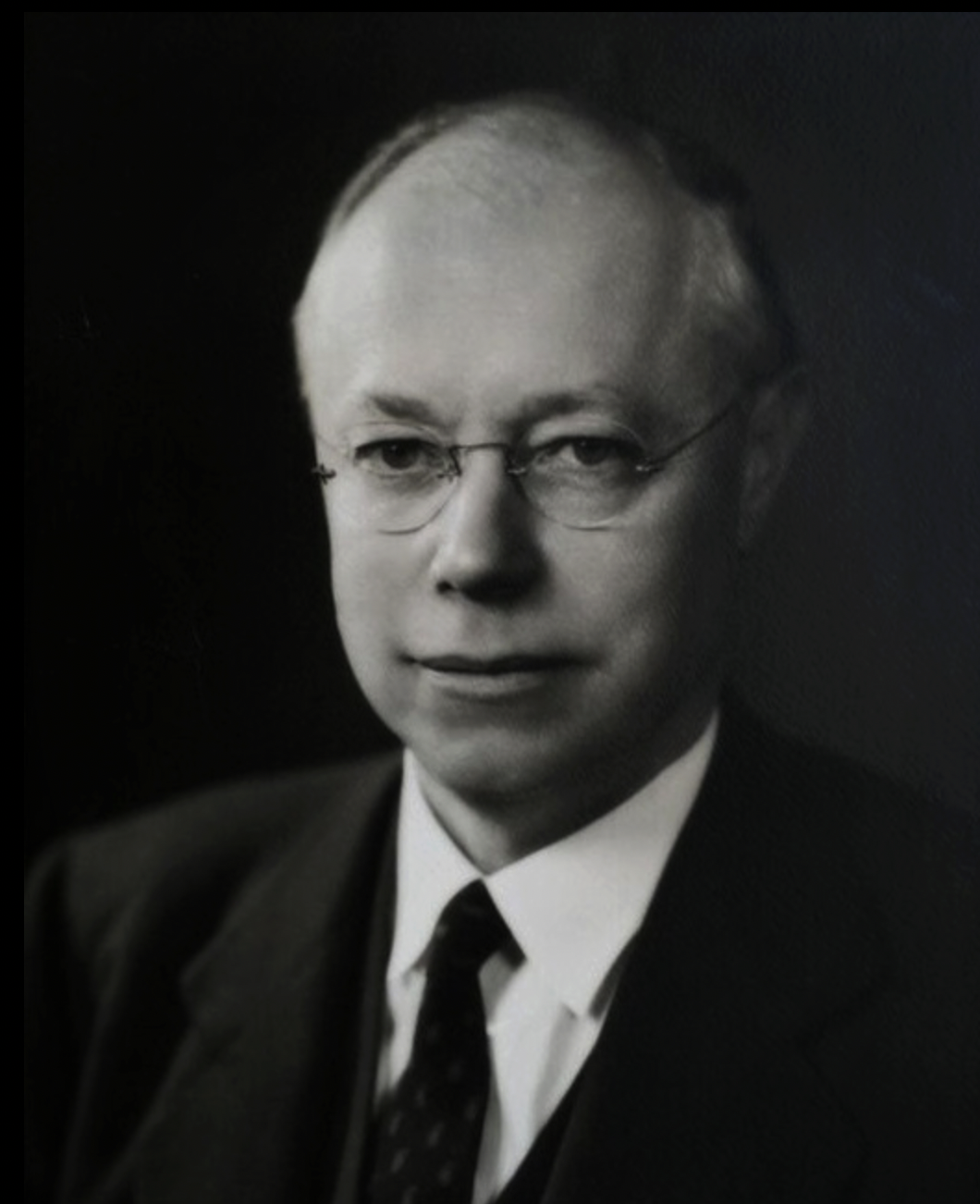
Sen. Robert Taft (R-OH)
Post-war American politics became complicated by competing ideologies that vied for control of American political parties and the broader national culture. The Democratic New Deal coalition splintered in 1948 as many Southern Democrats or Dixiecrats refused to support the party’s evolution toward more open support for civil rights. Democrats also endured a battle between liberals (like Harry Truman) who supported New Deal values at home and Cold War containment abroad and progressive (like Henry Wallace) who questioned the foreign policy establishment. Republicans were divided between conservatives (like Sen. Robert Taft of Ohio) and ultra anti-communist demagogues (like Rep. Richard Nixon from California in 1948 or later Sen. Joseph McCarthy from Wisconsin) and moderates (such as Gov. Tom Dewey from New York). Outside of the mainstream parties there were also other ideologies competing for American support, including libertarianism, socialism and communism. Critics derided these fringe movements as extremists, but many persevered and ultimately influenced US policy in sometimes-powerful ways. But in 1948, it was Truman and New Deal liberals who prevailed in what many regarded as a stunning upset victory.