
Image Gateway
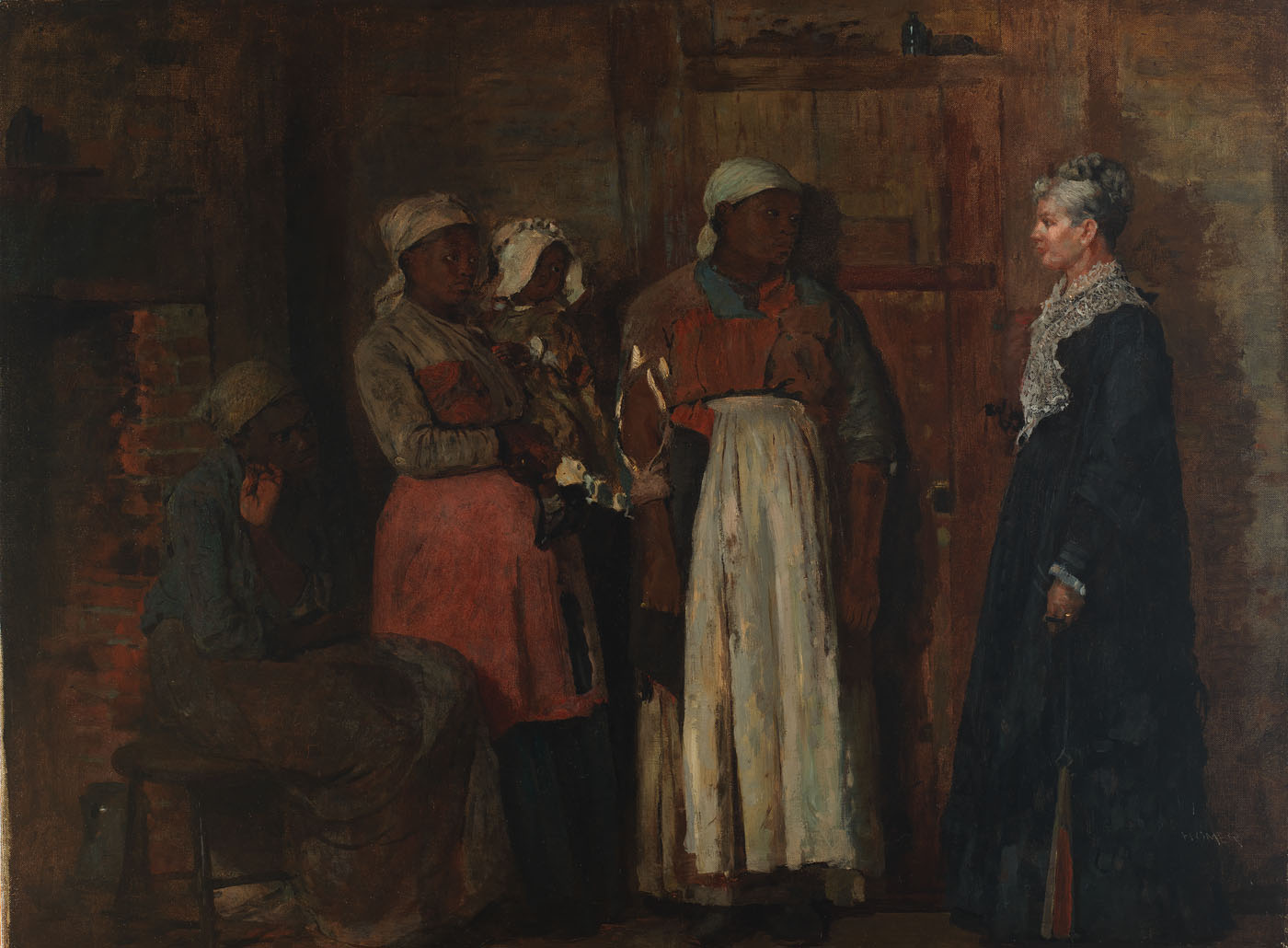
Winslow Homer, A Visit from the Old Mistress (1876)
End of Reconstruction
“If Reconstruction was a revolution, the campaign against it was a counterrevolution.” –Sinha, Rise and Fall, p. 267

Prince Rivers (1822-1887)
Many white Southerners labeled the return of “home rule” following the Radical era of Reconstruction as a period of “Redemption.” That word, however, contained a very bitter note for anybody who believed that the aftermath of the Civil War promised equality to all and a socioeconomic revolution for the region’s dispossessed. For southern blacks, in particular, the Redeemers represented an ominous threat, not only to their rights as freemen, but to their lives. How far Redemption might go in undoing the reforms of Reconstruction –and how violent its advocates might be in that process– remained to be seen by the end of the 1870s. However, it was already clear during the Centennial Year of 1876 that violence against blacks was looming. According to Manisha Sinha, the Hamburg Massacre in South Carolina during July 1876 offered one of the more gruesome examples of the counterrevolution that ended the experiment in interracial democracy.
Timeline
1868 // Grant (GOP) defeats Seymour (DEM) in presidential election
1870 // Ratification of Fifteenth Amendment
1870-71 // Enforcement Acts
1872 // Grant (GOP) defeats Greeley (LIB REP / DEM) to win reelection
1873 // Panic (depression) begins
1873 // Colfax massacre in Louisiana
1874 // Democrats win landslide victories in midterm elections
1876 // Hamburg massacre in South Carolina
1876-77 // Hayes (GOP) defeats Tilden (DEM) in disputed presidential election
Key Supreme Court Decisions
- Blyew v. US (1872) –overturns convictions of KY murderers on federalism grounds concerning witness rules
- Slaughterhouse Cases (1873) –upholds LA business regulation on federalism grounds, limiting “privileges or immunities” clause
- US v. Cruikshank (1876) –overturns convictions following Colfax Massacre (1873) in LA on federalism grounds
- US v. Reese (1876) –overturns convictions under Enforcement Acts in KY on federalism grounds
Some Supreme Court decisions in 1870s and 1880s upheld equal protection for jury laws and protected black voting rights but they were the exception, not the rule
Civil Rights Cases (1883)
- United States v. Singleton
- United States v. Stanley
- United States v. Ryan
- United States v. Nichols
- Robinson and wife v. Memphis & Charleston R.R. Co.
In November 1879, William R. Davis, black newspaperman, and his mixed race girlfriend were denied entry to the Grand Opera House in New York by doorkeeper Samuel Singleton: “these tickets are no good.”
- Sponsored by Sen. Charles Sumner (R-MA)
- Following landslide Democratic victories in the 1874 midterm elections and during the lame duck session of Congress
- Supported tirelessly by black congressmen such as Rep. James Rapier (R-AL), who said:
“Every day my life and property are exposed, are left to the mercy of others, and will be so long as every hotel-keeper, railroad conductor, and steamboat captain can refuse me with impunity … After all, this question resolves itself into this: either I am a man or I am not a man.”
Majority Opinion by Justice Joseph Bradley:
Joseph Bradley (1813-1892)
When a man has emerged from slavery, and, by the aid of beneficent legislation, has shaken off the inseparable concomitants of that state, there must be some stage in the progress of his elevation when he takes the rank of a mere citizen and ceases to be the special favorite of the laws, and when his rights as a citizen or a man are to be protected in the ordinary modes by which other men’s rights are protected. There were thousands of free colored people in this country before the abolition of slavery, enjoying all the essential rights of life, liberty and property the same as white citizens, yet no one at that time thought that it was any invasion of his personal status as a freeman because he was not admitted to all the privileges enjoyed by white citizens, or because he was subjected to discriminations in the enjoyment of accommodations in inns, public conveyances and places of amusement. Mere discriminations on account of race or color were not regarded as badges of slavery.
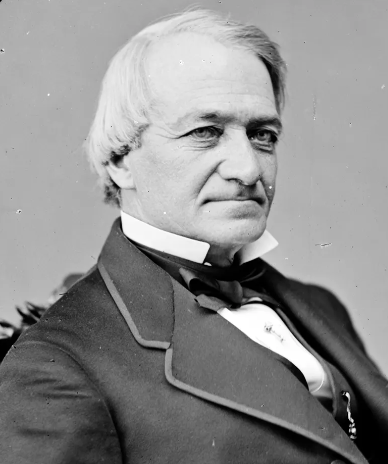
Dissenting opinion by Justice John Marshall Harlan
“Today it is the colored race which is denied, by corporations and individuals wielding public authority, rights fundamental in their freedom and citizenship. At some future time, it may be that some other race will fall under the ban of race discrimination. If the constitutional amendments be enforced according to the intent with which, as I conceive, they were adopted, there cannot be, in this republic, any class of human beings in practical subjection to another class with power in the latter to dole out to the former just such privileges as they may choose to grant.”