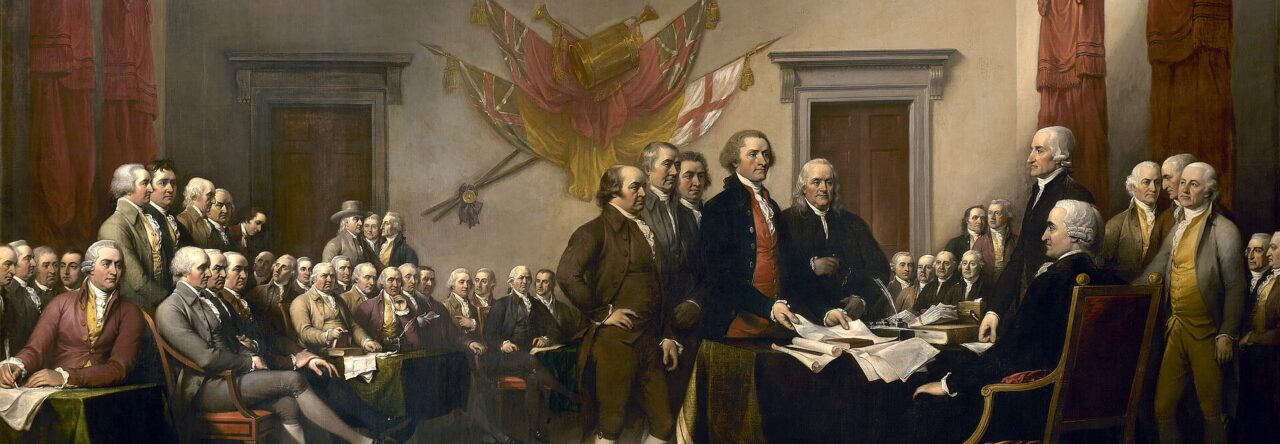
Frances Wright, Fourth of July Address (1828)
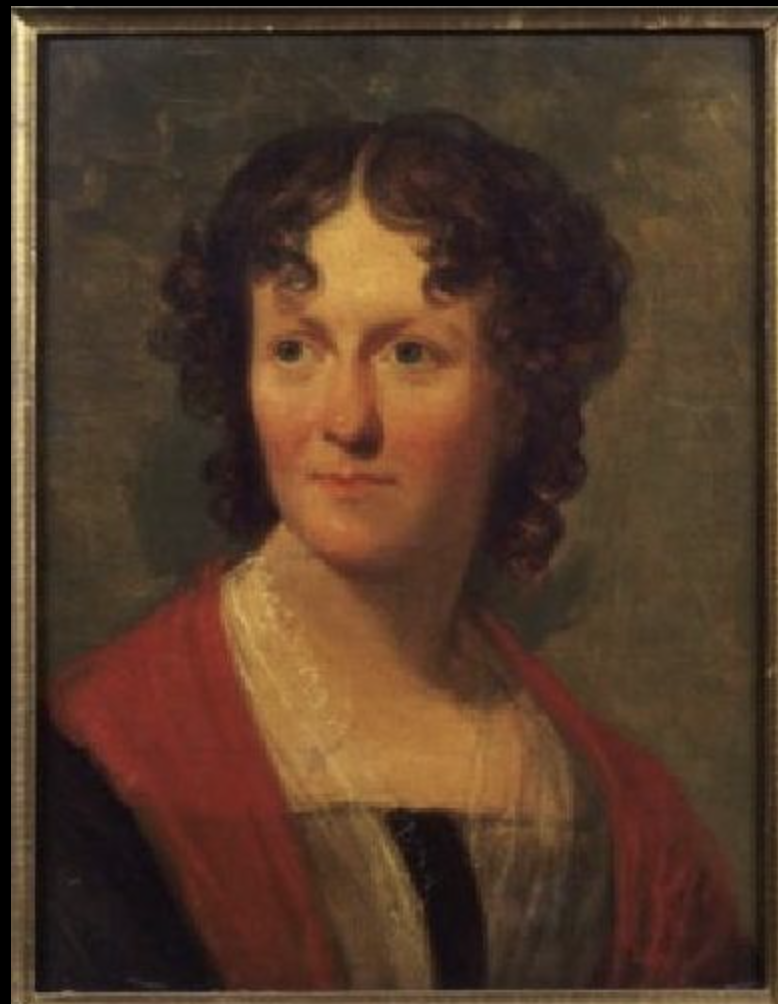 All the liberty therefore that we yet lack will gradually spring up—there, where our bondage is—in our minds. To be free we have but to see our chains. Are we disappointed—are we sometimes angry, because the crowd or any part of the crowd around us bows submissively to mischievous usages or unjust laws? Let us remember, that they do so in ignorance of their mischief and injustice, and that when they see these, as in the course of man’s progressive state they must see them, these and other evils will be corrected.
William Lloyd Garrison, Dangers of Nation (1829)
 Before God I must say, that such a glaring contradiction, as exists between our creed and practice, the annals of five thousand years cannot parallel. In view of it, I am ashamed of my country. I am sick of our unmeaning declamations in praise of liberty and equality—of our hypocritical cant about the unalienable rights of man. I could not, for my right hand, stand up before a European assembly, and exult that I am an American citizen, and denounce the usurpations of a kingly government as wicked and unjust; or, should I make the attempt, the recollection of my country’s barbarity and despotism would blister my lips, and cover my cheeks with burning blushes of shame.
Working Men’s Declaration of Independence (1829)
Therefore, we, the working class of society, of the city of New York, “appealing to the supreme judge of the world,” and to the reason, and consciences of the impartial of all parties, “for the rectitude of our intentions, do, in the spirit, and by the authority,” of that political liberty which has been promised to us equally with our fellow men, solemnly publish and declare, and invite all under like pecuniary circumstances, together with every liberal mind, to join us in the declaration, “that we are, & of right ought to be,” entitled to EQUAL MEANS to obtain equal moral happiness, and social enjoyment, and that all lawful and constitutional measures ought to be adopted to the attainment of those objects. “And for the support of this declaration, we mutually pledge to each other” our faithful aid to the end of our lives.
John Quincy Adams, Fourth of July Oration (1831)
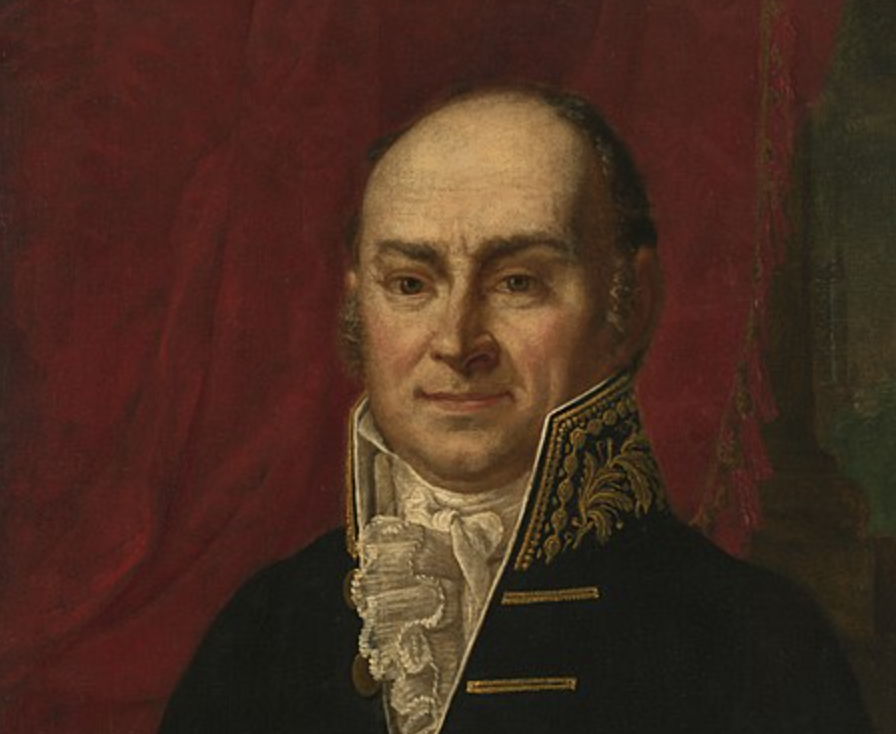 The Declaration of Independence was a social compact, by which the whole people covenanted with each citizen of the United Colonies, and each citizen with the whole people, that the United Colonies were, and of right ought to be, free and independent states. To this compact, union was as vital as freedom or independence.
In the history of the world, this was the first example of a self-constituted nation proclaiming to the rest of mankind the principles upon which it was associated, and deriving those principles from the laws of nature. It has sometimes been objected to the paper, that it deals too much in abstractions. But this was its characteristic excellence; for upon those abstractions hinged the justice of the cause. Without them, our revolution would have been but successful rebellion.
Texas Declaration of Independence (1836)
Nations, as well as individuals, are amenable for their acts to the public opinion of mankind. A statement of a part of our grievances is therefore submitted to an impartial world, in justification of the hazardous but unavoidable step now taken, of severing our political connection with the Mexican people, and assuming an independent attitude among the nations of the earth.
Liberian Declaration of Independence (1847)
While announcing to the nations of the world the new position which the people of this Republic have felt themselves called upon to assume, courtesy to their opinion seems to demand a brief accompanying statement of the causes which induced them, first to expatriate themselves from the land of their nativity and to form settlements on this barbarous coast, and now to organize their government by the assumption of a sovereign and independent character. Therefore we respectfully ask their attention to the following facts.
John C Calhoun, Speech on Oregon Bill (1848)
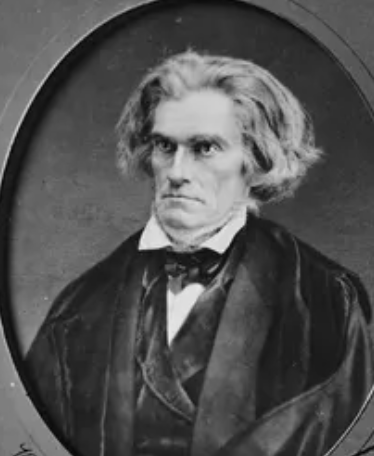 All men are not created. According to the Bible, only two, a man and a woman, ever were, and of these one was pronounced subordinate to the other. All others have come into the world by being born, and in no sense, as I have shown, either free or equal. But this form of expression being less striking and popular, has given away to the present, and under the authority of a document put forth on so great an occasion, and leading to such important consequences, has spread far and wide, and fixed itself deeply in the public mind. It was inserted in our declaration of independence without any necessity. It made no necessary part of our justification in separating from the parent country, and declaring ourselves independent. Breach of our chartered privileges, and lawless encroachment on our acknowleged and well established rights by the parent country, were the real causes, and of themselves sufficient, without resorting to any other, to justify the step.
Seneca Falls Declaration of Sentiments (1848)
The history of mankind is a history of repeated injuries and usurpations on the part of man toward woman, having in direct object the establishment of an absolute tyranny over her. To prove this, let facts be submitted to a candid world. He has never permitted her to exercise her inalienable right to the elective franchise. He has compelled her to submit to laws, in the formation of which she had no voice. He has withheld from her rights which are given to the most ignorant and degraded men—both natives and foreigners. Having deprived her of this first right of a citizen, the elective franchise, thereby leaving her without representation in the halls of legislation, he has oppressed her on all sides. He has made her, if married, in the eye of the law, civilly dead. He has taken from her all right in property, even to the wages she earns.
Frederick Douglass, Fifth of July Speech (1852)
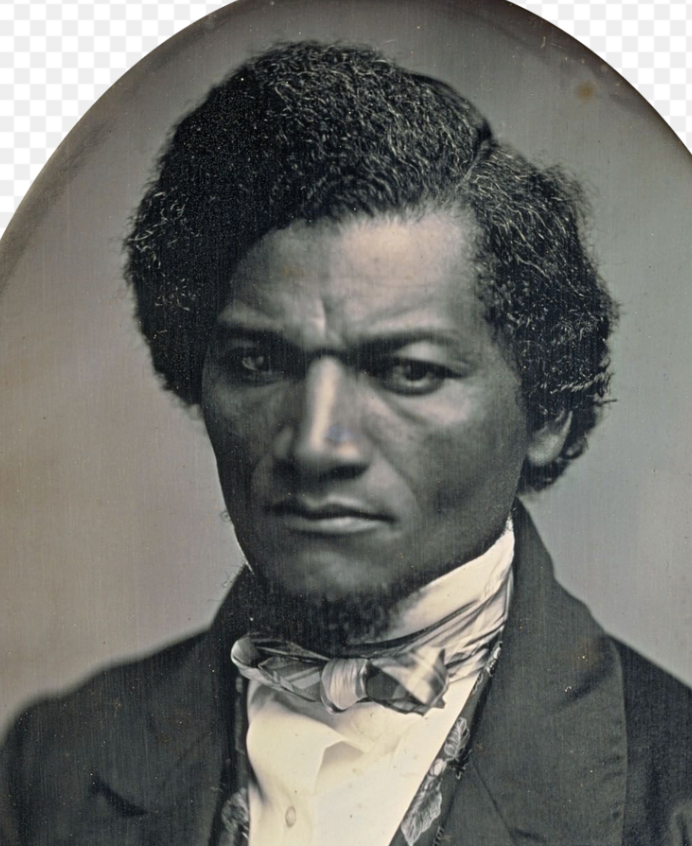 At a time like this, scorching irony, not convincing argument, is needed. O! had I the ability, and could I reach the nation’s ear, I would, to-day, pour out a fiery stream of biting ridicule, blasting reproach, withering sarcasm, and stern rebuke. For it is not light that is needed, but fire; it is not the gentle shower, but thunder. We need the storm, the whirlwind, and the earthquake. The feeling of the nation must be quickened; the conscience of the nation must be roused; the propriety of the nation must be startled; the hypocrisy of the nation must be exposed; and its crimes against God and man must be proclaimed and denounced.
What, to the American slave, is your 4th of July? I answer: a day that reveals to him, more than all other days in the year, the gross injustice and cruelty to which he is the constant victim. To him, your celebration is a sham; your boasted liberty, an unholy license; your national greatness, swelling vanity; your sounds of rejoicing are empty and heartless; your denunciations of tyrants, brass fronted impudence; your shouts of liberty and equality, hollow mockery; your prayers and hymns, your sermons and thanksgivings, with all your religious parade, and solemnity, are, to him, mere bombast, fraud, deception, impiety, and hypocrisy—a thin veil to cover up crimes which would disgrace a nation of savages. There is not a nation on the earth guilty of practices, more shocking and bloody, than are the people of these United States, at this very hour.
Abraham Lincoln, Speech at Independence Hall (1861)
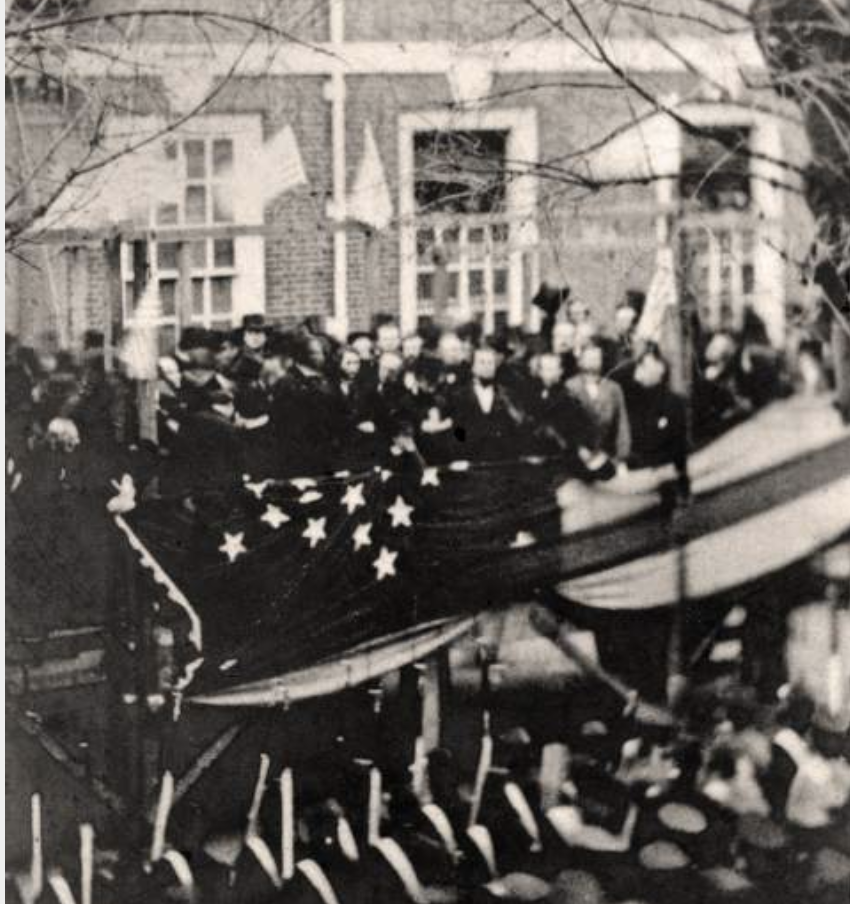
Lincoln in Philadelphia, February 22, 1861 (House Divided Project)
You have kindly suggested to me that in my hands is the task of restoring peace to our distracted country. I can say in return, sir, that all the political sentiments I entertain have been drawn, so far as I have been able to draw them, from the sentiments which originated, and were given to the world from this hall in which we stand. I have never had a feeling politically that did not spring from the sentiments embodied in the Declaration of Independence.
I have often inquired of myself, what great principle or idea it was that kept this Confederacy so long together. It was not the mere matter of the separation of the colonies from the mother land; but something in that Declaration giving liberty, not alone to the people of this country, but hope to the world for all future time. (Great applause.) It was that which gave promise that in due time the weights should be lifted from the shoulders of all men, and that all should have an equal chance. (Cheers.) This is the sentiment embodied in that Declaration of Independence.
Abraham Lincoln, Gettysburg Address (1863)
Four score and seven years ago our fathers brought forth on this continent, a new nation, conceived in Liberty, and dedicated to the proposition that all men are created equal.
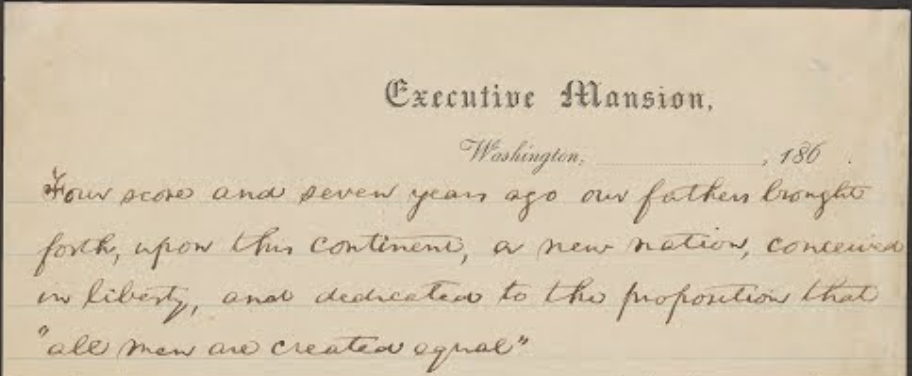
Nicolay Draft, c. November 18, 1863 (Library of Congress)