When I began searching for primary sources related to NLRB v. Jones and Laughlin Steel Corporation (1937), I was unsure how challenging the process would be. However, I was pleasantly surprised by the quantity of historical information available through Dickinson’s online library databases, popular search engines, and AI programs. Additionally, the books and articles I consulted for my previous post provided especially interesting areas to research further for primary source materials. Using those sources and referencing the different online platforms listed above, I found a unique set of primary sources, including a transcript of Roosevelt’s March 9 fireside chat, a public speech given by Senator Burton Wheeler, and a letter from Chief Justice Charles Hughes to Senator Wheeler. Having completed the research for my second post, I learned how valuable secondary sources are for identifying potential primary sources and how abundant our library databases are with historical documents.
Since my paper is centered on a Supreme Court case, the first primary source I sought out was the Court’s 1937 opinion in Jones & Laughlin. Given its prominence and wide availability, I simply used Google to find the opinion. From there, I chose the text provided by Justia Law, a popular and highly reputable website that provides decisions from the Court as well as a plethora of laws and regulations at both the federal and state levels. The site includes both Chief Justice Hughes’s majority opinion and the dissenting opinion by Justice McReynolds.
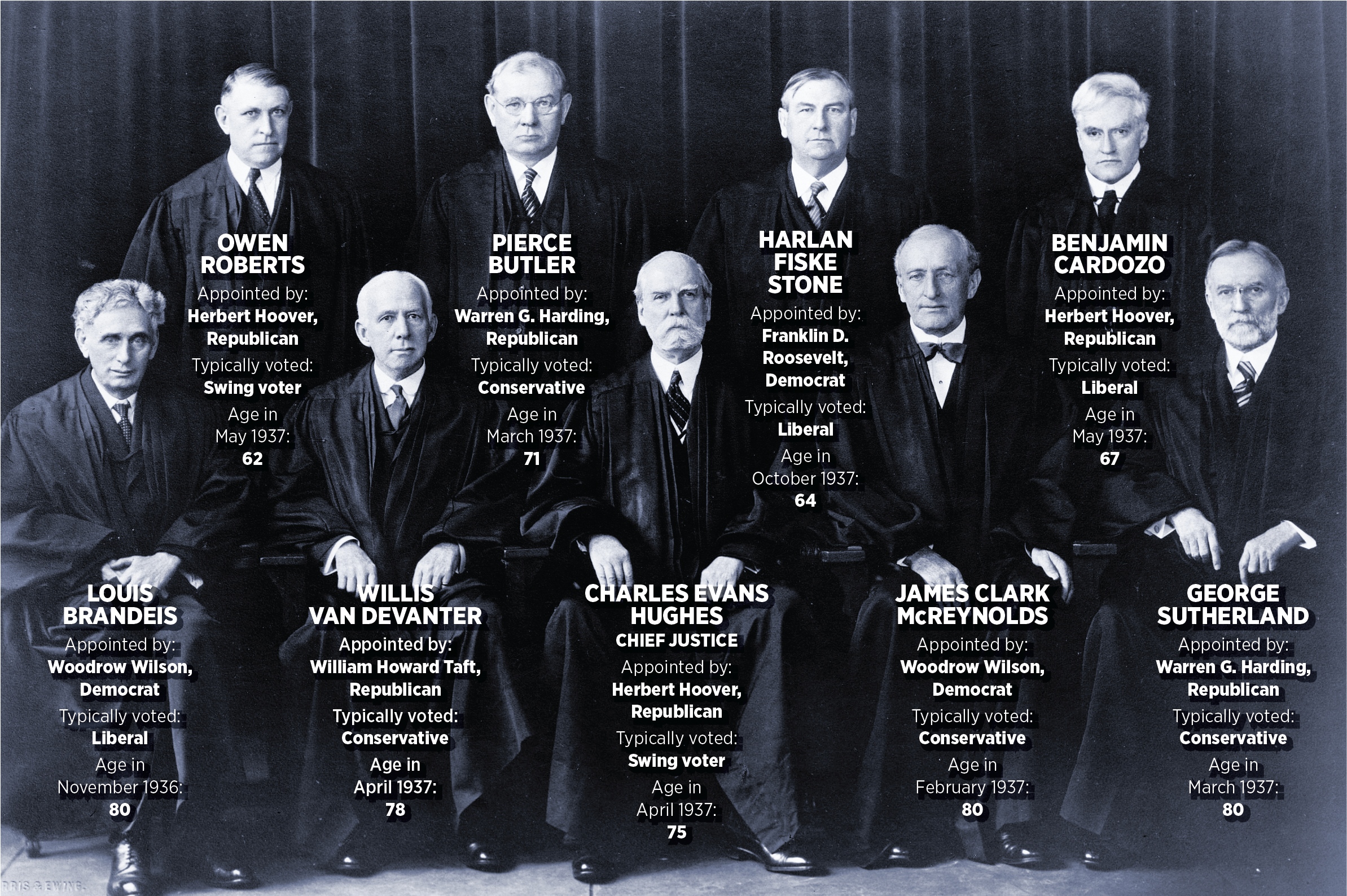
Photograph of the Hughes Court (1937), featuring Chief Justice Hughes in the center, surrounded by the associate justices (The Spokesman Review).
In addition to the Court’s opinion, I wanted to find the opposing briefs filed in the case. These documents not only clarify the issues before the Court, but also reflect broader ideological divides among constitutional laywers, judges, and political figures. Having those documents available will more clearly illustrate the major points of contention between economic interventionalists (Roosevelt’s supporters) and constitutional watchdogs. Although these briefs were more difficult to find, I utilized ChatGPT to guide my search. From there, I was directed to Hathi Trust, a digital library containing numerous historical books, journals, and other documents. While it only provides NLRB’s brief, I compared it with the brief excerpts in Pohlman’s book to ensure that it matched. Considering that the briefs will play a smaller role in my final paper, I will use the full NLRB brief from HathiTrust as well as the excerpt of the Jones and Laughlin brief provided in Pohlman’s Constitutional Debate in Action: Governmental Powers.
While looking through Pohlman’s book to compare the briefs, I also came across a primary source section dedicated to a letter from Chief Justice Hughes to Senator Burton Wheeler. The letter argued against the points proposed in support of the court-packing plan given by FDR. Senator Wheeler, one of the leading Democratic politicians opposed to the plan, would later read that piece aloud during a Senate floor debate on the proposal. Although Pohlman’s book only included an excerpt of the letter, I used Google to try and locate the full text. There, I found a congressional record from March 29, 1937 on Congress.gov. This site, operated by the Library of Congress, possessed the complete letter. As I read more about Senator Wheeler’s opposition to the proposal, I began to explore his disagreements with the President further and found some interesting sources beyond the congressional floor debates.
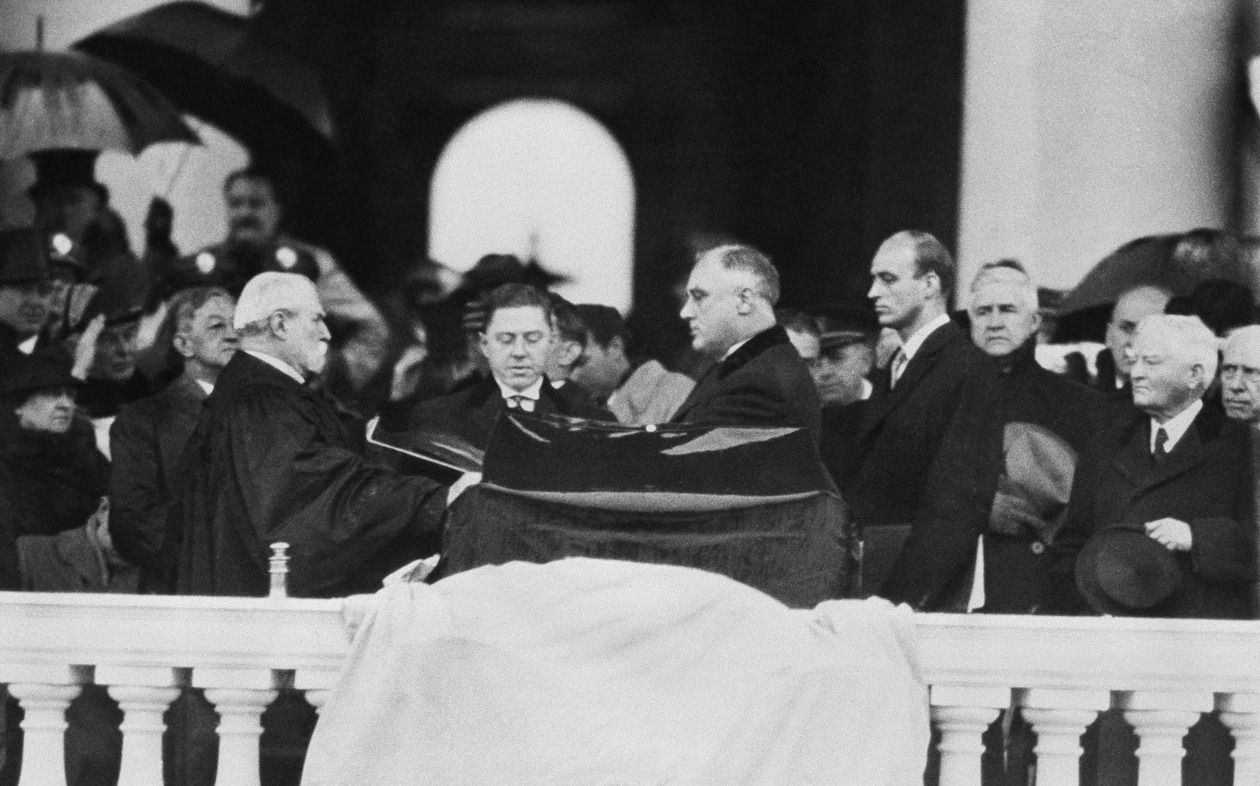
Photograph of President Franklin Delano Roosevelt’s second inauguration, featuring Chief Justice Hughes (left) swearing in the incumbent President Franklin Roosevelt (right) (Politico).
The first source I found was the result of a search entered into ChatGPT that inquired about similar instances of Wheeler’s opposition to the court-packing plan. In the first set of links provided, I found the transcript of a public speech given by Wheeler in Chicago on March 10, 1937, provided by The City University of New York. The speech was titled “First Member of the Senate to Back the President in ’32-,” which underscores its theme as both a promise of loyalty to the President and the Democratic party, as well as a statement of fierce opposition to the proposal. The forceful language contained in the speech both illustrated the intensity of the debate regarding expanding the Court’s membership and highlighted the stakes surrounding the outcome of Jones & Laughlin.
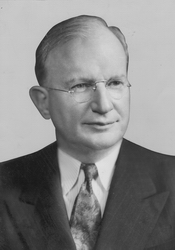
Portrait of Democratic Senator Burton Wheeler (1937) (United States Senate).
The second source I found relating to Wheeler’s opposition to the court-packing plan, and his March 10 speech more specifically, was one that I did not know existed: a transcript of FDR’s March 9 fireside chat. The recording and transcript are available at the Miller Center at the University of Virginia. I came across this source after using Google to search for any instances of FDR supporting his court-packing plan publicly. Not only will the recording highlight the position taken by the supporters of FDR, but it will also contextualize the speech given by Wheeler the next day. It would be surprising if the speech were not, at least in part, influenced by the President’s national message released the night before. Regardless, the proximity between FDR’s and Wheeler’s speeches, issued about one month after the plan was proposed, will provide an interesting snapshot of the debates and perspectives initially surrounding key political figures.
Finally, I searched for a newspaper article published around April 1937, when Jones & Laughlin was decided. To do this, I used the library’s newspaper search database and applied the proper filters to narrow down the list of sources. Although most of the articles provided contained the Court’s opinion in whole or in part without any analysis, I was able to find a shorter article issued in the Wall Street Journal decrying the opinion. The article, titled “Federal Power Broadens,” centered on concerns that the Court’s decision gave Congress and, more specifically, executive agencies significant power to regulate areas of commercial activity through the Commerce Clause. It accurately highlights the primary point of contention surrounding Jones & Laughlin and provides a sense of the unrest many Americans were feeling at the time.
Ultimately, this research process improved my understanding and familiarity with the historical resources available through Dickinson, demonstrated the practical value of AI tools, and highlighted the surprising number of primary sources accessible across the internet. Moving forward, I am confident that I will continue to consult these resources to improve the research quality of my future papers and assignments beyond what I had previously thought possible.
Bibliography
City University of New York. “First Member of the Senate to Back the President in ’32-.” Accessed December 6, 2025. [CITY UNIVERSITY OF NEW YORK]
Congress.gov. “Congressional Record – Senate.” Reported March 29, 1937. [CONGRESS.GOV]
HathiTrust Digital Library. “Brief for National Labor Relations Board.” Accessed December 8, 2025. [HATHITRUST]
Miller Center at the University of Virgia. “March 9, 1937: Fireside Chat 9: On “Court-Packing.” Accessed December 7, 2025. [MILLER CENTER]
National Labor Relations Board v. Jones & Laughlin Steel Corp., 301 U.S. 1 (1937). Accessed at Justia.
Pohlman, Harry L. Constitutional Debate in Action: Governmental Powers. Rowman & Littlefield Publishers, Inc., 2005.
“The Federal Power Broadens.” Wall Street Journal, March 13, 1937. [PROQUEST]