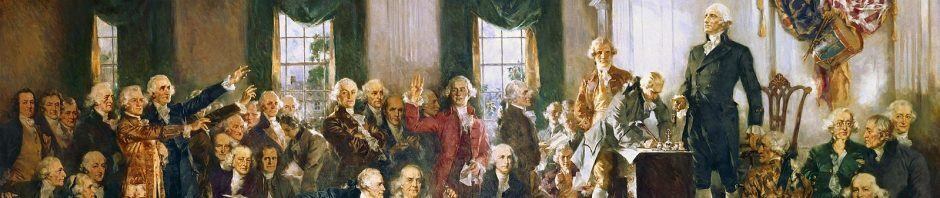
Eras of US -American Indian Policy
- Treaty-making and Civilizing (1780s-1830s)
- Removal (1820s – 1860s)
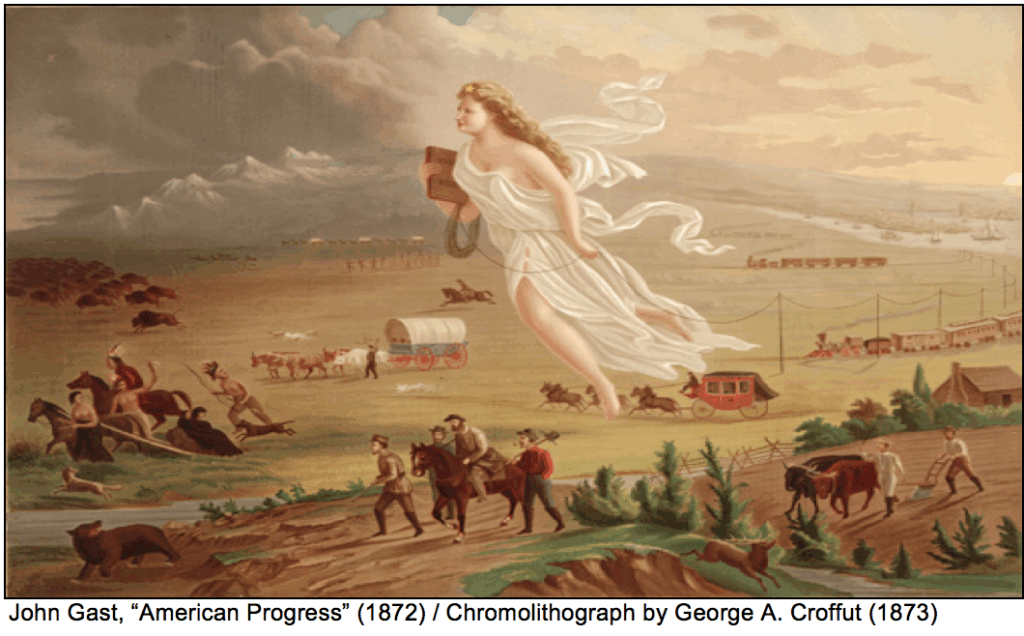
- Reservation (1850s – 1890s)
- Allotment (1880s – 1930s)
- Indian New Deal (1930s-1940s)
- Termination (1950s-1960s)
- Self-Determination (1960s-present)
Key Dates
- 1763 // Royal Proclamation
- 1791 // St. Clair’s Defeat
- 1828 // Indian Removal Act
- 1832 // Worcester v. Georgia
- 1867-68 // Indian Peace Commission
- 1879-1918 // Carlisle Indian School
- 1887 // Dawes Severalty Act
- 1890 // Wounded Knee massacre
- 1903 // Lone Wolf v. Hitchcock
- 1924 // American Indian Citizenship Act
- 1973 // AIM occupation of Wounded Knee
- 1979 // Seminoles begin Indian gaming
- 2021 // Deb Haaland becomes first American Indian to serve as Secretary of Interior

500 Indian Nations with about 250,000 people in the American West by 1900 (shaded area = Plains tribes) Courtesy of American Yawp
“A great general has said that the only good Indian is a dead one, and that high sanction of his destruction has been an enormous factor in promoting Indian massacres. In a sense, I agree with the sentiment, but only in this: that all the Indian there is in the race should be dead. Kill the Indian in him, and save the man.”
“It is a great mistake to think that the Indian is born an inevitable savage. He is born a blank, like all the rest of us. Left in the surroundings of savagery, he grows to possess a savage language, superstition, and life. We, left in the surroundings of civilization, grow to possess a civilized language, life, and purpose. Transfer the infant white to the savage surroundings, he will grow to possess a savage language, superstition, and habit. Transfer the savage born-infant to the surroundings of civilization, and he will grow to possess a civilized language and habit.”
“As we have taken into our national family seven millions of Negroes, and as we receive foreigners at the rate of more than five hundred thousand a year, and assimilate them, it would seem that the time may have arrived when we can very properly make at least the attempt to assimilate our two hundred and fifty thousand Indians, using this proven potent line, and see if that will not end this vexed question and remove them from public attention, where they occupy so much more space than they are entitled to either by numbers or worth. The school at Carlisle is an attempt on the part of the government to do this. Carlisle has always planted treason to the tribe and loyalty to the nation at large. It has preached against colonizing Indians, and in favor of individualizing them. It has demanded for them the same multiplicity of chances which all others in the country enjoy . Carlisle fills young Indians with the spirit of loyalty to the stars and stripes, and then moves them out into our communities to show by their conduct and ability that the Indian is no different from the white or the colored, that he has the inalienable right to liberty and opportunity that the white and the negro have. Carlisle does not dictate to him what line of life he should fill, so it is an honest one. It says to him that, if he gets his living by the sweat of his brow, and demonstrates to the nation that he is a man, he does more good for his race than hundreds of his fellows who cling to their tribal communistic surroundings.”
“Theorizing citizenship into people is a slow operation. What a farce it would be to attempt teaching American citizenship to the negroes in Africa. They could not understand it; and, if they did, in the midst of such contrary influences, they could never use it. Neither can the Indians understand or use American citizenship theoretically taught to them on Indian reservations. They must get into the swim of American citizenship. They must feel the touch of it day after day, until they become saturated with the spirit of it, and thus become equal to it.”
Image Gateway
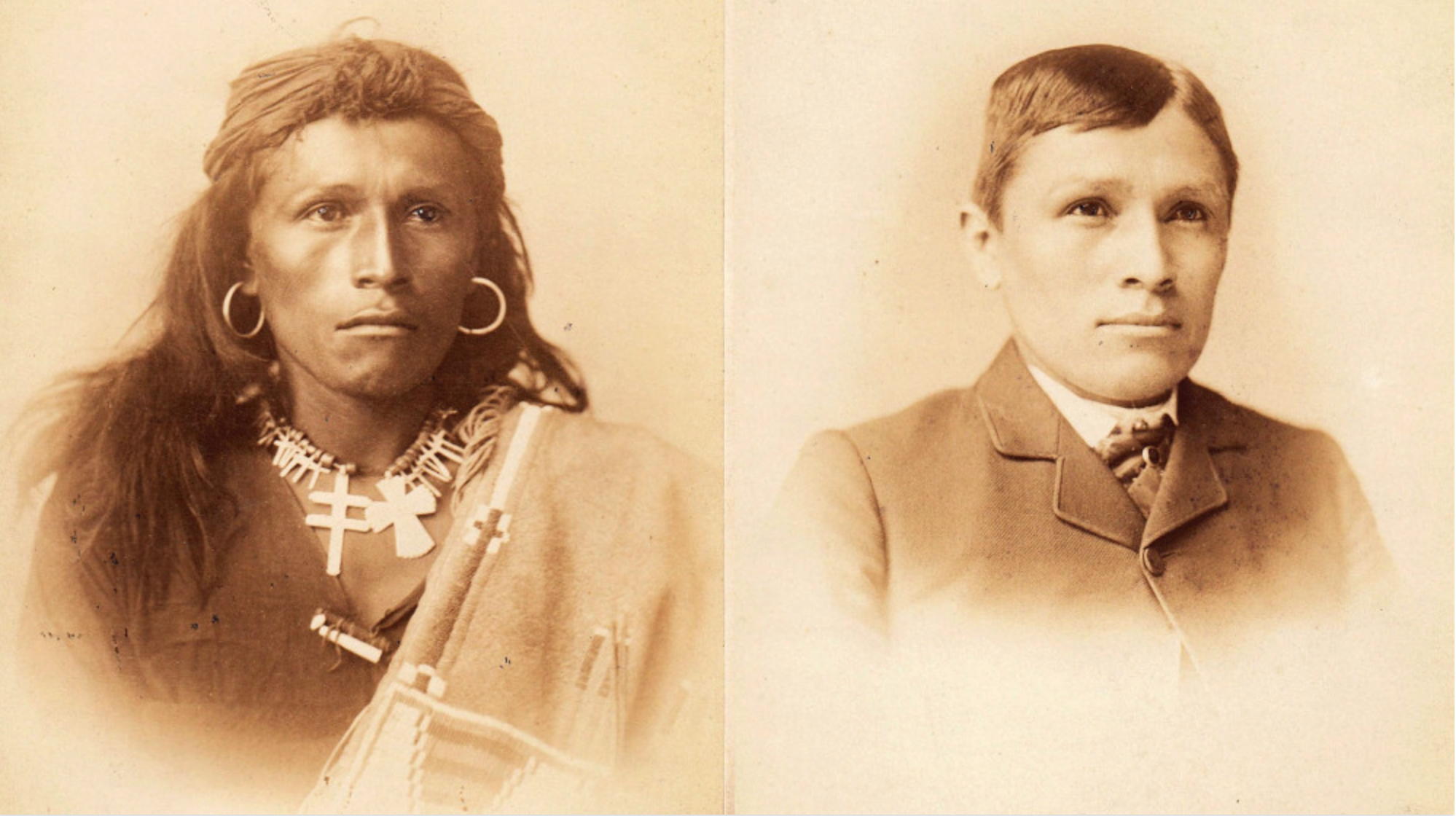
Tom Torlino (Hastiin To’Haali), in 1882 (left), and 1885 (right)
To find out what happened to Tom Torlino and his descendants, read this 2013 article from the Navajo Times
Richard Henry Pratt to John Oberly, January 4, 1886
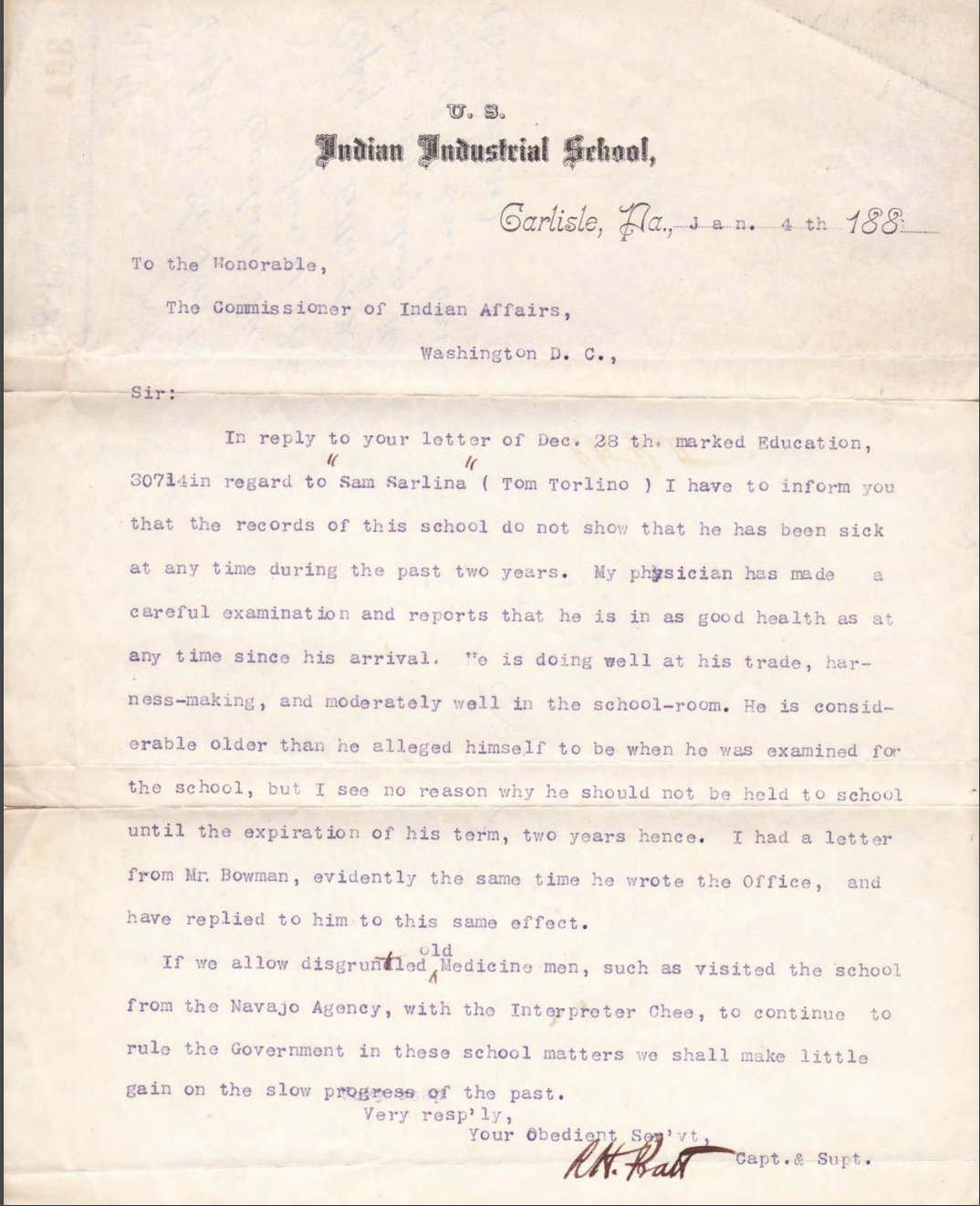
Tom Torlino and family in the 1910 US Census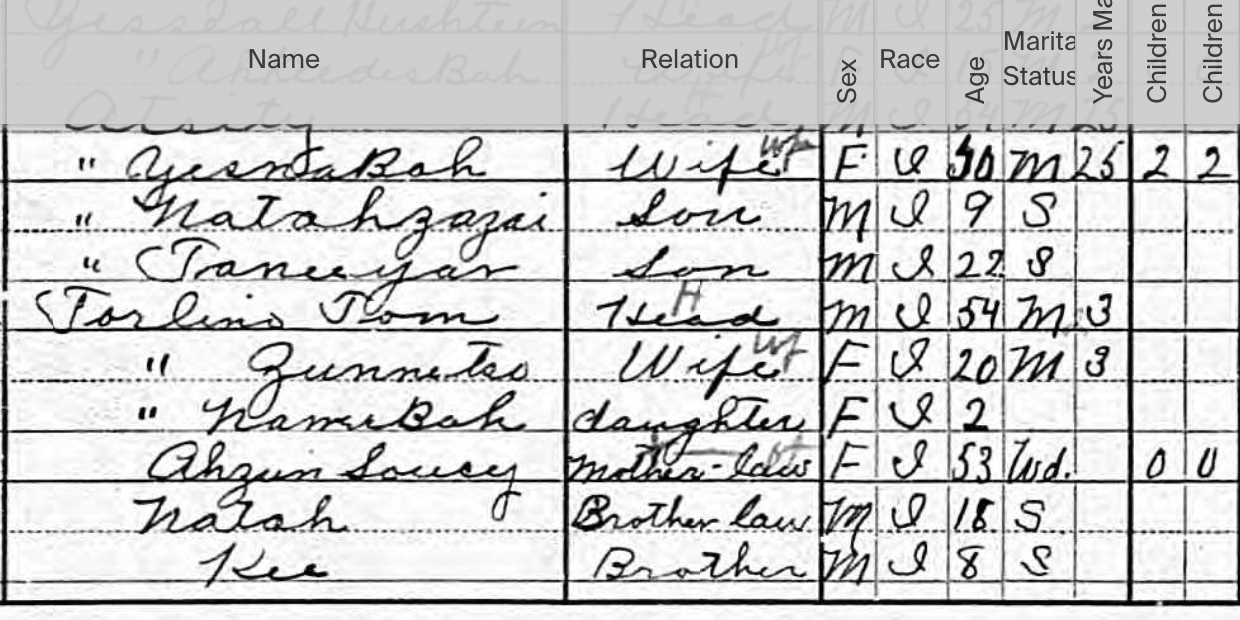
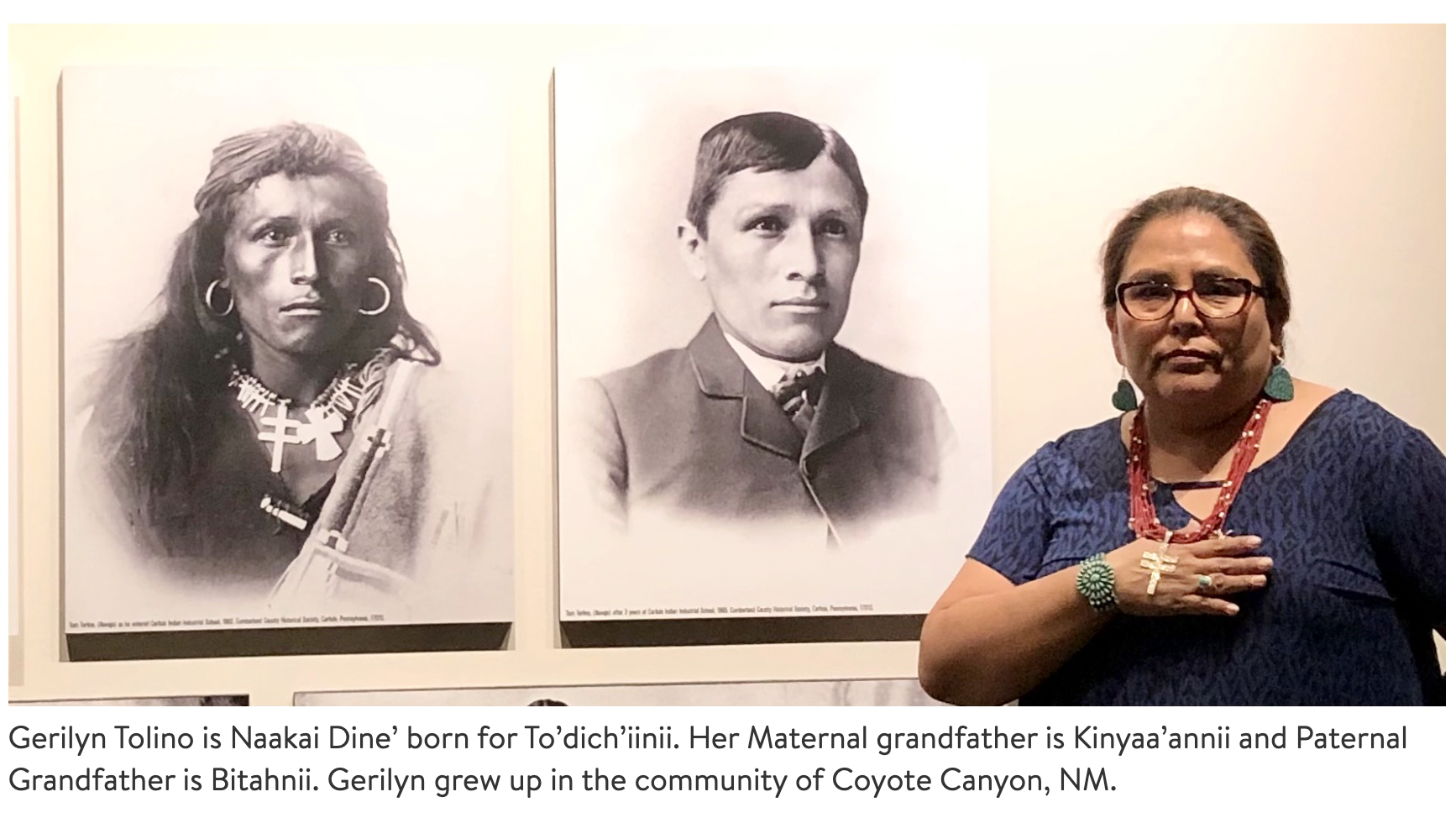
Gerilyn Tolino is now a board member of the Center for the Futures of Native Peoples at Dickinson College