Dickinson College Spring 2026

Paris 1783

Author: Jack Scantland

Jacqueline Kennedy Onassis, 2nd Post

Roadblocks and Resources: How Dead Ends Led to Primary Sources While Researching Jacqueline Kennedy Onassis
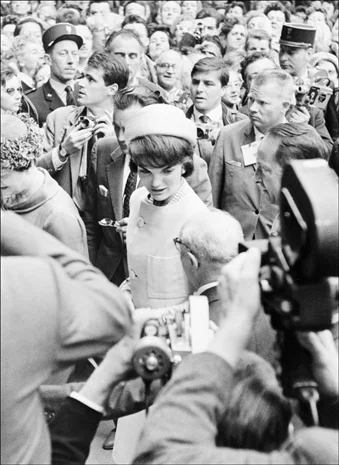
First Lady Jacqueline Kennedy is greeted by the press and public during her 1961 visit to Paris. [CBS News]

When I selected Jacqueline Kennedy as my biographical subject, I expected the search for primary sources to be simple. She is well known, well-liked, and well documented. I anticipated the hardest part of my research to be finding sources related to my case study: the 1961 Kennedy visit to Paris and Jacqueline’s use of personal and cultural diplomacy. However, the research process involved numerous roadblocks and dead ends before relevant primary sources were identified. This process demonstrates that roadblocks are a necessary part of research, as dead ends eliminate unproductive paths and help refine the direction of investigation. Recognizing what you don’t know is an important part of discovering where to search for primary sources.

I started my pursuit of primary sources by further researching a potential lead I found while looking for images to add to my first journal post: Mark Shaw, a photographer who developed a close relation to the Kennedy family. The photos I found were taken domestically, but I hoped to find evidence that he accompanied the Kennedy family abroad – specifically to Paris – and that he published writing about those experiences. Sadly, after a Google search that led me to Shaw’s Wikipedia page and the Mark Shaw Photographic Archive, there was only evidence that the photographer accompanied the Kennedy family abroad once, on a vacation to Italy. Dead end #1.

Slightly disappointed but determined, I followed Professor Pinsker’s advice from class and created a list of source types I’d like to find to better narrow my focus and research efforts: letters or diary entries from Jacqueline Kennedy, government documents or notes about Jacqueline Kennedy’s diplomacy, French newspaper articles, domestic newspaper articles, interviews with Jacqueline Kennedy, and, if possible, material from people who disliked Jacqueline Kennedy. To hold myself accountable to the research process, I booked an appointment in the Writing Center with my friend Parker Lengle, a History major and research extraordinaire. 

During the appointment, Parker helped me search databases such as Newspaper Source Plus and ProQuest. According to the Dickinson College Library website, Newspaper Source Plus has access to international newspapers, and TV and radio transcripts. However, despite using various search term combinations (“Jacqueline Kennedy” AND “Paris,” “Jackie Kennedy” AND “France,” etc.), I couldn’t find any French or American sources covering the First Lady’s European visit. Dead end #2. ProQuest proved more useful, specifically because it included an article that discussed Kennedy’s use of celebrity and quoted close personal friends. While I had found domestic newspaper articles, French sources proved more difficult to locate. Regrettably, I decided to use ChatGPT to aid my search. Despite my personal feelings about the use of AI in the writing process, I found ChatGPT’s results useful. The most useful source turned out to be an article by Claude Sarraute. Although half of the source is behind a pay wall (something I am trying to work around and currently labeling dead end #2.5), the half that is free to read still provides compelling insights. 
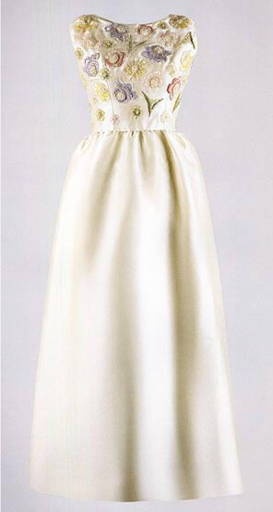
First Lady Jacqueline Kennedy demonstrated her appreciation for French culture by wearing an evening dress, designed by French designer Hubert de Givenchy, to a dinner at the Palace of Versailles on June 1, 1961. [National Archives]

Arguably, the greatest area where Parker and I saw success was in the bibliographies of my secondary sources. While tedious, this allowed me to see which sources – primary and secondary – were cited multiple times across different scholarly works, giving me the chance to discover primary sources. One of the most interesting sources I found using this technique was “An Evening with Jackie Kennedy,” an Esquire Magazine article by Norman Mailer. While the citation didn’t have a link, a Google search provided a digitized copy on the Esquire Magazine Archives website. This source is intriguing because Mailer calls Kennedy “a royal phony,” compares her to “a wooden horse,” and writes that her voice is “manufactured.” This is the first source I’ve encountered that pushes back against the idea that Kennedy was a naturally charismatic figure. Considering the article was published after Kennedy’s Paris visit, it’s interesting to see it in conversation with already-obtained sources.

Searching through bibliographies also led me to a source I am very surprised I hadn’t used yet, the John F. Kennedy Presidential Library and Museum. In hindsight, this is a no-brainer digital source with a large quantity of primary sources. One website page is dedicated to a special exhibit titled “In Her Voice: Jacqueline Kennedy, The White House Years,” which features information and quotes from a 1964 interview Kennedy did with historian Arthur Schlesinger, Jr. The interview discusses her visit to Paris and how members of the public thought she hated politics.  The library also has an audio transcription of a news conference President John F. Kennedy did in Paris, where he famously said: “I am the man who accompanied Jacqueline Kennedy to Paris, and I have enjoyed it.” This source highlights Jacqueline Kennedy’s role in the Paris trip, but President Kennedy also contextualizes their visit, which will prove vital to my final paper. 

I continued my research after my appointment, searching the John F. Kennedy Presidential Library and Museum website, but I still encountered roadblocks. While searching for the full documents referenced in the aforementioned museum exhibit, I learned that the items could only be viewed in person. Dead end #3. Eventually, I found the second-best alternative to letters by Kennedy: letters addressed to her. The most relevant letter was from a collection of correspondence between White House counsel Clark Clifford and Kennedy. In one of his letters, Clifford says, “You have rendered the most magnificent service to your country,” referring to the success the First Lady had in Paris. He further sings her praises, ending the letter by calling Kennedy’s skill an “asset to this nation.” This is when I began to feel a sense of achievement with my research; despite the tedious work I was doing, I was getting results. 
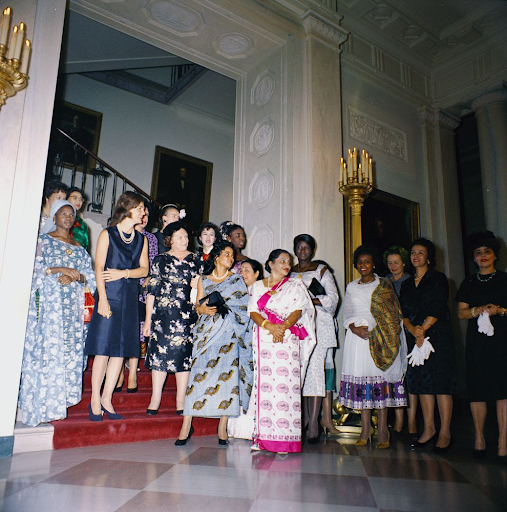
First Lady Jacqueline Kennedy poses with the wives of newly appointed ambassadors at a 1961 tea party, photographed by Robert Knudsen. [John F. Kennedy Presidential Library and Museum]

By this point, I had received draft feedback from Professor Pinsker, who recommended that I examine the Foreign Relations of the United States, a diplomatic book series that contains documents from presidential libraries, the Department of State, the Department of Defense, and other foreign affairs agencies. A quick Google search led me to a digitized copy on the Office of the Historian website. I found a folder dedicated to French relations from 1961-1963 that had 54 telegrams, memorandums, etc. I searched each document using the Command+F function to find terms such as “Jacqueline,” “Jackie,” and “First Lady.” However, none of the sources mentioned Jacqueline Kennedy. Dead end #4. However, the effort did produce some results. I skimmed through the documents and found several that contextualized US-France relations during the period, such as documents 223 (a memorandum from the Assistant Secretary of State for European Affairs), 228 (presidential talking points and visitation schedules), 230 (a memorandum between Presidents John F. Kennedy and Charles de Gaulle), and 268 (a telegram from the French embassy).

The most potent lesson I learned while searching for primary sources was that roadblocks are essential to the research process. Each dead end I encountered – whether it was that Mark Shaw didn’t go to Paris with the Kennedy family, unsuccessful database searches, or inaccessible archival materials – forced me to rethink my approach and refine my strategy. These challenges clarified which paths were unproductive, providing redirection toward available avenues, such as examining bibliographies. The setbacks I initially found frustrating became the most instructive moments of my research. Roadblocks revealed gaps in my knowledge and limitations in my approach, pushing me to ask better questions, use new resources, and think more critically about where and how to find evidence.


Bibliography 

“120. Letter From Jacqueline Kennedy to Chairman Khrushchev.” Office of the Historian, 1 Dec, 

  1. [WEB]

Birmingham, Stephen. “The Public Event Named Jackie: ‘Better than any Other Famous Woman 

in History (Including Garbo), She has Mastered the Art of Managing Her Celebrity.’.” New York Times (1923-), Jun 20, 1976. [ProQuest]

Bohlen, Charles E. “268. Telegram From the Embassy in France to the Department of State.” 

Foreign Relations of the United States, 1961–1963, Volume XIII, Western Europe and Canada, 16 Feb, 1963. [WEB

“Correspondence with Jacqueline Kennedy, 1961-1965.” John F. Kennedy Presidential 

Library and Museum, 1961-65. [WEB

Department of State. “228. Talking Points.” Foreign Relations of the United States, 1961–1963, 

Volume XIII, Western Europe and Canada, 27 May, 1961. [WEB

“In Her Voice: Jacqueline Kennedy, The White House Years.” John F. Kennedy Presidential 

Library and Museum, 1964. [WEB]

Kohler, Foy D. “223. Memorandum From the Assistant Secretary of State for European Affairs 

(Kohler) to Secretary of State Rusk.” Foreign Relations of the United States, 1961–1963, Volume XIII, Western Europe and Canada, 24 Jan, 1961. [WEB

Mailer, Norman. “An Evening with Jackie Kennedy.” Esquire Magazine, July 1, 1962. [Esquire 

Classics

McBride. “230. Memorandum of Conversation.” Foreign Relations of the United States, 

1961–1963, Volume XIII, Western Europe and Canada, 2 Jun, 1961. [WEB

“News Conference 12, June 2, 1961.” John F. Kennedy Presidential Library and Museum, Jun 2, 

  1. [WEB

“President’s trip: Europe, 1961: May-June: De Gaulle briefing book: Volume I (3 of 3 folders).” 

John F. Kennedy Presidential Library and Museum, 1961. [WEB

Sarraute, Claude. “When Mrs. Kennedy throws a “party” for the press.” Le Monde, Jun 3, 1961 

(Translated by Google Translate). [WEB

Jacqueline Kennedy Onassis

From “Jacqueline” to “Jackie”: Improving My Approach to Secondary Source Research

Throughout Diplomatic History of the United States, topics related to culture and soft power interested me. As I read further about these themes and as they were discussed in class, I remembered a book I read in elementary school: Who Was Jacqueline Kennedy?, by Bonnie Bader. This children’s book discussed Kennedy’s life, but I specifically remembered learning about her charming personality and multilingual abilities, skills I would later see associated with cultural and soft power. While this early interest shaped my topic, the process of researching Jacqueline Kennedy quickly revealed that historical research depends less on prior knowledge and more on strategy. Who Was Jacqueline Kennedy? isn’t the type of source you’d cite for a college assignment. Thus, I began my research process by visiting my favorite History major in the Writing Center, Parker Lengle, who taught me that effective research can be a collaborative process, but it still requires precision and adaptability.

We started the appointment by searching for biographies of Jacqueline Kennedy in American National Biographies, a database Professor Pinsker recommended that provides tertiary sources. This built a foundational starting point for my research. Next, Parker helped me navigate various databases, such as America: History and Life, through JumpStart on the Dickinson College Library website. Although I have prior research experience, I quickly realized I had forgotten many of the more technical strategies necessary for efficient database searching. For instance, I used targeted search terms such as “Jacqueline Kennedy” AND “Foreign Policy,” relearning to use quotation marks and Boolean operators to narrow results. This was especially important, considering Jacqueline Kennedy was known by various names – Jacqueline Kennedy, Jackie Kennedy, Jacqueline Kennedy Onassis, etc. – which allowed me to discover different sources. 

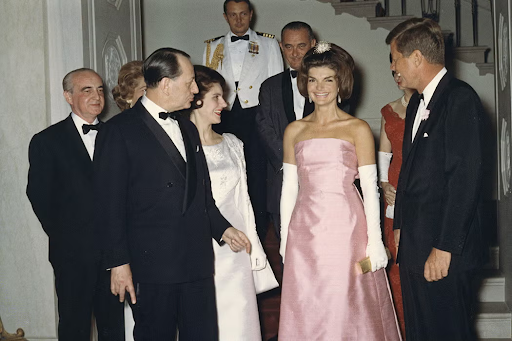
President John F. Kennedy and First Lady Jacqueline Kennedy attend a dinner (May 11, 1962) in honor of Andre Malraux, Minister of State for Cultural Affairs of France. [JSTOR Daily]

We then moved to JSTOR, where I applied similar strategies, but also began engaging more critically with the results. Instead of relying solely on keyword searches, I examined the bibliographies of promising articles, which led me to additional sources that I might not have found otherwise. One example of a source I found in a bibliography is Barbara Pascarell Brown’s master’s thesis, “Pretty in Pink: Jacqueline Kennedy and the Politics of Fashion,” which discusses how Kennedy purposefully dressed during foreign visits and the impact of her cultural knowledge.

By searching through JSTOR, I encountered a variety of secondary sources. Some sources immediately jumped out as relevant to my probable focus on US-French relations due to their titles: “Jacqueline Kennedy, Frenchness, and French-American Relations in the 1950s and Early 1960s,” by Whitney Walton, and “Wives in the White House: The Political Influence of First Ladies,” by Karen O’Connor, Bernadette Nye, and Laura Van Assendelft. This demonstrated how refining my keywords led me to sources that directly addressed my specific research focus. I also found related sources, such as “Treatment of First Ladies in American Government and Presidency Textbooks: Overlooked, Yet Influential, Voices,” by Anthony J. Eksterowicz and Robert P. Watson. This source could be interesting to include in my essay because our class textbook, From Colony to Superpower: U.S. Foreign Relations since 1776, by George C. Herring, mentions Jacqueline Kennedy once, calling her “stylish,” and implying her use of celebrity.

After my Writing Center appointment, I continued researching, utilizing the methods Parker taught and reminded me of. Eventually, I took a break from databases and instead did simple Google searches, just to see what different types of sources might appear. One source I found using this method was Jacqueline Kennedy and the Architecture of First Lady Diplomacy by Elizabeth J. Natalie. I found the book’s abstract on ResearchGate, but the full text was behind a paywall. Rather than abandoning the source, I explored alternatives: searching JumpStart for the book, checking the Internet Archive, and even searching Reddit for a free PDF. My current solution is to attempt an interlibrary loan, but I have not yet completed the process. However, the book’s abstract alone demonstrates its relevance and potential to advance my research.

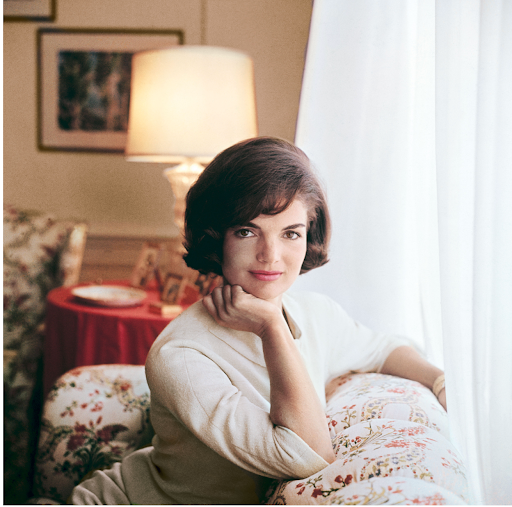
Portrait of First Lady Jacqueline Kennedy, photographed by Mark Shaw. [Real Art Press]

Through this process, I began to refine not only my topic, but also my research approach. Initially, I assumed that finding sources would be a straightforward task: search for a name and select relevant results. However, I learned that effective research requires a more strategic approach, especially when analyzing a historical figure from an atypical angle. Broad searches often yielded overwhelming or irrelevant results, whereas more precise keywords and combinations yielded specific, tailored sources. I would take these lessons with me outside the appointment, applying them even to my image search. While searching for images of Jacqueline Kennedy, I discovered Mark Shaw, a photographer who developed a close relationship with her family. When it comes time to examine primary sources, he is a name I plan to research to see if he published any writings or made any relevant statements.

However, after sending a draft to Professor Pinsker, I learned I still had more to learn about the research process. He pointed out ways to improve my narrative writing (e.g., that I had to search through databases using Kennedy’s various monikers), but more importantly, he noted that some of my sources didn’t seem particularly relevant and that I had missed a source Herring cited while discussing the Kennedy family’s use of celebrity. Herring cites a book by Robert Dallek, which I later found on the Internet Archive. Given the context of the quote, some chapters should prove useful in researching Jacqueline Kennedy’s political and cultural influence.

For me, the beginning of my research reinforced the importance of seeking guidance early in the research process. My appointment at the Writing Center provided me with tools and strategies that I continued to use afterward, streamlining my subsequent research, and Professor Pinsker’s feedback allowed me to sharpen my focus and examine new sources. My experience demonstrates that successful research is not about immediately finding the ‘right’ sources, but about developing effective methods – such as refining search terms, following bibliographies, and navigating access barriers – to locate, evaluate, and connect information. Moving forward, I plan to approach research with greater intentionality, using targeted search strategies and actively engaging with the scholarly conversations.

Bibliography 

Bradley, Richard. Onassis, Jacqueline Kennedy. American National Biography, 2000. [WEB

Brown, Barbara Pascarell. “Pretty in Pink: Jacqueline Kennedy and the Politics of Fashion.” Legacy Theses & Dissertations (2012): 605. [WEB

Cull, Nicholas J. “Auteurs of Ideology: USIA Documentary Film Propaganda in the Kennedy Era as Seen in Bruce Herschensohn’s ‘The Five Cities of June’ (1963) and James Blue’s ‘The March’ (1964).” Film History 10, no. 3 (1998): 295–310. [WEB

Dallek, Robert. John F. Kennedy: An Unfinished Life, 1917-1963. London: Allen Lane, 2003. [INTERNET ARCHIVE

Eksterowicz, Anthony J., and Robert P. Watson. “Treatment of First Ladies in American Government and Presidency Textbooks: Overlooked, Yet Influential, Voices.” PS: Political Science and Politics 33, no. 3 (2000): 589–95. [WEB

Herring, George C. From Colony to Superpower: U.S. Foreign Relations Since 1776. New York: Oxford University Press, 2008. [PRINT] 

Natalie, Elizabeth J. Jacqueline Kennedy and the Architecture of First Lady Diplomacy. Peter Lang, 2018. [RESEARCH GATE

O’Connor, Karen, Bernadette Nye, and Laura Van Assendelft. “Wives in the White House: The Political Influence of First Ladies.” Presidential Studies Quarterly 26, no. 3 (1996): 835–53. [WEB]

Walton, Whitney. “Jacqueline Kennedy, Frenchness, and French-American Relations in the 1950s and Early 1960s.” French Politics, Culture & Society 31, no. 2 (2013): 34–57. [WEB]. 

Powered by WordPress & Theme by Anders Norén