Tuesday, October 8th, 2013...10:06 amChris Francese
Rhythmic Fluency 2: The Hendecasyllable
Jump to Comments
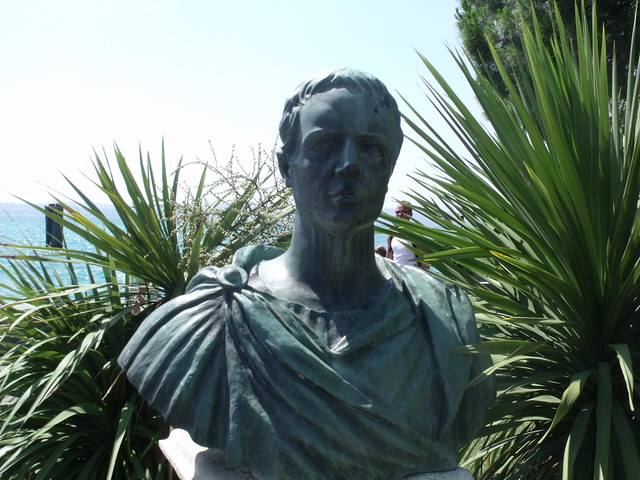
bust of Catullus in Sirmione. (via fickr user Elliot Brown, CC-BY-2.0)
In this second installment of a three part series, Lance Piantaggini drums his way to a better understanding of the Latin hendecasyllable, using Catullus 1.1-2 as an example. He also discusses the downside of scansion, and suggests a system where, rather than indicating metrical feet above the line, we simply rely on macrons to make clear vowel quantities, and underline syllables that are long by position.
Cui dono lepidum novum libellum
arido modo pumice expolitum?
3 Comments
April 4th, 2014 at 2:30 pm
Great blog, congratulations! I loved it. Your readings are excellent. I would like just to suggest you to scan the poems in latin you read. Writing if the vowels are short or long will save a lot of time for the learners and we could use your scansions to correct ours.
Thank you very much.
Demaenetus
April 4th, 2014 at 3:26 pm
Thanks for this comment. I can do that much more readily now that I have started using the ShowMe app for iPad.
Leave a Reply