Reading The Legend of Auntie Po made me think a lot about the stories we grow up with and how we change them to fit who we are. Mei reshapes the Paul Bunyan myth into something that actually reflects her life. She thinks of a powerful Chinese woman who protects her community instead of the giant lumberjack everyone else talks about. What I love is that Mei doesn’t wait for permission to change the story, she just does it because she needs a version that makes sense to her.
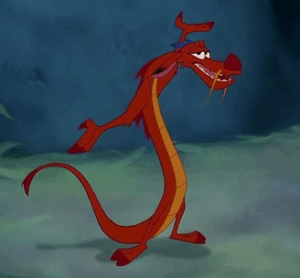
I related The Legend of Auntie Po to Mulan. Mulan is a movie I watched when I was little and loved mostly because she was brave and independent (and I was obsessed with the idea of cutting my hair and becoming a warrior). But after reading Khor’s novel, I started noticing how much Mulan is also a kind of reimagining but just on a much bigger scale and shaped by a company instead of by one kid in a logging camp.
Both Mei and Mulan deal with people telling them who they’re supposed to be. Mei is expected to stay quiet, help her father and accept the racism around her without pushing back. Mulan is expected to become the perfect daughter and fit into her society’s rules. Neither of them can really be themselves inside those expectations, so they turn to stories to add themselves in.
What stands out most, seeing these two together, is how powerful it feels to take a story that doesn’t quite fit you and change it. Mei isn’t trying to make the correct version of the Auntie Po myth but she’s trying to make one that helps her survive. And I think a lot of us watch movies like Mulan for the same reason. It’s not because they’re perfectly accurate but because they give us a way to imagine ourselves as stronger or freer than we actually feel.
The Legend of Auntie Po reminds me that stories are alive and they grow and change with us. They shift based on who’s telling them, what they need and what they want. And maybe the whole point is that we get to shape the stories that shape us.