Dickinson College Food Studies Certificate Program

Category: Food Studies Fall 2025

The Business of Food: Independent Restaurants and Institutional Dining Operations in Carlisle, PA

Sources (left to right): 1. Carlisle Design (n.d.) https://www.carlisledesigninteriors.com/commercial-index/one13-social\ 2. Wheree (n.d.) https://issei-noodle-1390967.wheree.com/ 3. Central Wedge Cheese Shop (2024) https://www.centralwedgecheese.com/post/say-cheese-and-it-s-yours


Environment of the Food Industry 

According to the 2025 Independent Restaurant Industry Report, independent restaurants exist in a dynamic environment that is shaped by shifting customer expectations, and economic pressures (James Beard Foundation & Deloitte, 2025). This is also applicable for institutional dining operations. The economy of the United States has proven unpredictable (National Restaurant Association, 2025), which demands resilience and creativity in order to thrive (James Beard Foundation & Deloitte, 2025). This begs the question, how have members of the Carlisle food industry exhibited perseverance and innovation amidst the challenges of a changing world? 

United States Food Culture

The food culture in the United States guides public perception of appropriate expenditures. This has presented a significant barrier for businesses such as the Central Wedge Cheese Shop, because Americans have been cultured to believe that it is unnecessary to get higher quality and thus more expensive food (S. Beeman, Personal Communication, November 17, 2025) Similarly, Issei Noodles had to overcome the assumption that the value of ramen is limited to a convenient packet (N. Pham, Personal Communication, November 17, 2025). This exemplifies the theme of convenience in our food system, which makes it difficult to view food consumption as an experience in itself. 

Source: Dickinson College (n.d.) https://www.dickinson.edu/homepage/657/locations

Vendor Decisions

Product source decisions reflect the ethos of a food business. Vendor decisions at Dickinson Dining Services (DDS) give preference to products that are local, sustainable, and in season (A. Telep, Personal Communication, November 20, 2025). However, the large quantity demanded by an institutional dining operation requires some sacrifices, such as sourcing chicken that is halal but not local (A. Telep, Personal Communication, November 20, 2025). Ingredient sourcing at RD is also based on a strong ethos. For example, it sources all beef from Carwood Farm, a small family farm located just seven miles away (K. Rockwood, Personal Communication, November 17, 2025). Local relationships help RD accommodate global instability while developing a strong business narrative (K. Rockwood, Personal Communication, November 17, 2025). This practice is not always applicable, because small producers often cannot produce the quantity and uniformity of product required by large dining operations like DDS.

Although both RD and DDS project themselves as sustainable businesses with locally-sourced ingredients, their motives vary. The decisions made by RD create a unique message to appeal to likeminded customers, whereas DDS is instead contributing to the existing reputation of Dickinson College. Within your household, what values influence your food purchase choices, and how often? Would this change if your reputation was on the line? 

Labor Challenge

Source: Dickinson College (2024) https://www.dickinson.edu/news/article/5838/bringing_the_heat_dickinson_welcomes_new_executive_chef

Obtaining and retaining staff is a common challenge in the culinary industry (James Beard Foundation & Deloitte, 2025). According to Kevin Rockwood of RD, high standards and an extensive hospitality-based training process make staffing difficult (Personal Communication, November 17, 2025). On the contrary, institutional dining operations like DDS likely place more emphasis on the mechanics of food preparation alone. RD has found success in the genuine company culture attracting skilled and passionate employees, because it defies the narrative of disinterested food industry workers in the United States (K. Rockwood, Personal Communication, November 17, 2025).  

Importance of Community

Community demographics shape collective responses to new restaurant concepts. Both Issei Noodles (N. Pham, Personal Communication, November 17, 2025) and Central Wedge Cheese Shop (S. Beeman, Personal Communication, November 17, 2025) brought new food cultures to Carlisle, and were met with open perspectives and curiosity fostered by its international community. 

The value of authentic international cuisine is shared by students, as shown in a study that found ⅓ of college students want a greater variety (Mowreader, 2024). Ashley Telep, the executive chef at DDS, has followed this trend through the integration of new international cuisines (Personal Communication, November 20, 2025). 

The success of food businesses is only as strong as the success of the community. This idea is embodied by RD. Through establishing its presence in culinary excellence, RD hopes to attract food-conscious individuals to Carlisle as a whole instead of its businesses alone (K. Rockwood, Personal Communication, November 17, 2025). In your opinion, how does the greater community impact customer experiences? And how can different dining businesses utilize their community relationships to enhance their business practices?

Citations

James Beard Foundation, Deloitte. (2025). “2025 Independent Restaurant Industry Report.” pp. 2-28. 

https://cdn.sanity.io/files/2t27tguw/production/37d06a9c5a8e4693d873e4f1d53a71ce2718ee03.pdf 

National Restaurant Association. (2025). “Economic Outlook.” 

https://restaurant.org/research-and-media/research/restaurant-economic-insights/economic-indicators/economic-outlook/ 

Mowreader, A. (2024). “Survey: Students Value Choice in Campus Dining Facilities.” Inside Higher Ed. 

https://www.insidehighered.com/news/student-success/health-wellness/2024/01/17/what-college-students-want-their-dining-provider 

The Gut-Brain Axis

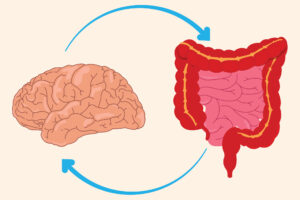
This image illustrates the connection between the brain and the gut’s nervous system, known as the “second brain.” eps 10

This week we examined the complex communication system between the gut and brain, otherwise known as the Gut-Brain Axis. The gut-brain axis is a bidirectional network that allows the central nervous system and the gastrointestinal tract to exchange signals through neural, hormonal, and immune pathways. The gut  is a diverse microbiome that contains 168 neurons which connect to your brain through the nervous system.  The microbes in the gut play a huge role in producing short-chain fatty acids which strengthen the intestinal barrier, reduce inflammation, and support the blood-brain barrier, ultimately affecting mood, cognition, and overall brain function.

What is the Gut Microbiome?

The gut microbiome consists of 100 trillion living bacteria within the body’s digestive tract that help digest food, produce essential vitamins, and regulate our immune system. In Genevieve Wanucha’s reading, the focus is on how the microbiome influences the brain. The bacteria in the gut produce neuroactive compounds such as serotonin, which helps to regulate our emotions and mood. Therefore, an unhealthy gut can have serious consequences on someone’s mental health. As Wanucha illustrates, “a diverse microbiome is a healthy one”, meaning that a rich community of various bacterial species is necessary to maintain balance and prevent one strain from dominating. Disruptions in this balance have been linked to diseases like autism, inflammatory bowel disease, blood cancers, and Alzheimers. The article also highlights  that a person’s genetic makeup plays a major role in the health of their microbiome. While we can’t change our genes, we can improve our diet to help support a healthy gut. Implementing more fibrous, fermented, and probiotics and prebiotics foods can significantly strengthen the gut microbiota. By supporting a health gut environment, these dietary changes can enhance brain health and overall well-being.

Microbiome Development & Diversity

The gut microbiome is largely impacted by genetics and is significantly impacted by one’s parents. While in utero, a mother’s plays a crucial role in shaping her child’s microbiome. For example, eating nutrient-rich, fiber-heavy foods can promote beneficial bacteria, while a diet high in processed foods and sugar may lead to less diverse gut microbes. As the baby is developing in utero, their gastrointestinal track is developing as well, which is why doctors promote prenatal vitamins and health diets for mothers. The method of birth, vaginal or c-section, is another factor of how a child’s microbiome is affected by their mother’s. The mode of delivery  influences the initial colonization of microorganism in infants. C-section babies often have a delay in the development of immune systems, whereas vaginal babies don’t experience that delay. To address this, some Hospitals will expose c-section babies to the organisms they did not receive from a vaginal birth. This helps to diversify the babies microbiome early on in development. Finally, feeding practices ,like formula or breast milk, shape an infant’s microbiome. Breast milk contains high levels of colostrum which is an antibody that helps build the infants immune system. Therefore, infants that were formula feed lack that colostrum and may experience differences in immune protection. An example talked about in class, was when Professor Halpin did her work in the Peace Corps, in Niger. Many natives discouraged breastfeeding, because they believe that breast milk was bad. They viewed mothers who did not breast feed as “wealthier”, because of this mother’s used cow milk. However, this practice contributed to one of the highest infant morbidity rates in the region due to the lack of antibodies found in breast milk.

Alzheimer’s and the Gut-Brain Connection

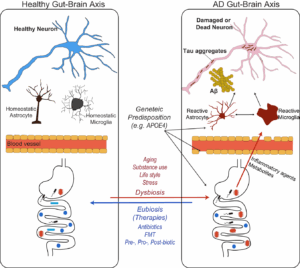
As mentioned above, disruptions to your microbiome are linked to diseases, one of the most common ones being Alzheimer’s disease. Research shows that individuals with Alzheimer’s have a less diverse and imbalanced community of gut microorganisms.  According to the studies cited by Wanucha,  “the microbiomes of people with Alzheimer’s diseases have specific increases and decreases in common gut bacteria, especially decreases in Bifidobacteirum, an important inhabitant of the health human gut” (Wanucha). Researchers are exploring ways to restore healthy gut bacteria in Alzheimer’s patients as a potential method to prevent or slow the disease. Targeted microbiome therapies have become popular in treatment, however since genetics play a huge role in shaping the microbiome, it is essential to consider a patient’s genetic background before treating.

References

Robertson, K. (2023, May 16). The gut-brain connection: How it works and the role of nutrition. Healthline. https://www.healthline.com/nutrition/gut-brain-connection

Seo, Do., Holtzman, D.M. Current understanding of the Alzheimer’s disease-associated microbiome and therapeutic strategies. Exp Mol Med 56, 86–94 (2024). https://doi.org/10.1038/s12276-023-01146-2

Tompa, Rachel. “Scientists Explore Role of Gut-Brain Axis in Parkinson’s, Anxiety, and Long COVID.” Stanford Report, 6 Mar. 2025, https://news.stanford.edu/stories/2025/03/gut-brain-research-long-covid-parkinsons-anxiety.

Wanucha, G. (n.d.). The gut microbiome and brain health. Memory and Brain Wellness Center, University of Washington. http://depts.washington.edu/mbwc/news/article/the-gut-microbiome-and-brain-health

Health, Wellness, and Nutrition

Nutrition: From the Individual to the Whole Picture

Source: Rachel Helfferich, Everglow Nutrition, "5 Examples of Gentle Nutrition in Real Life", 2022.

Source: Rachel Helfferich, Everglow Nutrition, “5 Examples of Gentle Nutrition in Real Life”, 2022.

This week, our class explored food studies through the lens of nutrition and health. Discussing popular and oftentimes controversial topics like global diet recommendations and intuitive eating, we learned about how what we eat connects to our wellbeing not only individuals but as a species. Our class readings for Monday, 10/27 focused on issues like obesity and social determinants of health, topics that have political, social, as well as personal connotations for many. I gained immense insight from Alice Julier’s 2008 article, “The Political Economy of Obesity: The Fat Pay All”, which frames the issue of obesity within a sociological and political context, rather than an individual one. Julier insists that blaming individuals for the leading factors of obesity, from lack of access to healthy foods to the social constructs in the United States promoting consumption, is unproductive and misplaced. Instead, she suggests the federal government take a more active role in hunger prevention and combating food insecurity, because the “unsteady flow of federal funds” assisting non-profit organizations such as food banks “makes good food, leisure, and physical exercise into commodities that are only affordable to those who have disposable income, time, and cultural capital” (Julier, 2008).

Social Determinants of Health and Dietary Guidelines

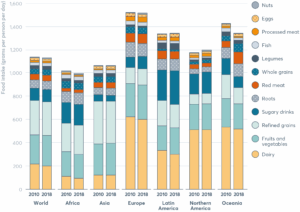
Source: Dr Marco Springmann (Lead author), Dr Dariush Mozaffarian, Dr Cynthia Rosenzweig, Dr Renata Micha. "Food intake by food group, year and region (grams per person per day), 2010 and 2018". Global Nutrition Report. (2021). https://globalnutritionreport.org/e67d6e#2039f4ec

Source: Dr Marco Springmann (Lead author), Dr Dariush Mozaffarian, Dr Cynthia Rosenzweig, Dr Renata Micha. “Food intake by food group, year and region (grams per person per day), 2010 and 2018”. Global Nutrition Report. (2021). https://globalnutritionreport.org/e67d6e#2039f4ec.

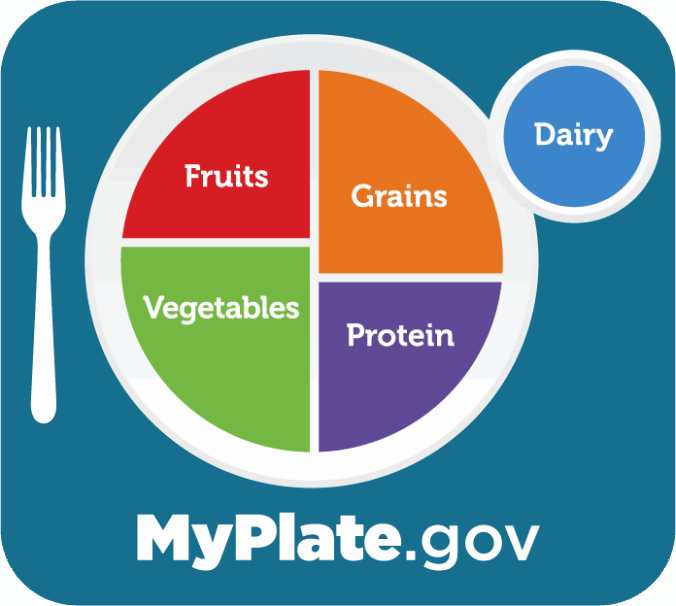
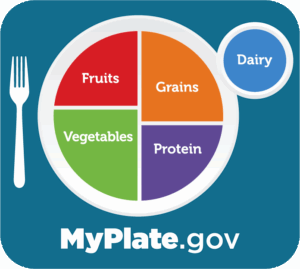
This perspective connects with our reading on Social Determinants of Health, which according to Jiao, are the “non-medical conditions in which people are born, grow, work, live, worship, and age” (Jiao, 2024). Both Jiao and Julier emphasize a necessity for holistic action by governing bodies to craft culturally and dietarily appropriate nutrition policy. In class, we talked about our different experiences with nutritional education growing up, with some recalling federal programs such as MyPlate, and others mentioning that programs like First Lady Michelle Obama’s ‘Let’s Move!’ initiative made them feel overly responsible for their food choices as individuals despite many school lunches including ultraprocessed foods (The Lancet Regional Health – Americas, 2022). During our Thursday, 10/30 class, we met with Dickinson College’s nutritionist Courtney Hager to learn more about dietary recommendations and how they’re communicated in the U.S. One example we explored was the USDA’s MyPlate website (https://www.myplate.gov), which provides tools to calculate the recommended quantities of fruits, vegetables, grains, protein, and dairy or soy products each individual requires depending on various factors.

MyPlate, Intuitive Eating, and the Future of Nutritional Education

U.S. Department of Agriculture. (2025). MyPlate (infographic). https://www.myplate.gov/.

U.S. Department of Agriculture. (2025). MyPlate (infographic). https://www.myplate.gov/.

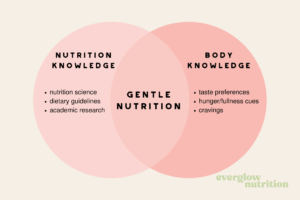
While I recall the MyPlate image from secondary school, it has been interesting to see how the USDA’s recommendations have evolved to include diets such as vegan and dietary restrictions like lactose intolerance. In fact, the deeply nuanced and personal quality of diet was made clearer to me through another reading from Week Nine by Jackson et. al., “Intuitive eating and dietary intake”, which highlights four areas of eating that factor in physical signs of hunger and satisfaction over other reasons why we eat. These areas include “unconditional permission to eat (UPE)”, “eating for physical rather than emotional reasons (EPR)”, “reliance on hunger and satiety cues (RHSC)”, and “body-food choice congruence (B-FCC)” (Jackson, et. al., 2022). As exemplified in Chapter 2 of the 2021 Global Nutrition Report, most adults in the United States are not meeting dietary intake recommendations, specifically those for fruits and vegetables. Considering this, our class discussion on intuitive eating touched on the difficulty in balancing personal practices with the global dietary recommendations. How do we as individuals reconcile our wants and needs when it comes to food and nutrition, considering both social determinants of health and federal nutritional education programs? After all, a study as recent as last year found that “nearly 1 in 3 U.S. adults reported knowing about the MyPlate plan” but that “only about 1 in 7 U.S. adults reported knowing about and trying to follow MyPlate plan recommendations” (Restrepo, 2024). Perhaps the answer lies in improving the quality of nutritional education for future generations, by ensuring it encompasses diverse experiences with food – from social determinants of health, allergies, other dietary restrictions, and beyond.

References

Helfferich, R. (n.d.) 5 Examples of Gentle Nutrition IRL. Everglow Nutrition. https://everglownutrition.com/category/intuitive-eating/page/2/.

Jackson, A., Y. Sano, L. Parker, A. E. Cox, J. Lanigan. (2022). Intuitive eating and dietary intake. Eating Behaviors, 45. https://doi.org/10.1016/j.eatbeh.2022.101606.

Jiao, L. (2024). Social Determinants of Health, Diet, and Health Outcome. Nutrients, 16, 3642. https://doi.org/10.3390/nu16213642.

Julier, A. (2008). The Political Economy of Obesity: The Fat Pay All. Food and Culture, 2019. Edited by Carole Counihan and Penny van Esterik.

Restrepo, B. (2024). Awareness and Use of MyPlate Among U.S. Adults: Evidence From Nationally Representative Data, 2024. American Journal of Preventive Medicine, Volume 69, Issue 5. https://www.ajpmonline.org/article/S0749-3797(25)00503-3/abstract.

The Lancet Regional Health – Americas (edit.). (2022, Dec. 8). Unhealthy school meals: A solution to hunger or a problem for health? Lancet Reg Health Am, Volume 16. https://www.sciencedirect.com/science/article/pii/S2667193X22002307?via%3Dihub.

The Original Intuitive Eating Pros. (n.d.) 10 Principles of Intuitive Eating. The Original Intuitive Eating Pros. https://www.intuitiveeating.org/about-us/10-principles-of-intuitive-eating/.

Springmann, et. al. (2022). Chapter 2: What we eat matters: Health and environmental impacts of diets worldwide. 2021 Global Nutrition Report: Stronger commitments for greater action. Bristol, UK: Development Initiatives. https://globalnutritionreport.org/reports/2021-global-nutrition-report/health-and-environmental-impacts-of-diets-worldwide/#section-2-8.

U.S. Department of Agriculture. (2025). Eat Healthy with MyPlate. MyPlate U.S. Department of Agriculture. https://www.myplate.gov/.

Waste in the Food System

The Food Waste Problem  

The Food and Agriculture Organization defines food waste as “the decrease in the quality or quantity of food resulting from decisions and actions by retailers, food service providers, and consumers.” In the United States – as well as globally – we waste approximately 30-40% of our food (Canon, 2023). This tendency has significant implications for the climate, from growing landfills to increased greenhouse gas emissions. But how did we get here in the first place? Where do these steep numbers come from?  

Sources of Food Waste  

There are four main pathways of food waste: production, post-harvest/post-handling, processing, and distribution/consumption. Food can be wasted at any point in the food supply chain. At the production level, food may be lost due to overproduction and surplus. At the post-harvest/post-handling level, food may be thrown away if it does not meet industry cosmetic standards. At the processing level, consumer preferences (e.g., pre-peeled, pre-chopped) lead to the waste of viable produce parts. Last but not least, distribution houses a particularly pervasive problem: food labels. Contrary to popular belief, these labels actually have nothing to do with food safety (Tanigawa, 2017). If we can’t trust labels, then, how do we know when to throw things out? 

Food Waste Solutions  

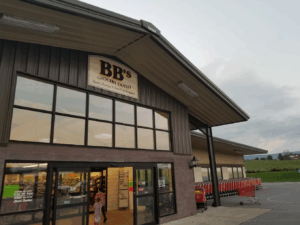
While each pathway of food waste contributes to the wider problem, we can look to each pathway for solutions as well. On the consumer level, we can spread awareness to adjust behavior. With the case of food labels, we can teach individuals how to assess food safety and expiration using qualities like smell, texture, color, and taste. On the processing level, we can modify expectations to increase acceptance of cosmetically “imperfect” products. In terms of production and distribution, Pennsylvania has some excellent local initiatives. The Pennsylvania Agriculture Surplus System reimburses farmers for donating their surplus goods. Pennsylvania is also home to many Amish “Bent n’ Dent” grocery stores, which sell damaged products at discounted prices. Dickinson College students interested in a local Bent n’ Dent can check out BB’s Grocery Outlet, just 18 miles away in Newburg! 

BB’s Grocery Outlet – “Bents, Bumps, and a Bunch of Bargains”, Kirb Witmer

Innovative Solution: Biodigesters 

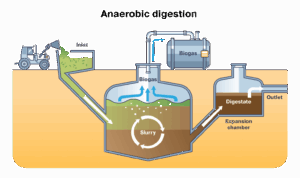
Biodigesters are a unique and growing solution to food waste. These systems use anaerobic digestion to break down organic material and convert it into two reusable resources: biogas and digestate. These byproducts have numerous utilities. Biogas can be used for cooking, heating, electricity, and even vehicle fuel. Digestate can be used as a nutrient rich fertilizer – a much more sustainable alternative to synthetics. The benefits of biodigester implementation are vast, and they go beyond the environment. Women and children in developing countries, for example, can be significantly advantaged in terms of health and life satisfaction with the help of biogas (Steiman, 2020).  

Diagram of anaerobic digestion in a biodigester, Power Knot

The Dickinson College Farm has a biodigester of its own, taking waste from college dining locations, local restaurants, and livestock to generate electricity. This project is a prime example of preventing waste by turning it into something valuable! 

Generating Change 

While food waste initiatives are highly necessary, it can be hard to foster engagement and participation. This is where we have to get creative. A 2019 study of an Austrian food sharing program explored member’s motivations for participating and found that they were influenced by the following: emotions and morality, identity and sense of community, reward, social influence, and instrumentality (e.g., desire to save food from being wasted) (Schanes & Stagl, 2019). Using what we know about consumer desires and drives, we can make intentional program design choices to shape the most effective programs. In this way, food studies can harness consumer and market psychology to understand and shape our food-related choices.  


References

Canon, G. (2023, May 14). Has this food actually expired? Why label dates don’t mean what you think. The Guardian. https://www.theguardian.com/environment/2023/may/13/food-labels-expiration-dates-safe-to-eat

Dickinson College (Director). (2022). From beer to biogas: Creating green energy using brewer’s grain & farm waste [Video recording]. https://www.youtube.com/watch?v=jz1aBf7CTR0

Gunders, D., & Bloom, J. (2017). Wasted: How America is losing up to 40 percent of its food from farm to fork to landfill. Natural Resources Defense Council. https://www.nrdc.org/sites/default/files/wasted-2017-report.pdf

Schanes, K., & Stagl, S. (2019). Food waste fighters: What motivates people to engage in food sharing? Journal of Cleaner Production, 211, 1491–1501. https://doi.org/10.1016/j.jclepro.2018.11.162

Steiman, M. (2020). Women and home-scale biogas: Benefits, barriers and insights from US-based innovators.

Tanigawa, S. (2017). Biogas: Converting waste to energy (J. Stolark, Ed.). Environmental and Energy Study Institute. https://www.eesi.org/papers/view/fact-sheet-biogasconverting-waste-to-energy

The Evolution of Food Culture, Traditions, and Foodways

(Author, 2025)

Are you the consumer who has saved endless recipes on social media, and wishes to prepare and taste all of them, just to end up with convenience foods? Because I certainly am. Life has seemed to accelerate for years and foodways have become increasingly impactful with the rise of social media and the information which is shared on those platforms. Everyone seems to be an expert such as recipe developers or (fitness) influencers. I have gained over six years of experience working and dining the world’s finest kitchens, and I am intrigued about the rapid pace of change regarding food cultures, traditions, and foodways. I would like to share my worries about the impact of modern-day foodways, their production systems, and the impact of social media on foodways.

I recommend the article from Montanari (2013) stating that food is culture, it always has been and always will be. The impact of food has been incredible throughout our societies; in symbolic, economic, social, and political ways. All class discussions found that foodways describe these traditions and cultures, and that a foodway is therefore a glimpse of geographical moment in time. Highlighting history, lifestyle,and location. To illustrate I will highlight the Mediterranean diet. This has not always been the way it currently is. The geographical location welcomed African pasta varieties, American tomatoes and Asian spices, together creating Italy’s famous cuisine. What I am trying to share is that the ‘fluid’ foodway evolution constantly adapting to human needs and desires. This also causes cultures to lose their cuisines in the global appropriation, such as the Palestinian cuisine being objectified as Israeli food and taken away from their identity. (Washington Post, 2020)

This has resulted in beautiful dishes, interactions, and cultures in the past. In the modern day however, the flexibility of people their foodways seems to be a risk. Globalization and worldwide connection allow people to share their recipes with the globe, but it also drives convenience foods. Global producers prioritize profitability over the quality of their products. To maintain affordability, transnational corporations focus on convenienceand low costs. An example I recommend investigating is the tomato industry, mostly based in Florida and California. Food Journalist Barry Estabrook (2011) highlights the exploitation and hidden costs in the industry which are in practice to maintain a low price for the U.S.’s second most consumed vegetables. (USDA, 2020) These costs entail the inhumane exploitation of workers, the monoculture, the decreasing nutritious value, and the millions of chemicals used to remain consistent. This way, globalization prioritizes efficiency over nutritious value, flavor, or human rights.

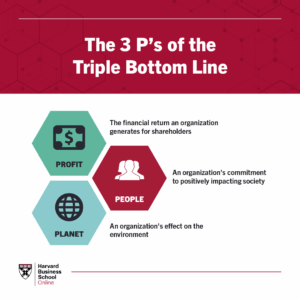
People, Planet, Profit; HBS Online (2020)

People, Planet, Profit; HBS Online (2020)

The human body still requires the same nutrients for healthy lifestyles. Social media is however overflowing with (self-proclaimed) food experts, all recommending different diets, causing confusion for consumers. Delivery services offer convenience foods, which are often cheaper than fresh meals in the U.S. (Lewis et al., 2022) Since convenience and profitability is the new focus in the modern (western) world, I wonder if the pleasure of eating still belongs in the current society? Based on the Italian Slow Food Movement, this pleasure should be the focus. When I lived in Italy, I noticed traditions, local and unprocessed foods. I understand that this currently not a sustainable way to feed the ever-growing human population. Yet I believe that the current systems are far less sustainable, for people, our planet, and a fair distribution of profit. Which are the three pillars of corporate sustainability according to John Elkington. (1944) I wonder where how consumer priorities will change, since our current, addictive, and obesity causing foodways are unsustainable.

Sources and recommended literature:

Chen, X., Huang, M., Li, J., Yu, Z., et al. (2023). Healthy Food Prices Increased More Than the Prices of Unhealthy Options during the COVID-19 Pandemic and Concurrent Challenges to the Food System https://pmc.ncbi.nlm.nih.gov/articles/PMC9967271/

Estabrook, B. (2011). Tomatoland: How modern industrial agriculture destroyed our most alluring fruit. Andrews McMeel.

Kassis, R. (2020, February 14). Here’s why Palestinians object to the term “Israeli food”: It erases us from history. The Washington Post. https://www.washingtonpost.com/lifestyle/food/heres-why-palestinians-object-to-the-term-israeli-food-it-erases-us-from-history/2020/02/14/96974a74-4d25-11ea-bf44-f5043eb3918a_story.html

Montanari, M. (2013). Italian identity in the kitchen, or food and the nation Columbia University Press.

Harvard Business School. (2020). What is the triple bottom line? https://online.hbs.edu/blog/post/what-is-the-triple-bottom-line

U.S. Department of Agriculture, Economic Research Service. (2020) Potatoes and tomatoes are the most commonly consumed vegetables https://www.ers.usda.gov/data-products/chart-gallery/chart-detail?chartId=58340#:~:text=Potatoes%20and%20tomatoes%20are%20the%20most%20commonly%20consumed%20vegetables%20%7C%20Economic%20Research%20Service

Project SHARE and the Scope of Food Insecurity

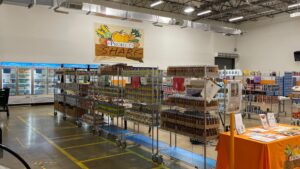
Wide view of inside Project SHARE, a local food pantry.

Fox 43 (2023). [Photo]. Project Share, Carlisle, PA. https://www.fox43.com/article/news/local/project-share-is-feeding-around-500-families-in-cumberland-county-for-thanksgiving/521-375e351d-ccff-4390-8a52-97db1cea2aea

Over the years, food insecurity has been redefined to more completely describe its affected populations. Presently, food insecurity is described “as a lack of access to the kinds and amounts of food necessary for each member of a household to lead an active, healthy lifestyle…” (Smith et. al 2023). Over the past decades, the definition has expanded to more completely encapsulate the food needs of a person, household or culture. How do food access needs vary from culture to culture? Are people food insecure if they have access to food, but not food that meets nutrient and cultural requirements? One particular focus of Project SHARE and other nonprofit food pantries is providing food need of individuals and households who do not meet eligibility for the federal government’s Supplemental Nutrition Assistance Program (SNAP) but still struggle to consistently provide nutritious meals for their families.  

Barriers to Assistance

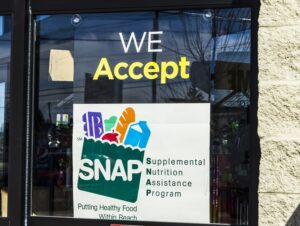
Image of a window with a sign stating, "We Accept SNAP"

FRAC (2016). USA. https://frac.org/programs/supplemental-nutrition-assistance-program-snap

SNAP defines eligibility for their program by income: “… a household’s income (before any deductions) must be <130% of the poverty line” (Gunderson 2013). Due to the nature of a federal assistance program, they must outline eligibility even if it means excluding those who still struggle with affording and finding time to acquire groceries. In addition to income restrictions, SNAP, even for those who do meet requirements, can be challenging to apply to and navigate. Primarily, the application process can be confusing, time-consuming, and inaccessible to all populations (e.g. language barriers, attending in-person appointments, or making various phone calls) (Hossfeld 2018). Lower income individuals may be struggling with poorness in more than one aspect of their life, leading to both a lack of time and money to engage with otherwise beneficial assistance programs. 


The Importance of Nonprofits

While SNAP does have widespread benefits to those enrolled (about 70 billion dollars of benefits per year), there are still gaps that need to be filled by other aid (Gunderson 2013). One of these groups that falls through the cracks of governmental assistance is the Asset Limited, Income Constrained, Employed (ALICE) population. Originally presented as an ‘emergency food source, food pantries based out of churches, warehouses, and vehicles provided short-term relief for families struggling to make their benefits last. Nonprofits such as Project SHARE which have developed permanent residence in the Carlisle area are among the few means of assistance for the ALICE population, as well as others who are eligible for SNAP. Project SHARE works with the community to boost these families into food security without the use of supplemental assistance. 


More than Just Food Insecurity 

While hunger and food insecurity are both challenges unto themselves, chronic food insecurity can lead to a variety of other complications that can permanently affect the livelihood of people and their families. These complications include but are not limited to higher chance of hospitalization, physical health problems, greater chance of developing diabetes and other chronic illnesses (Gunderson 2013). Recently, ‘hunger’ has been removed from many documentations referring to the access an individual has to food (Allen 2007). How do the words we use to refer to marginalized groups affect their real-life situations? In addition to the physical challenges a chronically hungry person may face, they are also not referenced to in a way that recognizes the difficulty and significance of their hardships. Ultimately, there is a disparity between the needs of lower-income groups and the provisions of local and federal governmental benefits.


Works Cited 

Allen, P. (2007). The disappearance of hunger in America. Gastronomica the Journal of Food and Culture, 7(3), 19–23. https://doi.org/10.1525/gfc.2007.7.3.19

Gundersen, C. (2013). Food insecurity is an ongoing national concern. Advances in Nutrition, 4(1), 36–41. https://doi.org/10.3945/an.112.003244

Hossfeld, L. H., Kelly, E. B., & Waity, J. F. (2018). Food and poverty: Food Insecurity and Food Sovereignty Among America’s Poor.

Smith, T. A., & Gregory, C. A. (2023). Food insecurity in the United States: measurement, economic modeling, and food assistance effectiveness. Annual Review of Resource Economics, 15(1), 279–303. https://doi.org/10.1146/annurev-resource-101422-090409


Food Systems and Models of Food Production

You’ve probably heard the term food system before. Perhaps you have thought of your local grocery store, and maybe you’ve considered the farmers and retailers whose work resulted in the food on your plate. The reality, however, goes far beyond a grocery, farm, and processing facility. A food system consists of the complex network of production, transformation, transportation, distribution, and disposal of food. Today’s food system is highly globalized; in one bite of a burger you are likely to consume Mexican beef, sandwiched between bread made from wheat harvested in the Great Plains, topped with ketchup produces in Italy.

Different Scales of Food Systems

Food systems occur on four distinct levels: household, local, regional, and global. A household food system occurs when a family or group of individuals produce and dispose of their own food. This can be in the form of a garden or homestead farm. A local system consists of smaller farms which provide sustenance to a community, particularly a town or small area. A regional food system exists on a much larger scale, and necessitates more transportation of food and waste, often resulting in a higher level of processing. The global scale describes the worldwide market for food. As this is far-reaching and diverse, it consists of a variety of stages, and involves a high level of processing and industrialization, as well as necessitating strict regulation.


Food Supply Chain

Example of Short Circuit Supply Chain: Farmers on the Square, Carlisle

One aspect of a food system is the food supply chain, which illustrates the processes by which food is produced and delivered to the consumer. A supply chain can be defined as a long circuit food supply chain (LSFSC), which is typical of a regional or global food system, or a short circuit food supply chain (SCFSC), commonly present in household or local systems. The characters in a typical long circuit food supply chain include the farmer, processor, distributer, retailer, and consumer. As a result of the lengthy separation between farmer and consumer, only 15% of the typical dollar spent on a food actually end up in the hands of the farmer; 85% of the cost is usually spent in the processing and retail stages of food production. A short circuit food supply chain, however, provides for a direct interaction between the farmer and the consumer, as the buyer purchases directly from the farm. This results in the farmer receiving 100% of the food dollar.


Models of Food Production

Example of Alternative Agriculture: Dickinson College Farm

Two distinct models of agricultural food production include Conventional Agriculture and Alternative Agriculture. Conventional Agriculture relies heavily on industrialization and prioritizes profit. This often leads to the exploitation of people and resources, creating a decrease in biodiversity in attempting to dominate nature. Conventional Agriculture is common in central and subsidized farms throughout the United States as productivity takes precedent over sustainability. Alternative Agriculture, however, prioritizes sustainability and harmony with nature. This approach typically works to maintain biodiversity and is typical of smaller, decentralized farms throughout the United States.


Food and the Environment

As environmental awareness grows within the US, citizens are beginning to take issue with industrial models of Conventional Agriculture. As 80-90% of the human diet now relies on 12-20 species, the mass production of these species has led to a great reduction in biodiversity. Additionally, as biodiversity decreases, the nutrient content of several industrially produced crops is also depleted. This calls for the reevaluation of the global industrial food system and its priorities.


Articles Referenced

Owino, V., Kumwenda, C., Ekesa, B., Parker, M. E., Ewoldt, L., Roos, N., Lee, W. T., & Tome, D. (2022). The impact of climate change on food systems, diet quality, nutrition, and health outcomes: A narrative review. Frontiers in Climate, 4(941842). https://doi.org/10.3389/fclim.2022.941842

Howard, P. (2016). Enforcing the new enclosures: Agricultural inputs in Concentration and Power in the Food System. PhilipHHoward-ConcentrationAndPower-2016-7EnforcingTheNewEnclo.pdf

Beus, C., and Dunlap, R. (1990). Conventional versus Alternative Agriculture: The Paradigmatic Roots of the Debate. Rural Sociological Society (Washington State University). 55(4).

A visit to the Dickinson College Farm

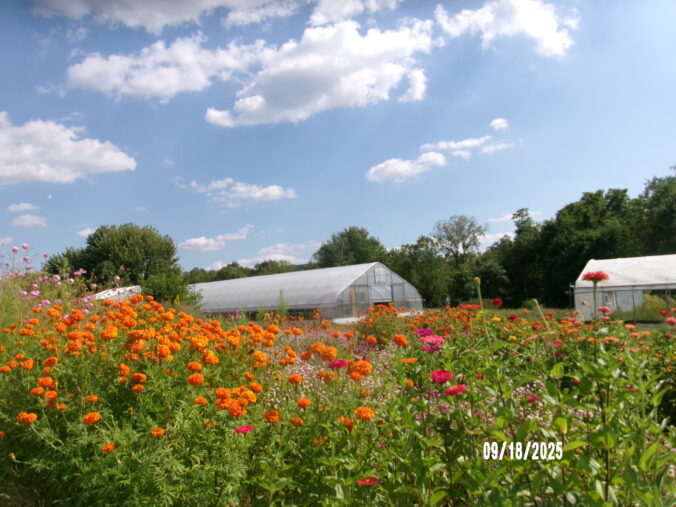
A visit to the Dickinson College farm

On a visit to the Dickinson Farm you can see extensive farm fields, abundant veggies, crates of harvested produce, or even the happy cows grazing in their pasture but until you start to understand the processes of the productive organic farm, you won’t fully appreciate the farm for all that it is.

Polyculture versus monoculture

Polyculture versus monoculture from Community Food Forests

As soon as you walk onto the property you can see a variety of crops, maybe you can smell the garlic that was recently harvested or you can see the rows of ripe tomatoes ready to be picked or even notice the strawberries that were already planted for an early harvest next Spring.  That variety of crops is polyculture. The outcomes of polyculture are usually higher yields, more stability, and natural pest and disease control. Then, there’s monoculture, the cultivation of one crop. As you drive through the backroads of Pennsylvania, at some point you’ll see fields upon fields of corn. That’s monoculture. Monoculture has dominated a large sector of the agriculture industry because it’s efficient. Our current food system relies heavily on monoculture due to its convenience, but by growing one crop the risk of crop failure, food supply issues, and food insecurity increases. The health of our society depends upon a diversity of crops. In The Impact of Climate Change on Food Systems it emphasizes that “…food systems that foster biodiversity have been shown to contribute toward more sustainable food production systems”(Owino et al. 2022).  With the added instability from climate change, it’s more important than ever to have diverse agriculture.

Example of Silvopasture from Earth Overshoot Day

Silvopasture

Beyond polyculture, the Dickinson Farm uses silvopasture which is the use of trees in grazing pastures. Not only does the shade of the trees make the pasture more comfortable for livestock but at the Dickinson Farm, the trees are native, fruit producing, and pollinator friendly helping to create a diverse ecosystem. (J. Halpin, personal communication, September 18, 2025). According to the USDA, Silvopasture “Protects water quality, reduces soil erosion, improves nutrient cycling.” By using nature as a guide in setting up a farm, as one does in silvopasture, one can avoid domination of nature. As a class we discussed how, conventional agriculture reflects a business oriented approach to farming where nature is seen as a commodity. In contrast, alternative agriculture is based in harmony with nature. The Dickinson farm is an example of alternative agriculture and proves that a productive farm doesn’t have to be one that exploits the land. 

Crop rotation

The Dickinson farm uses a crop rotation system where produce is grown in an area for 3-4 years then the area becomes a pasture for the cows for a few years until it’s used for growing again. This cycle builds soil health. The manure from the livestock adds nutrients such as nitrogen back into the soil. There is a risk that the inactive growing years could lead to more weed competition for the crops but if done successfully the livestock will graze on the weeds preventing them from going to seed. (J. Halpin, personal communication, September 18, 2025). This rotational system is essential to having successful crops.


Next time you’re on the Dickinson farm I hope you’ll have a deeper appreciation for a few of the many intentional aspects and systems of the farm that help to make it the productive alternative agriculture farm that it is!  

Consider…

Is a shift in how we view nature necessary to move toward more sustainable agriculture?

How can we make changes to ensure that our food system has stability especially when the effects of climate change are exacerbating the issues of our monoculture reliant food system?

Works Cited:

Gordon, A. (2022, June 14). Polyculture Farming: Detailed Overview. AGRIVI. https://www.agrivi.com/blog/polyculture-production-system-for-sustainable-farming/

Owino, V., Kumwenda, C., Ekesa, B., Parker, M. E., Ewoldt, L., Roos, N., Lee, W. T., & Tome, D. (2022). The impact of climate change on food systems, diet quality, nutrition, and health outcomes: A narrative review. Frontiers in Climate, 4(941842). https://doi.org/10.3389/fclim.2022.941842

Silvopasture | USDA Climate Hubs. (n.d.). Www.climatehubs.usda.gov. https://www.climatehubs.usda.gov/hubs/southeast/topic/silvopasture


What Is Food Studies? A First Impression

“Food identifies who we are, where we came from, and what we want to be”  (Belasco, 2008, p.1).

This is the answer Warren Belasco gave to the question of “Why Study Food?”. Food is not only a source of life, the core to human existence, but also a way to identify a society’s history and culture. Studying food is particularly important now as we have become further estranged from food production to disposal. This week’s readings and discussions challenge us to think about how food both connects and distances us from one another, and push us to gain consciousness about what we eat as a responsibility, and even freedom from food industrialists.

Belasco’s explanation of why the food studies field was neglected draws on the popular Victorian belief of food being “uncivilized”, as well as the dichotomic association of food production being masculine and food consumption being feminine, making the subject not worthy of studying. Later on in the 20th century, as the feminist movement freed women from their patriarchally enslaved role in the kitchen, food preparation shifted from households to industry. While this was a step toward gender equity, it also widened the gap between supplier and consumer (Belasco, 2008, p4-5).
The estrangement from our food is also central in Wendell Berry’s “The Pleasure of Eating”, as he claims that “eating is an agricultural act” (Berry, 2002, p. 17) and proceeds to prove that consumers are a crucial part of the food system. He critiques the way food industrialists “persuaded” consumers to buy what they think they want within the limit of what they can get, which was decided by the industry through specialization of production. I noticed a commercialized lens that frames food is very prominent in this article, since everything is based on its profitable value in the food industry. As Berry argues “one reason to eat responsibly is to live free” (Berry, p. 18), he suggests readers to be independent from the food industry and not become an “industrial eater”, who is estranged, passive, and uncritical, a “victim”. This can be achieved through participating in food production, learning about origins, and engaging locally, all to the best extent.

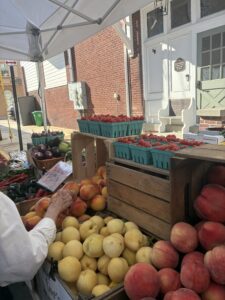
I took this photo at Farmers on the Square during the apple season in 2023.

The meal analyzing discussion in class has demonstrated this point. My breakfast includes chia seed pudding and coconut water from Walmart and an apple I got from Farmer’s Market, which is the only item I could clearly trace the origin of. I had lunch at the Dining Hall, and honestly, I had no clue about any part of the food’s journey in the food system before it hit my plate. The only detail I knew was that leftovers are composted into biogas. Eating at the dining hall is convenient, freeing me from the labor of making food, yet also alienating me from my food.
A statistic provided by Professor Halpin that only 2% of the U.S. population are involved in farming, with an average age of 50–60, further proved the point of estrangement with food. We also discussed how food packaging distances you from what part of an animal you are eating, what the fruit looks like on its tree, or what season does this vegetable grow. Comparing the two meals and listening to my classmate’s sharing, it is clear that it is a privilege to grow your own food, or even to just know your local producers instead of mere brand names. This also means that Berry’s suggestions are ideal, but not necessarily applicable to everyone due to multiple circumstances including time and wealth. It raised a question of if food awareness and freedom is a privilege only some can have, and how can we make it more inclusive and equitable?


Works Cited:
Belasco, Warren (2008). Why Study Food?. In Food: The Key Concepts. Berg Publisher, London.

Berry, Wendell (2002). The Pleasure of Eating, The Sun, 17-20.

Sample Blog Post

Intro to Food Studies

In this class we learn about food, talk about food, and eat food. I will be explaining why I love food and what some of my favorite foods are and why.


Why is food so good?

It fuels us

Food is what gives us life and energy. After we eat it, we digest it.

It is yummy

Food has lots of flavor and that makes it really enjoyable to eat.

It unites us

The best memories are made around meals and cooking.


Some of my favorite foods

Tacos

Tacos are really good.

Soft Shell Tacos https://www.cookincanuck.com/easy-vegetable-soft-tacos-recipe/

© 2025 Food Studies


Academic Technology services: GIS | Media Center | Language Exchange

Theme by Anders NorenUp ↑