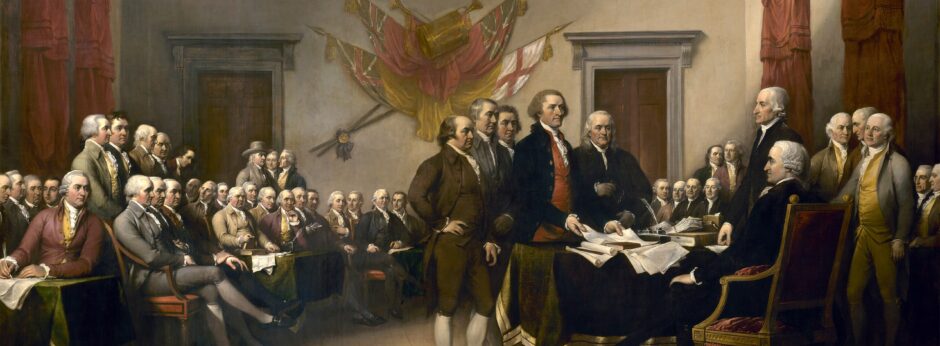
The Meeting in Savannah
One of the most important efforts of the Civil War was General William T. Sherman’s March to the Sea campaign. Sherman’s army marched through Georgia from Atlanta all the way to the Atlantic Ocean at the end of 1864, destroying Confederate territory and freeing slaves at an unprecedented level. At the end of this campaign, Sherman, along with Secretary of War Edwin Stanton, met with several local African-American leaders in Savannah, Georgia. This meeting was intended to create a dialogue between the federal government and the black population that had recently or would be freed from the shackles of slavery. Through this meeting, Stanton and the federal government gained an understanding of how to best support this new demographic of Southern freedmen, while the African-American community learned how to cooperate with the federal government. As a result of this, Sherman issued Special Field Order 15 a few days later, providing swaths of land on abandoned plantations to Southern black families. On the surface, this meeting and the resulting act seem like a progressive look to the future by the federal government, planning how to best accommodate the formerly enslaved African-American community. However, this series of events was more akin to an effort of damage control by the Union government in the wake of multiple controversies.
Text
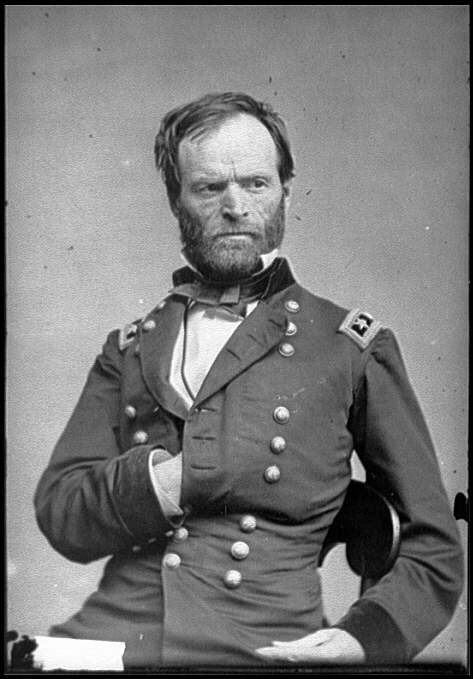
General William T. Sherman. Library of Congress
Sherman and Stanton’s meeting with the black community leaders of Savannah, which included Garrison Frazier, a minister and the de facto leader of the group, and James Porter, who had operated a secret school to educate enslaved people, contains three key points. The first comes from the third question asked by Stanton, on the topic of how the federal government can best help these newly freed peoples become self sufficient. Frazier asserts that “the way we can best take care of ourselves is to have land, and turn it and till it by our own labor […] We want to be placed on land until we are able to buy it and make it our own.”[1] Frazier’s argument is that, if the government temporarily provides land to the freedmen of the South, they will be able to become self-sufficient and purchase the land permanently. This segment clearly became the basis for Field Order 15. The second key point comes from the sixth question, where Stanton asks what the sentiments of the Southern black population is regarding the Union government and the war. Frazier answers by saying that he believes that the vast majority of African-Americans in the South are in support of the North, and that there are not “a dozen men that are opposed to the Government.”[2] His response to this question assured Stanton and the federal government that the freedmen of the South were loyal to the Union, and could be trusted.[3] The last key point can be drawn from the final question, only asked in the absence of General Sherman. When asked what the feeling among African-Americans was regarding Sherman and his actions, Frazier glowingly approved of Sherman, referring to him as “a man in the Providence of God” and that “his conduct and deportment toward us characterized him as a friend and a gentleman.”[4] While on its own, the question and its response merely show the level of support and gratitude that black Georgians had for the man whose campaign freed slaves across the state, it is perhaps the most revealing of all twelve questions with proper context.
Context
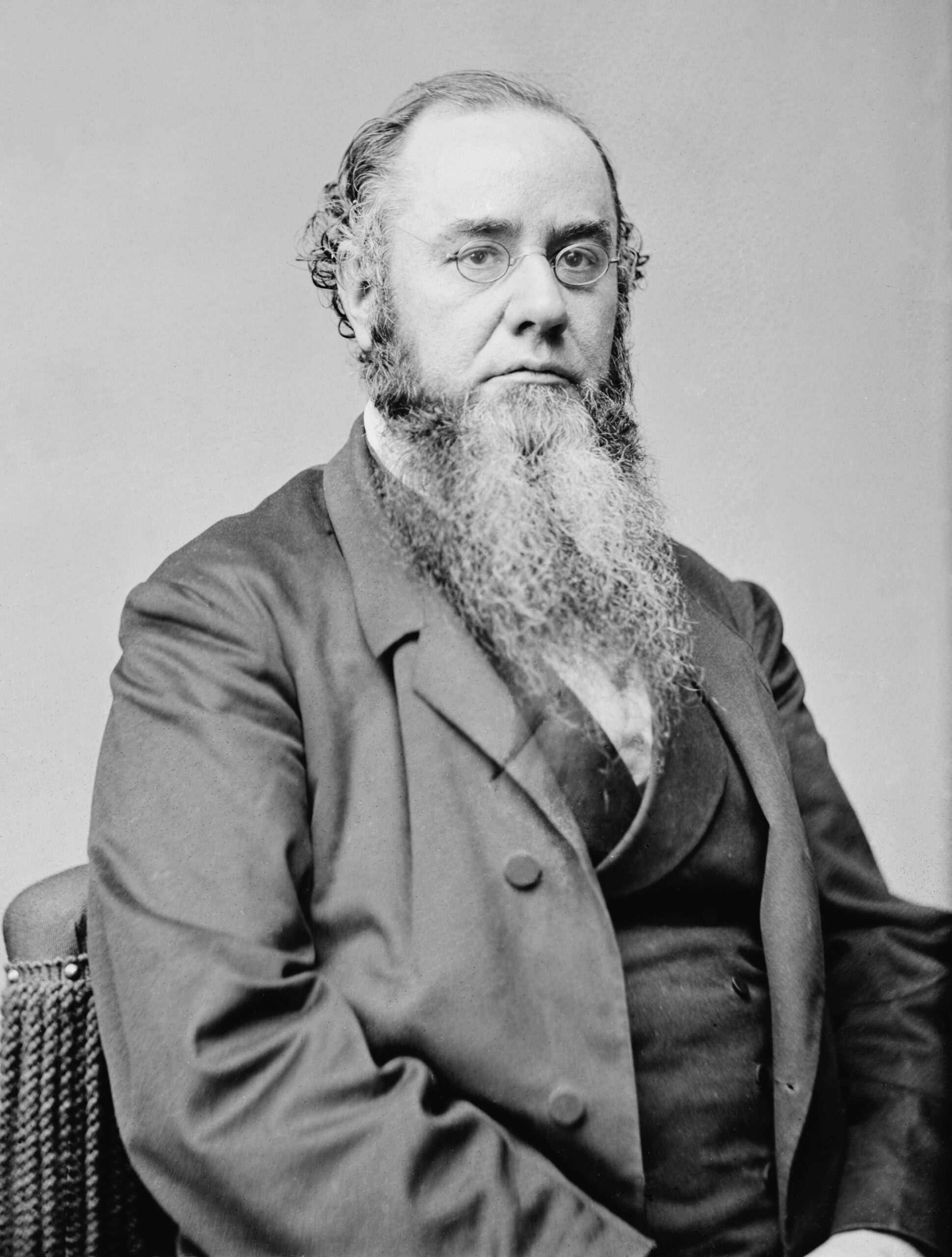
Secretary of War Edwin Stanton. Wikimedia Commons

While the freedmen of the South viewed General Sherman as a figure approaching divinity, he did not have nearly as high an opinion of them. Although he may have freed multitudes of slaves from their bonds, it is hard to say that he did it in any intentional way. Prior to the war and in its early phases, he was a supporter of slavery, opposing the Emancipation Proclamation and believing slavery was an important system to society. As the war progressed, he eventually accepted that the death of slavery was necessary because of the war. Even after this, he operated with an extremely pragmatic approach, only intentionally freeing slaves when he believed they could actively help his army. Despite this, thousands of slaves whose masters’ plantations were in his trail of destruction followed his army anyways, much to his chagrin.[5] He instructed the officers below him to keep black refugees not working with the army away from them, worrying that they make slow down the army or take away supplies. Even among the former slaves he recruited, he wanted them to work for the army as laborers, not as soldiers, saying “I believe that negroes better serve the Army as teamsters, pioneers, and servants…. I confess I would prefer 300 negroes armed with spades and axes than 1,000 as soldiers.”[6] While he was rarely explicitly racist, and usually cordial to individual black men and women he spoke to, Sherman’s opinion on slavery and its morality was ambivalent at best. He simply did not care about freeing slaves, only doing it intentionally when it benefited the military. His approach to the issue was divisive. Some of his staff supported him, while others opposed this approach. Furthermore, the issue was divisive in Washington. Many within the government condemned Sherman’s actions regarding slaves, and the issue hit a boiling point with the Ebenezer Creek incident. Troops under General Jefferson C. Davis, who was himself under Sherman, crossed the creek on pontoon bridges while pursued by Confederate cavalry. After the troops had crossed, the bridges were brought up, with many black refugees who had been following the army left on the other bank. Some drowned attempting to swim across the creek, while others were picked up by the arriving Confederates.[7] This incident became hugely controversial, and was the boiling point for many regarding Sherman’s approach to the refugees following him en masse. The criticism from Washington is what prompted Edwin Stanton to travel down to Savannah, meet with Sherman, and then hold a discussion between him and the region’s black leaders. Furthermore, Sherman’s issuing of Field Order 15 was only due to Stanton’s urging, who came to believe after the meeting that the black Southerner population could support themselves, and pushed Sherman to create an order that would distribute land to freedmen.[8]
Subtext
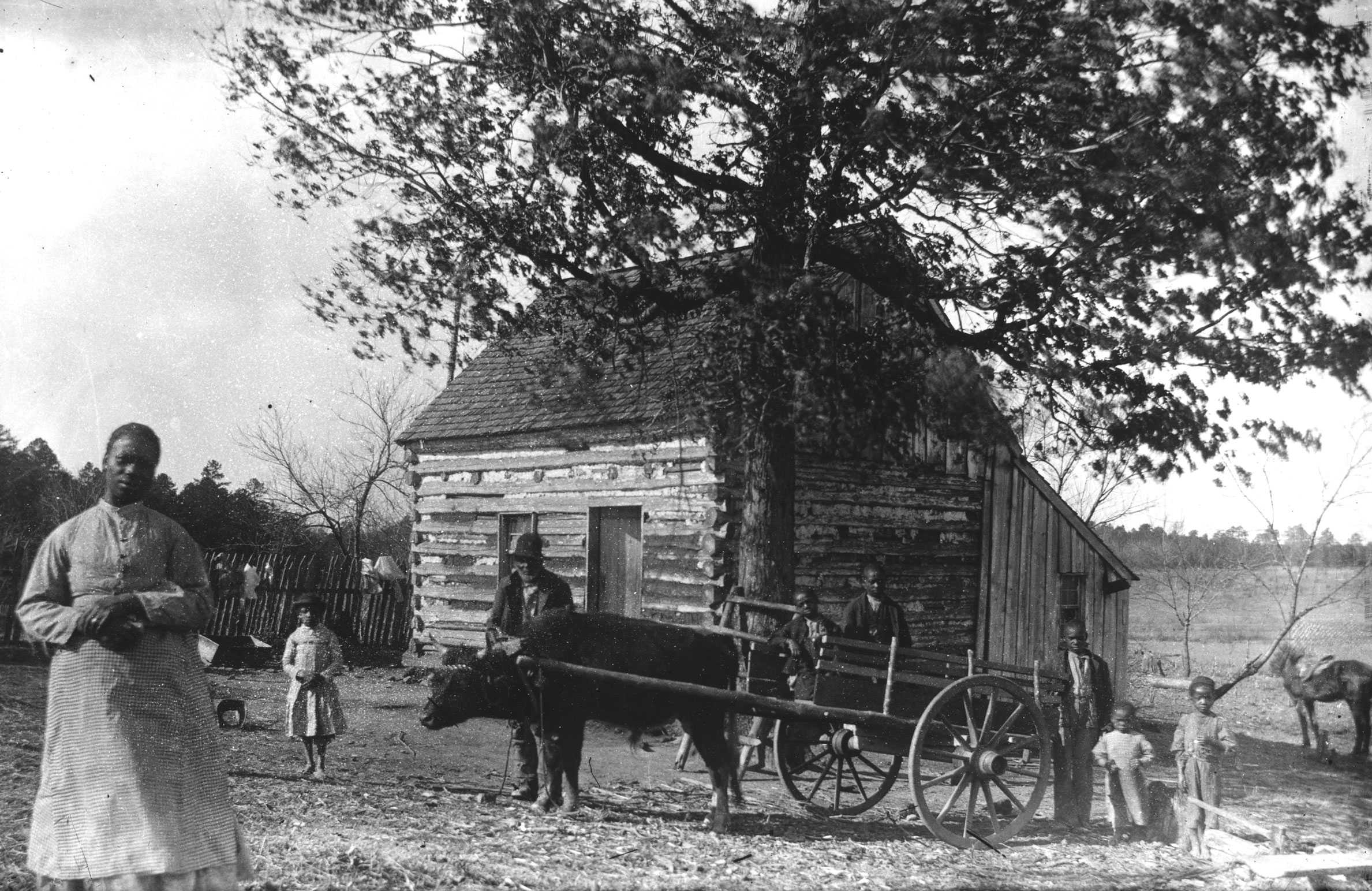
Black family with farmhouse. National Museum of African American History & Culture
Knowing now the issues that compelled Edwin Stanton to organize this meeting, several things become clear. First is that the main purpose of the meeting was not to look forward to the future of the freedmen, but to improve sentiments in Washington regarding Sherman’s treatment of black refugees. It was this issue that compelled Stanton to travel to Savannah, and Stanton who organized the meeting, and it certainly makes sense that he, as a representative of the federal government, would want to improve the sentiment regarding one of the Union’s top generals. By specifically asked those gathered their opinions on General Sherman, he created a story that could be easily spread, one displaying how Sherman was beloved by the black Southerner, and thus put the uproar around Ebenezer Creek down. Furthermore, Sherman’s own participation in the meeting is rather dubious. He only attends at Stanton’s urging, does not ask any questions, and then only implements the order that the freedmen had specifically stated would be the easiest way for them to attain autonomy after Stanton pushes him to. Once again, this continues to display Sherman’s racism and ambivalence towards the issue of slavery. However, there is something positive that arises out of this subtext, and that is how beloved Sherman was by the people he had helped free. He himself had found it curious how, despite his success in cutting through Georgia and escorting tens of thousands of slaves to safety (even if unwillingly), he was criticized in Washington for not offering the full support of the army to each slave he came across.[9] To the people he had helped free, it was the fact that he had freed them that was important. The slaves of Georgia understood that Sherman’s presence effectively freed them, and they helped his army in any way possible by any means necessary, including stealing the property of their masters or divulging military information such as the defenses of Savannah.[10] In this manner, the twelfth question of the meeting is perhaps the most important, as it both serves to reinforce Stanton’s meaning for hosting the meeting in the first place, and allowed the freedmen gather to display how grateful all the former slaves of Georgia were for Sherman’s role in freeing them.
Viewing the Meeting in Savannah as damage control by the United States government regarding General Sherman’s treatment of black refugees and the Ebenezer Creek incident is, perhaps, reductive. The meeting did indeed create change, as Field Order 15 allocated abandoned plantation land for freedmen, and even though it was eventually pushed out and white Southerners were allowed to reclaim their plantation land, it represented positive progress towards black land ownership and autonomy. However, it is still clear that the primary purpose of the meeting was an effort to improve Sherman’s image in Washington. Keeping the general with the most recent success out of controversy was crucial given the turnover of Union generals during the Civil War, and the bonus of confirming popular support for the Union among black Southerners. Sherman and Stanton’s meeting with freedmen in Savannah may have not been as progressive as it outwardly seems, but it still did provide progress and achieved its goal.
[1] “Meeting between Black Religious Leaders and Union Military Authorities, January 12, 1865,” January 12, 1865, Link.
[2] Freedmen’s Meeting in Savannah
[3] Kristopher A. Teters, “William T. Sherman and His Officers: The Reluctant Emancipators,” in Practical Liberators, Union Officers in the Western Theater during the Civil War (University of North Carolina Press, 2018), Link, pp. 146-147.
[4] Freedmen’s Meeting in Savannah
[5] Teters 133-4
[6] William T. Sherman, quoted in Teters 136
[7] Howard C. Westwood, “Sherman Marched: And Proclaimed ‘Land for the Landless,’” The South Carolina Historical Magazine 85, no. 1 (1984): 38.
[8] Teters 146-7
[9] Josef C. James, “Sherman at Savannah,” The Journal of Negro History 39, no. 2 (1954): 133, Link.
[10] Teters 142-3
Bibliography