Introduction to Food Waste:
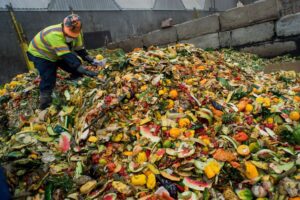
A major issue in America and around the world is Food waste. Food waste refers to the decrease in the quantity or quality of food resulting from humans’ decisions and actions (Halpin, 2026). It affects the environment, the economy, and the way people think about food. Many people throw away food because it looks unappealing, is no longer wanted, or the date printed on the packaging has passed. Americans waste on average about 400 pounds of food per person each year (Halpin, 2026). However, food waste is not always caused by people’s direct choices. It is also connected to confusing food labels, consumer habits, and the way food is sold and distributed. Understanding these issues shows why reducing food waste requires both individual and larger changes to the food system.
Understanding Food Labels and Influence on Food Waste:
An important issue is that expiration dates can be misleading and unclear. Many food date labels are intended to indicate quality rather than safety (Canon, 2023). Most food date labels are not indicators of food safety, with some exceptions, like infant formula (U.S. Department of Agriculture [USDA], n.d.). Labels such as “best if used by” and “use by” often refer to when a product will be the best quality, not necessarily when it becomes unsafe (Canon, 2023; USDA, n.d.). Manufacturers dictate labels, and they are often based on math, exposure testing, and taste quality. This often confuses people, causing them to throw away food that could still be eaten or prepared. People often rely on the date printed on packaging without understanding what it means. Learning how to interpret food labels and implementing standardized labels could help consumers waste less food while still following proper food-safety practices.
Dumpster Diving and Food Insecurity:
This issue has also caused more people to turn to dumpster diving. Dumpster diving means looking through trash to find items and food that have been thrown away and discarded. Dumpster diving has become more popular, especially on social media, as people look for ways to save money and reduce waste (Ulrich, 2024). This connects to the larger issue of food insecurity, meaning not having reliable access to enough affordable and nutritious food. A lot of food is often thrown away while many people struggle to afford groceries and basic necessities. The food system allows for so much usable food to go to waste instead of finding better ways to distribute it to people who need it.
Environmental and Economic Effects of Food Waste:
Food waste also has serious environmental and economic consequences. The United States has historically wasted a significant portion of its food supply (Gunders, 2017). Food waste causes environmental damage that severely affects the Earth (Environmental Protection Agency [EPA], n.d.). When food is wasted, the resources used to produce it also go to waste. These include water, land, energy, transportation, and labor. It also wastes the resources needed to grow and transport food. Food that ends up in landfills can also produce methane, which is a greenhouse gas that contributes to climate change (EPA, n.d.). This shows that food waste is not just about throwing away leftovers but has an impact on our environment.
Figure 1
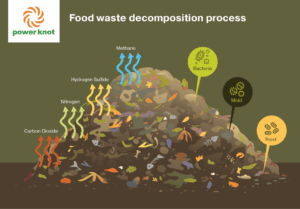
Figure 1. This is showing what happens to food waste when at a landfill (Power Knot, 2023).
Reducing Food Waste at Colleges:
This topic is important for college students because food waste can even happen in dining halls and apartments. Sometimes students take more food than they can eat, buy groceries they do not finish, or throw away food because unclear dates on labels. Small changes, such as planning meals, taking smaller portions, and saving leftovers, can help make a difference. Colleges and food businesses should also look for ways to donate leftover food and improve food-waste education. Colleges could help reduce food waste by making it easier for students to understand food labels, save leftovers, and donate food that is still safe to eat. Students can also help by being more aware of how much food they take and buy. These changes would reduce waste while helping people make full use of the food available.
Conclusion:
Food waste is a reflection of a wider issue about the way food is valued and distributed in our society. Reducing food waste involves more than just individual choices. The food system needs to be improved through better information, education, laws, responsible businesses, and systems for utilizing the food available. Food is a valuable resource, so we should think more carefully about what happens to it before it ends up in the landfill.
Discussion Questions:
Have you thrown away food even when it may still be safe to eat? Why?
What changes could college dining halls make to reduce food waste without limiting students food choices?
Should grocery stores be expected to donate more extra food instead of throwing it away? Why or why not?
References:
Canon, G. (2023, May 14). Has this food actually expired? Why label dates don’t mean what you think. The Guardian. https://www.theguardian.com/environment/2023/may/13/food-labels-expiration-dates-safe-to-eat
Choo, K. (2024, February 28). Food Waste in America. Demi | Making Composting Mainstream. https://www.demicomposting.com/blog/food-waste-in-america
Gunders, D. (2019, January 28). Wasted: How America is losing up to 40 percent of its food from farm to fork to landfill. NRDC. https://www.nrdc.org/resources/wasted-how-america-losing-40-percent-its-food-farm-fork-landfill
Power Knot. (2023, May 15). Lifecycle of food waste in the landfill – power knot. Power Knot. https://powerknot.com/2023/05/15/lifecycle-of-food-waste-in-the-landfill/
Ulrich, A. (2024, August 4). How dumpster diving went from taboo to trendy: ‘It’s a treasure hunt’. The Guardian. The Guardian. https://www.theguardian.com/us-news/article/2024/aug/04/dumpster-diving-cost-of-living-waste
US EPA, O. (2023, October 12). From field to bin: The environmental impacts of U.S. Food Waste Management Pathways. Www.Epa.Gov. https://www.epa.gov/land-research/field-bin-environmental-impacts-us-food-waste-management-pathways
USDA. (2019, October 2). Food product dating | food safety and inspection service. Www.Fsis.Usda.Gov. https://www.fsis.usda.gov/food-safety/safe-food-handling-and-preparation/food-safety-basics/food-product-dating