Class Blog

Donna Ferrato

Donna Ferrato is a photographer who documents both the lives of women and the effects of domestic abuse. In one of her prints she writes “I became a soldier in the war on women. The camera, my weapon.” 

An image from Ferrato’s collection that closely relates to this class is Lesbian couple Jay and Kattain labor with their first child conceived with a turkey baster, a revolutionary act of reproductive independence unheard of at the time, Northhampton, MA, 1993. This image was taken in 1993, a time when two lesbians having children would have been a bizarre phenomenon to the general public. If we look at it through the view of The Legend of Auntie Po, this was a reality and a relationship that Bee and Mei were unable to have. Although it was uncommon when the photograph was taken, it was this couple’s reality and they were able to make that life for themselves rather than give it up. 

One of the most obvious connections is between Saeed Jones’s writing and Ferrato’s The eight year old boy called 9-1-1 to report his father…  The image shows a young boy yelling at his father for abusing his mother. Certain versions of the image have text imposed over top, presumably in Ferratos handwriting; this text provides dialogue for the boy; “ I hate you for hitting my mother. Don’t come back to this house.” A rather intense dialogue for an eight year old boy, we can only imagine what the boy has seen and been through. He has had to grow up much faster than we want to believe, similarly to the character that Saeed Jones writes through. Saeed Jones’s writings are through an innocent and fearful veil, while the photograph from Ferrato is showing the anger and frustration that could come from this as well.


Angels of Montero

In Tony Kushner’s Angels of America along with the rapper Lil Nas X’s music video for the song “Montero” there is an elaborate use of camp that connects them. There are two similar moments that share related themes in Angels of America it is in Act. 5 of “Perestroika” between the characters The Angel and Hannah Porter Pitt who is a Mormon woman. With Kushner’s elaborate stage directions he is able to convey exactly what goes on between them, “Hannah walks toward her, torn between immense unfamiliar desire and fear […] The Angel kisses her […] Hannah then has an enormous orgasm” (Kushner 261). In this scene, there is an exaggerated use of sexuality with the imagery that Kusher evokes of an angel having the ability to give a character an orgasm. This same type of flamboyant sexuality and the elaborate use of camp is something that is also implemented by Lil Nas X’s “Montero.” One moment in the music video that has a clear relation to the aforementioned scene in Angels of America is depicted after Lil Nas X’s character is mounted by a figure who is supposed to represent a devil. This is shown when Lil Nas X sings, “Call me by your name,” This lyric is a reference to the gay novel by the author André Aciman where two male lovers spend a summer together in Italy. So the overt sexual moment is underscored by this sentimental saying from one fictional man to another.

Montero had a lot of controversy because of its references to religion and Lil Nas X responded on twitter with the following remark, “y’all love saying we going to hell but get upset when I actually go there lmao” (Lil Nas X). Although what he says here is meant to be humorous there is a serious undercurrent to this and the moment in the music video which is the true nature of homophobia. In the same way that Angels in America uses the seriousness and parody of camp to combat a view of religious homophobia Lil Nas X plays into the fantasy that has been common for homophobic people to come up with. I believe that representations like these that use camp as a significant element are important because they show a unique portrayal of queer people that helps to flesh out the different types of stories that can be told about them. Both of these examples have fun with the extremes they go to while also having an intentional seriousness in responding to queer related issues of AIDS and homophobia which evokes the true meaning of camp.

Lil Nas X Tweet

“I’m going to have my very own story now”

Although I’ve only read about half of it, Ocean Vuong’s “On Earth We’re Briefly Gorgeous” is a poetic memoir about his queer, Asian experience from his childhood and onward.  

The Legend of Auntie Poe reminded me of this narrative. When Mei says, “This is Bee’s story. Bee will go to university, and marry a man” (Khor 37), the author not only addresses Mei’s queer experience, but also, the distance that comes with one minority identity layered upon another. Mei is conscious of how being a Chinese American places her in a marginalized position, and at the beginning of the book, she views herself as a sidebar to Bee’s story.  

However, as Mei builds the myth and the role model of Auntie Poe, her perspective on her own life shifts. Role models, like Auntie Poe for Mei, and like Vuong’s mother in his memoir, are key pieces of childhood and support for these queer characters. 

In Ocean Vuong’s memoir, his Vietnamese identity and relationship with his mother is at the core of the book. Vuong structures his book as a letter to his mother, who can’t read. He intermixes retellings of his childhood with wishes about seeing queer representation around him and contemplating his queerness in relation to his Asian culture.  

This parallels Mei’s position at the end of the novel where she is confidently able to say, “I’m going to have my very own story now” (Khor 282), meaning that, Mei sees herself as a main character in her own story. Although Mei needed Auntie Poe as a catalyst to take initiative, at the end Auntie Poe leaves because Mei now has the power to create her own myths. In a similar vein, the driving force of Vuong’s memoir is providing a narrative to represent untold stories. Vuong looks to similar figures that Mei does, independent women like his mother that have shaped his identity. With these figures Vuong and Khor’s characters are able to harness power and make myths their own.

Texts like Khor’s and Vuong’s are essential to understanding the multiplicity that lies in queer people of color’s identities. Just like Mei’s story proves, queer people should not and cannot be reduced to just their romantic relationships, because there is so much more context surrounding their lives. To be a queer person of color is to exist on multiple planes simultaneously. Without representation like this, queer media risks falls flat which can be detrimental to the understanding of queer representation. Both texts demonstrate how race and class intermingle with queerness, and when these themes can be shown to children through the form of graphic novels like Auntie Poe, children can find the pride and representation that they may lack in their lives. 

Here’s a link to an article where Ocean Vuong talks about his novel

Fanfiction from the Queer Perspective

In her letter, “Speaking in Tongues” Gloria Anzaldua states “they convince us that we must cultivate art for art’s sake. Bow down to the sacred bull, form. Put frames and “metaframes around the writing. Achieve distance to win the coveted title “literary writer” or “professional writer” (Anzaldua 167). This sentiment is extremely reminiscent of the treatment fanfiction and fanfiction authors receive when they try to claim they are real writers and that their works are real writing. Fanfiction is fan-written work based around a subject with any fanbase one could think of. It is commonly thought of as weird and shameful to take part in when in reality there are fanfictions out there that are leagues above many applauded works of literature and cinema. 


Fanfiction is written for a multitude of reasons, the primary one is exploring the possibilities of a piece of media. Anzaldua expresses why I enjoy fanfiction so much: “the world I create in the writing compensates for what the real world does not give me” (Anzaldua 169). A huge theme in this class is the erasure of queer history and media. Even today there is a stunning lack of representation of LGBTQ+ people in popular culture. Fanfiction is a popular outlet for people who want to see more of themselves in a piece of media they like or relate to. A lot of the authors we have learned about in this class wrote so that people like them could feel represented, and that is essentially what fanfic writers are doing on a smaller scale.


Gloria Anzaldua wrote “Speaking in Tongues” to reach out to other women like her, who do not often see themselves in the media they wish to pursue. Fanfiction is a similarly comforting thing to me and many others. Those who write fanfiction can interpret pieces of media they connect with in ways that make themselves, and the readers, feel seen. The incredible thing about fanfiction is that it does not exist to appeal to everyone, it exists for people to find something that appeals specifically to them. 

Yesterday and today of the LGBTQ+ community

Option B:

One story that I can relate to our LGBTQ+ class is the graphic novel and TV series “Heartstopper.” This story is about young teenagers in high school who are going through a process of discovering and finding themselves. Although it can sound superficial, what I like of this story is that it is a cliché, however, I consider that we are used to watch these kinds of stories but mostly represented by heterosexual couples. A heterosexual boy or girl in high school who falls in love and discovers himself or herself in the process. Heartstopper offers different gay and lesbian love stories, that are not only represented with homosexual young characters, but also with actors and actresses members of the LGBTQ+ community.

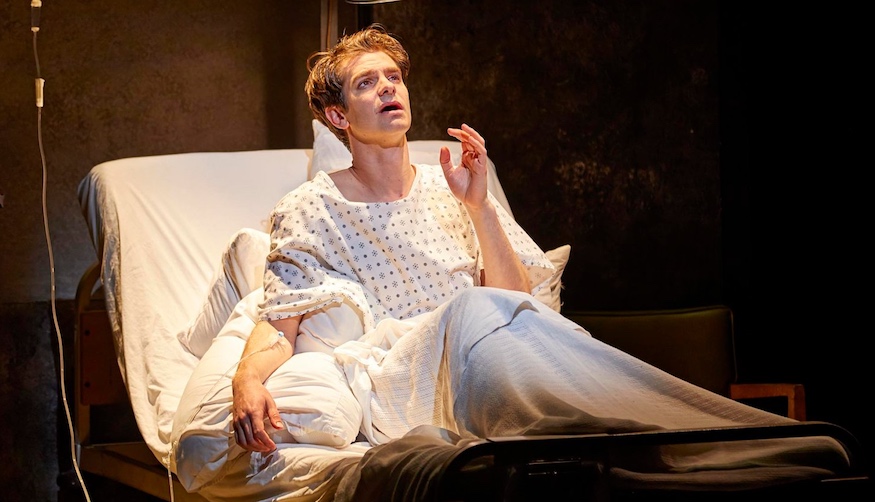
I consider that Heartstopper can be related to Angels in America because both are a fictional story with visual and written support that show stories of the daily life of gay people, however, in different times and realities. The LGBTQ+ community has historically been shown in the most representative mass media as a community full of suffering, losses, pain and sickness, and represented with adults, not youth. We can see that representation in the fictional play (and TV show) Angels in America. It is a story where adults not only have to deal with the problems of their lives like any other adult, but also with the troubles, worries and weight of being gay. Hearhopper allows us to see that the LGBTQ+ community is not something that happens in very specific or unfamiliar situations. It is a reality around us, that can occur everywhere, at any age, and that can be more than suffering. It can also be romantic, hopeful and with happy endings, as any other love story we are exposed to in movies, series, books, social media, etc.

These two stories are contrastive because they show the two different parts of the gay community, but both equally real and important. It is essential to acknowledge the background behind the LGBTQ+ community, but also to see it as past and visualize a better present and future where the community is growing and finding more support among them.

El fenómeno del momento es Heartstopper: los libros más adictivos hablan  del amor entre dos chicos y tendrán una serie en Netflix Podrás escuchar a Andrew Garfield en Angels in America | El Aquelarre

Lumberjanes

When I was in middle school, I remember reading a comic book series called Lumberjanes. This series was about a group of girls at an all-girls summer camp discovering the often supernatural mysteries of the area. The cast of characters is full of LGBTQ+ individuals and POC, which I had not seen much of up to that point. Reading it back then, I simply enjoyed the story, not thinking critically about some of the choices the author made.

Now, having read The Legend of Auntie Po, it occurs to me how intentionally the setting and title were chosen. Both books take the route of subverting the hypermasculine stereotype of lumberjacks to set the stage for a queer story. It is also worth noting that one of the five main characters is a transgender girl. By placing this story at an all-girls camp, the author immediately shuts down any questions about the validity of her identity. Her presence at the camp confirms that she fits in with all the other girls just fine.

This also leads to an interesting dynamic, as none of the girls are particularly “girly.” They choose to spend their summers at a camp advertised towards “Hardcore Ladytypes,” which is in the actual title of the camp. This means there gets to be a story about a transgender girl who is still allowed to be in touch with the more traditionally “masculine” parts of her identity without it invalidating her girlhood. I did not fully appreciate this kind of representation in middle school, but after reading so much about the intersections of identities in this course, this detail strikes me as remarkably important in literature.

Khor’s point in the Author’s Note about their hopes for publishing in “a vibrant landscape of stories from all kinds of marginalized voices” also guided my thinking here (285). Lumberjanes being published, and the success it found, gave an opportunity for so many queer and POC stories to be told to adolescents. Although the plot of series itself is not centered around being queer or POC, the characters are obviously affected by their identities, bringing casual representation to many more young minds.

Queer Divinity

The way in which Tony Kushner’s Angels in America converses with the relationship between queerness and the Divine is one of the best and most complex I have seen in media.

From the very start of the play we see the pairing of queerness and spirituality with the Jewish funeral which is depicted. Then, we are introduced to Joe who struggles with his sexuality and Mormon faith. But the pairing of religion and queerness which I find the most important and interesting is Prior’s relationship with spirituality and religion. The choice to to make a gay man who is dying of AIDS the character in play who is the self proclaimed prophet, most connected to the divine is important especially in a post AIDS America, with so much stigma still surrounding the illness. The moment which stands out to me is when the Angel itself refers to Prior as the prophet, “Greetings Prophet! The great work begins!” the Angel proclaims when meeting Prior. In having the divine itself recognize Prior as a prophet Kushner challenges traditional ideas of religion and inexplicably connects the queer to the divine.

Elder Queer Joy and Love

The piece of queer media which stands out to me as being valuable in terms of this class is the film The Birdcage starring Nathan Lane and Robin Williams. What I find so valuable and resonant in terns of this particular piece of queer media is how it depicts elder queer love, queer community, and queer joy. Granted, the men who are in love in the film are not old per se, but they are queer people who are beyond their twenties or thirties, which is something that I think more queer media needs representation of. A lot of the texts we have read and that I have read in other classes discussing LGBT issues were written or written about younger queer people (ex. Saeed Jones is in his thirties, Eli Clare was in his thirties when Exile and Pride was published, etc. ). Which of course is valuable but it is also valuable for the voices of elder queers to be heard so that the younger generation can not only appreciate its history but look forward to its future. Obviously I understand how the AIDS epidemic has impacted how and how much we head elder queer voices, so I recognize that that poses a challenge.

Also, I think this film, while it does fall into certain queer stereotypes, it also depicts the presence of queer joy.  Certainly some of our texts discussed similar themes but a lot of what we have read focuses on the struggles associated with queerness and I think it is just as important to read and study and prioritize the joy that is being queer and experiencing the LGBT community.

Queer at Every Level

Young Royals is a Swedish Netflix series that follows a fictional Swedish prince, Wilhelm, and his time at the Hillerska boarding school. Hillerska caters to the upper echelon of Swedish society, and all of the boarding residents are the children of the extremely wealthy. A few day students also attend this school, but it is known that it is because of scholarships and that these students do not hold the social clout of the boarding students.

Wilhelm finds himself entangled with one of these day students and struggles with his feelings that he might be gay. What sets him apart from his love interest, Simon, is not only a financial divide but a class divide and difference in societal expectations. Arguably, Wilhelm has anything that a person could want—wealth and power. But, while Simon has neither of these things, he has a warm and accepting family and lives his life out of the closet rather than burdened by the weight of discretion Wilhelm is forced to upkeep. 

I think that this story represents the idea of myth making particularly well. American society, specifically, is drawn to this story as a result of our intense interest in the English royal family. Although this story is Swedish, the audience is still drawn to a story of royalty because it is a perspective we will never know. This story is also influential because the family it writes about is fictional but the Swedish monarchy is real. This story could, in one way or another, happen in real life. It makes us draw connections between the show and the real world. We wonder how many times something similar has happened to a real monarch. While royals are few, statistically some of them must be queer. Yet, we never hear about it.

The idea that something that could be real, is similar to the mythmaking we see in The Legend of Auntie Po. Mei develops a story based on a “real” mythical character Paul Bunyan. Even though Mei’s story isn’t necessarily true, the circumstances in which she lives are historically accurate to some degree. While the book is a work of fiction, it, like Young Royals, invites the reader to consider our relationship with history, as well as the relationship that groups we are not a part of have with history. Ultimately, I think the way both of these works contribute to the genre of myth making is important because they accomplish the goal of myth making: by providing representation for underrepresented groups. Individually, I also commend these works because they help an audience recognize that queer people exist beyond a single setting and time period.

HIV/AIDS Today

“Then I’m crazy. The whole world is,… that this is real, it isn’t just an impossible, terrible dream, so maybe yes I’m flipping out.” (Kushner, 175)

Whenever we address HIV/AIDS, back in the day, it emerged as a really powerful physical and mental sense – a notion that those who were affected must be engaged in the work of fighting this disease, physically and mentally. Nowadays, it is something we take for granted, everything that is related to AIDS is easier to approach, because, with medical and social advances, the conversation around HIV/AIDS became much more open-minded, to a point where the disease itself is somewhat neglected due to its irrelevancy.

Nowadays, we kind of take it for granted that AIDS could be something that could be talked about in a polite and more effortless manner, without thinking too much of it as an immediate threat due to medical advancement. An HIV/AIDS patient back then would probably die a few years after their diagnosis. If we look at this conversation from this scene, AIDS was so devastating to the point that it would break down even the strongest of men. The discussion regarding the severity of AIDS has changed nowadays because even if you have AIDS, living for another 30-40 years is still possible when you have a lot of money for treatment.

We also take it for granted how openly you could have a conversation about AIDS nowadays without offending anybody. However, we have come to forget that it was an extremely sensitive topic because you couldn’t talk about HIV without talking about gay men, junkies, or whoever the conformed society deemed to be the potential AIDS-carrying agent.

Finally, the emotional struggle of being an HIV patient is somewhat forgotten nowadays. Back in the 90s, it was hard to hide HIV after a certain point. It was likely easy to see someone emotionally drift away and say, they probably have AIDS. That’s not the case today because it’s invisible due to how manageable it has become. This is by no means a bad thing, and it’s great to see the decline in deaths caused by AIDS but coming along with that is the concern about AIDS and its existence also sharply declined.

Kushner, T. (2013) Angels in America: A gay fantasia on national themes. Theatre Communications Group.