When I purchase food or go somewhere on campus to eat between classes there are some foundational factors that come into play. I look for a cheap option that tastes good and will satiate me. After the two readings we reviewed and multiple lectures and discussions in class, my perspective was changed on what I am putting into my body based on two factors. Microplastics and antibiotics. We analyzed and discussed how these factors play into our food safety and how production and materials affect them.
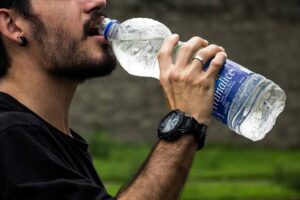
I want to speak about microplastics specifically in bottled water and beverages. Microplastics being microscopic plastic bits that contaminate our products either from packaging, production or even the original source. The research numbers and results vary substantially due to different methods being used. Possible biological effects vary as well due to difficulty across results. We can deduct that from this research that there is cause to investigate these problems but there is not enough proof this far to link it to illness.
Moving on to the antibiotic reading, there is still a legitimate concern. Antibiotic residues have been in animal products after they have been treated and processed. Bacanli (2024) shows us that the amount of antibiotics found in animal products can exceed standardized limits if the products are not given the proper and required withdrawal time. Withdrawal time is how long an animal, or its biproducts need to wait before entering a food system. The FDA states that food with antibiotic residues below the threshold are safe if the withdrawal period is abided. WHO (2017) further shows that resistant bacteria can travel between animals and people through the environment and food itself after consumption. What is scary about this is when we take in unnecessary antibiotics it can render other critical medication obsolete.

Being a college student on a fixed income these topics highlight how little control we think we have. We are quick to choose the convenient and cheaper option most of the time and in some situations may not even have a choice in what products we consume or how they were processed. In all fairness I don’t think that all the responsibility should be put on the consumer. There needs to be a better means of measuring and reducing the amount microplastics and antibiotic residues across all foodways. Something I can do is be curious about the process my food goes through before getting to me, drink safe tap water rather than the convenient option, and trust my own research rather than online buzz. These decisions can make a difference in food safety along with help from public health stepping up to the plate.
As a group my peers and I should focus on food safety as it is a pivotal moment in our lives to start building healthy and safety conscious decisions. We should strive for transparency and accurate information. These readings and discussions do not provide a simple solution but rather guide us into healthy habits and show us what we should strive for in food safety.
Questions for discussion
- Where does more responsibility lie, with the consumer or with the producers?
- If evidence is developing, what could help you make a decision on beverage choice?
- Should there be more disclaimer on antibiotic use with animals on packaging?
Sources
Bacanlı, M. G. (2024). The two faces of antibiotics: An overview of the effects of antibiotic residues in foodstuffs. Archives of Toxicology, 98, 1717–1725. https://doi.org/10.1007/s00204-024-03760-z
Rahman, S., Saha, W., Maysha, T. I., Sarker, P., Datta, T. R., Rahman, S., & Chacrabati, R. (2026). Prevalence and health risks of microplastics in bottled water and beverages: A food safety concern. Journal of Hazardous Materials: Plastics, 2, Article 100024. https://doi.org/10.1016/j.hazmp.2025.100024
U.S. Food and Drug Administration. (n.d.). T.A.L.K. before you treat. https://www.fda.gov/animal-veterinary/animal-health-literacy/talk-you-treat
World Health Organization. (2017, November 1). Antimicrobial resistance: The food chain. https://www.who.int/news-room/questions-and-answers/item/antimicrobial-resistance-in-the-food-chain?
World Health Organization. (2019). Microplastics in drinking-water. https://www.who.int/publications/i/item/9789241516198?
Hello Rocco,
I love how you open your post with a personal story – I used to be like this too, before our class. I also like how you chose to focus on bottled waters and other beverages – I’m even drinking tea right now. It also stood out to me that part of your research came from an article published in 2019… this issue has been around for a while.
I also appreciate that you described antibiotic withdrawal time. This is not something that I remember from our class, so it is interesting to know that withdrawal time is how long a meat animal needs to wait before entering a food system. My guess is that many companies or farms do not adhere to withdrawal times, and that is why antibiotic residue in animal products is so high? Finally, I like how you say you need to be “curious” about where your food comes from.
In response to your questions, responsibility should rely with producers but unfortunately still falls onto consumers. I always choose a different alternative to drinking out of plastic – I’m even thinking of getting a metal water bottle. And finally, there should be a bigger disclaimer.
Nico