Introduction
Do you ever think about what happens to our food after we throw it away? I didn’t either. I assumed it just went to the dump and sat there. It’s food, so how bad could it be for the environment? As it turns out, food waste in landfills releases a greenhouse gas called methane, that traps heat in our atmosphere far more efficiently than carbon dioxide (EESI, n.d.). This makes reducing it an important part in fighting climate change. One cleaner way to deal with this food waste is a biodigester, and Dickinson College has one right on its farm.
What is a Biodigester?
A biodigester, also called an Anaerobic Digester, is a system that converts food and other organic waste into energy. Food, crop, and animal waste is crushed, mixed with water, and pumped into a sealed container devoid of oxygen. In this tank, microbes break the waste down and it produces three outputs, Biogas, Digestate, and pulp.
Biogas is used to produce immediate energy like electricity and heat. It can also be upgraded to a renewable natural gas (RNG) called biomethane that can fuel cars and be used in the natural gas network (EESI, n.d).
Digestate is the liquid produced from the anaerobic digestion, and can be used as fertilizer.
Pulp is the pressed fibers that can be used as bedding for livestock and as soil amendments (Steiman, M. 2026).
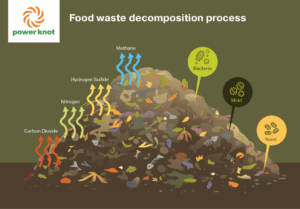
Figure 1
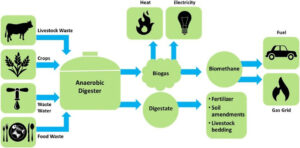
Note. Figure 1 Illustrates a biodigester system, and its inputs and outputs (EESI, n.d).
What does it look like at Dickinson?
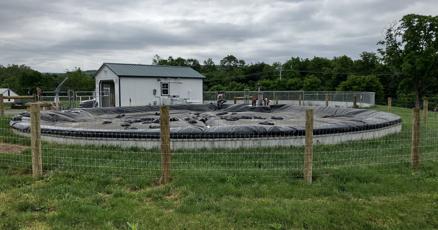
The biodigester at the Dickinson farm sits near the dairy cows, and what makes it unique is their partnership, not only with the dairy farm next door but also with local businesses. The farm takes around 41 bins a day from our cafeteria, plus waste from a few local restaurants, and from the dairy farm.
During our class trip to the farm Matt Steiman told us that the biodigester eats around 3,000 to 4,000 gallons of waste a day, and from that they make over 500 cubic meters of gas daily. That’s enough to power the farm and the digester itself, as well as 10 to 15 additional homes in Carlisle. The digester also creates a large amount of fertilizer that is used by both the Dickinson farm and the Dairy farm, and both use the pulp as cow bedding and in planting soil. The system is currently saving the farm around $11,000 a year, and that number is expected to grow in the future. (M. Steiman, personal communication, 2026).
Figure 2
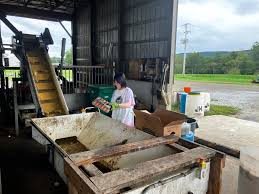
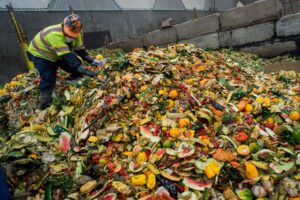
Note. Figure 2 illustrates the food processor at the Dickinson College Farm
What are its benefits and drawbacks?
Benefits: Biodigesters have many benefits. Keeping this anaerobic process within a sealed container captures the methane emissions produced by the breakdown process that would otherwise escape into the air, and is able to be turned into energy reducing the need to use other fossil fuels. Steiman also pointed out on our trip to the farm that a biodigester may cost more to set up, but it saves thousands of dollars yearly on power.
Drawbacks: Although there are many benefits, no system is perfect. Digesters are expensive to build, and need maintenance when clogged by plastic packaging or metal utensils. They also need a steady waste supply to produce energy.
Biogas on a smaller scale: Home-scale biogas systems also can have a very positive affect on women in developing countries. In his article, Steiman (2020) explores the benefits and barriers of Home-scale biogas systems. He mentions that in developing countries, tasks are usually assigned based on gender lines. Some benefits he describes include reduced smoke inhalation/respiratory issues, reduced physical labor, additional free time for education and social activities, employment opportunities, more participation of men in cooking. Some barriers include more time spent finding water in areas where water is scarce, men usually have final say in whether or not the system is adopted and could be denied, promotion may not reach where it needs to, women may be restricted on participation, and more time may be spent on maintenance.
Figure 3
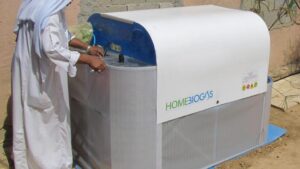
Note. Figure 3 illustrates a home biogas system in Israel, producing gas used for cooking
Takeaways
After our class readings and the farm visit, I think the biodigester is really cool and has many advantages. However it got me thinking. The only reason we need systems like this is because we produce so much food waste. Some of it is damaged food, some is leftovers from our plates, and a lot is food that could still be consumed. The biodigester is a system that helps us manage the waste, but each day we produce more and more. We could install many more of these systems all over the world, yet they would not be able to keep up. I think the bigger problem we need to look at is why do we produce so much food waste, and how can we minimize it. 41 bins of waste a day, just from our cafeteria, shows that we could be making small adjustments to our lives and eating habits to help reduce waste.
Questions to think about
After everything considered, I leave you with a few questions:
Is it enough for individuals to waste less, or does the food system itself need to change?
If a biodigester makes food waste useful, does that reduce the pressure to prevent waste in the first place?
Should colleges and restaurants track and publicly share their food waste numbers?
Who should pay for systems like this, the ones implementing the system, local governments, or the businesses that produce the waste?
What’s stopping more communities from adopting these systems?
References:
Environmental and Energy Study Institute (EESI). (n.d.-a). Fact sheet: Biogas: Converting waste to energy. EESI. https://www.eesi.org/papers/view/fact-sheet-biogasconverting-waste-to-energy
Gruber, P. pgruber@lancasterfarming. com. (2026, June 16). Dickinson College Farm’s new methane digester shows benefits. Lancaster Farming. https://www.lancasterfarming.com/farming-news/conservation/dickinson-college-farm-s-new-methane-digester-shows-benefits/article_98d54a56-5b89-421e-a48f-2d4a9aa02cf3.html
Poulet, M. (2016, August 22). Israeli company converts food waste to cooking gas. The Observers – France 24. https://observers.france24.com/en/20160812-israeli-inventor-converts-food-waste-cooking-gas
Steiman, M. (2026, October 15) Personal communication, visit to the college farm