Others

Living in the United States, we are subject to a wide variety of cultures throughout our communities, as I mentioned in my last post.  We are exposed to different religions and ethnicities from all over the world, which can make us feel uncomfortable.  We see our culture as the norm and anything that opposes our way of life leads us into question.  Who is this person? Are they going to harm me? Are they a threat to my community?  Understanding other cultures is something society has struggled to achieve for centuries.  In fact, it has created unhealthy relationships all throughout the international community.  Why does this occur?  Conflict and profiling occurs because we approach other cultures, especially Middle Eastern cultures, with an orientalist view.  An orientalist observes the Middle East while comparing the region to the cultures of the European Union and United States, which usually transitions into claiming the Middle East is an uncivilized society.
Featured image

Although we are exposed to a variety of cultures, stereotyping or profiling has become an issue within our communities.  With that said, I can argue that no culture has been more scrutinized than the cultures that originate from the Middle Eastern region.  With today’s media and issues surrounding the Middle East, people are pushed into negative positions on the Middle East and its cultures.

Featured image

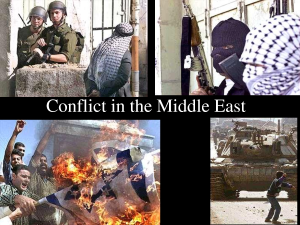
When citizens of our society look towards the Middle East and its cultures, many immediately think of terrorism and the problems it has presented for the international community, which forces people to assumptions.  For example, the Shaw in Iran, conflicts in Iran, conflicts in Israel, terrorist organizations, etc. have all affected the image of the Middle East and its cultures. Why do people jump to quick conclusions?  The answer is because many of these conflicts link back to certain cultures.  The region has been subject to centuries of conflict due to differences in beliefs, which has brought the idea that these cultures promote violence and destruction on those who opponents.
Featured image

When looking at other regions and cultures around the world, one must throw their own beliefs out the window and approach the matter with a clean mind.  Outside sources, such as the media, creates a bias that is tough to overcome.  Approaching the study of the Middle East as an orientalist is an unjust effort.  We must be able to look at the Middle East in an honest manner in order to completely understand its complexity.  The best way of understanding a culture is being able to experience it and actually live in it.  Looking from the outside in makes it extremely difficult to attain accurate conclusions.  However, the same can be said for those in the Middle East looking at our culture here in the United States.

Featured image

Posted in Student Blog Project 2015, Student Blog Project 2015 | Tagged | Comments Off on Others

“Where I live; where they live”

As citizens of the United States of America, our daily routines differ from those who live in the region of the Middle East.  How are we different?  Looking at our culture and environment compared to the Middle East, we live in a completely different world.

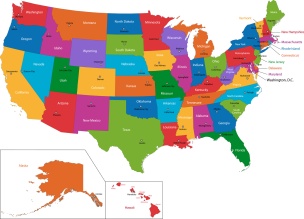
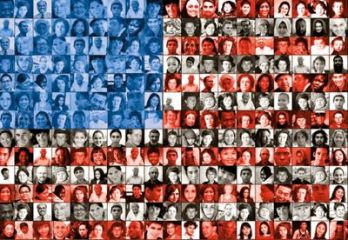
Living in the United States provides opportunities of a lifetime, which is certainly a privilege many in the international community do not share.  The United States creates these opportunities because of the diverse community among its population.  Citizens from a wide variety of ethnicities and religions live amongst each other creating a diverse community that works as one, for the most part.

Featured image               Featured image

Like the United States, countries in the Middle East share a wide variety of ethnicities and religions.  Middle Eastern ethnicities include Arabs, Kurds, Jews, Armenians, etc. However, most of these groups live separately and conflicts often ensue as a result.  Religion appears to be one of the main reasons conflicts will break out in the region.  With that said, terrorist groups emerge in order to force their religious beliefs on other religious groups or ethnicities.  For example, the Islamic State in Iraq and Syria (ISIS) is attempting to create an islamic state of their own by massacring their way through cities of Iraq and Syria.

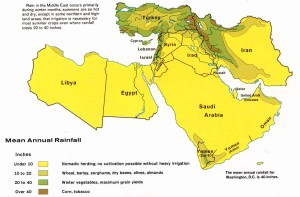
When looking at the environment in the United States compared to the Middle East, there is a huge difference in terms available resources to live off of.  The United States has the ability to create its own resources and not depend on other countries to provide these resources like some in the Middle East.  The United States has many large bodies of water, which makes it possible to grow crops and other necessities.  For example, the majority of Iraq, Jordan, Kuwait, etc. receive under ten inches of rainfall.  This makes it difficult for these countries to grow crops, which forces them into relying on other countries to provide them with food and water.

Featured image         Featured image

After analyzing the Middle East and seeing the differences it has with the United States, it is evident that we, as citizens of the United States, seemingly live in a completely different world than those in the Middle East.  We all, for the most part, have all the resources we could need to make a successful living and are able to live our daily lives with those who are quite different from ourselves either ethnically or religiously.

In the Middle East, it appears to be a struggle to get hands on everyday resources, depending the nation state one lives in.  Conflict flows through the region due to religion, which has created a crisis of its own.  The Middle East appears to be the complete opposite of the United States.

Featured image        Featured image

Posted in Student Blog Project 2015, Student Blog Project 2015 | Tagged | Comments Off on “Where I live; where they live”

Thursday Treasures 1/22

This week I am sharing a few of my favorite things I did over the long and restful winter break.

1. Acupuncture- I will admit, I was a little skeptical at first because I have heard mixed reviews on this form of treatment. However, I was pleasantly surprised and ended up going back. I have always had neck and lower back pain, but acupuncture made me feel SO much better. It is all about finding the balance between the Yin and the Yang.

Screen Shot 2015-01-22 at 11.22.51 AM


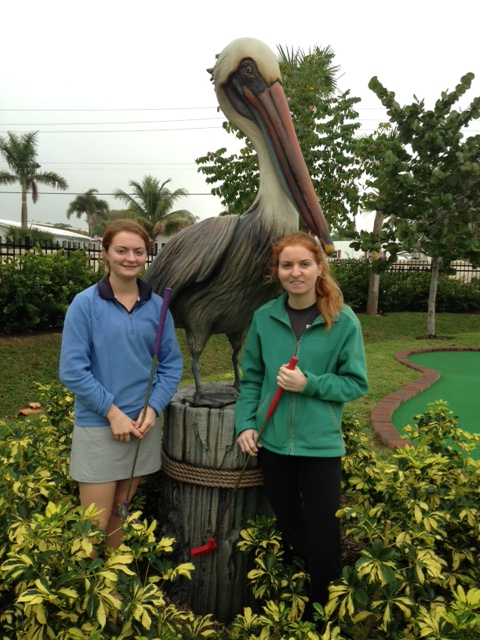
2. Mini Golf- Playing mini golf was fun and mindless. It’s a great activity for anyone looking to try something different.

photo_4-8
photo_2-9


Posted in Student Blog Project 2015, Student Blog Project 2015 | Tagged | Comments Off on Thursday Treasures 1/22

7 ESSENTIAL ELEMENTS EVERY TRANSLATOR NEEDS

As I was packing my belongings to travel to Miami, I was wondering which would be the most important elements a translator must carry with himself besides knowledge. I came up with a list of the most used things every translator should have.

#1 Computer

A computer is essential to work online and offline. The translator may work on a document in different formats (word, PDF, excel), save it, and edit it later. He can research specific topics and create parallel texts. It also enables communication with the client if their phone doesn’t work or their battery died.

#2 Monolingual dictionaries

A monolingual dictionary provides the definition of the word, pronunciation, and gives examples of the word in context. In case a word lacks an equivalent term in the target language, a monolingual dictionary is the first resource to understand the meaning of the term and to provide an equivalent expression.

#3 Bilingual dictionaries

Bilingual dictionaries provide the equivalent term in the target language. They are the most used among translators. The translator looks for the definition of the word according to its context.

#4 Parallel corpora

A parallel corpus is a recollection of texts in two languages. It may contain text pairs which are not translations of each other but texts which were developed independently in each language. It offers an opportunity to align original and translation, to gain insights in translation and to create bilingual glossaries.

#5 Bilingual glossaries

Glossaries are other resources employed by translators. They may be more specific than a bilingual dictionary which may contain more specialized vocabulary on a specific topic. You may create them from scratch by means of parallel corpora.

#6 Specialized bilingual dictionaries

Specialized bilingual dictionaries are essential elements in which the translator has access to a specific equivalent term in the target language. If there are no specialized dictionaries on a certain area, most translators create their personalized glossaries.

#7 Computer- Assisted Translation

Some but not all translators make use of Computer- Assisted Translation tools (or CAT), where texts are broken into segments and translation units are saved in a database called Translation Memory (TM).The most used translation memories are Wordfast, SDL Trados Studio, Déjà Vu, Memo Q, among others.

I hope you have enjoyed my list of essential elements translators need. If you feel like adding elements to the list you are more than welcome.

Posted in Student Blog Project 2015, Student Blog Project 2015 | Tagged | Comments Off on 7 ESSENTIAL ELEMENTS EVERY TRANSLATOR NEEDS

Thursday Treasures 12/18

With the holidays just around the corner, the pressure is on to find the perfect gift for family and friends. The theme of this week is gift ideas.

1. Take a look at this list, full of suggestions that suit a wide range of people.

2. Sometimes an actual gift is not necessary. I personally enjoy receiving a hand crafted card.

Click to view slideshow.


Posted in Student Blog Project 2015 | Tagged | Comments Off on Thursday Treasures 12/18

Finally Back

DSC00149

The time has come when I am finally going back to Mendoza. I look back and I cannot believe it has been four months since I landed on America. I have enjoyed great experiences here and learnt a lot about culture, English, myself, and, surprisingly, life as a whole.  

DSC00159

This week I want to share with you a short video that brings together all my adventures in America and my feelings now that I am going back. But above all, it you will see many beautiful pictures of Mendoza that waits for me, with a traditional song, “Póngale por las hileras,” which I perform. Enjoy!

Posted in Student Blog Project 2015 | Tagged | Comments Off on Finally Back

Art for the Artless: Original Video

I have explored the visual art of Carlisle over the last few months. To find out some more about my story and discover what I have found, watch the video below!

Posted in Student Blog Project 2015 | Tagged | Comments Off on Art for the Artless: Original Video

Big Ten Conference Championship Preview Podcast

It’s that time of year, championship weekend.  This Saturday, conference foes will line up to battle for their respective conference championship.  Wisconsin and Ohio State square off at 8:00 PM ET, battling for the right to claim themselves Big Ten Conference Champions.  Listen in to my podcast below as I preview the two teams and share my prediction on the outcome of the game.

Posted in Uncategorized | Comments Off on Big Ten Conference Championship Preview Podcast

Fall/Winter 2014 Lookbook

Posted in Student Blog Project 2015 | Tagged | Comments Off on Fall/Winter 2014 Lookbook

Semester Wrap Up

With the semester coming to a close and finals taking over all of our lives, I thought I would share with you what the Dickinson Equestrian Team has been up to all Fall. With lessons, shows, and invitationals we have been a very busy group of people. I’ve put together a video that I’d like to show you to give you a holistic view of what being on this fabulous is all about. Hope you enjoy watching it as much as I enjoyed making it!

Songs: Tell Me (Clock Opera Remix) by Au Revoir Simone, High for This (feat. Sorta Easy) by Koda & Ellie Goulding, Holdin’ On by Flume, Pumpin’ Blood by NONONO, HyperParadise (Flume Remix) by Hermitude, Levels by Avicii, Latch (feat. Sam Smith) by Disclosure, Midnight City by M83


Posted in Student Blog Project 2015 | Tagged | Comments Off on Semester Wrap Up