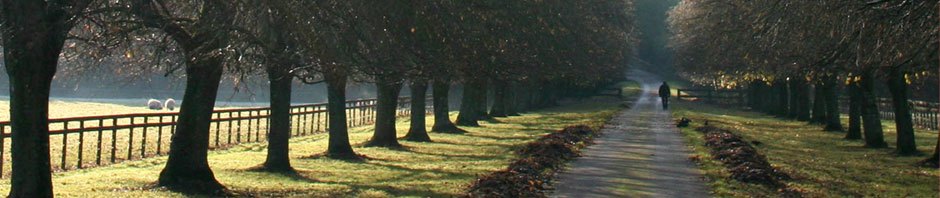
Dad’s Journey Home!

Here it is! Still trying to figure out correct formatting, font colors and all of that but I am excited to share my first post with everyone! Enjoy! dadsjourneyhome.wordpress.com

Posted in Student Blog Project 2015 | Comments Off on Dad’s Journey Home!

Traduttore, Tradittore: Translation Ethics and Mistranslations

The Italian saying “traduttore, tradittore”, which in English means “translator, traitor” was my first encounter with translation issues. During my freshmen year in the English- Spanish Translation Program, one of my teachers introduced us to this saying, which made me think about translation, but I still didn’t fully grasp its meaning. Why would translators purposefully betray people if their purpose is to bridge cultural gaps and facilitate communication? Can mistranslations have a profound impact on the client`s business and image?

Before delving into mistranslations and some of their potentially damaging effects, it is crucial to define ethics.

What is ethics?

I believe ethics is about putting ourselves in another person`s shoes and thus, thinking about the implications of our actions on society. In the conference of Ethics and Interpreter Training, Mona Baker,an Egyptian professor of translation studies, expresses that “ethics is about the implications of everybody in any kind of encounter”. If we want to be professionals, we have to behave as such. If you schedule an appointment with a doctor, you instill your trust in them and you assume they will take care of you. You implicitly know if any health problem arises, they will do their best to diagnose and treat it. The same situation occurs with translators. The client trusts the translator, who, of course, will work to the best of their knowledge to aid in communication. However, what happens when you accept a job for which you are not prepared?

The following video is a dramatization that portrays an ironic situation of an interpreter who, instead of helping the client, causes him to experience an uncomfortable moment in front of his company`s CEOs.

Funny video, but not so amusing when you are the client. Although these situations extreme and rarely happen, it would now be important to clarify what is mistranslation.

Mistranslation     

Mistranslation implies something deeper than a bad translation; it implies the partial or total loss of the intended meaning of a message. While there could be some minor deviations in meaning like omissions, additions, bad choice of words, unclear ideas and ungrammatical sentences, some major mistakes may have financial and legal or political implications.

Faulty translations may deeply affect the clients. It is not wrong to say no if we are not qualified for or if we think we are not going to meet the tight deadline. In order to avoid mistranslations, we have to make sure we proof read and edit the text effectively, showing our professionalism and expertise.

If you liked this post, you cannot miss next week`s post on cultural differences, neologisms and when to borrow terms. Please feel free to comment. I am looking forward to reading your opinion about this topic.

Posted in Student Blog Project 2015 | Tagged | Comments Off on Traduttore, Tradittore: Translation Ethics and Mistranslations

Tailgating Treats

Greetings all. It is my pleasure to introduce you to the Brok’n Kitch’n. For my initial post I would like to cater the season at hand and I’m not talking about autumn, I’m talking about football season. After a week … Continue reading

Posted in Student Blog Project 2015 | Tagged | Comments Off on Tailgating Treats

Dad’s Search For His Identity

34219_1215604714675_7200668_n

I am the spitting image of my father. There is no doubt in anyone’s mind when they see us together. We are definitely father and daughter. Everything from my red hair and freckles, to my eyes that get squinty when I smile, down to my taste in music and sense of humor, my dad and I are one in the same. Growing up I never had the slightest feeling of not belonging. However, for my dad, growing up to be a 6-foot tall redhead in a house full of short, dark-haired people, he always felt that he did not belong.

My father was born on Christmas Day, 1950 in Roscrea, Ireland. He lived in a mother-baby home called The Sean Ross Abbey until an American family adopted him at about 3 years of age. My dad grew up always wondering about his true identity, where he came from, who his real parents were. So in the 1970s he tried to get information from the nuns who run The Abbey, but he had no luck. Discouraged, he put this quest on the backburner and focused on his own independent life.

I always knew that my dad was from Ireland. I would tell all of my friends and teachers thinking it was the coolest thing in the world! It wasn’t until I was about 10 years old that I began to learn more details about my dad’s adoption, that he did not know who his real parents were, and even then I couldn’t quite grasp the seriousness of it all. When I was about 12 years old, my dad read an article in a local newspaper about a fellow Irish adoptee who was reunited with his birth mother through a woman who specializes in Irish adoption. Intrigued, my dad contacted the woman. It was not long before she was able to track down my dad’s mother and her family. We learned that she now lives in London with her 4 other children, who have children of their own now. My first thought, as a 12 year old, was “we’re going to go to London and meet all of my new cousins!” However, it was far more complicated than that.

My dad was given his birth mother’s phone number and he decided “why not?” and called her. At first she was interested in talking to him, they chatted a few different times on the phone over the span of a couple weeks. Then one day we got a message on our answering machine. It was his mother asking to no longer be contacted. You see, she had only mentioned my father to her husband once, when they were young and had first started dating, and she was too afraid to tell him once again. The nuns at The Abbey would tell these young girls that they were sinners and no one should ever know about what they had done. In my grandmother’s mind, she still felt shame for what had happened.

A few years passed, we still sent Christmas cards with family photos to her home in London, hoping to get a call but did not hear back. My dad had to go to London for business and decided while he was there, why not try to see her. He already had her address so he went over and walked right up to her front door and ring the bell. When she looked down from a window and saw my dad standing there, she jokingly yelled “Oh, go back to America, wontcha!!!” She did however let him in to her home. They spent a few hours together that day getting to know one another, and when they parted ways, my dad knew he probably would not hear from her again; she was still too afraid to share this with her family.

In February of last year my dad was interviewed for a local newspaper about his adoption story. The movie Philomena had recently been released and created a lot of buzz about Irish adoption, the characters in the movie had spent time at the same mother-baby home as my father and his mother. At the end of the article, my dad stated that his mother had still not come around but he was hopeful that she would soon. Well, quite ironically only a few days after the article had been published, the phone rang. It turned out that my grandmother’s husband had passed away and she felt that she was ready to tell her children about her secret; she was inspired by the movie Philomena. She was very nervous though, and looked to my dad for support during this time; she asked his advice on how to approach the subject with her other children. When she finally got up the courage to do so, they were all thrilled and immediately wanted to meet my dad, and the rest of our family. Just 3 weeks later, my parents were on a plane to London…

Posted in Student Blog Project 2015 | Tagged | Comments Off on Dad’s Search For His Identity

Narrative Structure

My first post was supposed to be about what makes a good movie ending, but to understand that, my readers need a good understanding of narrative structure. So instead I wrote this post, a rundown on narrative structure, and my next post will be about what makes a good ending in film. I know, my first post and I’m back tracking. This should be a great blog. Any-ho…

NARRATIVE STRUCTURE

Narrative structure is the skeleton of a story. It’s allows us to recognize a work as a narrative instead of poem, or an essay, or maybe something far stranger. The idea of narrative structure has its genesis in Aristotle’s Poetics.  His idea was that every story should have a beginning, middle, and end. Since Aristotle a lot of trees have been killed for writings about this subject. Smarter people than I have come up with a lot of theories and nifty diagrams to explain it. The most basic narrative structure is exemplified in the diagram bellow.

Source http://c2portal.com/blog/wp-content/uploads/2013/04/DramaticArc.jpg

All story start with exposition. This is where we meet the protagonist(s) and the world that they inhabit. Next, we move on to the inciting incident. Some conflict is introduced, and the protagonist(s) must then spend the rest of the story attempting to resolve it. As the story progresses, the tension increases and stakes are raised. Usual during the rising action the protagonist(s) is changing and developing in some way. This continues, until the story reaches it’s climax. The climax is where all of the tension that has been building comes to a head, and the protagonist(s) finally faces the conflict that was introduced in the inciting incident. The resolution is whatever happens that causes the conflict to be resolved. At this point, the protagonist(s) should have changed in some way because of what happened during the rising action. They don’t have too though. Some have the best stories involve characters who fail to change despite the conflict. The dénouement is just wrapping up the story, tying up any loose ends that need to be resolved.

This is narrative structure in its most basic form. The structure I use when writing my own stories, and the one I’ll mostly use to analyse films is the three-act structure.

THREE-ACT STRUCTURE

This particular structure is just a more detail version of the structure I just explained.

Source: kateforsynth.com.au

As you can see, three-act story structure incorporate all of the elements of narrative structure, it just organizes them somewhere within three acts. This structure was created for theater, back when theater was the only visual medium. Despite how it’s age, it still commonly used when writing or analyzing films. The only other thing that’s different and worth mentioning is disaster and crisis at the end of act 2. The disaster is when the protagonist(s) are utterly defeated by the antagonist(s). The crisis is when the protagonist(s) give up all hope. The disaster is an external conflict and the crisis is an internal conflict. This defeat before the climax is extremely prevalent in most films. I think the rest of the structure has either already been explain or is self-explanatory. If you have questions, ask them in the comments. Or you can check out this video by indie filmmaker Darious J. Britt. It’s about 12 minutes long. He gets into more detail about three act story structure and gives great examples. It is an awesome video and you should definitely watch it right now. I mean if you’re here, you’re probably not that busy.

One more thing. It is important to know that narrative structures are guideline not a law. Feel free to break them in your films and feel free to enjoy film that break them. But remember, this structure has been around in one way or another for a few thousand years because it works. Often, if you find yourself unfulfilled after watch a film it’s because it failed to execute this structure.

If you have any question, comment, concerns, a shrewdly worded haiku please leave them in the comments.

Posted in Student Blog Project 2015 | Tagged | Comments Off on Narrative Structure

Back Across the Pond

norwich2

A winding cobblestone street in Norwich.

My black riding boots clacked against the cobblestone streets, as I tried to avoid injuring myself on the lethal combination of wet leaves and slippery uneven stones.  The echo of my boots rebounded off of thirteenth century buildings, and traveled down the narrow, vacant street. It was a typical Sunday afternoon in mid-October in Norwich, England: gray sheets of clouds blanketed the sky, hinting at the possibility of another rain shower. The quiet air was trapped beneath the clouds, forced to face the bothersome disturbance of my loud footsteps. It’s hard to believe that this was my life roughly one year ago: exploring Norwich on my year abroad, knowing that I still had eight months of adventures ahead of me…

As I wandered through the winding cobblestone streets on that October afternoon, I remember reflecting on my abroad journey thus far, including my pre-departure orientation which took place at my college months before I boarded a plane to England.  I was struck by one memory from the orientation in particular: the global education directors stressed that, as an abroad student, you should “never feel at home” in your host country – you should be “uncomfortable.”

norwich1

View of the waterfront in Norwich. Norwich Cathedral is visible in the distance.

But, that was not my experience. Sure, the first two weeks at UEA had been a bit stressful, with adjusting to life at a new uni (university), living with new people for the first time, and feeling like a small liberal arts college guppy swept up in an enormous university wave. But after that brief period of adjustment and mild discomfort came a span of incredible bliss. On that October afternoon, while wandering the historic Norwich streets, I realized that I didn’t feel uncomfortable.  I was in England. I was at home. Coming to this realization brought a smile to my face as I continued on my peaceful stroll.

uea

The Ziggurats at the University of East Anglia (UEA). Taken during my first week on campus.

I still view England as my second home, and it is a place that still holds a very large space in my heart. England provided me with many of the essential pillars of a home: it was a place where I felt safe, a place that I love, a place where I experienced a great deal of personal growth, and most importantly, a place with people that I love – people that have changed and impacted my life more than they will ever know.

In an attempt to cope with the pain of being ripped away from my second home, and to keep the memories I have of the most important year of my life alive, I have decided to create this blog. Yes, I’m currently writing this from a tiny town in the heart of Pennsylvania rather than in the beautiful English countryside. Yet, I intend to allow the spirit of English culture, and my memories of my time there, to thrive through this blog. Among other things, I will write about my state of in-betweenness: I am an American girl who has returned after a year abroad with a huge piece of my heart still remaining in England. I am an anglophile stranded in Carlisle.

Posted in Student Blog Project 2015 | Tagged | Comments Off on Back Across the Pond

Why home?

Universidad Nacional de Cuyo

Universidad Nacional de Cuyo

When I was thinking about my first post, the title of my blog came instantaneously to my mind: “My Home Mendoza”, immediately followed by the question “What is home?” It sounded like a pretty silly, basic question, but I wanted to come up with a deep answer to it. I looked the word up in the dictionary and I found the following definition: “The place where you came from or where you usually live, especially when this is the place where you feel happy and comfortable.” The first part of this definition I already knew; it was the second part that struck me the most. Was Mendoza really my home? Was it indeed the place where I felt at ease, cheerful and where I felt I belong?

Being more than 6,300 miles away from Mendoza, these searching questions seemed to touch deep into my soul.  The simple, obvious answer would have been “Yes, it is my home because that is where I was born.” But I knew now that home meant much more than the place one was born. Therefore, I set out to find reasons that made Mendoza my home.

10798469424_e43edc7a4e_o

Sitting on the grass with a pen in my hand, the sun beaming through the clouds, I remembered the cloudless, blue sky of Mendoza. I flew over a few scattered clouds and looked down on the earth. I saw my house, my father taking the car out the garage early in the morning to go to work, my mother watering the plants. I shivered at the thought of how far away from them I was now.

cropped-15065648317_e8e4b9c982_o.jpg

I kept moving and suddenly I realized I was over the majestic mountains shining with different colors as the sun blazed down on them. I remembered many days and nights I had spent there, camping, hiking, and cycling.

1363499707_d1f52ca64a_o

I turned right and I noticed a beautiful dam. I recognized it quickly, Dique Potrerillos. How important it was for irrigation in Mendoza, a province which is a desert turned into an oasis thanks to the human action.

2136960042_bfc191f05a_o

I turned around and faced a huge green area, Parque General San Martín. How could I forget the bikes rides, soccer matches with friends, and other adventures I had experienced there!

Someone poked at me. Surprised, I woke up from my dream and realized that my eyes were full of tears. The person next to me, with concern showing in her face, asked, “Is everything all right?” After an instant of silence, I replied with a smile on my face, “Yes. It is perfect.” I stood up, closed my notebook, and headed for my room with a slow pace. Yes, everything was perfect. Yes, I was glad. I had experienced in my heart what home was and where my own home was.

Posted in Student Blog Project 2015 | Tagged | Comments Off on Why home?

The Tourist Eye

Sunlight glittered on the softly undulating surface of Baltimore’s Inner Harbor. Families floated inside whimsical paddleboats shaped like dragons, as the regal ships moored to the dock shaded the waters beneath a murky green. Shakespeare actors clanged their swords together in a mock fight; a stray guitarist strummed a folk tune; children all around squealed in delight.

I breathed in these sights and sounds greedily. This trip to the Baltimore Book Festival was a much-needed change of pace from mundane day-to-day college life, especially in cloudy Carlisle, PA (just south of Middle-of-Nowhere and west of Never-Heard-of-It.) After spending a semester abroad in England where I could hop on a train to London for the weekend, living in a small-town campus in rural Pennsylvania was starting to feel claustrophobic. So, naturally, I rejoiced in this refreshing vista as my inner bookworm browsed antique novels and inhaled the sweet scent of expensive handmade leather journals that lil’ broke me could never afford.

That afternoon, I sat on one of those uncomfortable metal folding chairs in a big outdoor tent as I listened to a panel of writers on How to Make to the Ordinary Extraordinary. For an aspiring writer like myself, the topic sounded mildly interesting, but I never expected that one of the panelists would say something that resonated so deeply with me; she exhorted us to live life with the mindset of a traveler or a tourist, even in one’s own neighborhood.

A tourist? I thought. I immediately spurned the word, imagining fanny packs, socks with sandals, and obnoxiously large cameras. But tourists, the panelist explained, ask questions. They notice details. They open up their senses and view the world around them with an indefatigable sense of wonder.

She was right. Perhaps everything seemed brighter, more colorful, and more charming in Canterbury or Aux-en-Provence because I was looking for beauty there. That wrought-iron gate or quaint flower box, which is just another fixture that the local inhabitant doesn’t even notice, is a remarkable work of art to the foreign traveler.

Had I been missing out on the wondrous details of Carlisle, or even my hometown of Philadelphia? The skyscrapers and sculptures I take for granted in that city are the same ones that tourists travel miles and miles to see. What would happen if I looked at the world around me as if I were seeing it for the first time? I left Baltimore with a new frame of mind.

This blog is my experiment—a space for me to explore my wandering thoughts as I try to live each day as a “traveler.” I hope to discover opportunities near and far to invigorate my daily life with art, culture, and travel. If you’re interested in taking the journey with me, grab your passport, strap on your fanny pack, and join me in studying the art of wandering through life.

Posted in Student Blog Project 2015 | Tagged | Comments Off on The Tourist Eye

Why Art?

244126029_30ea688067_z

Andrew Wyeth’s painting, entitled “Christina’s World”, (shown above) is one of the earliest paintings I can remember appreciating as a piece of “art”. My sister had a print of it hanging on her bedroom wall and it caught my attention during my middle school years. It’s astonishing detail, mysterious subject, and masterful union of idea & form were not apparent to me at the time, but it gave me a sense of what great art can accomplish. more

I have a deep appreciation and enthusiasm for art. I am constantly seeking opportunities and events that expose myself to new and interesting creative projects. When I visit a city, the first place I go is to an art museum. I enjoy experiencing all kinds of creative projects and learning about the creative process. In addition to observing art, I participate; I make collages out of magazines and post them online. Here is one of my favorites:

tumblr_mdybcwPA441rldzvlo1_1280

I currently reside in Carlisle, Pennsylvania as a senior English major at Dickinson College. During my final year on campus, I will immerse myself in Carlisle’s creative community and use this blog to link it to the much larger online community. I will interview artists, document exhibits/shows, explore creative spaces, and much more.

Carlisle has a vibrant artistic community. (Just take a look at this video!) I hope to discover new facets of this community and gain a deeper understanding of its nature and influence. Many creative and inspiring people make up this community; behind every work of art is a creative mind. In addition to documenting art, I hope to explore questions such as: ‘How is creativity inspired?’, ‘What spaces inspire art?’, and ‘Why do we create art?’

Art for the Artless will entertain, inspire, explore, and inform. If you are looking to discover and participate in a vibrant artistic community, then you’ve come to the right place. So get excited and dive in—let’s explore.

Posted in Student Blog Project 2015 | Tagged | Comments Off on Why Art?

#WhyIRun

My solution for everything—a bad grade, a stressful day, yelling coaches, homework galore, even overwhelmingly-fabulous news—RUNNING. It’s freeing, exhilarating, relaxing, and never fails to make me smile from ear to ear. The first time I ran for fun, I had no idea what I was doing. I was stressed so I put on my running…

Posted in Student Blog Project 2015 | Tagged | Comments Off on #WhyIRun