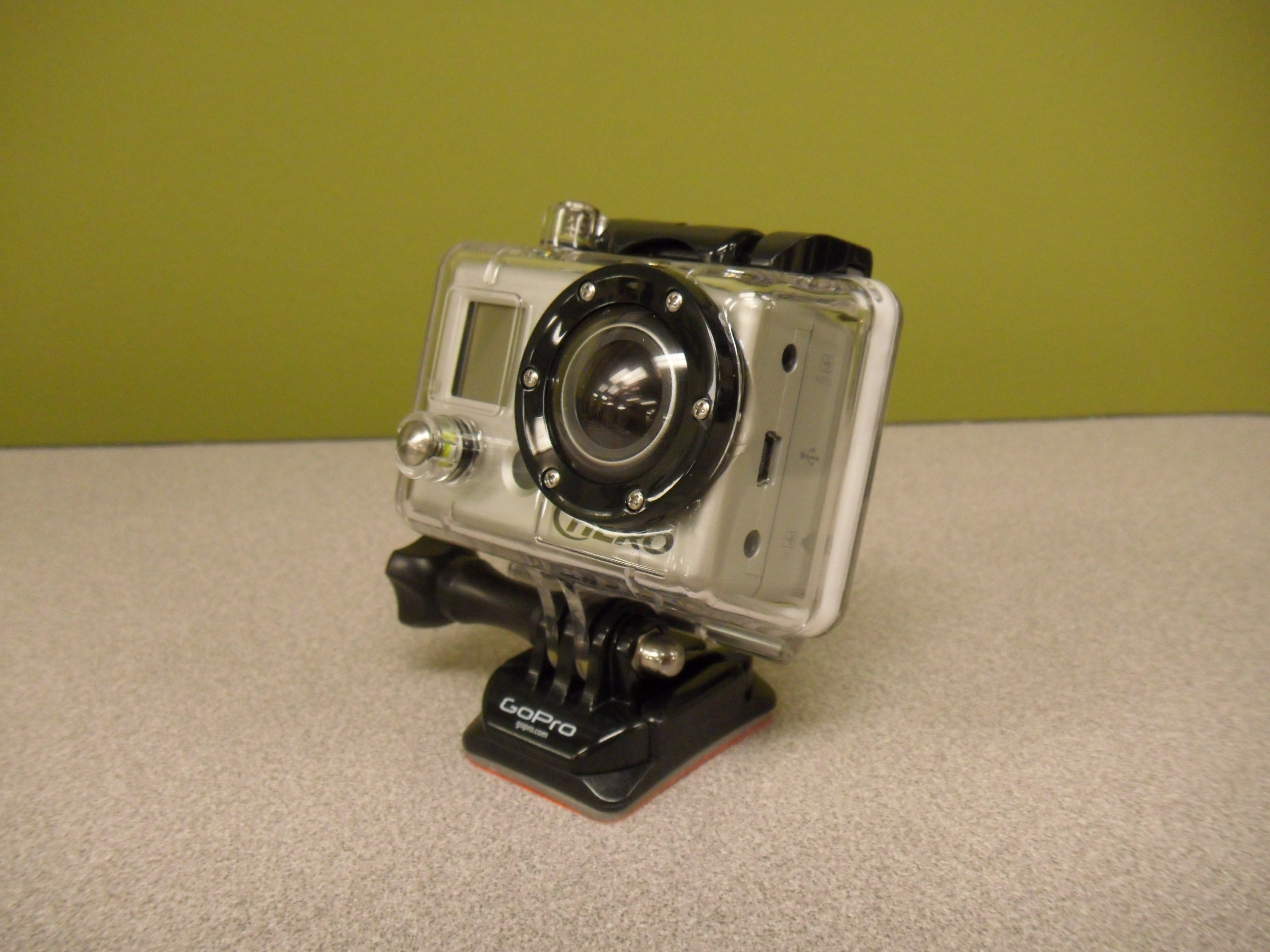
The Media Center now has GoPro cameras! The GoPro Hero and Hero 3 are compact digital cameras that shoot wide angle video, which makes it great for outdoor use. They also come with a water resistant case and can be used with a variety of mounts and tripods.
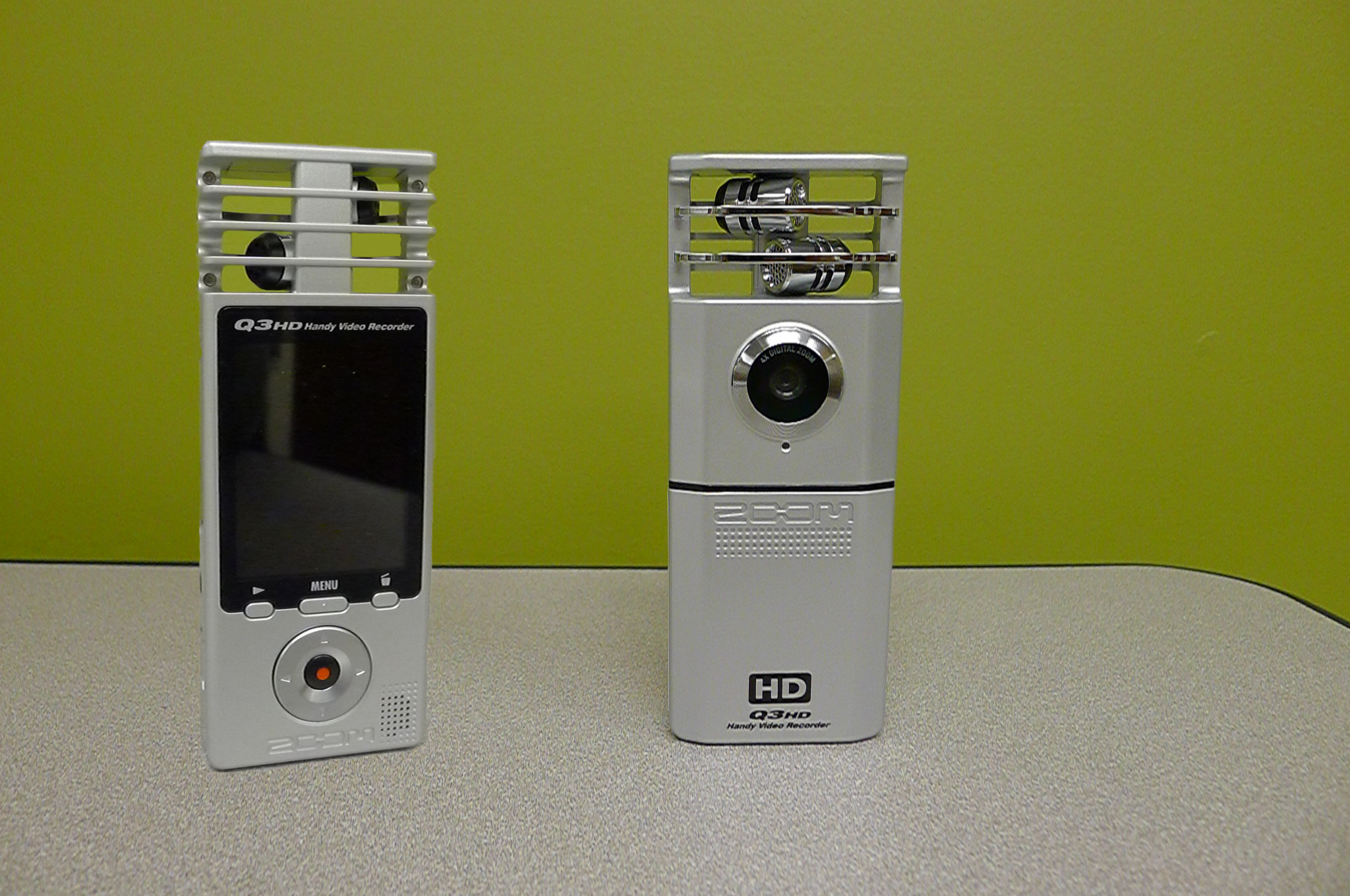
The XY Mic Video Camera is similar to the Flip cameras that are frequently used by students, but with far superior audio. So if you’re planning on shooting a video that has a strong emphasis on sound, this might be the one for you. We have two Q3HD Zooms available now, so come check them out.
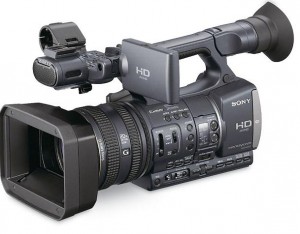
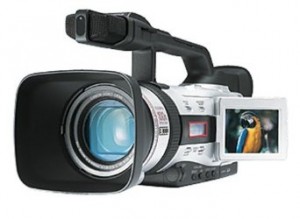
The 3CCD and HD 3MOS video cameras are top grade digital video cameras useful for students and faculty working on more advanced film projects. Equipped with high quality optical zoom and a wide array of audio editing options, light adjustment, texture options, and more, they can also be used with our selection of tripods, dollies, lighting and sound equipment to achieve professional grade productions.
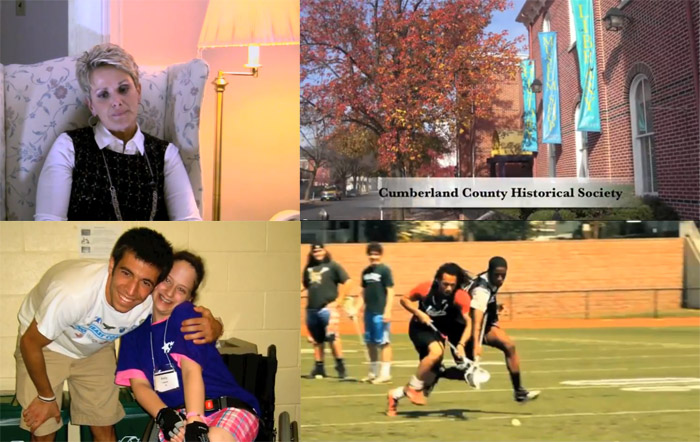
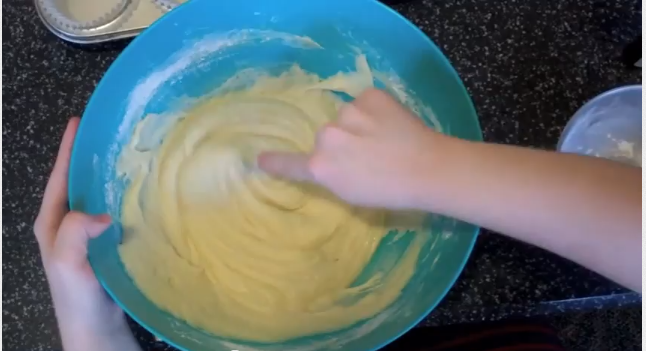
From chocolate-chip cookies to toffee, YouTube visitors can find out what ingredients make for sweet scientific success thanks to a series of videos produced by students in Christine O’Neill’s Chemistry in the Kitchen course. Working with staff at the College’s Media Center, class members have produced short educational videos on culinary topics such as what makes for a better batter.
“I have always enjoyed cooking and baking in the kitchen, but I’ve sometimes wondered why, when I follow the same recipe, the end product can vary slightly,” says the visiting instructor in chemistry. “The class explores why ‘following’ the recipe may give different results. By learning about ingredients’ physical and chemical properties, students are able to study the role that each substance plays in a recipe.
“I thought the video component would give students an opportunity to express their creative side,” O’Neill continues. “The subject matter is open, but the students are responsible for all aspects of the project, from choosing and researching the topic to filming and editing the video.”
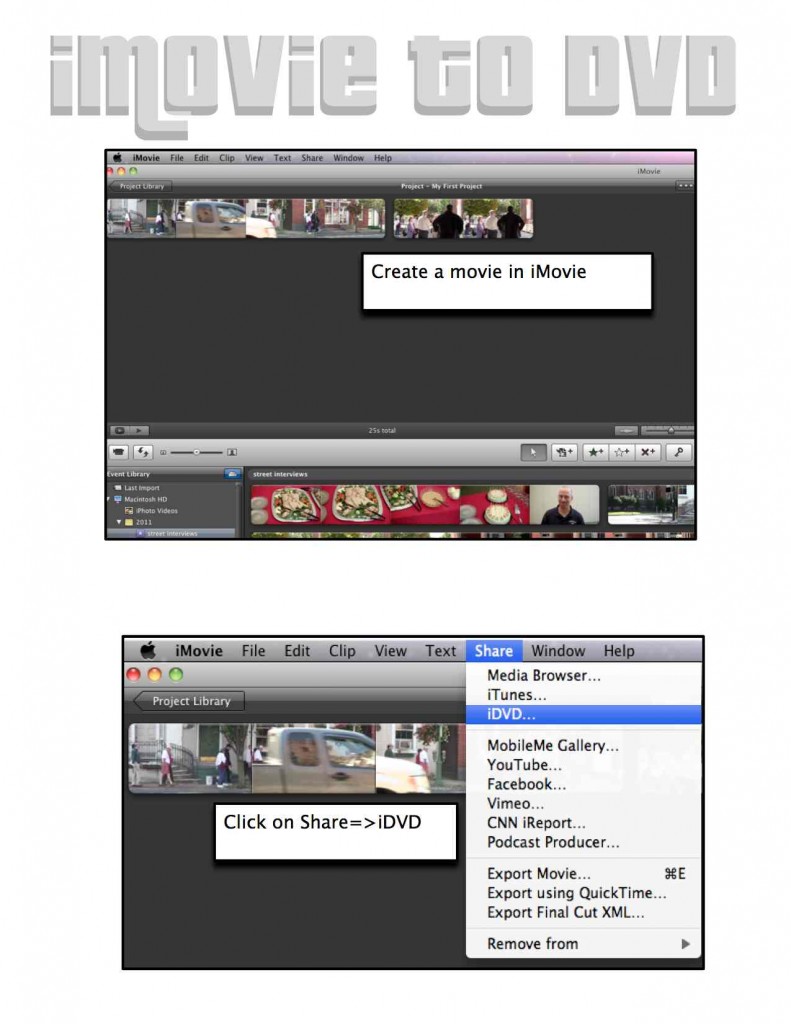
Use this tutorial to process an iMovie project onto a dvd. This dvd will be playable in a computer or DVD player but it is always important to check after burning to ensure that everything works before you hand it in as a project or try to play it to an audience.
The four videos will focus on different aspects of John Cage and his work. I have been able to catch a sneak peak of them and they are looking really good so far. The students have been working hard over the last two weeks to create them and it would be great if you could come out to see them, as well as the performance by Third Coast Percussion. See you on Saturday!
We have hit the middle of the semester and our class blogs are in full swing. Often our campus doesn’t even know what great stuff is being written until it is already over…..or maybe not at all. So here is a quick little overview of some great blogs you should be keeping up with.
Political Science
The Carlisle Policy Forum is a blog for the ‘National Security Policy in the 21st Century Global Media Environment’ course taught by P.J. Crowley, the General Omar N. Bradley Chair in Strategic Leadership and former U.S. assistant secretary of state. Recently showcased on the Dickinson News page “the course examines U.S. security policy and the ways in which new and traditional media factor into world events and American foreign policy. Students use online-media tools such as blogs to comment on domestic or global happenings that have an impact on American foreign policy and discuss the potential outcomes.”
It is getting some national attention as well as Bill Nellingan ’14 had his opinion piece “A Secret Memo, A Secret Panel, A Novel Process,”picked up by the ‘The Week’ as a “best opinion“. Kudos Bill! Senator Dodd even left a comment on the post so you know big players are reading what we that class has to say.
“Wow, Will! Your analysis is spot on. Great job!
P.S. I miss you. Come back to Washington”
Sounds like PJ has some friends in high places….who miss him.
“We are rational beings. Our beliefs are founded on good science, we use logical reasoning to make decisions, and we have left behind the mystical beliefs of our ancestors. If this is true, then why do we spend billions of dollars each year on alternative medicine? Why do we buy lottery tickets? Why do we carry lucky charms, knock on wood, and avoid strolling under ladders. Why do we believe in the paranormal, UFOs, astrology, and the Loch Ness Monster? Why are we more afraid to fly than to cross a busy street? In this seminar we will explore the mathematical, statistical, psychological, historical, and social reasons that these seemingly irrational beliefs still have a strong hold on us. We will learn how to nurture a healthy skepticism and to develop critical thinking skills that will enable us to face these issues with our eyes and minds wide open.
The blog showcases stories that relate to myths, logic (or lack thereof), science, theory and a wealth of other topics. The students are currently posting their podcasts where each discusses a different fallacy and why people believe them. Here is one of the many interesting/humorous entries you will find on their blog.
Dickinson Librarian Chris Bombaro’s ‘Tell Me Why‘ FYS examines:
“the history of recorded information from the oral traditions of ancient philosophers through the age of the Internet, and how different methods of communication affect the circulation of information. We will discuss issues critical to the dissemination of information such as censorship, plagiarism, and the true cost of information. We will do this by exploring the power of questions, and how the many different kinds of questions shape the answers that we find. In this seminar we will learn to develop our intellectual curiosity by becoming proficient seekers, finders, and reporters of information. We will explore how multiple points of view relate to truthfulness and reliability of information, and we will verify information others present to us. Emphasis will be placed on how to properly and ethically engage in research, and how to skillfully and creatively report the findings of that research using traditional, paper-based methods of communication as well as the newest technological methods.”
Their blog discusses many topic related to readings and class discussions. Earlier this semester they did a series of podcasts related to mythology. Check out a few examples below.
Abroad Blogs
Want to find out what your classmates are doing while adventuring in England this semester? Check out the Norwich Science Program in London blog to find out what they are up to. From the looks of the pictures….they are having a blast.
On September 19th, Dickinson science students woke up to a rainy day in Bath. At around 9 a.m. we all left our hostel to board the coach and travel to Avebury, located about an hour away in Wiltshire, England. Many students were very excited to travel to Avebury, as they have heard that you can actually go up and touch the prehistoric rocks, unlike the world famous Stonehenge. When we arrived at Avebury, we all marveled at the extensive land that stretched over the horizon, and we were eager to learn more about this historical place. We began by taking a short walk through the Avebury museum to find out more about the mystical rocks.
Language Blogs
Professor Akiko Meguro has partnered with Nanzan University in Japan to have a course blog where the students can exchange ideas and comment on topics related to the class. They have made videos of themselves to help get to know each other as well as having Skype language exchanges throughout the semester.
Professor Duperron’s “Introductions to Cultural Analysis” students write about culture with a critical eye on the “Before Toulouse” blog. They’ll think about their own culture and begin thinking about issues they’ll likely encounter while studying abroad. Here is an example of one of their posts:
History
Professor Matt Pinsker has blogs for both History 382: US Diplomatic History and History 404: US Constitution Seminar. The History 382 course will require students “to undertake a multi-media assignment in Google Maps as well as in-depth writing assignments that include an essay on historiography and an extensive narrative paper on a critical episode in American diplomatic history prior to 2001.”
The History 404 course requires students “to produce Supreme Court case summaries, analytical word clouds, op-eds, and a major research paper that profiles a constitutional framer. “
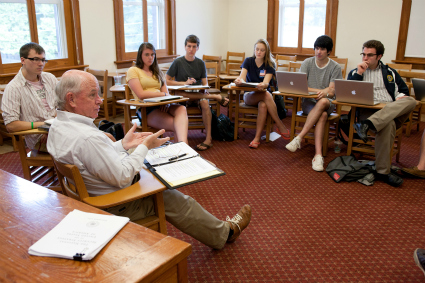
Why do some videos look stylized and professional while others look like an amateur created it……even if both were done by students? There are a few answers to that question but one key element is what techniques were used when the video was originally shot. You can improve the look and feel of your video by understanding some basic techniques when using video equipment. There are many different elements that work together to give your video the look and feel you are striving to create. During this session we will introduce students to best practices when shooting including lighting, miking, shooting and basics of setting your scene.
Audience
Faculty and Students
Type
Instructor Led – Hands On
Time
1 1/2 – 2 Hours
Outcomes
Understand basics of using, handling and storing equipment
Learn filming techniques
Learn lighting techniques
Learn miking techniques
Understand best practices in group work to ensure successful recording
With the rise of YouTube, everyone wants to create videos but most people don’t realize how much time and effort it takes to edit a video. In some cases, creating a video isn’t about telling a new story but it could be used for reflection, oral language exams, critique and other options. These videos can be shot on a simple Flip Camera and uploaded directly to YouTube or Moodle for viewing. If a small amount of editing is needed, Quicktime Pro is a great option compared to IMovie.




 The
The  .
.


