Selfies and The Craze of Self-Photography

A few weeks ago, General Colin L. Powell created an overnight Internet sensation by posting an image of himself, taken in the 1950s.  The image, capturing the young and dapper Powell in black-and-white, was a direct response to the “selfie” taken by Ellen DeGeneres at the 2014 Oscars.  General Powell boldly proclaimed that he “was doing selfies 60 years before you Facebook folks,” and told Ellen to “eat her heart out.”

Colin Powell 60 years ago. Courtesy General Colin L. Powell.

Colin Powell 60 years ago. Courtesy General Colin L. Powell.

Besides General Powell’s Facebook post, Ellen’s selfie drew the attention of President Obama.  The President, appearing on Ellen’s talk show, seemed a bit sore that the star-filled Oscar photo drew more Twitter retweets than his selfie with Danish Prime Minister Helle Thorning-Schmidt, taken at the funeral of Nelson Mandela.  The President’s dig at Ellen has taken the media by storm, but has also sparked criticism of today’s culture.

President Obama and Danish PM Thorning-Schmidt pose for a selfie.  Courtesy Getty Images.

President Obama and Danish PM Thorning-Schmidt pose for a selfie. Courtesy Getty Images.

The modern “selfie” culture is, according to some, a sign of increasing narcissism.  While psychologists bicker about the exact nature of this ballooning cultural self-importance, it seems that selfie culture is not slowing down.  Applications like Snapchat actually encourage selfies as a form of virtual interpersonal communication.

What’s important to remember in all of this, and what has been lost in the current discussions on selfies in both the academic and public spheres, is that selfies are nothing new.  In fact, our fascination with photography and the photographic self-portrait traces its roots back to the advent of the camera.

Early photography, much like early computer science or telecommunications, was more for professionals, scientists, and hobbyists.  However, once the camera became more publicly accessible, people began photographing their everyday life.  The concept of capturing an image of the present that could be shared in the future was fascinating, and thus drew a lot of attention.  Self-portrait photography, or what we now call “selfies,” was an early development in the photographic genre.

A circa 1900 "selfie."  Courtesy Shorpy.com.

A circa 1900 “selfie.” Courtesy Shorpy.com.

Individuals from all walks of life were interested in taking self portraits in photographic form, combining the technological wonder of the camera with the natural human interest in the self.  Cameras captured and preserved what mirrors reflected: cultural views on beauty, fashion, and the self.

Grand Dutchess Anastasia, circa 1913.  Courtesy @HistoricalPics

Grand Dutchess Anastasia, circa 1913. Courtesy @HistoricalPics

Calling selfies new, and claiming that they are a symptom of the increasing narcissism, is misinformed.  The technological boom of the last 30 years has given individuals from all walks of life the ability to indulge in many activities once only accessible to the elite.  Cheap cell phones with front-facing cameras have made the selfie a cultural phenomenon, expanding the genre out of its otherwise archaic roots. However, it certainly is not something new to our time.  General Powell may have been doing selfies before Ellen DeGeneres, but Grand Dutchess Anastasia was doing it before Powell was even born.  So the next time you smile for a selfie, remember the generations before you that did the same thing (using slightly larger equipment, of course)!

What do you think?  Do “selfies” reflect increased narcissism?  How does technology play a role in cultural expression?

Posted in Student Blog Project 2013 | Tagged , , , , , , , , , | Comments Off on Selfies and The Craze of Self-Photography

A Letter to People Who Think They Can’t Cook

Screen Shot 2014-03-06 at 10.08.25 AM.png

Dear People Who Say They Cannot Cook,

I kindly ask that you reconsider your position.

Why? Because cooking is not magic. If you can follow instructions, you can cook. 

Also, you probably have tastebuds that work. If so, you can cook. 

And you have a stomach, I hope. I assume that means you get hungry sometimes? Yes? Good. You can cook. 

Cooking is no more than following instructions, except in gastronomy (in other words, the study of food and culture) it’s called a “recipe.” Therein lies the only difference.


How to begin?

I suggest you start with a simple food that you love very much. So: macaroni and cheese. A dressed salad. Pancakes. Beginning with a very involved dish (lemon meringue pie, for example, or baklava) might get you discouraged if it doesn’t turn out. 

There are plenty of places to find recipes. Cookbooks, for one. Go to a library or bookstore, find the cookbook section and start paging through them. If you find something that strikes your fancy, carefully read the recipe. If it still sounds good, get the book…or be cheap and copy down the recipe. You could look for recipes online; you don’t even have to leave your chair. A few of our favorite sources are: Green Kitchen Sources, My New Roots, Sprouted Kitchen, Smitten Kitchen, The Kitchn. Maybe try something that doesn’t really require a recipe. Like roasting vegetables (a la Tamar Adler, perhaps?). 

If this is your first time around, follow the recipe as best you can. If it doesn’t work out, try again or find another recipe. Gather your ingredients – I suggest you put them all on the counter before you commence cooking and then put them away one by one as you add them. Go through the recipe in order, but understand that the recipe is not perfect. 

Buy good salt. It makes a difference. Salt enhances the flavor of foods (I’m sure Tim can tell you the science of this; I just accept that it works and add salt to everything, even smoothies and other sweet things). Want to learn more? Read here.

Follow the recipe but be an active participant in the cooking process. Smell the food before you begin to cook – get an idea of the flavors you’ll be working with. Touch it. Taste it as you go. And listen – listen for the sounds things make when they hit the hot skillet, how they sizzle, the vigor with which things bubble when cooking, etc. and so forth. 


Why begin at all?

There are plenty of good reasons. My favorites? When you cook, you know what you’re eating. That sounds like a good thing to me. It’s rewarding too. And don’t you think it’s empowering to be able to feed yourself? Eating is one of the simplest, most necessary things you do.

Then when you learn how to provide meals for yourself (and if you try, you most certainly will), you can feed other people. And you can teach other people. And they can teach other people. And then we won’t have so many people on this earth who think they cannot cook – because it’s not true. You can. 

Yours truly,

Ema


Images in this post were from our instagram

Posted in Student Blog Project 2013 | Tagged , , , | Comments Off on A Letter to People Who Think They Can’t Cook

Know Thine Farmer

beets_washing.JPG

When We Source From Elsewhere It Will Be From People With Whom We Strike Up Conversations And Form Relationships. They Are People Who Care For Their Own Piece Of The Earth.


Before my internship at Side by Side Farm, I never thought much about who grew my food. 

It wasn’t a necessary question. The things we buy at grocery stores have pretty anonymous sources, usually no more than an indication of country or state of origin…or company of origin. 

But I began my internship at Side by Side with the sense that there had to be another way to approach the foodsystem. Now I am a firm believer in mindfully grown food; food that was grown on a spot of land not too far away from me, by people who I can share a conversation with, if not a meal. That kind of food quite often tastes better – I can’t explain why exactly. The vegetables and eggs I took home with me each week of my internship changed my palate like nothing else before or since. Then of course, there are the ecological and economical reasons for eating locally…

However, I’m not here to talk about why. (Other people have done that far better than I can.) I’m here to talk about how.

You don’t have to intern on a farm to tap this source. In fact, my internship was the long way around. 

devin.JPG

Finding local food is probably easier than you think. Take a peek around and you’ll see that the “buy local” mentality is catching on. And thank goodness. 


Farmers Markets

Farmers markets are popping up all over the place. A growing number of small towns have a weekly, usually seasonal market that may be no more than a few booths or large enough to seem like a weekly festival. They can be inside, outside, at grassy parks, or on parking lots. Search them out. If there isn’t one in your town there may be one nearby. 

Or if you’re really enthusiastic about local food and your town doesn’t have a farmers market, start one. I don’t see why you have to be a farmer to be part of a farmers market. Make connections, reach out to local farmers and local government/ordinance people. Find a place to host the market, raise funds, meet with farmers. If you’re not sure where to begin, look at some online guides and band together with like minded people. 

CSAs

CSA stands for Community Supported Agriculture. It’s a form of farming that’s really becoming popular. At the beginning of the season, people pay a farmer for a share of the season’s bounty. They become “members” or “shareholders.” Then regularly during the season they get a box or bag of goods from the farm. In this way, the risk is shared but so is the bounty. And the bounty could be a range of things: typically, CSAs give out mostly vegetables. But there are also fruit CSAs, milk CSAs, bread CSAs, fish and meat CSAs, and full diet CSAs. Additionally, some CSA farms allow members to pay for part or all of their share through weekly labor.

Side by Side is a CSA farm. I’ve written more on the subject of farming and CSAs over here

And if you want to learn more about community supported agriculture I suggest you take a look at Sharing the Harvest

Farm Stands

Look for stands or carts long the sides of the road. Often these can be found, unattended or attended, out in the country. Farm stands may carry a variety of products, depending on the season: honey, maple syrup, vegetables, fruits, hay, pumpkins, flowers, bird houses, cookies, etc. If you don’t see anything you like one week, try returning to the stand a few weeks later. There’s a good chance the bounty will have changed. 

Orchards

Local orchards aren’t hard to find. However, if your priority is organic rather than local, there’s a chance the nearest orchard may not accommodate your preferences. However, investigate. 

Bartering

Money can be overrated. Try bartering with people you know. If you have a friend who grows tomatoes but you only have space for potted basil, see if you can strike a bargain. Tomatoes for a bunch of basil. Or a bouquet of zinnias for a bunch of kale. Or eggs for a batch of homemade granola. Or a box of peas for an afternoon of weeding…

Befriend a Farmer

If you aren’t already acquainted with a nearby farm and farmer, I suggest you seek one out. Check online and if you find one that peaks your interest, ask them for a tour of the farm. Or strike up a conversation with a farmer at market. More likely than not, they’ll be happy to talk to you. (And if not…well, consider that they may have been up since 5am harvesting the shallots and carrots you’re buying. Try to be friendly again next market day.) I haven’t yet met a farmer who didn’t want to talk about the foods they were growing or raising. It is their livelihood but very often it’s also their passion. Farming isn’t easy; if they get into it and stay, it seems to me they’re probably pretty convicted. 


digging.jpg

There are some excellent resource sites for finding farms, farmers markets, CSAs and other places that purvey foods that haven’t traveled far. 

Local Harvest, Grace Sustainable Table and Local Foods all have databases you can search. There’s even an app for finding local goods: Locavore

d_planting.JPG

Just a few days ago, I happened about this quote by Brenda Schoepp:

“My grandfather used to say that once in your life you need a doctor, a lawyer, a policeman, and a preacher but every day, three times a day, you need a farmer.”

Sounds about right to me. 


This post is part of a year long series exploring our manifesto. See January and February’s posts for more. Check back for April’s post, which will address the fourth point of your manifesto. 

Posted in Student Blog Project 2013 | Tagged , , , , | Comments Off on Know Thine Farmer

My Garden Was A Bed of Weeds

NutButters 010.jpg

To Meet Our Needs, We Will First Source Whatever We Can From Our Own Piece Of The Earth, Taking Care To Tread Lightly, Respect The Seasons And Observe What Is Plentiful.


So here we are halfway into February and it’s about time to begin planting a garden.

Ok, that sounds fantastic. Right? Hours of sweaty work in July, dirt that refuses to be removed from underneath fingernails and the worst part… weeding. But you know what? I don’t care. I love gardening. But perhaps you think gardening isn’t for you. Or perhaps that you don’t have time in your incredibly busy life. Perhaps you think you kill everything. Or perhaps you just don’t like vegetables.

Whatever your reason, let’s just accept that fresh produce is delicious and completely worth the time and effort it takes to grow it. So how exactly does one grow things? Gardening seems like a crazy impossible thing to get started with. I mean, there are farmers who have been doing it for years and they’re still learning new things! How am I supposed to plant things and keep them alive if there are 75 year old dudes who have been doing it their entire lives and they don’t even totally get it?

NutButters 010 (1).jpg

To this I say, “Don’t worry. It’s really quite easy and we’ll start a garden for you in 5 easy steps.”

*Note: This post has a lot of links in it. They’ll all open up in separate tabs or windows, but this post isn’t meant to teach you everything about gardening, rather it’s meant to give you the resources to feel confident enough to try it yourself.

Step 1: What do you eat?

The first thing you should consider is what you eat most. Do you love lettuce? Tomatoes? Garlic? Onions? Do you not really like vegetables? What about fruit? Look in your kitchen and pantry and see what you have lots of, or conversely, what you need to get from the grocery store. What do you spend a lot of money at the grocery store on? Do you get a lot of microwave dinners? Try growing herbs. And most of all, don’t discount vegetables or herbs as beautiful plants. I’ve have basil plants in my front yard that grew to the size of small bushes and when they began to flower they were covered in purple flowers that looked like they came from a salvia flower.

Step 2: Where to find plants

Do you want to start with seeds? Then there’s quite a selection of places you can get seeds. We love seeds around here. They’re so much better to ship (environmentally and cost-wise), you can save your seeds for next year and you get so many more choices to try. But if that list is overwhelming then here’s a few places you can try looking:

catalog.baker_.creek_.jpg

JSSRod40th2013.jpg

333a1f2382fe1e0a8851ac85aee8f1cc.jpg

catalog.territorial.jpg

Except for Johnny’s, all of these companies are Monsanto-free seeds, meaning that the seeds aren’t genetically modified (unless it specifically says it is), so if you’re worried about GM food, worry not. If you’re looking for transplants (which are seeds that have already been started for you and thus are little baby plants), it’s best to look for a local greenhouse.

Step 3: Where do I put these things again?

So the next thing you’ve got to work on is figuring out where you’re going to put these eventual plants. There are all sorts of cool things you can do to plant. Just scroll through Pinterest for five minutes and tell me you didn’t get all sorts of awesome ideas. If you have a lot of space and not much time, try looking into Square Foot Gardening. If you’re lacking space but have a bit of time, try a hanging garden (perhaps inspired by The Hanging Gardens of Babylon). Are you lacking both time and space? One of my favourite websites, ThinkGeek, has a few different geeky options for awesome things you can grow easily, including an herbal tea garden, a grow your own coffee kit, and these awesome little Boskke SkyPlanters. If none of those entice you, they also sell Seed Bombs, which yes, are exactly what they sound like. Or perhaps, you’re not the geeky type and you just want some fresh basil. Yes, we remembered you too, Amazon sells pre-build seed boxes that already come with seeds and soil. I prefer the boxes sold by Living Whole Foods because they’re made from reclaimed barn wood and they’re not expensive.

Step 4: What do I do now?

You have seeds or transplants. You have a place to put them. Follow the directions on the seed packet or if it’s a transplant, then just dig a hole, put it in the soil and cover it up. Add a little water on top of that and you’re all good. If you’re using some of the awesome products from ThinkGeek or a pre-preprepared seed box, then there are usually directions inside that explain things way better than I can. If you’re feeling adventurous, you can watch a few Permaculture videos and learn about designing your yard to grow tons of food in a very small space. Here’s an excerpt from a Geoff Lawton DVD for the more adventurous of you (Please note: he’s a bit hippy-ish. And by a bit, I mean he’s 95% hippie, 4% hair and 1% Australian accent. But the things he mentions are worth watching.)

Step 5: Weeding, upkeep, wait… where did these 50 kilograms of tomatoes come from?

Nature is never stingy. Nature doesn’t put a price on everything and in return for your care and effort in creating an ideal environment for your plants, it always presents you with excess.

This is the part that everyone hates. Weeding. Watering in the middle of August. Sweating. Ugh. But this is also the most rewarding part. After weeks of doing things that no one likes doing, you’re presented with a bounty of food like you’ve never experienced. One of the first things you learn in Permaculture is that nature is never stingy. Nature doesn’t put a price on everything and in return for your care and effort in creating an ideal environment for your plants, it always presents you with excess. So when your tomatoes or basil or whatever it is you grew starts producing, you’ll receive it in an amount you rarely expect. This is one of the best parts of having a garden, not the exercise, not the products; it’s the ability to create and mold an environment that gives back to you many times over and places you as the steward of an abundance.

What you do with that abundance is completely up to you, but let me give you a suggestion. First, take care of your needs. You may eat a lot of salad and so you’ll need a lot of greens, but what about that excess? Share that excess with someone who has things you don’t. Trade products with others. And when you still have excess, give it back to the earth and compost it. Let your abundance do good for yourself, others and the earth that gave it to you in the first place. That’s what a garden is really about.

The video above is long, it’s a TEDx talk by Geoff Lawton, but if you have time then watch or listen because it opens up a set of ideas and connections that many of us fail to notice. Don’t worry if you don’t understand all of it or if you don’t agree with all of it, you don’t have to. Our goal with Gastronomic Permaculture isn’t to convert you to everything we believe, but to equip you with the tools and resources to learn and decide what you think is best. So go ahead, explore, research, learn, try new things. Perhaps, a garden can be your first step to a healthier life.


Hey, guess what? We’re on Twitter! And Facebook. And Instagram. If you liked this super long post, but don’t have time to read this kind of thing all the time, then you should follow us there to get all your bite-sized bits of Gastronomic Permaculture. And all our pretty pictures.

Posted in Student Blog Project 2013 | Tagged , | Comments Off on My Garden Was A Bed of Weeds

Facebook as a Multimodal Diary for Future Biographers

Recently, Facebook celebrated 10 years online by creating the “A Look Back” feature.  This specialized web page pulls images, posts, status updates, relationship changes, and a number of other data types from your public profile, and compiles them into a cute video, all with a catchy tune and cued transitions.  Anyone can access and their share their videos, which cover all of their time on Facebook.

Facebook is not the first developer to create tools allowing people to sort through their social media data.  Applications such as My Year in Status can also pull together the massive amounts of data stored on your Facebook profile.  Websites such as Storify allow you to go one step further, uniting content from multiple social media outlets into a single “story.”  All of these sites demonstrate our interest in reviewing our own recent history, as well as the history of those around us.  These tools are popular not only with people, but also with corporations and organizations.  The White House even has a Storify story for the Affordable Care Act, which you can find here.

Facebook’s “A Look Back” feature is making waving across the huge social media site. Image: pcmag.com

My curiosity leads me to wonder how these tools and applications will become helpful to future researchers, biographers, and genealogists, who will have access to an almost limitless pool of information and metadata about a large cross-section of the population.  Any kind of data reviewing tool could possibly be developed into a better, more efficient form of sorting through social media information, and the software that ultimately can organize, sort, and (most importantly) preserve this information will be extremely successful.

As people enjoy the benefits of cute and playful applications combining huge aggregates of data, information specialists and digital archivists should be looking towards the future task of preserving and interpreting the immense banks of metadata recorded through the digital time-capsules that are social media sites.

See also:

http://www.theverge.com/2014/2/4/5376396/facebook-look-back-video-lets-you-relive-the-last-ten-years-of-your-online-life

http://www.pcmag.com/article2/0,2817,2430513,00.asp

Posted in Student Blog Project 2013 | Tagged , , , , , , , | Comments Off on Facebook as a Multimodal Diary for Future Biographers

ArchivesMouse Participates in Crowdsourcing Discussion

A little while back, I posted about the potential value social media has for repositories as a crowdsourcing tool, which could help them locate more information and clarify existing theories.  A few days ago, I participated in one such example of social media crowdsourcing.

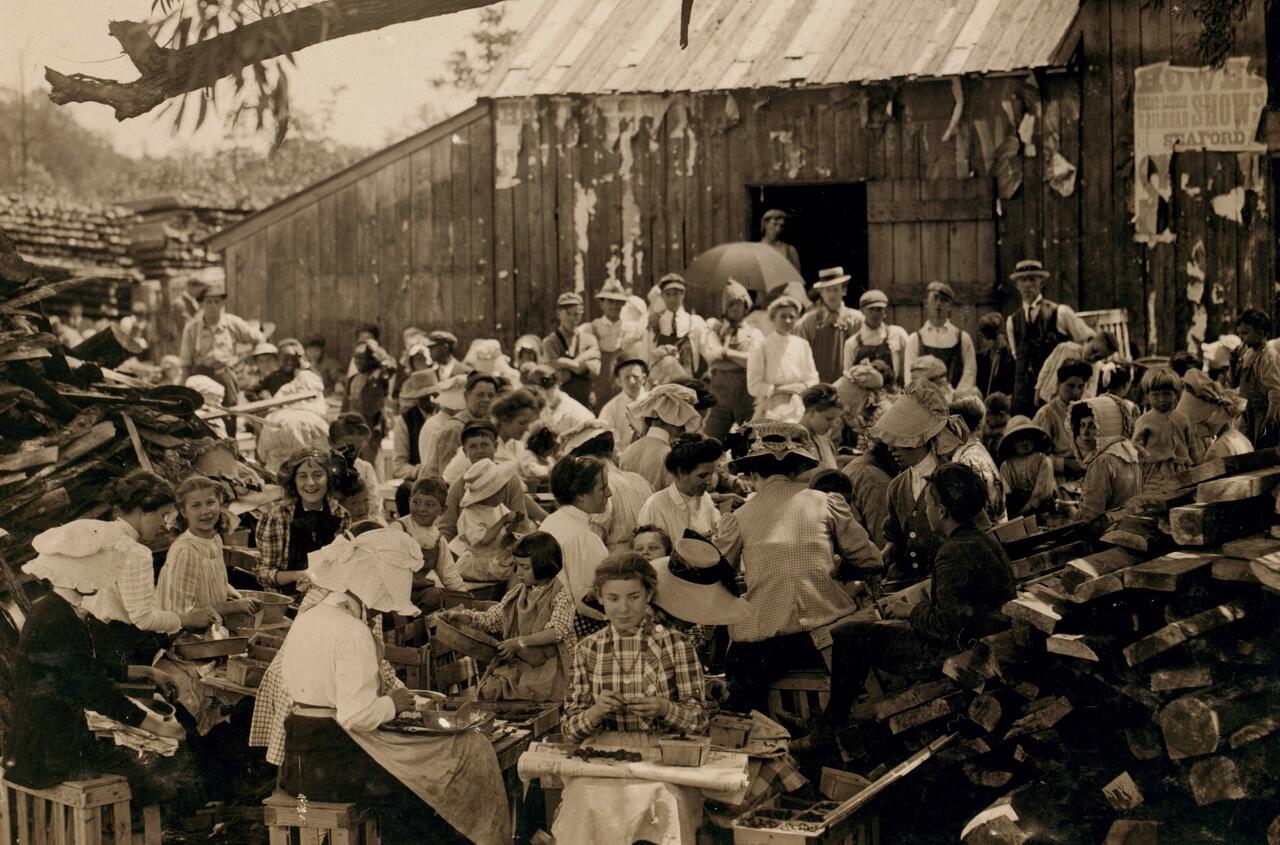
Accessible Archives, a company that creates and maintains primary source databases, posted a picture to Twitter of what appeared to be a berry festival of some kind.  Asking for some input as to what the berries could be, myself as well as Lynne S. (@LynneinMD) started throwing out suggestions.  One thing led to another, as described by a post on the blog of Accessible Archives, and within about an hour the mystery was solved.

The picture that started it all.  This image is from Accessible Archives, and does not belong to me.

The day’s events proved to me once again that social media, when used correctly, can have fantastic results for repositories in need of assistance.  Aside from the crowdsourced advice that Accessible Archives received, the experience was a fun case, allowing for a little bit of late-night detective-work to have some big pay-offs!

https://twitter.com/accessarchives/status/429263621710155776

Hopefully, as social media develops and repositories begin to embrace the power of digital crowdsourcing, many of the yet unsolved mysteries hidden within archives everywhere can be solved!

Posted in Student Blog Project 2013 | Tagged , , , , , , , | Comments Off on ArchivesMouse Participates in Crowdsourcing Discussion

What I Wore…and Ate

Click to view slideshow.

As I was home for my winter break, the majority of my time was spent eating and catching up with friends. What better way to catch up with high school friends that you haven’t seen since November, or even August by grabbing a nice bite to eat at your favorite local restaurant.

I met up with three friends in the middle of the week at a cute little French restaurant called Le Pain Quotidien (and no I have no idea how to properly pronounce Quotidien). It’s definitely one of my favorite go to places for breakfast, brunch, or lunch. They have an assortment of plates, from a quinoa quiche, to their signature tartines (an open-faces sandwich served with an array of toppings). I met up with my two friends for brunch so as one of my friends got French toast, and my other friend got a warm Belgian waffle; I went with the organic steel-cut oatmeal. It contained pecan nuts, brown sugar and chopped up bananas. It’s nothing special to order but with the polar vortex hitting New York when I was home, I was really feeling a warm and cozy meal. I mean the whole atmosphere of Le Pan (yes I gave it a nickname) is warm and cozy. The tables and chairs, and well the entire restaurant is wooden, giving a cabin -esque feel but not western, yet more Parisian, including this chain restaurant originated in France.

With all this eating though and meeting up with friends, I needed the proper attire to wear; because you never know whom else you might run into. I went with a cozy Zara sweater. I find that sweaters are so simple and easy to throw on, yet perfect to wear when catching up with friends when eating out. To go along with the Zara sweater, which was a mix of blues and whites woven together, I threw on a pair of blue jeans and my tan Frye boots and was ready to go. But before I went, because I mean this was in the middle of the polar vortex, I threw on my new Urban Outfitters Beanie. I’m not one to usually wear hats even if it’s freezing outside, but ever since I’ve purchased this beanie, I’ve been wearing it non-stop. And if you’re looking for other colors and patterns of beanies, Urban definitely has a great selection of cozy hats for you to strut and wear around this winter season!

Posted in Student Blog Project 2013 | Tagged , , , , , , , , | Comments Off on What I Wore…and Ate

Introducing the Roaring Brook Project

20130708105359-tee-shirt.blurb.jpg

I’m excited to announce one my adventures for this semester: I’ll be interning at Roaring Brook Market & Cafe.

And I’ll be chronicling my interning here on Gastronomic Permaculture.  

Roaring Brook is a new breed of food business. They’re a social purpose driven market and cafe in the heart of the city. They aim to bolster the local community and local economy, plus increase connectivity between producers and customers. About 80% of their suppliers are from within a 50 mile radius of the (bright, beautiful, welcoming) storefront. 

RB.jpg

I cannot believe my luck.

Roaring Brook opened their doors just a few months before I contacted Sarah McGahran, one of the owners. I was looking for a business to intern at in the city – somewhere that was part of the emerging local food and sustainability scene. Somehow I found Roaring Brook – I don’t remember how, but thank goodness I did. 

This week – my first week – Sarah, another intern and myself have been dissecting Roaring Brook’s mission statement to create a more succinct and widely accessible version. It’s not an easy task. The original mission statement is heavy with jargon. Which is all well and good…if the jargon is something you’re familiar with. There’s a certain trendiness to what Roaring Brook is doing, although it’s still unusual, and so some of the concepts that are honestly their core values are also buzz words. Sarah wanted to re-craft the statement so there’s no mistaking what they mean. Three particular words we worked on: local, transparent and sustainable. 

Another project from this week: writing up a producer spotlight. I’ve been working on one for East Indies Teas because there from Lebanon, PA and I am completely in love with their products. They make the finest earl grey and green loose leaf I’ve had in my entire life so far. And I drink a lot of tea. I’ve vowed to taste every flavor Roaring Brook carries.

My internship is one facet of a larger project. It’s actually a rather massive project, spanning multiple semesters. But you’ll hear more about that soon…

In short, we’re very excited about the things that are to come.


Logo design belongs to Roaring Brook Market & Cafe. Photograph by me.

Posted in Student Blog Project 2013 | Tagged , , , , | Comments Off on Introducing the Roaring Brook Project

New and Old Words: Pick Your Poison

One of the bloggers I follow, Melissa Mannon of ArchivesInfo, recently posted about the titles used for professionals within the LIS community.  Her point was that traditional terms such as “librarian” or “archivist” generally evoke responses commenting on the diminishing importance of analog records.  As a result, the ever-increasing role of computers, digital technologies, and the digital humanities in the LIS profession is lost.  While Mannon suggests that, for her, the combined title of Librarian / Information Specialist reflects the responsibilities of her position, I wonder about the true effectiveness of professional rebranding.

When asked about my future career aspirations, I generally say that I am interested in being either an “archivist” or a “digital archivist.”  Both terms are loaded, and neither truly conveys the whole of my interests.  The former is of course the traditional title for anyone working in an institutional repository.  As I suspect is universal nowadays, I often get comments revolving around the “fact” that paper communication is dying.  The arguable legitimacy of that statement ignored, my near-automatic response is always to point out that while documents from the past can be digitized, their analog presence cannot be ignored.

Contrary to popular opinion, archivists and librarians do use computers. Some of the machines are even newer than this model!

The latter title, although often more clear for members of my generation, garners equally mixed results from those of my parents’ and grandparents’ generations.  Further, the term “digital archivist” indicates, at least to me, a concentration only in born-digital records.  This also fails to indicate my true interests, which more accurately reflect a mixture of both titles.

Surprisingly enough, I have met at least two people who were under the impression that archivists did not use computers at all, but still actively maintained and expanded upon card catalogues.  While convincing a general audience that archivists and librarians do, in fact, use computers is an easy task, it can be more difficult to explain complex computer-driven responsibilities, such as the creation of digital humanities projects or digitization initiatives.

I have equal issue with many of the new titles currently thrown around in the LIS profession.  To me, terms like “information specialist” and “database manager” conjure images of IT professionals.  Alternative titles like “E-librarian” or, as LibraryJournal reported in 2013, “databrarian” are equally dissatisfying, as they do not give any easily recognizable idea of what the job’s responsibilities entail.

These newer titles, it seems to me, are trying to rebrand what an archive or library truly is.  While I certainly think that the modern-day work of the LIS profession needs to be better disseminated to the public, I do not think that playing around with job titles is the best manner of portraying our ever-changing responsibilities.  My own preference would be explaining to people that an archivist does in fact use a computer, instead of trying to comprehensibly describe what a “digital content manager” is.

What are your thoughts on titles within the archives and library profession?  What are the more interesting/unique titles you have had or heard of?

Posted in Student Blog Project 2013 | Tagged , , , , | Comments Off on New and Old Words: Pick Your Poison

Cooking In Tandem: Yoghurt and Granola

Bowl.jpg

Yoghurt and granola is my ultimate comfort food. 

Classic. Crunchy. Tangy. Not-to-sweet. You know what makes this pairing even more beautiful? They can made in tandem

First of all, people are often quite amazed to learn that you can make yoghurt yourself. You can. Anybody can. It isn’t difficult and you don’t need any special equipment. And because the process of making yoghurt is rather spread out – since the milk must be heated and then cooled – it allows ample time to make the granola. Using the residual heat from baking the granola, you can incubate the yoghurt. You’re using heat that would otherwise go unused. They really are a perfect couple.

Supplies.jpg

What you will need for the yoghurt:

1/2 gallon milk (cow or goat)

1/2 cup plain yoghurt

Mason jars or containers for yoghurt

1 roasting pan

1 bathroom towel

What you will need for the granola:

6 cups rolled oats

1 – 2 cups nuts or seeds

1 – 3 teaspoons spices of your choice

1 cup liquid sweetener and/or oil

Sea salt

1 roasting pan

1 saucepan


This will produce about 64oz. of yoghurt and 7 cups of granola.


Start by warming milk for the yoghurt.

You will need 1/2 a gallon of milk, either cow or goat. (Goat will yield a thinner consistency and require longer to incubate.) Pour into a large metal saucepan, place over medium-high heat and bring to just below a boil. If this is your first time, I recommend you use a thermometer and bring it to about 190° F. Do not let it bubble. 

Seeds.jpg

While the milk warms, start the granola.

First, preheat the oven to 325° F.

Then lay a metal roasting pan across two of your stove’s burners. Light both to medium-high heat. Pour your oats, nuts, seeds and spices into the pan:

  • 6 cups rolled oats
  • 1 – 2 cups nuts or seeds
  • 1 – 3 teaspoons spices of your choice (cinnamon, nutmeg, ginger, cardamom, cloves)

Shuffle the oats, nuts, seeds and spices around the pan until they are toasted and fragrant, about 10 – 15 minutes. Then, remove from heat.

Toasting.jpg

The milk shouldn’t be done heating yet, so finish the granola.

Put another small pot on the stove. Measure out one cup of liquid sweetener and/or oil. We used 1/2 honey and 1/2 cup coconut oil. But this is flexible, you could use all honey, all maple syrup or all brown rice syrup. Or you can substitute oil for up to one half a cup.

Heat the sweetener and oil until thin and runny. Pour over oats/nuts/seeds and stir until well combined. Sprinkle sea salt over the granola, to taste. 

Put the roasting pan in the oven. Bake for 20 – 25 minutes, or until golden brown. Let cool and then store in an airtight container. 

The milk should be up to temperature.

When it hits 190°, or thereabouts, take it off to the stove. Let it cool to 120°. 

Jars.jpg

When finished, remove the granola from the oven. Turn off the heat.

Time to prepare the yoghurt. 

When the milk is cooled, measure out 1/2 cup yoghurt. Ladle about 1 cup milk over the yoghurt and stir. Then pour the mixture back into the heated milk. Stir. 

Pour the milk/yoghurt mixture into mason jars, or store bought yoghurt containers. Wrap them up in a bathroom towel. Place the wrapped up containers in a roasting pan. Check the oven. It should be about 130° – cool enough that you can put your hand inside but still pretty warm. Put the roasting pan into the unlit oven. Close the oven. 

Towel.jpg

Let the yoghurt incubate for at least four hours.

You can let it sit overnight or just for a couple hours of the afternoon. The longer you leave it, the thicker and tangier the yoghurt will become. 

After the amount of time you choose, remove the roasting pan from the oven. Put the yoghurt in the fridge and let it cool. 

And there you have it. Breakfast. Or a snack. Or dessert…

Oncounter.jpg

One disclaimer: While the yoghurt is incubating, remember that’s it’s in the oven. Leave a note for yourself if you have to. Because you may find you need to use the broiler. And you may or may not remember that you have a very flammable bathroom towel in the oven. And it may or may not catch on fire if the broiler is lit. I speak from personal experience…

Posted in Student Blog Project 2013 | Tagged , , , , | Comments Off on Cooking In Tandem: Yoghurt and Granola